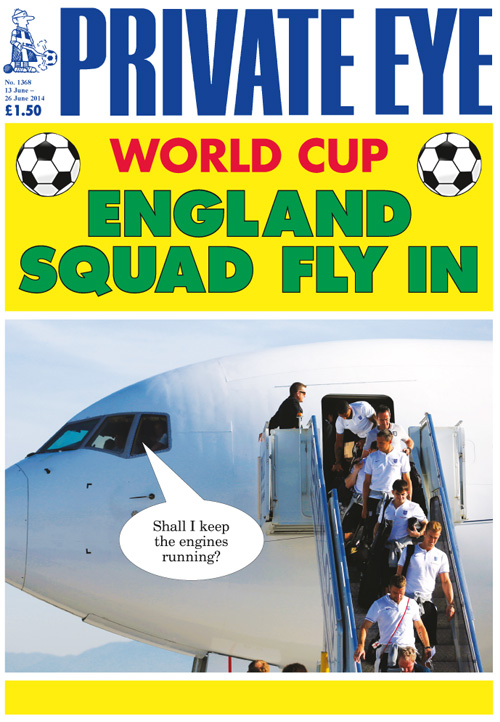
Farewell then
Daiichi Chuo
Kisen
Kaisha.
9132.
Sunk
by "slumping rates";
Torpedoed
by falling demand;
Capsized
by the stormy seas of
market forces,
so you
said.
Fact is:
you've been 'listing'
for decades,
and many times before
I thought you'd
abandon ship.
Your debt
could have filled
the holds of
several of your
handy-sized
bulk carriers.
You'd survived
depressions,
inflations,
and the second
world war,
but not
the weight of
over-investment
with OPM
(and deflation).
Your wishful
catchphrase was:
"Heading to be
the World's'' leading Tramper",
but your epithet
will read:
"Davy Jones' Locker, 2015".
Tuesday, September 29, 2015


Friday, September 04, 2015
Limitations of Pillory
pillory
/pɪləri/
verb
past tense: pilloried; past participle: pilloried
1.
historical
put (someone) in a pillory.
2.
attack or ridicule publicly.
"he found himself pilloried by members of his own party"
synonyms: attack, criticize, censure, condemn, denigrate, find fault with, give a bad press to, lambaste, flay, savage, brand, stigmatize, cast a slur on, denounce;
Bold political leadership has been in more or less persistent decline for some time now. Be this primarily a result of a seemingly more benign period in history (World War in general setting the bar extremely high for subsequent politicians), the advent of technology that enables the rapid measurement of public opinion, or the slavery of modern parties in democracies to use these technologies and associated methods to maintain power irrespective of whether prevailing opinion sits atop dubious (or erroneous) understanding, is unclear to me. Whatever the cause(s), it is increasingly rare for an elected leader to lead, undertaking unpopular policy, however "right", necessary or correct whether morally, economically, or both, such action might be, for fear of being pilloried, with attendant electoral consequence.
The lack of boldness can be viewed as a virtue, for it can cut both ways, leading to ignominious moments in history such as the cultural revolution, the second US invasion of Iraq, collectivization of Soviet agriculture, the Khmer Rouge genocide, and the privatization of Britain's Trains, (and other public utilities) without meaningful oversight.
Former President Carter, despite being pilloried, ceded the canal to Panama, undermined support for nasty, corrupt regimes around the world, danced on the Israeli's (and Egyptian's) head until they made peace (which uniquely has prevailed). It was hard, but he was inspired by personal belief and resolve. Pres. Obama, despite many disappointments, for all the hatred and invective, has succeeded in his fight for universal healthcare (still far from optimal), engaging Cuba (after fifty fricking years!!!!), amnesty for (mostly LatAm) immigrants - all deeply unpopular, but almost certainly on the right side of "right" in the time-line of history. Leaders are routinely shamed by bolts of Nordic or northern European humanitarianism, but it is increasingly rare for Leaders in the large nations or blocs to lead the world in doing the right thing when the occasion requires.
So, it was with great surprise and admiration that I listened to Angela Merkel's one-and-half hour speech, leading her peoples, (and hopefully her reluctant european neighbors) to do the right thing, while shaming critics, ostriches, opponents, and nationalists alike. It certainly is a shame people and nations feel little shame today (outside Japan), yet, at certain moments it remains an effective call to action, engulfing and then, like a contagion, able to overcome people's baser, visceral xenophobic fears and parochial self-interest. But it takes leadership. And an eloquence of common sense and humanity. Thank you Angela Merkel.
That Britain and both her people and government, have remained so stubbornly mean-spirited is shameful. That East-Europeans and the Irish - whose migrants and refugees have been accepted, and integrated in their times of need, have been obstinate is shameful. That America, Australia, and Canada with their vast space and wealth have done next-to-nothing is shameful. That China and Russia have done nothing is, while shameful, sadly expected given their historical (and present) role as persecutors themselves.
Few believe accepting and settling refugees is a solution to the root causes of the crisis. But that isn't an excuse to not act humanely and generously in the face of crisis. For it is worth remembering that events can turn things upside down quickly and you never know what side of the fence you may find yourself on. And should the North Atlantic conveyor shut down bringing a return of glaciers to Northern climes, Brits may, ironically, find themselves begging for resettlement in Libya or elsewhere in North Africa or the Middle East.
/pɪləri/
verb
past tense: pilloried; past participle: pilloried
1.
historical
put (someone) in a pillory.
2.
attack or ridicule publicly.
"he found himself pilloried by members of his own party"
synonyms: attack, criticize, censure, condemn, denigrate, find fault with, give a bad press to, lambaste, flay, savage, brand, stigmatize, cast a slur on, denounce;
Bold political leadership has been in more or less persistent decline for some time now. Be this primarily a result of a seemingly more benign period in history (World War in general setting the bar extremely high for subsequent politicians), the advent of technology that enables the rapid measurement of public opinion, or the slavery of modern parties in democracies to use these technologies and associated methods to maintain power irrespective of whether prevailing opinion sits atop dubious (or erroneous) understanding, is unclear to me. Whatever the cause(s), it is increasingly rare for an elected leader to lead, undertaking unpopular policy, however "right", necessary or correct whether morally, economically, or both, such action might be, for fear of being pilloried, with attendant electoral consequence.
The lack of boldness can be viewed as a virtue, for it can cut both ways, leading to ignominious moments in history such as the cultural revolution, the second US invasion of Iraq, collectivization of Soviet agriculture, the Khmer Rouge genocide, and the privatization of Britain's Trains, (and other public utilities) without meaningful oversight.
Former President Carter, despite being pilloried, ceded the canal to Panama, undermined support for nasty, corrupt regimes around the world, danced on the Israeli's (and Egyptian's) head until they made peace (which uniquely has prevailed). It was hard, but he was inspired by personal belief and resolve. Pres. Obama, despite many disappointments, for all the hatred and invective, has succeeded in his fight for universal healthcare (still far from optimal), engaging Cuba (after fifty fricking years!!!!), amnesty for (mostly LatAm) immigrants - all deeply unpopular, but almost certainly on the right side of "right" in the time-line of history. Leaders are routinely shamed by bolts of Nordic or northern European humanitarianism, but it is increasingly rare for Leaders in the large nations or blocs to lead the world in doing the right thing when the occasion requires.
So, it was with great surprise and admiration that I listened to Angela Merkel's one-and-half hour speech, leading her peoples, (and hopefully her reluctant european neighbors) to do the right thing, while shaming critics, ostriches, opponents, and nationalists alike. It certainly is a shame people and nations feel little shame today (outside Japan), yet, at certain moments it remains an effective call to action, engulfing and then, like a contagion, able to overcome people's baser, visceral xenophobic fears and parochial self-interest. But it takes leadership. And an eloquence of common sense and humanity. Thank you Angela Merkel.
That Britain and both her people and government, have remained so stubbornly mean-spirited is shameful. That East-Europeans and the Irish - whose migrants and refugees have been accepted, and integrated in their times of need, have been obstinate is shameful. That America, Australia, and Canada with their vast space and wealth have done next-to-nothing is shameful. That China and Russia have done nothing is, while shameful, sadly expected given their historical (and present) role as persecutors themselves.
Few believe accepting and settling refugees is a solution to the root causes of the crisis. But that isn't an excuse to not act humanely and generously in the face of crisis. For it is worth remembering that events can turn things upside down quickly and you never know what side of the fence you may find yourself on. And should the North Atlantic conveyor shut down bringing a return of glaciers to Northern climes, Brits may, ironically, find themselves begging for resettlement in Libya or elsewhere in North Africa or the Middle East.
Tuesday, June 30, 2015
Life Imitates Art

Marauders, pirates, outlaws, scallywags, and gangs of opportunistic thugs have, since time immemorial, been the scourge of civilized folk pursuing ordinary civilized life. Some have been officially-sanctioned (think Drake or Surcouf), while others were banished from society to life on the periphery (think Ronin). Most, from my anecdotal observations, however, seem to do what they do as an alternative means to make a living, mimicking one of nature's bullies: the frigate bird.
This threat, ignoring the very exercise of extreme and brutal power by states seen occasionaly in history, has largely remained peripheral, though on occasion they've bizarrely intersected with The State (e.g. Queen Ranavalona of Madagascar, or the Chinese Taipings), such examples being sufficiently rare and weird as to capture the considerable attention of George Fraser MacDonald. So rare, and so weird has it been, that the exploits of larger-than-life wanton criminal outlaws, and the good citizens' fight against them, have been a most fertile subject for writers and artists, particularly those of the pulp variety.

Oscar Wilde opined that "life imitates art", an astute observation – even more apt in modernity given the wide and numerous avenues available for mass-distribution. Foremost at this nexus of the criminally weird and the crazy Prophets - whether knowingly or unwittingly – is the self-proclaimed Islamic State, eerily resembling the violent and chaotic exploits of DC's most villainous Rogues Gallery. Anarky, The Joker, Firebug, Dr. Death, Cypher, Brutale, Deacon Blackfire, The Mad Hatter, Ra's alk Ghul, The Riddler, Proteus, Puppet Master, Thanatos, The Scarecrow, Roman Sionis, all conjured from authors' fertile imaginations, can hardly hold a creative candle to their real-life mimics wreaking havoc across the no-less-fertile crescent world. This result begs the simple question: How closely have the IS leaders studied, NOT the Koranic scriptures they purport to follow, but the collected exploits of Batman's colourfully-crazy nemesii? For if it was true that Bin-Laden was a big consumer of porn, is it any further-fetched to wonder whether al-Bhagdadi, al-Anbari, or al-Turkmani and their wicked henchmen have an accumulated and much-coveted stash of Caped Crusader pulp providing them with near-limitless inspiration?

As in the self-proclaimed Islamic State and their would-be Caliphate, DC's dystopias are riddled with logic flaws and conveniently irreconcilable inconsistencies. Ignoring that the most fantastical rogues have powers that defy the laws of the natural world, I've always found it difficult to suspend my disbelief when see the armies of seemingly loyal thugs and henchmen support their evil mastermind leaders in pursuit of their [rather dubious] goals - be they revenge, sadistic lust, political domination, or financial control of planet earth. This is as true of 007's nemeses, as it is of Dr Evil's and the hordes of baddies perennially threatening Gotham City.

Their un-Flashman-like zeal to protect and even sacrifice themselves so their leaders can escape, is only matched by al-qaeda or IS acolytes, strapping a bunch of semtex to themselves before walking into a mosque, a busy hotel or a parliament building and pressing the “detonate” button, acts that belie normal comprehension - leading one to presume that most are undoubtedly as bat-shit crazy as their leaders. Others may be merely desperate, or perhaps motivated by sharing financial gain, or the benefits of power when their New Order prevails. I suppose one might ponder the similar question as to what motivates the disciples of Rupert Murdoch, but THAT question not on the menu today.

However much Gotham City resembles Sodom & Gomorrah, most of both cities' inhabitants were ordinary folk, living ordinary lives – effectively caught in the middle between lunatic wickedness and callous corruption and greed. However apt this might be of the masses' predicament today, the problem remains: how does the (mostly innocent??!) populace protect themselves from the incursions of The Crazed, as well as from their own predatory elites. History (going back 1000 years to the Salafi-like Assasins sect) and practical observation suggests random covert acts of terrorism are, by definition nearly impossible to thwart. This is true of an idiot wishing to take out a plane with his “shoe” (saved by only by luck) as it is of an idiot with a AK-47 whose (tragically consummates) a whim to take target practice on a beach of humans..


It is important, at this stage, to remember that Batman never really was the near-perfect Batman/Bruce Wayne good-guy of the 1960's. Truer to his origins, he is The Dark Knight. He decidedly has some baggage. So he doesn't always get it right in the fight against the sick and twisted fucks, and for the avoidance of doubt, they ARE sick and twisted fucks. And sometimes his actions, against his own better judgment, resulting from his own back-story, make things worse, however good his intentions might appear. He is, after all, meant to be, just human...
Friday, June 26, 2015
What Have The Europeans Ever Done For Us

- Steve Baker:
- We get in through the underground heating system here... up through to the main audience chamber here... and Junkcer's wife's bedroom is here. Having grabbed his wife, we inform Juncker that she is in our custody and forthwith issue our demands. Any questions?
- Graham Stringer:
- What exactly are the demands?
- Nigel Farage:
- We're giving Juncker two days to dismantle the entire apparatus of the European Imperialist State and if he doesn't agree immediately, we execute her.
- Kate Hoey:
- Cut her head off?
- Steve Baker:
- Cut all her bits off, send 'em back every hour on the hour... show him we're not to be trifled with.
- Nigel Farage:
- Also, we're demanding a ten foot mahogany statue of Jacques Delors with his cock hanging out.
- Douglas Carswell:
- What? They'll never agree to that, Nige.
- Nigel Farage:
- That's just a bargaining counter. And of course, we point out that they bear full responsibility when we chop her up, and... that we shall not submit to blackmail.
- Omnes:
- (Applause) No blackmail!
- Nigel Farage:
- They've bled us white, the bastards. They've taken everything we had, not just from us, from our fathers and from our fathers' fathers.
- Douglas Carswell:
- And from our fathers' fathers' fathers.
- Nigel Farage:
- Yes.
- Douglas Carswell:
- And from our fathers' fathers' fathers' fathers.
- Nigel Farage:
- All right, Carswell. Don't labour the point. And what have they ever given us in return?
- Graham Stringer:
- Freedom of movement, so we can live in Spain and France and...
- Nigel Farage:
- Oh yeah, yeah they gave us that. Yeah. That's true.
- Masked Activist:
- And consumer and environmental protection!
- Douglas Carswell:
- Oh yes... protection!, Nige, you remember how polluted the UK used to be like.
- Nigel Farage:
- All right, I'll grant you that the freedom of movement and consumer and environmental protection are two things that the Europeans have done...
- Bernard Jenkin:
- And the Convention on Human Rights...pfewww...we have NO protection under British Common Law...
- Nigel Farage:
- (sharply) Well yes obviously the Convention on Human Rights... Human Rights go without saying. But apart from the freedom of movement, the consumer and environmental protection and the Convention on Human Rights...
- Another Masked Activist:
- Single Market...
- Other Masked Voices:
- Cross border regulation... Food Safety....Reciprocal Healthcare... Regional Development ...
- Nigel Farage:
- Yes... all right, fair enough...
- Activist Near Front:
- And the wine...
- Omnes:
- Oh yes! True!
- Owen Paterson:
- Yeah. That's something we'd really miss if we left Europe, Nige.
- Masked Activist at Back:
- Cheap immigrant labour who works hard and does the jobs no one else wants to do!
- Douglas Carswell:
- It IS safe to use a public toilet...
- Steve Baker:
-
Yes, they certainly know how to keep places clean... (general
nodding)... let's face it, they're the only ones who could in a
place like this...
(more general murmurs of agreement) - Nigel Farage:
- All right... all right... but apart from freedom of movement, environmental and consumer protection, The Convention on Human Rights, a single market, cross-border regulation, food safety standards, reciprocal healthcare across Europe, regional development, wine, speaking with a single voice whern negotiating with USA or China, and cheap labour to do the jobs British people do not want to do... what have the Europeans done for us?
- Graham Stringer:
- Brought peace and prosperity....! Just look at what things were like BEFORE the EU....
- Nigel Farage:
- (very angry, he's not having a good meeting at all) What!? Oh... (scornfully) Peace and prosperity, yes... shut up!
Sunday, June 07, 2015
Farewell Alan Bond
So Farewell
then
Alan
Bond.
The most
infamous
Ozzie
contrapreneur.
You gave
Laurie Connell
a "run for
his money".
(no pun intended)
Few young specs
will recall
your name;
But,
they should.
For you were
a case study on
the peril(s)
of paying
way too much.
Apparently,
you also
stole
lots of things -
illegally.
But at least
you stole THE Cup
from the Yanks
fair and
square.
(With apologies to Private Eye and EJ Thribb)
then
Alan
Bond.
The most
infamous
Ozzie
contrapreneur.
You gave
Laurie Connell
a "run for
his money".
(no pun intended)
Few young specs
will recall
your name;
But,
they should.
For you were
a case study on
the peril(s)
of paying
way too much.
Apparently,
you also
stole
lots of things -
illegally.
But at least
you stole THE Cup
from the Yanks
fair and
square.
(With apologies to Private Eye and EJ Thribb)
Wednesday, April 22, 2015
FIRE !!!! (J.K.....)
Guy walks in to the shadows of a crowded movie theatre. Yells "FIRE!!!!!". People scramble to exit. Some get trampled and hurt. It's ugly. A few skeptics remain (for the movie's still running). Of course, there's no fire. But people are prudently herd-oriented by nature so react viscerally. The guy emerges from the shadows, and coolly takes a prime seat - perhaps his objective all along? Some return to recoup their sunk cost, discover the predictable ending, or just watch Clooney, Pitt et. al. remove his shirt one more time. Sure, the guy runs the risk that he will be discovered as the causation of the chaos and mayhem. Sure, one of the larger and more muscular of the "victims" might punch him in the nose or break his leg(s). Or theatre management, might call the police, whether for civic purpose or liability containment. Others have employed the ruse successfully to obtain prime seats, with similar consequence. And despite its occasional reporting in the press, patrons, out of self-preservation, still react with the same visceral flight response. Sometimes they act in concert as two FIRE!!-Criers!!™ are more credible than one.
But somehow, in electronic financial markets, such ruses, ploys, and games, are discounted by apologists - be they HiFTers, libertarians (despite prevailing laws and regulations) and the recent arrest of the alleged perp accused of initiating the cascade. Why should one think it decidedly unacceptable in civic life, but somehow victimless, harmless and tolerable in financial markets? I think there is some hypocrisy about.The beauty of electronic exchanges is that there is there is a record and audit trail that easily permits measurement and enforcement of acceptable behaviour as defined by the rules. Egregious behaviour (spoofing, layering, etc) should be glaringly apparent and is easily discoverable by the even the most amateur of data tinkerers. Canadian SEDAR requires blue-sky disclosure of MF time and sales (something the US should emulate for MFs and HFs). The failure of exchanges themselves to investigate and exorcise the demons (or facilitate availability of the entire package of participant-specific quote-level data to all investigators) leads one to imagine that commercial conflicts are rife (as if we needed further evidence.
That exchanges themselves, and industry organizations have ignored/are ignoring this is perhaps not surprising. However the most striking [risk-management] issue - whether at the exchange, clearing-house, or executing broker or clearing broker level is the apparent total untethering of what a modestly-capitalised west-london punter can firmly enter and display on one of the most visible and largest exchanges in the world from the resources of that same modestly-capitalized punter can muster to make good the entry of orders for purchase, or sale of the leveraged positions, let alone the underlying magnitude of these positions. One wonders whether markets would have been similarly effected if participant-level disclosure indicating that Navinder Singh Sarao's modest account was touting these bids/offers or merely some indicator that the posted buyer/seller had no chance of fulfilling commitments.
But somehow, in electronic financial markets, such ruses, ploys, and games, are discounted by apologists - be they HiFTers, libertarians (despite prevailing laws and regulations) and the recent arrest of the alleged perp accused of initiating the cascade. Why should one think it decidedly unacceptable in civic life, but somehow victimless, harmless and tolerable in financial markets? I think there is some hypocrisy about.The beauty of electronic exchanges is that there is there is a record and audit trail that easily permits measurement and enforcement of acceptable behaviour as defined by the rules. Egregious behaviour (spoofing, layering, etc) should be glaringly apparent and is easily discoverable by the even the most amateur of data tinkerers. Canadian SEDAR requires blue-sky disclosure of MF time and sales (something the US should emulate for MFs and HFs). The failure of exchanges themselves to investigate and exorcise the demons (or facilitate availability of the entire package of participant-specific quote-level data to all investigators) leads one to imagine that commercial conflicts are rife (as if we needed further evidence.
That exchanges themselves, and industry organizations have ignored/are ignoring this is perhaps not surprising. However the most striking [risk-management] issue - whether at the exchange, clearing-house, or executing broker or clearing broker level is the apparent total untethering of what a modestly-capitalised west-london punter can firmly enter and display on one of the most visible and largest exchanges in the world from the resources of that same modestly-capitalized punter can muster to make good the entry of orders for purchase, or sale of the leveraged positions, let alone the underlying magnitude of these positions. One wonders whether markets would have been similarly effected if participant-level disclosure indicating that Navinder Singh Sarao's modest account was touting these bids/offers or merely some indicator that the posted buyer/seller had no chance of fulfilling commitments.
Tuesday, March 24, 2015
Yellen Isn't Yellin' Anymore
During times of liquidation, panic, and revulsion, when authorities are trying to establish a definitive floor under asset prices, and create an atmosphere of greater confidence in order to assuage fears and encourage longer-term capital investment, there is reasonable benefit clearly telegraphing policy intentions. Speculators may (and probably will) use this elevated level of certainty to front-run actual "real" flows. And this is fine and good since desired policy outcomes (at such times) tangibly benefit from the reduction and/or elimination of speculative short positions (or at the very least refraining from disinvestment or erstwhile liquidation). Policy objectives, are further hastened by speculative flows, at least initially, whether by confidence-bolstering or behavioral feedback effects. While the promise of backstopping is real, the primary effect results from old-fashioned "jawboning" to harness otherwise pro-cyclical flows to stabilizing, counter-cycling effect. At such times, it likely that just credibly stating that one will pursue certain stated policy(s) with defined objectives is often more efficacious than the implementation of the policy itself - the operative word being "credibly".
There comes the point in the inevitably-cyclical process - recent context being QE2 or QE3 or the present (choose your poison) - where fear of the abyss has passed, and when prevailing policy's "certainty", is extrapolated and viewed as providing perennial and asymmetrical risk-reward, or a proverbial "free lunch", irrespective of the extraordinary conditions for which it was originally conjured, and its decidedly-temporary nature when seen in an historical context. This is the moral hazard that policy certainty can wreak in general, and what disturbs me about ZIRP/QE in particular. The macroeconomy, in its aggregate investment decisions, typically overshoots sufficiently well without the further help of leveraged, speculative flows. There is little to done about The People making overenthusiastic coincidental investment and consumption decisions on the basis of the recent past, outside the modulation of traditional fiscal and monetary policy. This IS the business cycle.
Given the size of the financial economy in general, the increasing size of trading-oriented, leveraged investments, and feedback-related trading and risk-management styles, and the general hordes within the momentum-driven electronic herd, much of which is focused upon, and driven-by observing rather arcane nuances in policy, central-bankers in particular should, rightfully, be mindful of aligning the aggregate animal spirits in the general economy with leveraged financial speculation attempting to game perceived policy certainty. In short, in order to deter leveraged speculative activity at such times, when it is, as Rumsfeld might have termed, "decidedly unhelpful", i.e being pro-cyclical well-after the sell-by date of its usefulness, markets periodically NEED to be spanked. They NEED to understand that policy should, and will be, data-dependant. That might include whipsaw moves in rates and prevailing policies, even if sub-optimal with perfect hindsight. They [markets] need to understand there is no certainty, and no free lunch. And as more and more investment becomes rote, algorithmic, and systematic, these models (and their programmers), too must incorporate uncertainty at levels that incorporate longer-frame regimes than many systematic macro and risk-parity strategies contemplate or integrate, or other endeavors that overweight recent regimes at the expense of the more-distant-but-not-wholly-irrelevant past, or the next. Should one doubt the benefits of such an uncertainty principle, simply imagine the wild rumpus that would ensue following universal pursuit of the free lunch. Some would argue we're already there (though I am not so stridently convinced despite sympathetic caution).
Pulling away the milk-teat is never easy. Markets will need to get used to a return to policy uncertainty. There is significant momentum in the real economy, and it is likely it will not be derailed by a bias towards higher rates, or marginally-increased financial market volatility. We should not shed a tear for those Icarii who get run over by it's process. I've no problem with the authorities acting as "Lender of Last Resort", or the idea of their provision of liquidity as systemic backstop. But precisely "where", and "at what cost" should remain ambiguous to prevent the cleverly rapacious psychopaths amongst us from [trying to] test their boundaries and aggressively game it. In this regard, the fact that Yellen isn't yelling [specific certain forward policy guidance] anymore is highly appropriate. Get used to it. Embrace it. And remain mindful of charlatans with strategies overly-dependent upon mindless extrapolation and leverage.
There comes the point in the inevitably-cyclical process - recent context being QE2 or QE3 or the present (choose your poison) - where fear of the abyss has passed, and when prevailing policy's "certainty", is extrapolated and viewed as providing perennial and asymmetrical risk-reward, or a proverbial "free lunch", irrespective of the extraordinary conditions for which it was originally conjured, and its decidedly-temporary nature when seen in an historical context. This is the moral hazard that policy certainty can wreak in general, and what disturbs me about ZIRP/QE in particular. The macroeconomy, in its aggregate investment decisions, typically overshoots sufficiently well without the further help of leveraged, speculative flows. There is little to done about The People making overenthusiastic coincidental investment and consumption decisions on the basis of the recent past, outside the modulation of traditional fiscal and monetary policy. This IS the business cycle.
Given the size of the financial economy in general, the increasing size of trading-oriented, leveraged investments, and feedback-related trading and risk-management styles, and the general hordes within the momentum-driven electronic herd, much of which is focused upon, and driven-by observing rather arcane nuances in policy, central-bankers in particular should, rightfully, be mindful of aligning the aggregate animal spirits in the general economy with leveraged financial speculation attempting to game perceived policy certainty. In short, in order to deter leveraged speculative activity at such times, when it is, as Rumsfeld might have termed, "decidedly unhelpful", i.e being pro-cyclical well-after the sell-by date of its usefulness, markets periodically NEED to be spanked. They NEED to understand that policy should, and will be, data-dependant. That might include whipsaw moves in rates and prevailing policies, even if sub-optimal with perfect hindsight. They [markets] need to understand there is no certainty, and no free lunch. And as more and more investment becomes rote, algorithmic, and systematic, these models (and their programmers), too must incorporate uncertainty at levels that incorporate longer-frame regimes than many systematic macro and risk-parity strategies contemplate or integrate, or other endeavors that overweight recent regimes at the expense of the more-distant-but-not-wholly-irrelevant past, or the next. Should one doubt the benefits of such an uncertainty principle, simply imagine the wild rumpus that would ensue following universal pursuit of the free lunch. Some would argue we're already there (though I am not so stridently convinced despite sympathetic caution).
Pulling away the milk-teat is never easy. Markets will need to get used to a return to policy uncertainty. There is significant momentum in the real economy, and it is likely it will not be derailed by a bias towards higher rates, or marginally-increased financial market volatility. We should not shed a tear for those Icarii who get run over by it's process. I've no problem with the authorities acting as "Lender of Last Resort", or the idea of their provision of liquidity as systemic backstop. But precisely "where", and "at what cost" should remain ambiguous to prevent the cleverly rapacious psychopaths amongst us from [trying to] test their boundaries and aggressively game it. In this regard, the fact that Yellen isn't yelling [specific certain forward policy guidance] anymore is highly appropriate. Get used to it. Embrace it. And remain mindful of charlatans with strategies overly-dependent upon mindless extrapolation and leverage.
Wednesday, March 18, 2015


Thursday, March 12, 2015

Giving is Easy - Taking is Hard
Despite the occasional satirical joke, I've never had a grave problem with QE. Like many other sober-minded observers, QE, seen in its temporal context, was one of the few available weapons to put a floor under floor asset prices, finance the large counter-cyclical deficits thus preventing the worst of a delveraging-induced revulsion and associated dislocations of unemployment and output gaps, in an otherwise spartan policy armory. The limited policy options were partly due to rates' proximity to the ZLB, partly because of the difficulty in building consensual responses in an acrimoniously-divided polity and, yes, partly because of the moral furore surround culpability four the crisis.
Though my concerns about tin-foil hat hyper-inflationary fears were near-zero, so too were my expectations that QE would be a panacea. QE, was, never going to be a cure-all, but was decidedly positive whatever critics may say - if only for psychological, confidence-boosting affirmation that the authorities would not stand idly by, holding their willies, passively witnessing a liquidationist resolution, however-much Austrian School proponents were hankering for one.
With memories of Japanese premature fiscal withdrawal still fresh, I believe history will see QE2 as a useful example of trying to avoid past policy mistakes, by making sure foundations of recovery were sufficiently strong before modulating countermeasures. In isolation, it will not be judged harshly. QE3, from the start, was seen by many, as more contentious, and I also agree with their reservations. Growth IMO was sufficiently on its way, and would, (again IMO), have continued similarly without further asset purchases. However, seen in the context of Euro jitters, the silly sequester battles, Arab Spring upheavals, QE3 should also be seen as the Fed's attempt to prevent large political uncertainties from systematically undoing the meaningful progress. And while I was, and am, concerned about the embedding of Pavlovian behavior, I believe there was (at least some) merit in their response and we should accordingly throttle our harshest judgements. The alternative outcome will remain hypothetical, but the actual result of continued growth, faster-than-expected fiscal consolidation, straight-line drop in unemployment and emergence of real wage growth is hardly worthy of too-severe recrimination.
Maybe one-day, social scientists will accurately factor-analyze the transmission mechanism. Was it the QE-induced, low rates themselves? the psychological boost of asymmetrical forward-looking asset-price expectations given a newly-communicated floor?; the asset price market values, capital gains and their multipliers resulting from QE?; the multiplier effects of seamlessly funding counter-cyclical government expenditure - both automatic stabilizers and pro-active stimulus?; or was it just the generalized normalization of economic activity by removing fear of A Great Depression and feared Zerohedge-like survivalist dystopia? I invite readers to offer their attributions of choice and associated weight of contribution.
Whatever one's attribution, no one can ignore the obvious cumulative result of QE and its interactions: asset prices far and wide have soared as a result of the policy, creating unimaginably-large "windfalls" to asset-owners through little cause of their own. Attempts should have been to "sterilize" at least a portion of windfalls - through targeted fiscal policy - partly for reasons of fairness and equity, and partly to deter the systemic gaming in speculative leveraged bets upon one-way economic and financial policy.
How quickly investors forget. If you'd asked large asset owners in late 2008, or early 2009: "Would you give up a tranche of the future capital gains in asset prices in exchange for a floor under prevailing prices, and the near-assuredness of significantly higher asset prices in the future?", I am quite sure of the answer, given the widespread systemic fears and paucity of alternatives at the time. Investors, after all, pay 2&20 to HFs and PE for essentially the same (pre-tax) premise. Was not QE effectively the same proposition multiplied across the entire economy? The liquidationist alternative was clearly unpalatable to asset owners, and sub-optimal for nearly everyone else. IF, as the result of a policy directive, you bestow large windfall gains, it would be only fair to harvest a an additional share of those for the Public's Interest, since the goal of QE policy was NOT to further stoke inequality, nor accelerate the growth of fortunes for existing asset owners, but rather to prevent unnecessary liquidation, and deflation so private-sector balance sheet deleveraging could work its course, and to foster stability, so reviving private investment decisions in the real economy. But, as it happens, giving is far easier than taking away - irrespective if you're a welfare deadbeat (not my language) or a leveraged rentier.
Pundits and critics from the right rarely miss an opportunity to point out the inherent difficulty of unwinding government programs and bureaucracy. It is a criticism worth noting. For bureaucracies and organizations often assume lives of their own and wills to survive long-beyond the sell-by date of the problem or policy purpose, defending their mission and rights to exist with intensity and vigor. Once laws are enacted and forces mobilized, introspection is a novelty.
Yet, the same pundits and critics refrain from similarly-inspired criticisms when it comes to the beneficiaries of QE, and the protection of their windfalls. It is baffling. The right, politically, hates QE, and all that it stands for, but surely all of Jim Bunning's or Rand Paul's tirades would have been put to better use to promote some sterilization policy that would ameliorate the less-desirable side-effects, efforts that would not damage their populist dogma (excepting perhaps their relationship with Grover Norqvist)
Asset owners peculiarly act as if such windfalls somehow resulted from their own brilliance. Many, through every over-leveraged fault of their own, were a pubic-hair's breadth away from financial obliteration, saved by US - and I don't mean the United States, but rather you, and I, as representations of the taxpayer, or bag-holder as the ultimate underwriter of newly issued debt. Others - particularly in the tech world and on the left coast - are blind to the benefits wrought by munificence of The People, and the abundant liquidity finding its way into every inane crevice, and spilling over to provide VC's and PE investors exits at multiples unimagined even three years ago. And the "thanks" that all those west-coast libertarians afflicted with self-attribution bias, is to piss on the under-class who serve them, and wish for a Randian offshore tax-haven to insure they share as little as possible with the undeserving multitudes. These gripes are academic, but asset-owners would do well to reflect upon their self-attribution bias.
As a markets person, my concerns with QE (particularly QE3) remain consistent with concerns expressed in the past at one-way CB interventions. That is to say, it likely creates a moral hazard whereby financial institutions and speculators lean on the policy backstop to front-run, lever-up (be it risk-parity; duration, credit), in ways that ultimately create more systemic risk, volatility, sowing the seeds for future dislocation, and likely requirement for public market stabilization [again]. Such hazard is amplified by lack of sterilization. I admit I don't know precisely how it might be implemented, or the optimal boundaries or details, just that fiscal policy deterrents would help diminish some of the negatives to society of one-way unsterilized monetary policy largesse gifted to large asset owners caught in the happenstance of monetary policy.
Though my concerns about tin-foil hat hyper-inflationary fears were near-zero, so too were my expectations that QE would be a panacea. QE, was, never going to be a cure-all, but was decidedly positive whatever critics may say - if only for psychological, confidence-boosting affirmation that the authorities would not stand idly by, holding their willies, passively witnessing a liquidationist resolution, however-much Austrian School proponents were hankering for one.
With memories of Japanese premature fiscal withdrawal still fresh, I believe history will see QE2 as a useful example of trying to avoid past policy mistakes, by making sure foundations of recovery were sufficiently strong before modulating countermeasures. In isolation, it will not be judged harshly. QE3, from the start, was seen by many, as more contentious, and I also agree with their reservations. Growth IMO was sufficiently on its way, and would, (again IMO), have continued similarly without further asset purchases. However, seen in the context of Euro jitters, the silly sequester battles, Arab Spring upheavals, QE3 should also be seen as the Fed's attempt to prevent large political uncertainties from systematically undoing the meaningful progress. And while I was, and am, concerned about the embedding of Pavlovian behavior, I believe there was (at least some) merit in their response and we should accordingly throttle our harshest judgements. The alternative outcome will remain hypothetical, but the actual result of continued growth, faster-than-expected fiscal consolidation, straight-line drop in unemployment and emergence of real wage growth is hardly worthy of too-severe recrimination.
Maybe one-day, social scientists will accurately factor-analyze the transmission mechanism. Was it the QE-induced, low rates themselves? the psychological boost of asymmetrical forward-looking asset-price expectations given a newly-communicated floor?; the asset price market values, capital gains and their multipliers resulting from QE?; the multiplier effects of seamlessly funding counter-cyclical government expenditure - both automatic stabilizers and pro-active stimulus?; or was it just the generalized normalization of economic activity by removing fear of A Great Depression and feared Zerohedge-like survivalist dystopia? I invite readers to offer their attributions of choice and associated weight of contribution.
Whatever one's attribution, no one can ignore the obvious cumulative result of QE and its interactions: asset prices far and wide have soared as a result of the policy, creating unimaginably-large "windfalls" to asset-owners through little cause of their own. Attempts should have been to "sterilize" at least a portion of windfalls - through targeted fiscal policy - partly for reasons of fairness and equity, and partly to deter the systemic gaming in speculative leveraged bets upon one-way economic and financial policy.
How quickly investors forget. If you'd asked large asset owners in late 2008, or early 2009: "Would you give up a tranche of the future capital gains in asset prices in exchange for a floor under prevailing prices, and the near-assuredness of significantly higher asset prices in the future?", I am quite sure of the answer, given the widespread systemic fears and paucity of alternatives at the time. Investors, after all, pay 2&20 to HFs and PE for essentially the same (pre-tax) premise. Was not QE effectively the same proposition multiplied across the entire economy? The liquidationist alternative was clearly unpalatable to asset owners, and sub-optimal for nearly everyone else. IF, as the result of a policy directive, you bestow large windfall gains, it would be only fair to harvest a an additional share of those for the Public's Interest, since the goal of QE policy was NOT to further stoke inequality, nor accelerate the growth of fortunes for existing asset owners, but rather to prevent unnecessary liquidation, and deflation so private-sector balance sheet deleveraging could work its course, and to foster stability, so reviving private investment decisions in the real economy. But, as it happens, giving is far easier than taking away - irrespective if you're a welfare deadbeat (not my language) or a leveraged rentier.
Pundits and critics from the right rarely miss an opportunity to point out the inherent difficulty of unwinding government programs and bureaucracy. It is a criticism worth noting. For bureaucracies and organizations often assume lives of their own and wills to survive long-beyond the sell-by date of the problem or policy purpose, defending their mission and rights to exist with intensity and vigor. Once laws are enacted and forces mobilized, introspection is a novelty.
Yet, the same pundits and critics refrain from similarly-inspired criticisms when it comes to the beneficiaries of QE, and the protection of their windfalls. It is baffling. The right, politically, hates QE, and all that it stands for, but surely all of Jim Bunning's or Rand Paul's tirades would have been put to better use to promote some sterilization policy that would ameliorate the less-desirable side-effects, efforts that would not damage their populist dogma (excepting perhaps their relationship with Grover Norqvist)
Asset owners peculiarly act as if such windfalls somehow resulted from their own brilliance. Many, through every over-leveraged fault of their own, were a pubic-hair's breadth away from financial obliteration, saved by US - and I don't mean the United States, but rather you, and I, as representations of the taxpayer, or bag-holder as the ultimate underwriter of newly issued debt. Others - particularly in the tech world and on the left coast - are blind to the benefits wrought by munificence of The People, and the abundant liquidity finding its way into every inane crevice, and spilling over to provide VC's and PE investors exits at multiples unimagined even three years ago. And the "thanks" that all those west-coast libertarians afflicted with self-attribution bias, is to piss on the under-class who serve them, and wish for a Randian offshore tax-haven to insure they share as little as possible with the undeserving multitudes. These gripes are academic, but asset-owners would do well to reflect upon their self-attribution bias.
As a markets person, my concerns with QE (particularly QE3) remain consistent with concerns expressed in the past at one-way CB interventions. That is to say, it likely creates a moral hazard whereby financial institutions and speculators lean on the policy backstop to front-run, lever-up (be it risk-parity; duration, credit), in ways that ultimately create more systemic risk, volatility, sowing the seeds for future dislocation, and likely requirement for public market stabilization [again]. Such hazard is amplified by lack of sterilization. I admit I don't know precisely how it might be implemented, or the optimal boundaries or details, just that fiscal policy deterrents would help diminish some of the negatives to society of one-way unsterilized monetary policy largesse gifted to large asset owners caught in the happenstance of monetary policy.
Friday, January 23, 2015
"Pulling Out All The Stops"
Journos, observers, commentators, bloggers, traders, analysts, strategies, newscasters, reporters, and so it seems just about everyone else has a view on QE. And the result is overwhelmingly INTENSE. They've PULLED OUT ALL THE STOPS!!!!. No, not the ECB. I mean, anyone writing about the ECB's announced policy actions.
Below is anexhaustive (hyperbole?)list of the terms and associated language casually garnered from almost all the QE headlines and articles over the past few days. One could of course forgive any single instance of excitement, but in surveying the landscape, it's clear something's in the water. Especially in the United Kingdom (the nation with the highest and most pernicious sustained primary deficit, and a grand-canyon-sized CA gap - NB: intentionally exaggerated language) which is the source of most hyper-ventilative language (yes you guessed the Telegraph & Ambrose E.P. wins again). Even the usually-dry FT leapt on the bandwagon (sorry - OTT metaphoring is infectious), and sober BBC "joined the party" (drats!I did it again). Just have a look....
unleashes
triggers
pushes-the-button on
massive
massive
boost
huge
massive
injects
launches
pump
pull-trigger
bang
financial bazooka
d-day
salvo
unfettered
full-fledged
shock & awe
full-scale
massive
scheme
finally
long-awaited
fatally
exhausted
deflation
rescue
revive
save
struggling
back-door
plummeting
deep-division
severe reservations
wary
slide
teetering
brink
downward-spiral
reluctance
damage
faulty
disappoint
fatally-weaken
unimpressed
questions
flawed
lambast
stagnation
underwhelmed
wrong type
tensions simmer
inevitably fail
deservedly fail
last throw of the dice
too-small-too-late
won't save
will not solve
unclear
diminished
uncertainty
dangerously-close
save-from-ruin
Poor Draghi must feel like he's been gang-raped. OK, so it's "momentous", unprecedented" blah blah blah. Really? Euro 1 trillion (including existing programs) over the course of a year across an economy sporting GDP > EUR14 Trillion; Net Assets> (I've no clue but'll stake a stab...EUR 70 Trillion??)....hardly worth losing one's integrity over, considering all the program's practical limitations. As it happens, the Irish, and foreign obserservers writing in ENglish (India, Japan) were the most measured and least hyperbolic, using neutral language and refraining from the gratuitous ummm errr gratuitousness with words tethered to reality like.
start
begin
announced
revive
stimulate
program
Yes, the latter list is short...
Below is an
unleashes
triggers
pushes-the-button on
massive
massive
boost
huge
massive
injects
launches
pump
pull-trigger
bang
financial bazooka
d-day
salvo
unfettered
full-fledged
shock & awe
full-scale
massive
scheme
finally
long-awaited
fatally
exhausted
deflation
rescue
revive
save
struggling
back-door
plummeting
deep-division
severe reservations
wary
slide
teetering
brink
downward-spiral
reluctance
damage
faulty
disappoint
fatally-weaken
unimpressed
questions
flawed
lambast
stagnation
underwhelmed
wrong type
tensions simmer
inevitably fail
deservedly fail
last throw of the dice
too-small-too-late
won't save
will not solve
unclear
diminished
uncertainty
dangerously-close
save-from-ruin
Poor Draghi must feel like he's been gang-raped. OK, so it's "momentous", unprecedented" blah blah blah. Really? Euro 1 trillion (including existing programs) over the course of a year across an economy sporting GDP > EUR14 Trillion; Net Assets> (I've no clue but'll stake a stab...EUR 70 Trillion??)....hardly worth losing one's integrity over, considering all the program's practical limitations. As it happens, the Irish, and foreign obserservers writing in ENglish (India, Japan) were the most measured and least hyperbolic, using neutral language and refraining from the gratuitous ummm errr gratuitousness with words tethered to reality like.
start
begin
announced
revive
stimulate
program
Yes, the latter list is short...
Friday, January 16, 2015
A Recursive Crisis of Faith in My Chosen Lack of Faith
Idiocy.
Hypocrisy.
Uncountable belief paradoxes, logical flaws and non-sequitirs.
Demagoguery.
Magical thinking.
Legitimacy of dubious Profits.
One would be forgiven if one's first thoughts turned to the financial industry. Rather, as a sympathetic [amateur] satirist, I am of course referring to religion.
Such is my dismay at the actions of people claiming to speak, and act in the name of God - emphasising that this net is cast wider than Charlie Hedbo's assasins - I am beginning to seriously question my own faith in my chosen lack of faith - The Church of the Apathetic Agnostic. CAA's basic creed is simple: there is little point to arguing about something that neither can be proved nor disproved, though, even if a Supreme Being exists, he/she/it displays little concern for the affairs of humanity, so it's only sensible to requite with similar apathy. However, when the faithful project their inner beliefs outwardly, in a manifestly violent manner, I begin to wonder whether we need to respond with more serious weapons. Dawkins? Perhaps. But hardly as potent as...
Hypocrisy.
Uncountable belief paradoxes, logical flaws and non-sequitirs.
Demagoguery.
Magical thinking.
Legitimacy of dubious Profits.
One would be forgiven if one's first thoughts turned to the financial industry. Rather, as a sympathetic [amateur] satirist, I am of course referring to religion.
Such is my dismay at the actions of people claiming to speak, and act in the name of God - emphasising that this net is cast wider than Charlie Hedbo's assasins - I am beginning to seriously question my own faith in my chosen lack of faith - The Church of the Apathetic Agnostic. CAA's basic creed is simple: there is little point to arguing about something that neither can be proved nor disproved, though, even if a Supreme Being exists, he/she/it displays little concern for the affairs of humanity, so it's only sensible to requite with similar apathy. However, when the faithful project their inner beliefs outwardly, in a manifestly violent manner, I begin to wonder whether we need to respond with more serious weapons. Dawkins? Perhaps. But hardly as potent as...
Thursday, November 13, 2014
The Truth Hurts
Yes, I admit that I am surprised, that The People are surprised, that Bank FX Desks routinely (and I emphasize 'routinely') predated customer orders. This is, judging by the long list of things diddled when People have the opportunity(s) and incentive(s) do do so, Standard Operating Procedure, endemic not just to Banks, but, more or less, I am sad to say, most of the human enterprise. Banks undoubtedly are eyebrow-raising, less for their routine seeking of advantage at others' expense (let's term this 'business'), but rather for the breadth and magnitude of their repeated gluttony in a profession where trust is, I daresay, rather crucial to the entire undertaking.
Yet, what I, personally, find most surprising about The Banks, and the cast of characters who run, and inhabit them, is that they are incredulous, and somewhat mystified, to the suggestion that people really do hate them. Take the case of one of the largest American money-center banks where an uncle of mine was engaged to help them understand how to exploit opportunities on their newly-embarked-upon course of "Bancassurance". Specifically, he was asked by their Board to help them understand how to cross-sell insurance services from their newly-acquired insurance arm, into their existing customer base. My uncle, being a pioneer in focus groups, and brand-extension, did what he does best: conductive exhaustive focus-group study of the issue and analysis before presenting his findings to the Board. His results were categorical. He told them, in no uncertain terms, they had almost no chance of selling their subsidiary's insurance to their existing customers. "On what basis?" they asked rather angrily. He said it was obvious: all his research showed that people HATE their bank. It almost didn't matter which one. Most people think the other banks are better than their own, so you actually have a far better chance of selling their subsidiary's insurance to anyone BUT their customers. Awkward silence ensued. Meeting was quickly adjourned. Contract abruptly terminated shortly thereafter. And (unusually for him) no further work from this giant Bank. The truth is painful, yet people in general, and it would seem, bankers in particular, go to great lengths to avoid it.
(NB: The American experiment in Bancassurance, like Mitterand's disastrous nationalization of the French banks was eventually reversed, the ill-informed "guilty" architects, of course, inculpable, and unpunished.)
Yet, what I, personally, find most surprising about The Banks, and the cast of characters who run, and inhabit them, is that they are incredulous, and somewhat mystified, to the suggestion that people really do hate them. Take the case of one of the largest American money-center banks where an uncle of mine was engaged to help them understand how to exploit opportunities on their newly-embarked-upon course of "Bancassurance". Specifically, he was asked by their Board to help them understand how to cross-sell insurance services from their newly-acquired insurance arm, into their existing customer base. My uncle, being a pioneer in focus groups, and brand-extension, did what he does best: conductive exhaustive focus-group study of the issue and analysis before presenting his findings to the Board. His results were categorical. He told them, in no uncertain terms, they had almost no chance of selling their subsidiary's insurance to their existing customers. "On what basis?" they asked rather angrily. He said it was obvious: all his research showed that people HATE their bank. It almost didn't matter which one. Most people think the other banks are better than their own, so you actually have a far better chance of selling their subsidiary's insurance to anyone BUT their customers. Awkward silence ensued. Meeting was quickly adjourned. Contract abruptly terminated shortly thereafter. And (unusually for him) no further work from this giant Bank. The truth is painful, yet people in general, and it would seem, bankers in particular, go to great lengths to avoid it.
(NB: The American experiment in Bancassurance, like Mitterand's disastrous nationalization of the French banks was eventually reversed, the ill-informed "guilty" architects, of course, inculpable, and unpunished.)
Wednesday, November 12, 2014
"Bear's Anonymous" - Finance's Answer to A.A.
 The following is a voyeuristic peek into a meeting of the Stamford, CT branch of "Bears Anonymous", duly held a Rippowam High School….recounted in 2007 and rediscovered, and ever so apt in 2014.
 (Camera pans on participants taking their chairs , seated in a circle in a school room (a dozen or so men and women of varying ages. The moderator, a clean-cut optimist, who is always "fully invested" clears his throat and begins...)
Moderator: I'd like to welcome everyone this evening. I understand this is a big step for most of you: but the mere act of admitting you have problem is the first step to overcoming it. We have a number of new faces here tonight and I'd like to welcome all of you, as well as those who are returning. First and foremost, we are here to share our problems, support each other, so we can begin the road to recovery. Remember: there are many faces to our affliction, but the only requirement for 'BA' membership and attendance is that you must refrain from "going Short". In time, you may even learn to appreciate the liberating exhilaration of being long. (Moderator turns to early-thirties man) Let's start with you, Sir. Please Introduce yourself and begin...
Chuck: Hi everybody. My Name is Chuck, and I am a bear. I have had a bearishness problem for a long time. Not just a predilection for the usual contrarian stuff, which when I look back I have had since I've been a child, but a real nagging and pressing fear that the financial sky is about to fall at any moment.
I don't know where it first began. Maybe it was 1987. Yeah, that scarred me. I was naive, I guess, and long, and got slapped 20% that day in Oct 87. I tried to get out, but ended up exiting at levels near where it closed. A couple of years worth of savings just vaporized, that was!! But as things recovered, I was out of the market and then I didn't get back in because it looked to me like the world was really was going to end with thirld world debt, the S&L crisis, and the massive commerical real estate crash that seemed bound to cause a depression. Then, in 1991 when the UAL deal exploded - you know all those Reagan deficits coming home to roost - I thought that we were set for an ever deeper recession, but I was wrong, and again uninvested when the market started rallying. Come 1994, the bond market exploded and it looked like the end again - budget deficits, trade deficits, political gridlock and remember we were still working off the thriftbank and S&L issues, not to mention the near-destruction of the Texas oil patch and US agricultural sectors. Damn! If that wasn't enough to keep me out of the market, I don't know what is, but it did, and I was sure that I'd get a better opportunity to get in later.
Then came large cap cap growth and technology speculation. Germany and Japan were in near-depression, yet investors were paying silliest prices for big-pharma and global large cap growth. Who would thought they could continue to grow like that and justify the high prices? Not me. I missed it again.
All the while, I told myself: "It's ok. It's good to be prudent. The reckless will suffer like the Okies of the 30s. And, after all, it's only opportunity cost. Better one in hand than none in the bush". And I probably had a hundred other justifications and rationalizations for my bearishness, just in case I gnawed through these.
1998 came along and finally, finally, I was proven right with the unraveling of LTCM and bitch-slapping of Russia! Now we would witness the frightful reckoning, the deleveraging-yielding-to-parsimony that was needed to return assets to Graham & Dodd value and redeem America's sense of thrift! So I sat on the sidelines, waiting for the real blood in the streets that was imminent. But the Fed cut rates for fear of Y2K, the tech bulls ploughed ever-more money into the market. Some said don't fight the Fed, but I rationalized my bearishness that the Fed was "pushing on a string" and their efforts would have no effect.
The market did crash in 2000 - the tech and dotcom market anyway - and the broader market stood at 5 year lows, but I looked back to the financial history of the 30s and thought that when it hit its lows in 2002 that this could continue for a decade, especially with the Gulf War imminent and, with near-zero rates, it really looked like the Fed was pushing on the proverbial string. So I sat tight, waiting for a better entry point that was certainly around the corner.
Then weak dollar, credit bubbles, twin deficits, foreign accumulation of US reserves, muddling war in Iraq, incessantly rising energy prices and peak oil, and on each occasion - Aug 04, Mar and Nov 05, May and Nov 06, Feb 07 the market swooned, corrected, only to rally even more strongly out of the trough as if it were teasing me, taunting me, seducing me then mocking my now increasingly irrational fears and bearishness. And they were irrational, they must have been irrational right? for the market continued its inexorable rise on each occasion, laying waste to the rationalization or justification of the day for NOT being long long long.
In 2008, I felt vindicated. All my fears were realized. The world WAS going to on. It was so bad, I took all my money out of the bank, for fear of their collapse, and put it under my mattress. But be careful what you wish for. Things became so bad, I was afraid even money wouldn't have value, so I went out and bought gold (coins). Even the Fed rescue looked like it might not work. And then, there were new bank regulations which made it impossible to get a loan, all that shitty foreclosed housing to work through, and of course the EURO - oh my god - the EURO was bound to cause the biggest upheaval since the Panic of 1907, and Japan was imploding with deflation, while the Chinese were creating the largest bubble the world had ever seen. Would YOU have invested"??
It's taken nearly twenty-five years - almost the entire length of this grand new experiment in seemingly unlimited and unrestricted credit - for me to realize that this really and truly is MY problem. The world is just the world, and it's not going to end tomorrow, and that its better to suffer with the fools in the event the system unravels, than sit idly by and watch alone, a big pile of savings become a small pile of savings. Where o' where is joy in THAT?
In turning over a new leaf, and recognizing that I have a perpetual bearishness problem, I have terminated my newsletter subscriptions and vowed never again to watch or read Marc Faber, David Tice, Dr. Hussman and Fred Hickey. I will not read ZeroHedge, Peter Schiff, Max Keiser, anyone named "Rickards" and especially anyone like Mike Shedlock who wraps their politics so deeply into their strategy vision, they cannot possibly provide objective counsel. And I will make Investors Business Daily my read of choice in the financial markets. I will personally go and apologize to Abby Cohen, Vic Niederhoffer and Charles Gave for all those less-than-nice things I said about them. Further, I have vowed to place 50% of my money into a Vanguard global equity Index Fund, and also have vowed not to look at its asset value more than once a quarter. I have taken 25% of my funds and placed in them in a global balanced fund, and earmarked the balance for disciplined allocation on any subsequent drops, to momentum strategies. I have also asked my doctor to prescribe some little blue pills that will help me see the bright side of life, and stop being so pessimistic. And I have told my secretary NOT to hang up on salesmen that cold call for you never know when a good idea might fall on one's lap through a seemingly altruistic phone call. And I am going to stop all that stupid exercising and dieting in a bid to be "fat and happy", enroute to my ultimate goal of being fat, happy, AND lucky!!
 My name is Chuck. And I have a bearishness problem. But I have now acknowledged my problem in hope that such recognition is the first step towards getting better. Thank you.
 (applause of other members, camera pans on circle and focuses in on upon late twenties girl with tears in her eyes; Camera fades out, other members get up and give Chuck a group hug - but not a 'Bear-Hug'.)
(NB: While the author neither admits nor denies having a bearishness problem, the above account is entire (well, mostly anyways) fictional.
Tuesday, October 28, 2014
Perception of Reality vs. Objective Reality
A recent article in the New York Times cast a seemingly jealous eye upon the Dutch pension system. Why? By comparison with the US, the Dutch system appears scrupulous, fair, but most of all typically Dutch in the brutal honesty with which they objectively deconstruct and tackle contentious issues. In America, by contrast, even after bi-partisan commissions comprised of eminent panel members try to get to the bottom of something, we seem no more enlightened as to where truth lies (no pun intended) or how to tackle it for the greater good of the public's interest.
Pensions speak volumes about contrasting national characters. Sober-minded Danes and Dutch have transparent and logical approaches that attempt to maximize reality in actuarial analysis, funding and benefit requirements, while minimizing the fantasy of projecting above-market returns, and limiting the ability of pigs to feed at the trough. Canadians, too, have well-run, transparent systems that reflect their earnest, solutions-minded national character. Germans's rely almost wholly on pay-as-go reflecting their confidence to make tough fiscal choices when required, while the UK institutionalizes the rape and theft of savers and beneficiaries for the advantage of the City and her Managers, a legacy microcosm of UK class-based inequity. America's system reflects her faith in hope and fantasy over preparation and analysis, and plagued by the same byzantine structure incrementally etched by lobbyists and interest groups, that makes America's healthcare system The Very Best In The World. The New York Times is of course to polite, and would appear too partisan were it to represent the image of the US system as such.
I, must admit that I, too, am jealous of the Danes and The Dutch. So much acrimony over public policy would be disarmed if more peoples were capable of similar detached objectivity. So much angst would veritably disappear from our broadsheets and evening news. The energy could then be rightfully focused upon coping with what might often be a painful solution requiring shift and behavioral change, rather than exhausting oneself in an attempt to avoid confronting the problem itself.
A striking analogy springs to mind from the realm of industrial sociology, that is worthy of recounting, for it was a vivid attempt to objectively measure our national perceptions against a benchmark of some objective reality. Some three decades ago, researchers used driveshaft manufacturing within the auto-parts industry, as a baseline. If memory serves me correctly, the german conglomerate Bosch had plants manufacturing more or less the identical piece in four different countries - Holland, Spain, the UK and USA. Each of the plants, similarly equipped, had precise data on their quality as measured by their defect rates. The consultants set out to measure the workers attitudes towards the quality and effectiveness of their work, by asking them questions that measured their perception of the quality of their work. This might have value to firm when faced with wage demands, or consolidation decisions. The results, were striking, though not unsurprising.
The Dutch workers had a high opinion of the quality of their work. This was set against a low defect rate, giving the Dutch perception of reality a characteristically close approximation to objective reality (as measured by the defect rates). The British workers had a low opinion of the quality of their work. This was exemplified by high defect rates, making their perception of reality reasonably-close to the objective reality of their work. Workers at the Spanish plant had a reasonably low opinion of their work , which was at odds with the high quality of their efforts evidenced by a low defect rate. This was an interesting result - probably one there company would prefer to keep hidden from their Spanish workers. Perhaps @Ibexsalad can verify whether self-deprecation is endemic to the Spanish national character. At the American plant, survey results showed workers had a very high opinion of the quality of their work, completely at odds with the relatively high objective defect rates of the output of the plant. And it is precisely this gulf - between perceived reality and objective reality - which has proven problematical to overcome whether in politics, public policy, or, as in this topic, pensions. To be entirely fair, it is the stuff that helps put men on the moon, and cure cancer, but it also is the stuff that gives us Enron, 'AAA' sub-prime securitisations, Detroit, Puerto Rico, and ant-fuckingly irrelevant public-policy obsessions with creationism, same-sex marriage, and abortion while proverbial Rome burns and decays.
Thursday, October 23, 2014
AAMC: How's That Working Out For You Guys
MEMORANDUM
TO: Luxor, SAB, White Elm, Tiger Eye et. al.
FROM: Cassandra
DATE: 24 October 2014
SUBJECT: AAMC Altisource
-------------------------------------------------------
In Feb 2014, I was curious as to the investment thesis(if there was one) underpinning the large positions you (individually and collectively) held in Altisource Asset Management (AAMC), and the Ocwen related entities.
Despite my pleas, and promise to publish any such theses, no readers (or interested parties) came forth to enlighten me regarding the allure (investment or otherwise) that caused you (but not only you) to buy more and more shares, at high, and higher prices, culminating in a crackerjack-of-a-year-end mark, up more than 10-fold from beginning of the CY.
The tone of my curiosity, was, unashamedly skeptical for reasons described in the post. Outsized positions, acquired with investors' capital, in illiquid stocks, moving their price by eyebrow-raising amounts in the process of accumulation, with performance fees crystallizing at a single-point-in-time, which doesn't reflect liquidity or prospective unwind or investment risk, does raise potential conflict-of-interest questions, however unfounded they may be.
So, here we are in October 2014, and I am certain many observers are wondering just how that's working out for you guys?
Wednesday, October 22, 2014
In Memorium: Nelson Bunker Hunt
Farewell then
Nelson
Bunker
Hunt.
You were
born with
a Silver Spoon
in your
mouth.
But, apparently
That
was not
enough Silver.
You said
"I was
just trying
to make
some money"
Your catchphrase
should
have been:
"Never squeeze
the people
that can
change the rules.
(with apologies to Private Eye & EJ Thribb)
Wednesday, October 15, 2014
The Risk That Will Bite You Next Is NOT The One That Bit You Last

This is, in itself, one of the best arguments why Sarbanes-Oxley, and Dodd-Frank, EMIR and AIFMD are such abominable wastes of time, effort and money (for everyone except the lawyers feeding at the trough). Not that the risks they attempt address weren't risks, or that people were harmed by them. They were. It's just highly contentious whether they still are, or will be in the future and so worthy of the draconian regulatory regime(s) imposed ostensibly to control them. It will be a VERY long time before investors, again, plough double-digit billions into a Madoff-like purported secret money-machine with no transparency and audited by some guy in a 2nd story walk-up named "Dave", or take liquid collateral held against short-duration loans to clients, and shoot-the-moon by swapping it for illiquid long-duration mortgage bonds in a suicidal reach for yield. The germane observation here is that you cannot legislate against stupidity. And since it is stupidity (generously laced with greed) in the general sense that is at the root of risk, it will undoubtedly surface again in some other market endeavor, asset class or investment meme, such as myopic share buy-backs, insurance-linked securities, collectible art, high-end London Real Estate, or over-the-top deal prices with Frankensteinian capital structures paid for Private Equity investments. Who knows?
Because we know it is more or less deterministic, that bad things ultimately result when greed mates with stupidity, ruminating upon important yet-to-be encountered risks is a worthwhile undertaking, for risk-managers and portfolio managers alike. I would add that their bosses and investors, respectively would also benefit from meditating upon the question of "what risk will bite you in the ass - tomorrow?", but if the past is a guide, its urgency will be lost in the process. So what might be tomorrow's Big Risk? High equity prices? Tight credit spreads? Generalized relative valuation levels of asset classes to historical norms? ZIRP? Exiting ZIRP? Student or auto loan-backed ABS? China growth stall? Threats of War? Eurozone sovereign debt kerfuffle? Bank capital ratios? Ted Cruz or Nigel Farage? The diminutive age of the average HF analyst? A butterfly somewhere in the highlands of Mexico? The homogeneity of the average Finance MBA, and the curriculum studied? I daresay they are all candidates worthy of consideration…. all potentially destabilizing…but….but….
….But I think that the big risk to be concerned about - the one that sets the present apart from the past, - is the nature of risk itself. We feel more comfortable than ever in measuring much risk, for we have PhDs with powerful computers and software, all developing unpronounceable but impressive-sounding risk models spawning more acronyms than used by the armed forces. We use our DMAs to link directly to markets, giving the illusion of abundant liquidity that results from framing our references during subdued times, modeling it on observed turnover, bolstered by the presence of HFTs and dark pools. And yet despite these advances, we appear to understand little more than we ever did (or at least ignore it the same as ever). So while everyone does as they did before, they ignore the profound difference in the structure of liquidity, leverage, and the interplay and consequences upon both of risk-model herding and position crowding, the latter far more subject to the destabilizing whims of short-term agent-shepherds.
Dealers and banks are providing less liquidiity, and warehousing less risk than ever, precisely at a moment in time when the amount of systemic liquidity sloshing about, trading discretionarily on a leveraged basis is highly elevated relative to historical experience. These market-making activities have been meaningfully excised - a casualty of the Volcker rule and other regulatory demands from authorities - replaced by more discerning and more discretionary liquidity providers on the buy-side. One can argue (perhaps rightly) that both specialists and market-making securities dealers, during times of elevated vol, have always stepped away from making prices. And so they have, or least widened spreads and diminished quote size to the same effect.
But going back fifteen years to LTCM, what one saw "under the hood" was that the entire Street generally acted as a counter-trend buffer with vast liquidity-providing positions contra the flow. They were not stupid positions but attractive, positive-carry relative-value inventory accumulation. The reason they [street creditors] jointly "administered" LTCM into a managed unwind was precisely NOT to have these liquidated into an open market where they were themselves "full-up". Imagine the carnage and dislocation in their absence. The important distinction here is that the street were principals with permanent capital - NOT agents. While they may withhold the both quantity and levels at which they supply, they were, in practice, their own masters. Outsourcing the liquidity provision to HFs, or other agents raises the question - like in 2008 - whether even those that are dedicated to such opportunistic pursuits, as agents, will be in the position to what they may wish to do. With ultimate investors - whether individual, institutional or otherwise - being behaviorally hard-wired towards gamma-negative tendency, one would be challenged to imagine anything other than the classical response of pulling in one's proverbial horns, and redeeming, or putting in protective redemption notices given the lengthy notification requirements. One can imagine the destabilizing demands upon liquidity, in the absence of decisive principal capital to take the other side. I think this will translate into fatter highly-kurtotic left-tailed returns at the mere hint of serious demand flow.
But that is only part of the story. Coincidentally, we now have near-uniformity in model risk in the name of VAR, and an increasing deployment of risk-parity approaches. Both of these are profoundly gamma-negative. Volatility, suppressed by abundant liquidity, infers diminished risk as measured by VAR, encouraging a complacent accumulation of risk using available leverage. Risk-parity often results in a similar rear-view risk-assessment, and acquisition of leverage. Faced with a spike in volatility accompanying almost any potential event (exogenous or endogenous), The Market's aggregate positioning and leverage will deterministically trigger demands for liquidity, most likely in the same direction as the shock, into a veritable vacuum, replete with classical feedback loops. This is before considering the large increase in mimetic trend-following, momentum and CTA strategies' relative size and importance within market ecosystems, and the large army of discretionary day-traders waiting for set-ups and breakouts. These are unmitigated amplifiers of already-gamma-negative feedback loops. The paradoxical result, in a world with more risk-managers than ever, using better measurement and technology, with more position limitations, thresholds, and more-than-abundant capital is a market that is likely to prove more brittle than ever before. For not only will the modern liquidity providers intent on avoiding costly adverse selection step out of the way, they too will turn and trade in the direction of the impulse. LOR's Portfolio Insurance, will, by contrast, appear benign.
To most fundamental equity, fixed-income, FX, and commodity traders, the Quant Wreck of 2007 hardly registered. To those running systematic model-driven equity long/short strategies, recalling these mid-summer events is likely to trigger PTSD-like responses. But the lessons they burnished, worth heeding in regards to today's broader systemic structure are clear. Everything's fine until its not. Models, while useful, are always flawed. Participants habituate behavior basis the recent past - and are not forward-looking. Leverage is poison. Participants caught in risk/margin/redemption crosscurrents cannot discriminate and can only unwind their positions. Gamma-negative behavior outweighs gamma-positive behavior by a large margin. The exit is always smaller than perceived in aggregate before the theatre fills with smoke. Feedback loops cause dramatic overshoot. Out of the wreckage arises amazing opportunity. Dry powder is essential for credit is often impossible to obtain when the opportunities are the juiciest.
Monday, October 13, 2014
Pay Dirt ??!?
Declaring my views in advance, I nonetheless find the treatment heaped on Elliot and its un-named beneficiary in today's Guardian's piece today utterly assinine. Not because I think he's "worth" GBP38mm (or anyone else for that matter), but because The Guardian, rather than decrying money earned, should be rejoicing that the employee took it down in the UK (and presumably will be subject to UK income tax) and didn't [apparently] use any obvious manner of deferral or avoidance scheme. That Singer's management company paid GBP1mm in UK corporation tax, while having demagogic shock value, is irrelevant in such a global service business because it is ultimately taxed on its profits in the US, and should be be seen no differently than Silchester's Butt's large pay, who as founding principal of a similar service business, takes his down in the UK, to the benefit of HM Treasury. While one can certainly take aim at the relative merits of performance fees in fund management (the source of excess), or the wisdom of investors' fee arrangements with Elliot (a number of whom are likely UK public and private pension funds), Mr Singer's arrangement with one of his employees is ultimately a private affair, and should be of no more concern than what Mr Abramovich agrees to pour into Fabregas' bank acccount, Mr Beckham's privately negotiated endorsement fees, Elton John's stream royalties, or the price Steve Cohen is willing to pay to Damien Hirst for a lucite-encased shark, provided they are in line with rules set forth in law.
Perhaps the Guardian's Mr Neate has a point to make somewhere outside of his rubber-necking at the number of zero's contained in the filing - a point that might highlight the lack of social responsibility , in modernity, by today's beneficiaries, in a winner-take-all economy, or unprecedented windfalls to rentiers resulting from asset price inflation while the same macroeconomic consequences squeeze median purchasing power. Or perhaps he might focus on more pernicious systemic gaming of the tax code, or inelastic demand curves by privatized monopolies. Just gawking, however, serves little purpose at best, and in the absence of any constructive conclusions, may result in reactionary anger and envy-driven policies that would likely be very sub-optimal.
Monday, October 06, 2014
A Rare Guest Post
Today, I am breaking convention by posting a piece as a favor to a reader who is restricted from publishing by his employer, but wished for comments from a thoughtful audience. On his behalf, I gratefully ask interested readers for their constructive comments.
* * * *
Some Consequences of Government Regulatory and Monetary Policy on the Private Sector and Capitalist Systems
There has been much speculation about the end game to the US Government Debt "build out" that found it's start in the Reagan era and continues unabated today. Doomists say it's the end of Capitalism, while Socialists claim it's the natural result of the central government's responsibility to it's people. I should start by acknowledging that this paper lacks in the exactness and completeness that would qualify it as academic. I would not qualify as an academic or an expert. As someone working my entire career in various segments of the capital markets, I've had the good fortune to observe the evolution of the system and the broad reaching impact that technology has had upon it. This missive is my attempt at tying together and unifying a number of seemingly disparate observations. My hope is that, in producing it, I inspire further thought and data gathering that might support (or for that matter refute) the system, as I describe it. My wish is that in doing so, we might find a way to adjust the system or better prepare for the outcomes.
Money is a strange beast. It is everything and nothing at the same time. It is a placeholder for usefulness and a measuring stick of scarcity. It's creation is as mysterious to most as its destruction and it is the measure and means by which most everything is exchanged. In response to the outcome and effects of the 2008 financial crisis the US Federal Reserve embarked upon a policy course aimed at injecting the financial system with a massive dose of liquidity, with a goal to resuscitate a global system undergoing the equivalent of a massive heart attack. This policy was selected as the best choice to accomplish the following:`
Concurrent with the swift and decisive application of Monetary response, the public, though its elected officials, demanded that the Government implement a new set of more stringent banking regulations, in the hopes of ensuring that Banks would maintain the discipline and capital required to avoid future financial calamities. So under a changed regulatory regime, where does this liquidity go, what happens to it, and what are the side effects of its application?
- The Government's creation of Money for the assumption of private sector at risk assets to revive the banking system through the public assumption of impaired collateral in exchange for the "good" collateral comprised of US Government obligations.
- The Government's creation of Money for the manipulation of rates to spur private sector investment and generate economic growth. Spur Lending by ensuring that the means to finance debt could be obtained cheaply and simultaneously encourage saved capital to take the risk needed to revive capital formation, and encourage employment.
- The Government's creation of Money to support its own public sector investment and enterprise and in this manner, directly spur employment through government funded projects.
The Banking system effectively squirrels money away to support regulatory mandated de-leveraging of the Financial system. Changes in Banking regulations, accounting standards and Insurance Asset risk ratings, have increased the statutory pool of money needed to support a dollar of liabilities. As a result, the cost of debt-based risk capital increased to reach the equivalent hurdle rate per unit of capital supporting it, as lower leverage requires higher returns to equilibrate statutory capital returns.
The unintended consequence of increased regulatory risk controls is the creation of the less regulated shadow banking system. Non-bank lending requires less statutory capital to support a unit of risk. While the intent of reducing systemic risk is noble on the Government's part, it is a blunt instrument approach and only results in the formation of alternative systems to which the risk now resides. In effect, many of the risks previously borne on depositors has shifted to the hands of shareholders. Unfortunately, lower rates of deposit return have also encouraged depositors, seeking higher yield, to become the unsecured shareholders to the very risks which regulators sought to have them avoid.
The post 2008 world of lower economic growth (lower interest rates require higher levels of savings to produce the equivalent unit of purchasing power and unemployment reduces end demand) creates a conundrum for Corporate America. Corporations must satisfy shareholder's preference for growth in earnings. The means to do this can crudely be divided into three means: financial engineering (M&A, Stock Buybacks), the zero sum game for the consumption dollar (assuming no population growth), or the reduction in the unit cost of goods sold. The later has been the unprecedented beneficiary of technology based productivity gains. If returns generated by these gains are greater than the gains made per additional unit of employment or bricks and mortar enterprise expansion, then it logically follows that capital will flow into this segment of a corporation's enterprise. It is my contention that the availability of cheap capital as mandated by government monetary policy, intended to spur employment thru private sector economic expansion, has resulted in the systematic downsizing of the very labor force that capital was created to support. Simply put, investing in productivity has a higher return than investing in labor, the consequence of which is systemic under- and unemployment.

Clearly, the investment in productivity, and the readily available capital to do so, favors the largest private sector players, with the lowers percentage of inelastic fixed overhead (inelastic meaning impervious to productivity gains). These companies not only have scale to maximize productivity at the expense of labor, but also have the capacity to create accretive value for equity holders in the acquisition market by transforming smaller, less productive companies. This transformative value proposition is supported by the our Government's current Monetary and Regulatory policies. The bifurcation of the corporate have's and have-not's is the logical outcome and, unsurprisingly, repeats itself in the distribution and movement of individual wealth. So the transfer of Money from the Public sector to the Private sector in the system described logically ends in the hands of the equity holders. These unsecured risk takers reap the biggest reward per unit of private sector profit. (debt holders returns are capped in exchange for seniority and thus security, in the capital structure). This has certainly been the case since the Shift in Monetary policy which began with the Reagan era. This private sector wealth increase has disproportionately fallen in the hands equity holders who had the economic means to own disproportionate equity, or the entrepreneurs who retained it.
It's no surprise where the money flows next, once Government Liquidity has created disproportionate wealth. Asset inflation is, at the top end of Art, Wine, Real estate, Antiquities, Gems, Precious Minerals and other scarce goods, both unprecedented and perfectly logical. These items represent real insurance against the perceived risk of the current Monetary system to the beneficiaries of that system. The misperception that these assets are "uncorrelated" adds to their cache. The cruel irony here is that correlation may not be as risky as causality.
This all brings us around to the "1%", the "extinction of the middle class", and the way I believe we need to think about inflation. Asset inflation and wealth created by lower cost of goods sold will perpetuate the concentration of wealth gains to those that can afford investment over savings ( as a means of income replacement for those who's purchasing power is eroded by lower wages). As systematic un- and under-employment proliferate, purchasing power will be eroded for those who are victims of productivity gains. As they become less useful, their only defense is to deflate their economic value in an attempt to compete. This creates what I call "relative inflation", defined as the shortfall in purchasing power that occurs when the aggregate unit cost of labor decreases at a faster rate than the cost of finished goods. By example if todays milkshake costs $1 and I earn $1 after tax, I can buy a milkshake. If tomorrow's milkshake costs $1 and I earn $0.95, I have 3 choices if I want a milkshake; I can borrow $0.05, erode my savings by $0.05, or misappropriate the $0.05 or the milkshake its self. The poverty effect created by relative inflation will no doubt erode savings and increase crime. As regulations prevent increased borrowing by those who's wealth is eroded, few if any choices remain.
In summary, current Government policies (both Monetary and regulatory) combined with advances in technology, have had the perverse effect of increasing the systematic unemployment and wealth gap they were put in place to address. Rather than creating a level corporate playing field, they have actually increased the too big to fail risk while shifting economic credit risk from the regulated to the unregulated. These policies force risk aversion thru the erosion of purchasing power resulting in an ever-increasing wealth bifurcation in our population.
By investing in higher education the Government can perhaps slow down the effects of productivity on systematic unemployment, but I do not believe it would be sufficient to end the cycle. Labor shortages would only be maintained at the bleeding edge of technology, where supply requires levels of understanding that may not easily be translated to mass education.
A tighter monetary policy resulting in higher interest rates rates would negatively effect asset inflation but would benefit savers. This would be a logical way to fight relative inflation, but the economic thought consensus needed to prosecute such a policy would require a shift in economic thinking. It is my personal belief that only by understanding the interconnection of public debt, regulation and their collective effect on wealth creation and destruction, can our policy makers begin to make effective choices with intended outcomes.
Subscribe to:
Posts (Atom)

 Posts
Posts