Things, people, and/or ideas believed to have integrity now seemingly compromised...(the
Thursday, September 26, 2013
Another One Bites The Dust (v.3.0)
Things, people, and/or ideas believed to have integrity now seemingly compromised...(the


Friday, September 13, 2013
Dick Fuld and The Agony of Defeat
Where is Dick Fuld? This is the title of the well-read, extended Bloomberg/BusinessWeek piece yesterday, that reminded me of Vinko Bogataj. Who pray-tell is Vinko Bogataj? He is the former Slovenian ski jumper, who, for more than a decade represented one of the most famous (or rather infamous) and iconic images on American television. His notoriety resulted from a truly spectacular wipe-out off of a ski-jump platform - a fall that was prominently featured on the Intro to ABC's Wide World of Sports. Bogataj was representing what was the former Yugoslavia at the World Championships in the Bavarian resort of Oberstdorf in the spring of 1970. It was his third jump of the day. Visibly heavy Snow was falling and the ramp was fast. Midway down, Bogataj attempted to abort his jump, but unfortunately lost his balance and careened out of control, off the end of the ramp, tumbling and cartwheeling wildly, then crashing through a retaining fence near stunned spectators before coming to a painful halt. Fortunately - and surprisingly given the ferocity of the crash - Bogataj suffered only a mild concussion. Though he returned to jumping the next year, he never duplicated his prior successes and retired from competition, after which he became a ski instructor, supplementing his income by operating a forklift at a factory in his native Slovenia. Ask any American over the age of 40 about this swatch of video history, and they will confirm that Bogataj was, and forever will be, known as the vivid image of the "Agony of Defeat".
Fast-forward to 2008. A venerable investment bank that suffered from neglect by Amex only to rise phoenix-like again under the leadership of Dick Fuld to reclaim a seat at Wall St.'s table, spectacularly crashes and burns. To the astonishment of bystanders, Fuld, like Bogataj, miraculously is unscathed, walks away, but never recovers his old form. He becomes a pariah. People shun him, and his new life is a shadow of the old. He is being sued. He has to sell assets. He retains only a few close friends. He terminates his pilots' training. It also pointed out, to his credit that he drank his own Kool-Aid, and unlike many other famous extractors, financially went down with his ship (more than they), and has in a gentlemanly manner refrained from filing claims against the Lehman estate comp due and deferred comp. Should we feel sorry for him? Should we even care? This is story in Bloomberg Business Week. It had many gawkers so people are interested...or at least like a bit of schaudenfreude.
For me, the story is classic personification of hubris, rather than evil criminality. Hubris in business. Hubris in a fantasy-land lifestyle-of-the-rich-and-famous caricature. But, as Fuld is in the process of discovering, it is often ephemeral, and the fall both humbling and painful (not that it will, or should, garner any sympathy). Strangely, I do feel some some sympathy for him. The pain of adjustment and change must be excruciating, as the ego is weaned from gluttony to near-starvation. And it must do so in the likely absence of transformational tools to deal with it, whilst still-clinging to a charmed life that is no more. But before you buy that box of Kleenex, no one should feel too sorry for a guy with
For years Bogataj had little clue regarding his notoriety as ABC's image of the Agony of Defeat until he was tracked down by a Pulitzer-winning American sports-writer with keen sense of human interest. And his story, while momentarily tragic, played out happily. Fuld, will likely not be as fortunate in his Agony of Defeat.
Tuesday, September 10, 2013
The Great Temptation or Why Asset Mgmt Firms Will Fail The Marshmallow Test

Consider that on any given day, one learns of incredible feats of extraction in some industry or vertical (today WSJ highlighted the $2bn bonanza executives lavished upon themselves in the For-Profit education sector), and contrast that (according to the BBC) against the scruples and integrity of First World War British Captain Robert Campbell who, as a POW in Germany requested - and was granted leave - by Kaiser-Willie-Deux in order to visit his dying mother on the basis of "his word" and promise to return to the POW (which he in fact did). Jamie Dimon, David Einhorn or Phil Falcone would of course just call him a chump or an idiot. We truly live in different times in which numero uno is ultimo primo. Capt. Campbell knew however, that his actions or dishonor would in future directly impact other POW officers in potentially the same predicament. And so, in those different times, he returned to present himself as a captive at the POW camp, after which he set his best efforts upon tunneling his way back out.
As convergence in asset management gathers pace, with Hedge Fund managers offering "long-only" vehicles and services, and long-only shops and fund complexes pulling out all the proverbial stops to launch and gather assets for all things 2&20, investors are being asked in these different times 'to trust' - yes, to T-R-U-S-T (in boldfaced upper-cased font) - that their investment manager(s) will conjure integrity, pass the marshmallow test, and will not make cannon-fodder out of their non-performance-fee-paying, non-hedge-fund clients as managers pursue The Really Big Prize, the Fuck-You prize, the one that lets you Fly Private at will or purchase Professional NHL Hockey Teams, simply because you can. This, at a time when the currency of TRUST is, I believe, at all-time low.
Try as I might, I cannot see how this will end well - for integrity in general, or non-hedge fund investors in particular.
Granted, conflicts between adjacently-managed hedge funds and long-only funds are not a prerequisite for dishonesty or malfeasance. No shortage exists in other spheres outside finance. But if one believes, as I do, that humans beings will rarely fail to miss an opportunity to steal a cookie when: (a) the jar is full (b) the jar is conveniently-placed and (3) few - outside others who have a reasonable appreciation and appetite for cookies - are in a position to monitor the cookies, then it follows that, with these conditions met, the temptation for investment managers will likely prove irresistably-great.
I do not have a particularly evil or cunning mind, but I can, without great difficulty, imagine morally challenging situations - chinese walls, or not - the kind where the incentives of almost everyone involved will be, in marshmallow parlance, to eat it now, rather than take one's chances later, irrespective of the elevated gains accruing to the patient. Imagine the fund complex, sweet on a stock, who've accumulated an elephantine position in the same. Their HF will likely have shared in the feast (and the benefits upon the marks of continued accumulation) transmuting the appropriate debits from their investors' accounts, into credits of their own. Now (we'll call them "BlueRock Mgmt" or "BlackBay Partners") Black&BlueRockBay have soured on the portfolio firm's prospects. Of course they can unwind together. But The Temptation for the HF to unwind in front of the larger positions - because it's smaller and more nimble, and it can, and because it likely has limited transparency - and because its AUM has a much higher beta to performance, to unwind, must be excruciating...both for the managers of the HF, and their managers. How excruciating? Well that likely depends upon HF performance in more or less inverse proportions. Or if they are feeling less-bold, they can sell calls, or buy puts, or for the truly greedy, unwind AND go short well-before the MotherShip has fully left orbit. I'd even posit that, as a result of such increasing adjacencies, window-dressing activity around performance crystallization periods would increase lock-step in line with the opportunities to game the fee-structure disparities - entirely related to the increased ability to impact prices from the much larger scale of adjacent assets. That's the basic blue-print. Moreover, there are large asymmetries in the intensity of managers (and their management's) interests for banking short-term profit, rather than waiting for long vesting periods for their ownership interests, or building long-term value of their firm. Short-termism seems to trump patience in most circumstances outside the partnership structure
Scoffers might argue that in the long run, they will be discovered. One might point out that economies of scale across the functional areas of an investment management firm - in research, compliance, back-office, trading, portfolio management, technology, and marketing - make such combinations not only sensible but deterministic. One might highlight the integrity of certain trusted individuals or firms. And they might well be right to do so. But such a view remains panglossian in failing to address the inherent conflicts between the two undertakings, the payoff asymmetries and more-than-ample opportunity that in many other similar conflicted situations would lead to large transfers of wealth from investors in long-only collective schemes to investors and, as importantly, managers and manager's managers of Hedge Funds. And should such a firm erect truly impermeable Chinese walls - separating research, portfolio management, trading, possibly even risk-management, so whithers the argument for the economies of scale outside of share a back-office and a (ummm... errrrr... trusted?!?) brand-name.
By this point in my missive, interested parties will be protesting ferociously, and preparing their counter-points, if not for me, then for their potential investors, their existing investors, and their existing investors' investors. Ignoring the absurdity of the average HF fee structures, ignoring the alpha vs. beta debate (because this is, of course, NOT a diatribe AGAINST HFs) but rather a spotlight on the burgeoning pregnancy of conflicts between traditional AM and HFs that result from adjacency, and taking on board proponents likely counterpoints, I ask investors to consider aspects common to much of the fraud and malfeasance. Most - excepting the most sociopathic - do not embark upon a grand pre-meditated fraud a-la "The Sting". They do not set out to be fraudsters. In fact, rather the opposite. They embark upon a venture that has a plausible kernel of success at its core. Madoff, Lauer, Peter Young, Leeson, Tom&Jack@BeaconHill, all apparently took a perditious route as a result of something that didn't go their way as expected. All, in their own ways, shared the existence of easy opportunity which they could call upon in that moment of errrr..... ummm..... personal need, shame, embarrassment, or greed. All expected their transgressions to be temporary and transitory. Of course there comes a point of no return, and here, their actions diverge down their respective paths of ignominy and the rest is history.
The point is, their intentions at the outset were precisely the intentions of those who will try and convince investors that potential conflicts of interest are not a problem, and their risk therefore inconsequential because of integrity, controls, compliance, surveillance, skin-in-the-game blah blah blah. They want it all, but as an investor, you needn't give it to them at your expense.
As a Hedge Fund investor, this shouldn't frighten you. In fact, it should, and probably will excite opportunity-detector in the most astute of you, the same way SAC excited you: an edge, is an edge, is an edge, so do not ask questions, put the moral compass back in the drawer, and the net transfers will likely be made in your general direction in your favor at the expense of someone less astute and, well, more trusting. However, if I were a long investor in a collective investment scheme assuming what I will term as a large and growing "adjacency risk, I cannot think of the mitigating circumstance(s) that would give me comfort with the exception that they are managing my index fund. Even here, you may be skimmed as there will be a reasonable incentive for the adjacently-managed HF to secure hard-to-borrow shares at less than market rates - an easy pilfer in a highly untransparent unaudited stock-loan market market.
What, would give me comfort as an allocator? Full publicly-available transaction level transparency across the entire fund complex - both public funds and private partnerships, the way it is in Canada. Even if delayed a a quarter, if there is something to be found, it will be found here. Second, culpability both personally and financially, by direct portfolio managers, and supervisors including holdbacks and clawbacks. Neither is complicated, nor difficult. Managers' own back-office systems, or independent administrators can spit out time and sales with great accuracy and easy at the click of button. And no one is asking them to do so in real time (quarterly dumps are fine). Marshmallow-eaters will of course use hyperbolic language such as "draconian disclosure" to describe this, but Canadian firms and managers seems to be doing just fine thank-you-very-much. They will wheel out the "threats to proprietary strategy" or competitive advantage, but none of these pose a threat to the public interest for none of this affects the real flow of capital to enterprises, but only the shuffling of paper in the secondary markets between existing game-players. Until then, however, investors should have the dial of bullshit detectors set to "High", and prepare their due-diligence questions accordingly.
Monday, September 09, 2013
The Ten Commandments (of HFT)
If Moses were alive today, what might he have been doing? Perhaps a down-on-his-luck former SOES Bandit? Perhaps a refugee from Lehman or Bear Stearns ? Contemplating the Exodus from the lawless Kingdom of Pharaoh Neferjamie Dimonhotep II where remnants of The Bear tribe remain enslaved in the vast expanses of the Corporate Trust & Agency Group? Perhaps, but I think he'd be in Chicago, where the Supreme Being slipped him an updated version of the Ten Commandments (of HFT)....
1) Exchange co-location with 10GB Ethernet is God. Exchange(s) shalt have no other HiFTers before Thou.
2) Thou shalt not speaketh nor make images of strategies or their technical details.
3) Thou shalt not maketh markets in liquid instruments, nor collect rebates, in vain.
4) Honor the Holy Sabbath day which is for re-compiling code and beta-testing.
5) Honor thy exchanges, legislators, and thy best C++/ KDB+ programmers
6) Thou shalt not allow oneself to be killed by large orders.
7) Thou shalt not alow oneself to be caught whilst spoofing or quote-stuffing.
8) Thou shalt not be stolen from [more than 35% of the time] (or thou will spend thoust time doing MSWindows Sys Admin for an accounting firm in Poughkeepsie).
9) Thou shalt avoid losses on others false quotes.
10) Thou shalt not covet thy neighbors positions in fast, event-driven, or cascading markets.
1) Exchange co-location with 10GB Ethernet is God. Exchange(s) shalt have no other HiFTers before Thou.
2) Thou shalt not speaketh nor make images of strategies or their technical details.
3) Thou shalt not maketh markets in liquid instruments, nor collect rebates, in vain.
4) Honor the Holy Sabbath day which is for re-compiling code and beta-testing.
5) Honor thy exchanges, legislators, and thy best C++/ KDB+ programmers
6) Thou shalt not allow oneself to be killed by large orders.
7) Thou shalt not alow oneself to be caught whilst spoofing or quote-stuffing.
8) Thou shalt not be stolen from [more than 35% of the time] (or thou will spend thoust time doing MSWindows Sys Admin for an accounting firm in Poughkeepsie).
9) Thou shalt avoid losses on others false quotes.
10) Thou shalt not covet thy neighbors positions in fast, event-driven, or cascading markets.
Friday, September 06, 2013
Financial Haiku Open Weekend

It's that time again: Financial Haiku Open Day. The last one, was almost five years and was a stonking success with some near perfect compositions. I'll print the first few trades and look forward to your generous contributions. Make Bashō proud....
Tesla's Recoil
Buying blocks of Tesla
Roman candles! You shuffle
off this mortal coil.
Dog Days
Summers or Yellen?
Fido sleeps on the back porch
Corn fixes carbon.
Ode to S.A.C.
I am not guilty
Mosaics are my passion
It's complicated.
Trading
Rock. Paper. Scissors.
"Should I stay or should I go now"?
Love you! Hate you! Meh...
ZeroWhinger
Got any Gold? I do...
Glass is always half-empty
The game's frickin' rigged!
Tuesday, August 27, 2013
Financial Psalm No. 16
Financial Psalm No. 16
16:6.1 Beware the false prophet, paper gold, promising false profits.
16:6.2 Bow not before any other Gold but It, for they are but false and wicked idols
16:6.3 Trusteth in the Golden revelations of the Chronicles of Zerohedge and heedeth in thy Beck-ster and Fab-er, for they are the Righteous Ones and sayeth only the purest of truths.
16:6.4 Follow NOT the path of tribes of Paulson and Soros who, being weak in their hearts, smite-eth Gold, giving succor to the heathen.
16:7 Blessed be Chris Wood, who resembleth Jesus, and who hath given me wise counsel.
16:1 Preserve me, Gold, for in you do I take refuge.
16:2 My portfolio, you have saveth, and it sayeth: “You are my Saviour.
Apart from you, I have no good thing...not even Bitcoins”
16:3 As for the Silver and Oil which is in the earth,
they are also excellent ones in whom is my delight.
16:4 Their sorrows shall be multiplied who diversifyeth into other assets.
Their offerings of bonds I will not accept,
nor hold such paper on my lists.
16:5 Gold, well-assayed, is my preference and made-eth my cup.
You made my lot secure.
16:6 Your prices are now rising [again] making pleasant our faces.
Yes, our offspring will have a good inheritance.
16:6.2 Bow not before any other Gold but It, for they are but false and wicked idols
16:6.3 Trusteth in the Golden revelations of the Chronicles of Zerohedge and heedeth in thy Beck-ster and Fab-er, for they are the Righteous Ones and sayeth only the purest of truths.
16:6.4 Follow NOT the path of tribes of Paulson and Soros who, being weak in their hearts, smite-eth Gold, giving succor to the heathen.
16:7 Blessed be Chris Wood, who resembleth Jesus, and who hath given me wise counsel.
My heart instructs me to stay long during the right seasons.
16:8 I have set Gold always before other assets. Because It is is heavy in my right hand, and shall not be moved from It's Swiss vault without countersigned instructions.
16:9 Therefore my heart is glad, and my relative purchasing power rejoices.
My portfolio shall also dwelleth in safety so long as Bernanke ruleth.
neither will you allow my portfolio to become holey due to political corruption, or crony capitalism.
16:11 You, Gold, will show me the path of wealth preservation during times of war, inflationary woe and political uncertainty.
In your lustrous presence, I feel the warmth and joy of your security.
So that my hand can exchangeth you for pleasures forevermore.
Amen
(with apologies to Private Eye)
Friday, August 09, 2013
Criminal, Victim or Just Stupid??

Why does this shock me? Because it appears obvious that with the size of the position and the persistence of accumulation and targeted activity in the market, that the objective of Mr Iksil was to paint a false and misleading picture of the market by intentionally manipulating the market price (hence marks) of his position and by not letting prices trade askew, (if he could do anything about it). Anyone who has traded size in squeezable markets will immediately know what I am saying.
Snookered Hedge Funds are applying similar logic in their lawsuits against Porsche AG (though admittedly Porsche was operating in a market that was decidely more-limited in scale). But I wonder, had Mr Iksil been successful in engineering a squeeze, or waiting out for some market event that caused redemptions and deleveraging within oppositely-positioned funds, whether JPM would have been subject to similarly flavoured claims or lawsuits, irrespective of the theoretically unlimited market size in the offending instrument, constrained only by counterparty and credit limitations.
As an equity girl, this is all the more egregious. We must file positions periodically in great detail, and whenever we move above a modest level. We are obliged to law to act methodically when dominate a market - either making a bid, or limiting our actions. The idea of owning 50% or 70% of a "market" and still being allowed to operate unassailed is mind-boggling to the ruler-followers or impossible tempting to the black-hats. As a price maker, one controls the price, and one can use every marginal trade to insure, if not a profit, then against a mark-down...until one cannot, as a result of being placed upon Uncle Jamie's knee and spanked.
So the idea that Bruno Iksil had anything other than criminal intent in painting and perpetuating a false and fictitious market is laughable, and preposterous. This leaves two possibilities. The first one is that he was ordered to do so and cut loose when it went horribly wrong. That JPM tried to cover up a large and ...ahem...rather embarassing loss is not in dispute. But it appears this resulted from concerns about how stupid they would look to have let it happen, rather than management collusion on trading objectives and strategy - so I'd attribute this a low-probability. The second possibility is that Bruno Iksil is just the dumbest-of-fucking dumbasses ever to get a bankrolled seat at the table!! Rather than having criminal inten, he simply redefined the word STUPID in bold-faced upper-case. But Ecole Centrale is nothing like Nick Leeson's Middlesex Univ., and Mr Iksil didn't crawl out from under a back-office rock. This is an absurd thought. He is anything but stupid, and knew precisely what he was doing and trying to accomplish by continuing to increase the size of his position with the well-defined objective of protecting the mark-to-market valuation on his existing (large) book. Can this be called anything else?
I find it surprising that this behaviour is not the focus of attention. It is precisely this point which regulatory authorities should be focusing: the interference of market-determination of prices resulting from the creation of a false and misleading market. All interested in liquid functioning democratic markets determining prices should take note.
Tuesday, August 06, 2013
Team Japan Drafts Message to Loeb

Even if Mr Loeb's suggestions were as tempting as Hello Kitty! to an adolescent girl or Zizzi Hikaru to a video-game-addicted freeter, it simply is not possible for Sony to be seen to accede. Sony remains a vanguard of Team Japan, with a deep and broad web of obligations. For right or wrong, obedience to Mr Loeb's demand disturbs the calm stability at the center of these relations and throughout the web of obligations, and would set a precedent that would not go down well with the broad constituencies that comprise the Team. Moreover they (unlike humbled Shinsei) don't have to (at present), for there few greater regrets in Japanese finance circles than the sacrificing of Shinsei. Bloodbath that Sony has been for shareholders, it's hemorrhaging is still no Sanyo. Moreover, it is horribly "bad form" (in Japan) for shareholders (let alone gaijin shareholders) to make public demands of management umm... errrr... "allies". The greatest sin Olympus' Woodford made (in the eyes of colleagues, bankers, and Team Japan) was airing the the family's dirty knickers in public. When confronted publicly, the answer will ALWAYS be "Fuck-Off", irrespective of the question. When the same is asked privately, the answer will also be "No". However, for those focused on outcomes, rather than the immediate triumph of submission, the private approach (at the very least) allows the possibility of preserving a semblance of honor. Time and utmost supplication allow an idea to be appropriated by the Team, or through the hierarchical chain, to the Team Leader, as custom and history demand it be done. With patience, if the idea truly has merit, and, if it survives the convulated cost/bĕnefit equation [strikingly different than our] that confronts Japanese public corporate management, the idea may re-emerge, as an internally generated concept, now wholly appropriated. Only then, can it be pursued, once internal consensus is built, once vetted externally by those who are directly and tangentially impacted, or connected. And never, never, never, with an observable direct link between external coercion and ultimate action.
I am neither defending nor excusing TeamJapan. It just is. It may not remain so, and perhaps Mr Loeb is out to hasten the change - something TCI and others have never been to do excepting the weakest of sacrificial lambs. However if you spend a couple of billion (dollars) on a punt, then I hope (for Loeb's investor's sake) he: (1) traded the position "Einhorn-style" (or at least wrote options on the position) in the run-up reaction to the ruckous you created, or, (2) Insure the duration of your capital, and hedges against "shit happening", are sufficient to patiently wait out the long journey for your "suggestion" to be assimilated and appropriated. Until then, TeamJapan's Geisha will convey TeamJapan's heartfelt reply...
Thursday, August 01, 2013
Greenlight.. Redlight?
Marrying reinsurance to speculative investment has held allure to many for more than two decades. Of course, everyone who has proceeded down this route has had a good reason, be it a tax roll-up, juiced-up returns, or outright tax avoidance. All have ended, if not in tears, then whimpering with their proverbial tails between their legs.
StocktonRe, founded by Princeton-based Commodities Corp, and subsequently majority-owned by Japanese leasing giant ORIX, attempted to benefit from the roll-up marrying what was thought to be risk-less finite to a portfolio of CTAs. This was embarassingly-torpedoed by an underwriting accident so catastrophic, the venture was more-than-shuttered. Then, there was UPS affiliate OPL, which was the offshore benficiary of a higher-than-reasonble charge for insuring UPS packages, money that then would be invested and, benefit from the offshore roll-up until an exit strategy was conceived. Though they (rather luckily) won the IRS's challenge to the somewhat dubious logic unerpinning, their speculative investment portfolio fared rather more poorly, the combination of which forced the company into run-off. Louis Bacon, proprietor of Moore Capital liked the sound of an offshore tax dodge, providing locked-up capital to the mother-ship while benfitting from forecast underwriting profits and a more-than-pleasant Bermuda location and so decided to fund MaxRe, with son Zack as titular head. For six-years, MaxRe never missed an opportunity to miss an accident, burning through several CEOs, and steppingb on BOTH underwriting AND investment mines. Eventually, having learned the hard way, that even the most alluring of finite is rarely risk-free (or even that attractive - even as a tax-dodge to satisfy scrutinizers that one is shouldering "real risk"), and, that in the world of Macro, "shit happens", shareholders tired of MXRE's travails and neutered, merged, and morphed it into an actual Reinsurance Underwriter with a traditionally- conservative investment portfolio.
Somewhat differently, Ken Griffin's Citadel tried their hand with a determined focus on underwriting profit, only to discover that as an insurance financier, shit outta' one's control also happens (like massive losses or willy-nilly redemptions by fickle investors) that might cause some errrr... ummm... problems to a reinsurance underwriting operation (which it did). SAC Re, is also in the process of experiencing a mirror revelation of how deleterious "unexpected shit happening" (especially legal and regulatory problems) at the parent sugar-daddy, just might be.
So it was with some curiosity and considered amusement that I watched David Einhorn launch GreenlightRe - ostensibly for all the same reasons, seemingly undaunted by the chastening experiences of others. The lure of dedicated capital to the hedge fund to invest; offshore tax roll-ups, potential "double-alpha" via underwriting profit, double-dipping on fees, and an awesome bill-fishing venue in the Caymans. What could possibly go wrong?!?! For a while GLRE traded at a swanky premium to book - reflecting the desire of punters to gain access to Greenlight's Hedge Fund. Unsurprisingly, GLRE has seen finite deals spontaneously combust in their face. And Greenlight itself has not been immune to both controversy and accidents (i.e. insider trader, talking its book, HLF, it's sizable Gold pecadillo mirrored in GLRE). None of this should come as a surprise (or at least it wasn't to me). But what did shock me was the market's reaction to GLRE results earlier in the week. It essentially earned a miniscule underwriting profit and mediocre investment results on an investment portfolio backing underwritten risk comprised 90% of equities, and some macro bets. The stock popped nearly 10% - perhaps in relief that their Gold "bet" didn't hammer them more, and that they didn't lose money on underwriting activities. Whatever. Oil and water just don't mix. With markets getting more volatile, Mr Einhorn's performance more erratic, coinciding with his increasing notoriety, and reinsurance markets soft and getting decidedly softer, one would be forgiven for wondering whether this is just another train-wreck (and we've seen three large ones in last month) waiting to happen...
StocktonRe, founded by Princeton-based Commodities Corp, and subsequently majority-owned by Japanese leasing giant ORIX, attempted to benefit from the roll-up marrying what was thought to be risk-less finite to a portfolio of CTAs. This was embarassingly-torpedoed by an underwriting accident so catastrophic, the venture was more-than-shuttered. Then, there was UPS affiliate OPL, which was the offshore benficiary of a higher-than-reasonble charge for insuring UPS packages, money that then would be invested and, benefit from the offshore roll-up until an exit strategy was conceived. Though they (rather luckily) won the IRS's challenge to the somewhat dubious logic unerpinning, their speculative investment portfolio fared rather more poorly, the combination of which forced the company into run-off. Louis Bacon, proprietor of Moore Capital liked the sound of an offshore tax dodge, providing locked-up capital to the mother-ship while benfitting from forecast underwriting profits and a more-than-pleasant Bermuda location and so decided to fund MaxRe, with son Zack as titular head. For six-years, MaxRe never missed an opportunity to miss an accident, burning through several CEOs, and steppingb on BOTH underwriting AND investment mines. Eventually, having learned the hard way, that even the most alluring of finite is rarely risk-free (or even that attractive - even as a tax-dodge to satisfy scrutinizers that one is shouldering "real risk"), and, that in the world of Macro, "shit happens", shareholders tired of MXRE's travails and neutered, merged, and morphed it into an actual Reinsurance Underwriter with a traditionally- conservative investment portfolio.
Somewhat differently, Ken Griffin's Citadel tried their hand with a determined focus on underwriting profit, only to discover that as an insurance financier, shit outta' one's control also happens (like massive losses or willy-nilly redemptions by fickle investors) that might cause some errrr... ummm... problems to a reinsurance underwriting operation (which it did). SAC Re, is also in the process of experiencing a mirror revelation of how deleterious "unexpected shit happening" (especially legal and regulatory problems) at the parent sugar-daddy, just might be.
So it was with some curiosity and considered amusement that I watched David Einhorn launch GreenlightRe - ostensibly for all the same reasons, seemingly undaunted by the chastening experiences of others. The lure of dedicated capital to the hedge fund to invest; offshore tax roll-ups, potential "double-alpha" via underwriting profit, double-dipping on fees, and an awesome bill-fishing venue in the Caymans. What could possibly go wrong?!?! For a while GLRE traded at a swanky premium to book - reflecting the desire of punters to gain access to Greenlight's Hedge Fund. Unsurprisingly, GLRE has seen finite deals spontaneously combust in their face. And Greenlight itself has not been immune to both controversy and accidents (i.e. insider trader, talking its book, HLF, it's sizable Gold pecadillo mirrored in GLRE). None of this should come as a surprise (or at least it wasn't to me). But what did shock me was the market's reaction to GLRE results earlier in the week. It essentially earned a miniscule underwriting profit and mediocre investment results on an investment portfolio backing underwritten risk comprised 90% of equities, and some macro bets. The stock popped nearly 10% - perhaps in relief that their Gold "bet" didn't hammer them more, and that they didn't lose money on underwriting activities. Whatever. Oil and water just don't mix. With markets getting more volatile, Mr Einhorn's performance more erratic, coinciding with his increasing notoriety, and reinsurance markets soft and getting decidedly softer, one would be forgiven for wondering whether this is just another train-wreck (and we've seen three large ones in last month) waiting to happen...
Wednesday, July 31, 2013
Some Out-of-The-Box Suggestions For a New FRB Chairman
I do not believe there has ever been such a fuss - coming from all sides - regarding the appointment of a new chairman of the FRB. Markets swooned when PV exited, but I cannot recall in all my observation and readings the attention lavished upon this appointment.
Much is stereotypical of the political divide. Without effort, one could conjure most of the rhetoric verbatim and attribute it accordinly. Like most things macro these days, the nexus with politics is omnipresent, bringing shills of all persuasion to champion their view.
Wishing to stay above the fray, and, at the same time hoping to contribute to the discussion in a constructive way, I have some out-of-the-box suggestions that I believe are worthy of consideration for the next Chairman of the FRB.
1. Leonard Nimoy.
Objectivity. Logic. Fortitude. Strength. An ability to act. Years of training as "Spock" are the ideal preparation for the next Chairman. Dispassionate obstinence based upon logic derived from Vulcan training and being the smartest guy in the room.. Mind-melding with the market. Need we ask for more?
2. Sully (a.k.a. Chesley Burnett Sullenberger, III)
Volatile times, uncertainty, a global economy at stall speed trying to navigate European storms Chinese typhoons, could there possibly be anyone more qualified than than the guy who landed his crippled passenger plane mid-Hudson, without a single injury. Even better, this guy has a name that sounds like a patrician central banker of old.
3. Sir Alex Ferguson
Running the world's largest central bank is almost certainly child's play in comparison to managing a group of whinging overpaid primadona footballers, like Manchester United. The similarities are striking: one must deftly manage multiple constituencies, construct a longer-term strategy for winning, manage the press and PR of mistakes which the macroeconomy is bound to ecounter, and leave the world with a gaggle of timeless quotations one can wheel out in any situation.
4. "B-9 Environmental Control Robot"
No one ever knew his name in "Lost in Space", and he has a problem gboing up or down steps, but with the proliferation of handicap access ramps in all federal buildings, he might be the solution, since the Fed's fiercest critics are perennially concerned about it blowing, or not recognizing bubbles, and this early AI prototype is unique equiped to spot "Danger!! Will Robinson.....Danger!! Will Robinson". No chance of the punch-bowl hanging around too long with B-9 in charge.
5. A Large Advanced Computer
While B-9 is technically a computer, Fed critics like Stanford Prof John Taylor would undoubtedly likely to see a computer as Fed Chairman (so long as he was involved in coding the policy inputs). "HAL" (from 2001) springs to mind - easily capable of running an economy. Powever, logical, a sotto voce, and independent-minded (maybe a tad too much so) qualify him for consideration. For those of us who believe there is too much earnestness in government, I would suggesty "Holly" (who was the ship's sarcastic, moody, computer in Red Dwarf). She is undoubtably capable, and with her moodiness will keep the market on its toes whilst keeping HF macro terrorists in their box. A final AI candidate is "Rybka", the world's greatest chess computer. With a game as complex as the macroeconomy, and the largest players all fancying themselves as chess grandmasters, who better to manage the game than Rybka??!? Oh, and the biggest bonus: since Rybka is an accomplished cheater, it is well equipped to beat macro-terrorists at their own game.
6. Paul Volcker
There is still a role for a highly-qualified 6ft 7inch brutally-honest cigar-chomping bad-ass in government. He makes all other financially-qualified candidates look like weenies.
7. Someone from GS
Conspiracy theorists will be rooting for Bill Dudley to complete the GS CB Grand Slam in order to confirm their belief that GS controls everything.
8. Jim Bunning
Good pitcher. Abortion-of-a-Congressman. (Errr surely some mistake here including him....)
9. Bill Gross
This would be sweet payback. It always looks easier from the other side, eh Bill?
Much is stereotypical of the political divide. Without effort, one could conjure most of the rhetoric verbatim and attribute it accordinly. Like most things macro these days, the nexus with politics is omnipresent, bringing shills of all persuasion to champion their view.
Wishing to stay above the fray, and, at the same time hoping to contribute to the discussion in a constructive way, I have some out-of-the-box suggestions that I believe are worthy of consideration for the next Chairman of the FRB.
1. Leonard Nimoy.
Objectivity. Logic. Fortitude. Strength. An ability to act. Years of training as "Spock" are the ideal preparation for the next Chairman. Dispassionate obstinence based upon logic derived from Vulcan training and being the smartest guy in the room.. Mind-melding with the market. Need we ask for more?
2. Sully (a.k.a. Chesley Burnett Sullenberger, III)
Volatile times, uncertainty, a global economy at stall speed trying to navigate European storms Chinese typhoons, could there possibly be anyone more qualified than than the guy who landed his crippled passenger plane mid-Hudson, without a single injury. Even better, this guy has a name that sounds like a patrician central banker of old.
3. Sir Alex Ferguson
Running the world's largest central bank is almost certainly child's play in comparison to managing a group of whinging overpaid primadona footballers, like Manchester United. The similarities are striking: one must deftly manage multiple constituencies, construct a longer-term strategy for winning, manage the press and PR of mistakes which the macroeconomy is bound to ecounter, and leave the world with a gaggle of timeless quotations one can wheel out in any situation.
4. "B-9 Environmental Control Robot"
No one ever knew his name in "Lost in Space", and he has a problem gboing up or down steps, but with the proliferation of handicap access ramps in all federal buildings, he might be the solution, since the Fed's fiercest critics are perennially concerned about it blowing, or not recognizing bubbles, and this early AI prototype is unique equiped to spot "Danger!! Will Robinson.....Danger!! Will Robinson". No chance of the punch-bowl hanging around too long with B-9 in charge.
5. A Large Advanced Computer
While B-9 is technically a computer, Fed critics like Stanford Prof John Taylor would undoubtedly likely to see a computer as Fed Chairman (so long as he was involved in coding the policy inputs). "HAL" (from 2001) springs to mind - easily capable of running an economy. Powever, logical, a sotto voce, and independent-minded (maybe a tad too much so) qualify him for consideration. For those of us who believe there is too much earnestness in government, I would suggesty "Holly" (who was the ship's sarcastic, moody, computer in Red Dwarf). She is undoubtably capable, and with her moodiness will keep the market on its toes whilst keeping HF macro terrorists in their box. A final AI candidate is "Rybka", the world's greatest chess computer. With a game as complex as the macroeconomy, and the largest players all fancying themselves as chess grandmasters, who better to manage the game than Rybka??!? Oh, and the biggest bonus: since Rybka is an accomplished cheater, it is well equipped to beat macro-terrorists at their own game.
6. Paul Volcker
There is still a role for a highly-qualified 6ft 7inch brutally-honest cigar-chomping bad-ass in government. He makes all other financially-qualified candidates look like weenies.
7. Someone from GS
Conspiracy theorists will be rooting for Bill Dudley to complete the GS CB Grand Slam in order to confirm their belief that GS controls everything.
8. Jim Bunning
Good pitcher. Abortion-of-a-Congressman. (Errr surely some mistake here including him....)
9. Bill Gross
This would be sweet payback. It always looks easier from the other side, eh Bill?
Tuesday, July 30, 2013
Clever Dicks
At the next opportunity, when you see a clever-looking high-frequency trader, coder, developer or other predatory HFT enabler in the local Wholefoods market foraging for his dinner after "work", shadow him (and it will be a him for few of us girls have such unashamedly bad manners) to the fresh fruit & veg section. Observe him patiently, and wait. When he appears to covet something, say a mango signed at @$1.50/piece, non-chalantly drift closer. When he reaches for his chosen piece of fruit, make your move, and seize the object of his affection before he can get his mitts on it, using your sharp elbows if necessary to pry it from his hands. I can tell you in advance that this will not curry his favor. Nonetheless, open a dialogue and, without emotion (or an inkling of kindness or warmth) and without any indication as to your actual indifference to the item, ask whether he wanted that one. Accompanying a look of exasperation, he will likely say something like "Duh!" (a response testing the limits of his non-PERL, non-C++ interpersonal vocabulary). If so, empathize for a brief moment at how lovely indeed THAT mango is, and offer to sell it to him at $1.55 or whatever [higher] level you serendipitously desire. Should he hesitate, place it in your cart. Rinse. Repeat. If he turns his shopping chariot in the other direction to get away from a seeming nutcase like you, place the mango back on the display (preferably when he's not looking), but do not be deterred, and follow him. Do exactly the same again with whatever he chooses next, be it the acorn squash, and/or perhaps the very fine-looking white asparagus (the exact item is of course, of no importance so long as he seems interested in buying it). At around the third or fourth item, he will likely become rather distressed (as may the store manager). Stay calm and detached. For being a shy and somewhat introverted persona with a facility for math and a weakness for video games (and porn), he will likely have difficulty directly expressing his dislike of your behaviour and frustration with your insouciance. Indeed you may have to spell out for him the root rhetorical question: "How does it feel, asshole?"
He may, by happenstance, be on the tail of HiFTers ability to communicate, and might muster up the courage to hypocritically ask you why you have done what you've done. An appropriate answer might be: "Because I can" (at least until the store manager calls the police or store regulations codify etiquette), with no need to expand to your fall-back explanation that you admire his choice of products...so much so that you wish to use this admiration and thus his intention to acquire them BEFORE he does, and that you see nothing philosophically, or morally wrong with that. After all, you are both in the market (albeit a supermarket).
When you return to your own place of business (perhaps your Wine Shop), hopefully one that is rather isolated from competitors, you may - from time to time - have HiFTers who enter your place of business, who you might identify by their highly-corrected vision, overly-informal dress sense, laptop bag and baseball hat with their HFT firm's logo embroidered on the front. Greet them normally. They may head for the whites, and choose an over-oaked Chardonnay, a sad caricature of the white burgundy they are trying to imitate, and bring said bottle to the checkout behind which you reside. The price may be marked at say $30 (he buys on Parker's ratings because he doesn't know any better). Tell him, "I'm sorry the price has gone up and is now $40". I can tell you in advance (from experience) he will be none-too-enthused at this apparently swift change in the price, and, because it is the first occurrence and he's been caught unawares, will likely ask "why?", (rather than the more appropriate "WTF Dude!"). Serenely reply, in the most detached of tones, that in the nanoseconds before he reached for the bottle, you saw there was heightened interest in that vintage of that vineyard and in that same split-second, you used your privileged access to acquire the entire inventory of the same, but that you would be happy to part with a bottled (or two even) at the new quoted price. He may lift your offer, but will likely return to the shelves and pick out another bottle - one with greater inventory depth, perhaps, marked at $22/bt., and tentatively return to the checkout. Being charitable, and since you ARE in the business of selling wine and since you are not the Monty Python Cheese Shoppe (something outside the cultural reference of the avg HiFTer being twice its age), inform your customer that while the 750ml is now $30, he can partially fill his order by having a half-bottle of the same (the 375) @ $12. A second 375ml however, will set him back $18. Before he has the chance to inquire, just tell him you saw demand building and bought (most) of the inventory leaving a token amount for him, because, after all, you are there to sell wine. Feel free to point out that the nearest alternative is a 15-minute drive west.
Should we try, we might imagine, in Jimmy Stewart 'Ghosts of Xmas Past' style, all manner of what life would be like were we to apply the principles of predatory HFT to seemingly mundane transactions. Booking.com attempts to stir the browser into action with apparent transparency into (real or feigned) supply and demand. Airlines routinely move quotes at signs of heightened interest on a route. Convention and rules develop to grease the life, add integrity and trust, in the interests of efficiency. Situations where people who have no natural interest, who forcibly intermediate to take advantage of privileged information access, flawed market structure, reveals warning signs of market failure. Until this is addressed, we can each, when the opportunity presents itself, demonstrate some instructive payback to the misfits who ignore or who are unable to understand the coarse, corrosive effects of their pursuits.
He may, by happenstance, be on the tail of HiFTers ability to communicate, and might muster up the courage to hypocritically ask you why you have done what you've done. An appropriate answer might be: "Because I can" (at least until the store manager calls the police or store regulations codify etiquette), with no need to expand to your fall-back explanation that you admire his choice of products...so much so that you wish to use this admiration and thus his intention to acquire them BEFORE he does, and that you see nothing philosophically, or morally wrong with that. After all, you are both in the market (albeit a supermarket).
When you return to your own place of business (perhaps your Wine Shop), hopefully one that is rather isolated from competitors, you may - from time to time - have HiFTers who enter your place of business, who you might identify by their highly-corrected vision, overly-informal dress sense, laptop bag and baseball hat with their HFT firm's logo embroidered on the front. Greet them normally. They may head for the whites, and choose an over-oaked Chardonnay, a sad caricature of the white burgundy they are trying to imitate, and bring said bottle to the checkout behind which you reside. The price may be marked at say $30 (he buys on Parker's ratings because he doesn't know any better). Tell him, "I'm sorry the price has gone up and is now $40". I can tell you in advance (from experience) he will be none-too-enthused at this apparently swift change in the price, and, because it is the first occurrence and he's been caught unawares, will likely ask "why?", (rather than the more appropriate "WTF Dude!"). Serenely reply, in the most detached of tones, that in the nanoseconds before he reached for the bottle, you saw there was heightened interest in that vintage of that vineyard and in that same split-second, you used your privileged access to acquire the entire inventory of the same, but that you would be happy to part with a bottled (or two even) at the new quoted price. He may lift your offer, but will likely return to the shelves and pick out another bottle - one with greater inventory depth, perhaps, marked at $22/bt., and tentatively return to the checkout. Being charitable, and since you ARE in the business of selling wine and since you are not the Monty Python Cheese Shoppe (something outside the cultural reference of the avg HiFTer being twice its age), inform your customer that while the 750ml is now $30, he can partially fill his order by having a half-bottle of the same (the 375) @ $12. A second 375ml however, will set him back $18. Before he has the chance to inquire, just tell him you saw demand building and bought (most) of the inventory leaving a token amount for him, because, after all, you are there to sell wine. Feel free to point out that the nearest alternative is a 15-minute drive west.
Should we try, we might imagine, in Jimmy Stewart 'Ghosts of Xmas Past' style, all manner of what life would be like were we to apply the principles of predatory HFT to seemingly mundane transactions. Booking.com attempts to stir the browser into action with apparent transparency into (real or feigned) supply and demand. Airlines routinely move quotes at signs of heightened interest on a route. Convention and rules develop to grease the life, add integrity and trust, in the interests of efficiency. Situations where people who have no natural interest, who forcibly intermediate to take advantage of privileged information access, flawed market structure, reveals warning signs of market failure. Until this is addressed, we can each, when the opportunity presents itself, demonstrate some instructive payback to the misfits who ignore or who are unable to understand the coarse, corrosive effects of their pursuits.
Sunday, July 28, 2013
Syphilis Stages a Comeback

Friday, July 26, 2013
Lancing The Boil
Steve Cohen almost certainly didn't set out to be the biggest nor the most successful insider-trader in the history of the world. No one does, or could do, that with the requisite premeditation. Life has too many twists and turns, and in such a business, there is no direct line from 'A' to 'B'. Yet, here he finds himself. The most successful. But still defiant.
I don't know him. He may be a good guy. His first wife (and those he's fired) probably think not. His second (and those upon whom he's lavished generously with money, more likely harbour a different opinion. I am, in fact, not interested in this aspect. But I do wonder at the genesis from ordinary talented trader to systematic abuser of inside info who, despite every indication to the contrary, defends a reality divorced from the one most informed observers share. Maybe he must because he has no alternative. Maybe, he believes his own version of reality. He doesn't appear to be a monster in any sense. But there is, nonethless, a nagging obliviousness that is screaming for precedence if not scrutiny.
When I (from my distance as a detached practitioner) ponder his actions - based upon email, IM, recounted and transcripted conversations - regarding his decision-making process on the blighted trades cited by authorities, I cannot help but think of the bid-rigging scandal perpetrated by Marsh Mac, and detailed in State of NY vs. Marsh Mclennan. Read it. Here, ordinary people - the ones you see at PTAs and on the sidelines of the soccer pitch - break more or less every single rule and law violate every ethical tenet related to business conduct and markets in pursuit of ripping off the end client by systematically managing the pricing quotes to insure an uncompetitive, higher margin environment for all. It apparently went on for so long and became so ingrained, it became the standard operating procedure for the broker to set the price (rather put it out to competitive market tender), get an above-market quote the firm who will be awarded the business, and a way-above market "b-quote" from the designated loser who - in turn - would be the deserving recipient of the next piece of business at similarly inflated margins if they played the game cooperatively. It seems from the complaint, and those in the market, that after a while, no one saw anything wrong with it. It was, in those lines of business, just how it was done. The perps were ordinary, family men and women, however depraved was their sense of obligation, fairness, or fiduciary duty to their clients. They surely didn't set out that way. They likely stumbled upon it, and it worked. Their clients not noticing. Their fees higher. Their underwriting counterparties fatter and more profitable, and so in their debt. And it was easy to the point where everyone involved knew what a b-quote was, and their obligation when asked for one.
"The edge" or other pseudonym SAC had for insider trading, eerily resembles 'b' quotes. It was SOP, so much so, SAC, like Marsh, became brazen - ruminating amongst themselves in IMs about who's got the better inside information edge. And (before Level Global, Raj, and the spotlight was shined) this discussion (on recorded media) was NOT with respect to feigning attention to the legality or appropriateness of use, but solely on the establishment of which was more potent and therefore reliably useful in pursuit of the edge. It had, by then, become SOP. Apparently without fear of retribution by authorities. People, it would seem, including Cohen, constructed the intricate scaffolding to enable, support, cultivate and legitimize what in ethical terms is very very wrong and bent - cultivated to the point that in THEIR minds their transgression was diminutive, victimles, that perhaps they were entitled due to their tenacity andf cleverness. Who knows the precise narrative one makes to oneself...
America has a strange relationship with culpability. They rarely do it. Legal advice seems always to suggest to deny it. Claim innocence. Blame others. At Marsh Mac, only the infantry was sacrificed. No Generals went down. And Wall St. throughout the crisis (excepting Raj) is little different. We see the same with Fab Fabrice. But with SAC, there is an apparent determination to make a more meaningful statement. Make no mistake, this is not about market efficiency, but about the appearance of fairness. And the biggest sin of SAC, like Marsh Mac, was to go so far down the perditious route, there is no recourse for authorities but to use every means within its grasp to lance the ethical boil, so fat, ripe, and overgrown...
I don't know him. He may be a good guy. His first wife (and those he's fired) probably think not. His second (and those upon whom he's lavished generously with money, more likely harbour a different opinion. I am, in fact, not interested in this aspect. But I do wonder at the genesis from ordinary talented trader to systematic abuser of inside info who, despite every indication to the contrary, defends a reality divorced from the one most informed observers share. Maybe he must because he has no alternative. Maybe, he believes his own version of reality. He doesn't appear to be a monster in any sense. But there is, nonethless, a nagging obliviousness that is screaming for precedence if not scrutiny.
When I (from my distance as a detached practitioner) ponder his actions - based upon email, IM, recounted and transcripted conversations - regarding his decision-making process on the blighted trades cited by authorities, I cannot help but think of the bid-rigging scandal perpetrated by Marsh Mac, and detailed in State of NY vs. Marsh Mclennan. Read it. Here, ordinary people - the ones you see at PTAs and on the sidelines of the soccer pitch - break more or less every single rule and law violate every ethical tenet related to business conduct and markets in pursuit of ripping off the end client by systematically managing the pricing quotes to insure an uncompetitive, higher margin environment for all. It apparently went on for so long and became so ingrained, it became the standard operating procedure for the broker to set the price (rather put it out to competitive market tender), get an above-market quote the firm who will be awarded the business, and a way-above market "b-quote" from the designated loser who - in turn - would be the deserving recipient of the next piece of business at similarly inflated margins if they played the game cooperatively. It seems from the complaint, and those in the market, that after a while, no one saw anything wrong with it. It was, in those lines of business, just how it was done. The perps were ordinary, family men and women, however depraved was their sense of obligation, fairness, or fiduciary duty to their clients. They surely didn't set out that way. They likely stumbled upon it, and it worked. Their clients not noticing. Their fees higher. Their underwriting counterparties fatter and more profitable, and so in their debt. And it was easy to the point where everyone involved knew what a b-quote was, and their obligation when asked for one.
"The edge" or other pseudonym SAC had for insider trading, eerily resembles 'b' quotes. It was SOP, so much so, SAC, like Marsh, became brazen - ruminating amongst themselves in IMs about who's got the better inside information edge. And (before Level Global, Raj, and the spotlight was shined) this discussion (on recorded media) was NOT with respect to feigning attention to the legality or appropriateness of use, but solely on the establishment of which was more potent and therefore reliably useful in pursuit of the edge. It had, by then, become SOP. Apparently without fear of retribution by authorities. People, it would seem, including Cohen, constructed the intricate scaffolding to enable, support, cultivate and legitimize what in ethical terms is very very wrong and bent - cultivated to the point that in THEIR minds their transgression was diminutive, victimles, that perhaps they were entitled due to their tenacity andf cleverness. Who knows the precise narrative one makes to oneself...
America has a strange relationship with culpability. They rarely do it. Legal advice seems always to suggest to deny it. Claim innocence. Blame others. At Marsh Mac, only the infantry was sacrificed. No Generals went down. And Wall St. throughout the crisis (excepting Raj) is little different. We see the same with Fab Fabrice. But with SAC, there is an apparent determination to make a more meaningful statement. Make no mistake, this is not about market efficiency, but about the appearance of fairness. And the biggest sin of SAC, like Marsh Mac, was to go so far down the perditious route, there is no recourse for authorities but to use every means within its grasp to lance the ethical boil, so fat, ripe, and overgrown...
Friday, July 19, 2013
SEC Launches Torpedo at SS Cohen
It seems obvious from the SEC's complaint that SAC was in need of a compliance oversight department to insure that its compliance dept was insuring that PM's were in compliance with SAC's Code of Ethics. Oh, yeah, that was Cohen's job. So perhaps what SAC needed a CEO-overseer to make sure that the CEO was overseeing the compliance department in order to insure that SACs PMs (or the CEO!) was complying with its Code of Ethics (not to mention applicable law).
One also might speculate on SAC's understanding IM and service-provider archiving of IM messages. Since the ground rules on accepted communications between suppliers of edge and SAC consumers of edge was crystal clear to suppliers, one might wonder whether SAC believed IMs were somehow disposable and "not like email", somehow vanishing into cyberspace upon exit. This seems (to me) rather amateurish in comparison to the sophistication and lengths employed to cultivate an edge systematically throughout the business over time.
One also might speculate on SAC's understanding IM and service-provider archiving of IM messages. Since the ground rules on accepted communications between suppliers of edge and SAC consumers of edge was crystal clear to suppliers, one might wonder whether SAC believed IMs were somehow disposable and "not like email", somehow vanishing into cyberspace upon exit. This seems (to me) rather amateurish in comparison to the sophistication and lengths employed to cultivate an edge systematically throughout the business over time.
Monday, July 01, 2013
Confidence Crisis
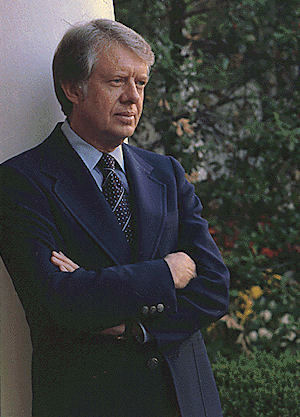
When I started out in the business, despite my knowledge of delta-hedging portfolios of options, I wasn't smart enough to dream-up of "portfolio insurance", nor implement or encourage its deployment in any way. Truth be told, I am often intimidated by Maths PhDs, self-conscious over my incapacity for visualizing anything but the most basic of quadratic functions (I hit "the conceptual wall" in Linear Algebra). And I admit was jealous that I was unable comprehend the beautiful genius of mathematical formula's and risk-analysis validating highly-leveraged (and crowded) carry trades, on for example, the Japanese Yen in 1998. And heaven knows I didn't have the prescience (or wisdom) to ride the most rip-roaring and snorting of bull markets in internet and technology stocks, unlike so many other much-smarter-than-me investors.
It is apparent to me now that I wasn't clever enough to understand the intricate business models or the unmitigated allure supporting the "merchant energy" craze, so I was never accused of being one of the smartest girls in the room, despite the untold billions flushed-away by Mirant, Dynegy, Calpine and Enron. I am so slow that CDOs didn't even register with me until they were near their sell-by date, and never in a million years could I have been so wickedly sharp as to invent the idea of putting a wrapper on them to miraculously transmute a still-steaming pile of dung into scentless triple-A.
In the markets and strategies that I invest (quant equity long vs. short) I almost certainly am one of the dimmer bulbs, blind to the opportunities that applying 10x (or yet higher!!) leverage to crowded trades might afford my P&L, as it might have in the summer of 2007. Despite beginning my professional days in the bullion business, my feeble grey-matter could never have conceived of turning a gold-and-oil-heavy commodities basket cum "index" into a permanent portfolio allocation for pension funds across the USA - a genius ALMOST as brilliant as that which dreamed up the idea of encouraging housewives to buy a box of baking soda, take it home, to immediately flush it down the toilet!
Lacking the requisite creativity, I missed the chance to design something really useful for humanity, like Payament Protection Insurance. I am still in awe of the risk-management intellect behind tail-risk insurance funds. The savvy required to make these attractive when implieds were already highly elevated (historically) and the market had already more-than-a-halved is humbling. I often wonder how I've managed to compete at all! Then, if I wasn't feeling stupid enough, I just need to take one look at luminaries like Galleon, Diamondback, or SAC. Top ivy-league schools, minted MBAs. IB training programs. Couple of years at Och-Ziff or Perry. These guys are so smart, and have had such good returns they just seem to know what is going to happen before it happens! And to think that for all these years, I'd never dreamed of the games one might play with LIBOR!
But far-and-away, the smartest guys, the ones whose certitude, sound logical reasoning, and mathematical notation are (to me) both most impressive and humbling to listen to are the guys (and they ARE guys for only guys can be this brilliant) touting risk-parity strategies. The engineers who've championed them sound soooo clever, and have so many academic letters following their name, one would just have to be a dolt NOT to want to adopt it for your pension plan. Really, who could quibble with the formulaic logic that miraculously gifts you a levered long bond position when it's yield is as close to the ZLB as, ummm errrr, it's EVER been??
It should be comforting to investors everywhere that so many of our best educated minds and brightest talents have chosen to serve investors' interests with such forward-thinking creative imagination. The investment world thus appears meritocratic. In this hierarchy, simpleton's seem to get what they deserve. Looking back to history, to President Carter's "Crisis of Confidence" in 1979, his implied solution was imbued in "redemption" in the biblical sense. I cannot help but wonder whether investors today will discover the same solution with regards to risk-parity and its associated gamma-negativity.
Thursday, June 20, 2013
Let's Play, Financial "Would You Rather...?"
With loadsa' people getting hammered, it might not be a bad time to take a break with your collegaues, grab a Skinny Grande Latte and play: "Financial Would You Rather...?"
Would you rather have Bill Ackman as your largest shareholder or Carl Icahn as your business partner?(All comments and your own Financial Would You Rather Questions welcome...)
Would you rather be caught insider trading by the SEC or accused of goosing LIBOR by the FSA?
Would you rather be a GoldBug or a YenBull?
Would you rather be an American with an undeclared Swiss bank account at UBS in Zurich or a German stashing undeclared income at HSBC in Geneva?
Would you rather be short puts of LULU stock into an earnings announcement or be long of USD/YEN into an Abe press conference?
Would you rather receive a tip-off of a takeover via an e-mail message or a your office landline?
Would you rather be George Osborne or Jeffrey Osborne?
Would you rather be cellmates with Raj Rajaratnum or Bernie Madoff?
Would you rather be short of a stock with extremely high, and decreasing short interest, or long of stock with extremely high and increasing short interest?
Would you rather run an Alpha Capture strategy or be the call before the first call on analyst recommendation changes at your cousin's IB?
Would you rather systematically trade upon the advice of Bob Janjuah or be forced to listen to an endless Q&A Loop with Abbey Joseph Cohen?
Would you rather be long a truckload of leveraged US Govt 30yr zeros or short a truckload of long-dated OTM puts on JGB 10yr bonds ?
Would you rather be investigated by Preet Bharara or pimped out to Eliot Spitzer?
Would you rather pump&dump pennystocks from a boiler-room with a bunch of Russians led by a guy named "Ivan" or shakedown the clinical researchers from your expert network for inside information?
Would you rather take investment advice from Martin Armstrong or Mish Shedlock?
Would you rather have your broker-dealer run by Dick Fuld or your FCM run by Jon Corzine?
Would you rather be short Commodity-currency gamma or long EM beta?
Would you rather invest in a new bond arb fund led by John Merriwether, or a commodity fund launched by Brian Hunter?
Would you rather be a Pension Beneficary of the State of Illinois, or the City of Philadelphia?
Would you rather a listen to market commentary by Dennis Gartman or self-help tapes from NN Taleb
Would you rather lose 33% of your clients money being incredibly and obviously stupid or 45% of your clients' money being unquestionably careless?
Would you rather play another round of this stupid game or get back to watching your hemorrhaging P&L?
Sunday, June 16, 2013
Saturday, June 08, 2013
Deux Chevaux?
I'd long held, from a quick superficial point of view, that France Telecom was cheap. I thought so at 17. And at 14. Even more so at 10. And again at 8. I haven't had a position but have carried the thought nonetheless, and watched with some attention. The reason I've not taken a position is mostly because of my dislike of cratering revenues and earnings forecasts. While the stock has been ahead of the fundamental declines, opportunities have been fleeting, an little has changed to the fundamental scenario, though the stock is, again, in front of fundamentals. Sumzero now thinks it is cheap too. 7x forecast. Outsized yield. Decelerating deceleration in revenues. Goliath status in local markets. Etc.
But before you back up your deux cheveaux (or park it front-wise since it's a rear-engine relic), it would be wise to consider this. I've been a good customer of Chez Orange for several years. Three analog landlines (inbound, fax, alarm circuit), Unlimited Broadband & Livebox TV, Video-on-demand, along with a digital telephone line (used for outbound), as well as two mobiles numbers with unlimited data, a few hours of talk time, and a heavily discounted foreign forfait. The monthly hit for this was roughly Euro160 plus whatever variable calls to daytime mobiles, foreign mobiles, or restricted regulated countries. My American friends tell me this is a serious bargain. My UK experience, and competitive observations suggested this was the wrong price.
So I ambled down to my local Orange kiosk where, despite the much-discussed low morale of engineers deskilled into clerical roles, I found a friendly salesman willing to tolerate my pidgin-French. I also had my trusty, enthusiastic, and more important, bilingual 10 year-old son. I told the Orange representative: "I think I'm paying too much. Let's negotiate". So we went back and forth. Discussed the various options, plans, and bundles. It turns out, France Telecom is keen to decommission the analog lines. If you can afford them, they ARE more reliable, and useful for fax and alarms, but the incentive to cut them is now simply too great. Mobile competitive pressures are finally being felt too. The result: massive, and I mean MASSIVE reductions.
After much discussion, we agreed: kill the analog lines. Move the permanent analog number to the digital line. Port the alarm to the digital line. Continue with unlimited broadband, Livebox WiFi and VoD, and with this package comes move 1 mobile to the bundle, and add the second mobile to the bundle for Euro 10. Total cost for year one: Euro 56/mo., stepping up to Euro61 when an applied discount rolls off. Wow! From Euro160/mo to Euro 55/mo!! OK, Small cuts to mobile minutes and an unobtrusive throttle on broadband for the mobile phones, and the small inconvenience of no fax line (must scan and e-mail), but these were inconsequential in the scheme of things.
Now, I realize that I am not the typical customer. But the revenue drop is eye-popping, and beyond my wildest imagination. And while one shouldn't extrapolate this throughout their businesses, the impact of similar blended revenue deflation is large and palpable and I am unlikely to be amongst the last customers to make such realizations and take action. France Telecom's debt, by contrast, is relatively fixed. And, for the first time in regards to FTE, firsthand, I witnessed how right the market had been fundamentally,and how little conviction I have that this is "in the price".
The stock IS likely ahead of revenue/earnings declines. And it may bounce. But continued revenue and earnings contraction and disappointments coupled with continued likely paring of the dividend means choppy trading and snuffed rallies before ratings will be view more positively. That's my FTE anecdote of the day FWIW...
But before you back up your deux cheveaux (or park it front-wise since it's a rear-engine relic), it would be wise to consider this. I've been a good customer of Chez Orange for several years. Three analog landlines (inbound, fax, alarm circuit), Unlimited Broadband & Livebox TV, Video-on-demand, along with a digital telephone line (used for outbound), as well as two mobiles numbers with unlimited data, a few hours of talk time, and a heavily discounted foreign forfait. The monthly hit for this was roughly Euro160 plus whatever variable calls to daytime mobiles, foreign mobiles, or restricted regulated countries. My American friends tell me this is a serious bargain. My UK experience, and competitive observations suggested this was the wrong price.
So I ambled down to my local Orange kiosk where, despite the much-discussed low morale of engineers deskilled into clerical roles, I found a friendly salesman willing to tolerate my pidgin-French. I also had my trusty, enthusiastic, and more important, bilingual 10 year-old son. I told the Orange representative: "I think I'm paying too much. Let's negotiate". So we went back and forth. Discussed the various options, plans, and bundles. It turns out, France Telecom is keen to decommission the analog lines. If you can afford them, they ARE more reliable, and useful for fax and alarms, but the incentive to cut them is now simply too great. Mobile competitive pressures are finally being felt too. The result: massive, and I mean MASSIVE reductions.
After much discussion, we agreed: kill the analog lines. Move the permanent analog number to the digital line. Port the alarm to the digital line. Continue with unlimited broadband, Livebox WiFi and VoD, and with this package comes move 1 mobile to the bundle, and add the second mobile to the bundle for Euro 10. Total cost for year one: Euro 56/mo., stepping up to Euro61 when an applied discount rolls off. Wow! From Euro160/mo to Euro 55/mo!! OK, Small cuts to mobile minutes and an unobtrusive throttle on broadband for the mobile phones, and the small inconvenience of no fax line (must scan and e-mail), but these were inconsequential in the scheme of things.
Now, I realize that I am not the typical customer. But the revenue drop is eye-popping, and beyond my wildest imagination. And while one shouldn't extrapolate this throughout their businesses, the impact of similar blended revenue deflation is large and palpable and I am unlikely to be amongst the last customers to make such realizations and take action. France Telecom's debt, by contrast, is relatively fixed. And, for the first time in regards to FTE, firsthand, I witnessed how right the market had been fundamentally,and how little conviction I have that this is "in the price".
The stock IS likely ahead of revenue/earnings declines. And it may bounce. But continued revenue and earnings contraction and disappointments coupled with continued likely paring of the dividend means choppy trading and snuffed rallies before ratings will be view more positively. That's my FTE anecdote of the day FWIW...
Monday, June 03, 2013
Valued Advice
Memorandum
To: Bea Wethervane, Senior Consultant, Coxbridge Associates
From: Hugh G. Shortphall, Florida University & College Teachers Pension Fund (FUCT)
Date: 31st May, 2013
Subject: Hedge Fund Allocations
_____________________________________________________________
I've appreciated your valuable advice to our plan over the years. As you know, the path to changes in orthodox investment policy in a plan such as ours is often long and arduous, particularly when trustees and oversight committees are involved. Witness our struggle to add mortgage derivatives, or expand our equity allocations with a dedicated BRIC component which we finally received approval for, and implemented in 2007. Our campaign to add a GSCI Commodity Index component, as per your recommendation, was not easier, though with your help, we finally gained approval for and deployed it in mid-2008. Your 2009 advice to implement a dedicated equity tail-risk program - one that we finally allocated to in Sep 2011 - was a big-step forward towards insuring our Board, Trustees (and plan members) could worry less about funding levels in the event of a market crash.
Over the past few years, you've been tireless supporters of substantially increasing our hedge fund allocations, and, as you know, last year, we recently ramped up these allocations (taking funds from our long equity exposure). I want to say, we trust your advice implicitly in this regard. However, we on the investment committee have been taking a lot of heat lately on this last decision - both at the tactical and the strategic levels. Not a day goes by without our Board and Trustees reading about overly-generous fee structures, poor manager and strategy performance, and asymmetrical division of the resulting aggregate investment return. As the chief internal supporter, I would be grateful if you could "do the rounds" with the Board and Trustees in order to reconfirm the thesis for this last decision in detail - something that would take the heat off me, and to the greatest extent possible, help you when Coxbridge's consulting contract comes up for renewal. In particular, they keep asking me "where are the scheme members' yachts (or Gulfstream IV's)", quoting figures that over the past decade, in aggregate, managers have pocketed $700 billion in gains whilst fund investors have gained a mere $12 billion net of fees. These concerns need to be addressed, and fears assuaged.
On a more positive note, I am pleased to say that as of the beginning of this year, we've finally completed the implementation of your advice to take replace more of our long-only equity with an allocation to several risk-parity managers. Indeed, as of January, levered bonds and reduced equity appear set to make a meaningful contribution to meeting the Plan's actuarial targets.
Wednesday, May 22, 2013
HFM Advertising or How To Take The Management Out of Risk Management
I have advertising in my blood. One of my relatives invented the Coca-Cola's first brand extension. Yet another relation miraculously figured out how to convince housewives to buy boxes of ordinary baking soda and, quite literally, pour them down their drains and flush them down their shiny white toilets. Kerplooosssssshhh. He was paid handsomely for his efforts.
Hedge Fund Management Companies, and their owners, must be salivating at the imminent opportunities advertising will afford their businesses (and please please please will dewey-eyed pseuds use the correct language: 'Hedge Funds' do NOT advertise; 'Hedge Fund Management Companies' are the not-so-altruistic interested parties here).
Traditionally, Managers kept low profiles. They maintained anonymous sounding names, discreet offices, unpretentious business cards and few titles. They rarely gave interviews, to keep their secrets, well.....ummm errrr ....secret. But if you make a billion dollars in a single year, or, less discreetly, do it for several years in a row, it is, it must be said, rather hard to keep you (and your Gulfstream IV and your divorce) out of the limelight.
So as the business of Hedge Fund Management converges with Traditional Asset Management, Hedge Fund Managers must begin the arduous and fickle process of branding, identity, and positioning in what is arguably an increasingly-crowded space. Where does the successful manager start, without taking one's eye off the proverbial investment ball? Not being too mercenary here, I'd suggest you contact Cassandra, who has taken the liberty of conjuring (and be warned, copyrighting) some apt off-the-shelf tag-lines and slogans that capture the bona-fide essence of these truly unique entities that will shortly serve the other 99% of the investing public. (Please feel free to contribute your own in the Comments Section)
Blackstone
"When Everything Is Not Enough"
Blackrock
"Have We Got The Trades For You!!"
Clive Capital
"Working To Help You Try And Make it Back"
Zweig-DiMenna
"Thank God For 'Dead Pet Trusts' "
Henderson (Absolute Return Fund)
"At Henderson, We're Redefining 'Absolute'"
Marshall Wace
"The Closest [Legal] Thing to Getting The Call Before The First Call"
SAC Capital
"Systematically In Front"
IKOS
"Fighting For Return To The Bitter End"
Bridgewater Associates
"We do it OUR way…(And it Works!!)
Campbell & Co
"There are Leaders. And There are Followers. We are Followers."
Greenlight Capital
Paulson Capital
"All It Takes Is One Big Trade"
or
"A Piece of Your Own Private Lottery"
Eclectica Asset Mgmt
"It's The Thought That Counts"
Pershing Square
"'The Squeaky Bird Gets The Worm"
DE Shaw
"We're So Annoyingly Smart…So You Don't Have To Be"
Blue Sky Japan
"We Take The Management Out of Risk-Management"
Citadel Investment
"No Comments. Just Returns."
Appaloosa
"Hedging is for Sissies"
RAB Capital
Helping Investors Make a Small Fortune (Out of a Large One)
Hayman Capital
"Strong Conviction Walks the Line Between Brilliance and Ignominy"
ESL Investments
"Redefining Concentration"
Highfields Capital
"The Keys To Better Returns"
Winton Capital
"Making Trends Your Friends"
Elliot Associates
"We Are Paid To Be Greedy, And We Do Not Disappoint"
Kynikos Assoc
"[A Bit] Smarter Than The Average Bear"
Subscribe to:
Comments (Atom)

 Posts
Posts


I am no apologist for banks, least not for German Banks, who've rarely missed an opportunity to
missjoin a crisis. That said, I do reckon that these presumed obscene numbers and ratios are an artifact of their securities financing business (including liquid markets delta-one and all manner of back-to-back swaps as it is for MS, UBS, and CA). All such undertakings cause a balance-sheet gross up of assets, but take no account of margin or collateral that is the equivalent of (if not superior to) bank equity in regards to financed assets.Consider, for example, if a DB customer deposits $100 at DB, and borrows a further $600 from DB to buy a total of $700 of bonds. DB's core equity is unchanged, but both the assets and liabilities on their balance sheet have increased. But the $100 of equity the client has deposited/pledged/posted is, to the bank, the equivalent (and I'd argue superior to) $100 of core equity because under the terms of the loan, it is "first loss", where the bank maintains strict covenants over the type of collateral, minimum required margin in the acct, rights to liquidate under certain conditions, and so forth. So before the bank loses a penny, the margin must completely evaporate. In practice, demands for additional margin/collateral are issued as soon as agreed thresholds are perforated. Failure to perform triggers a liquidation of positions by the bank, NOT to the detriment of the bank, but to their customer who bears the equity-like risk of the positions. Moreover, it's contiunously marked-to-market, in contrast to a traditional bank loan that is typically unsecured and unmargined initially, slow-moving to reprice, not subject to variation margin, and difficult to call-in or on-sell.
But for all such securities companies who finance positions similarly, this equity/collateral of the client, this equity-like buffer upon which they lend against the entirety customers' position, doesn’t show up on THEIR balance sheet as equity, but rather as a liability, offset by the investment assets held on their clients behalf. No matter that, under the example above, the capital ratio is > than 15% with all the covenant cards proverbially-stacked in their favour. So, a 2% tier-1 to assets ratio is a rather meaningless measure of risk, loss or actual capital sufficiency in relation to it's positions. One would need to know the bank's tier-one equity PLUS customer equity and/or liquid-market collateral held in order to make a sensible apples-to-apples comparison before declaring them a hazard.
Furthermore, financed positions like prime brokerage (as well as repo, delta-one) are typically liquid market instruments. No illiquids. No binary instruments like CatBonds. Sensibly large haircuts and low leverage for concentrated volatile positions (e..g. a Biotech portfolio), outsized position in relation to its historical liquidity, higher, but by no means stupid finance for liquid, well-hedged diversified stuff. Over two decades (speaking as a customer) they have all (DB, MS, GS, UBS, CA) extremely good risk management and control - much better in fact than the oversight of their own prop traders. And they are positively draconian in comparison to the terms of an ordinary commercial bank loan.
Vice-Chairman Hoenig is not the first to scare people with non-apple-to-apple comparisons that dramatically misunderstand the nature of these relatively prudent and well-risk-managed financing businesses (oh god, I know this sounds like an ass-lick straight from "Pseuds Corner" but its true!). Which is not to say they are without risk, but that this risk is not accurately reflected (i.e. severely overstated) in the too-often cited bogus ratios. There are lots of legitimate reasons to take aim at the banks in general, and Deutsche Bank in particular be it LIBOR manipulation, tax fraud, hiding losses, etc., but using a mis-specified capital-to-assets ratio, unfit for purpose, is disingenuine and not one of them - especially if one's purpose is to understand their actual capital position and consequential risk, free from hyperbole.