Would you rather have Bill Ackman as your largest shareholder or Carl Icahn as your business partner?(All comments and your own Financial Would You Rather Questions welcome...)
Would you rather be caught insider trading by the SEC or accused of goosing LIBOR by the FSA?
Would you rather be a GoldBug or a YenBull?
Would you rather be an American with an undeclared Swiss bank account at UBS in Zurich or a German stashing undeclared income at HSBC in Geneva?
Would you rather be short puts of LULU stock into an earnings announcement or be long of USD/YEN into an Abe press conference?
Would you rather receive a tip-off of a takeover via an e-mail message or a your office landline?
Would you rather be George Osborne or Jeffrey Osborne?
Would you rather be cellmates with Raj Rajaratnum or Bernie Madoff?
Would you rather be short of a stock with extremely high, and decreasing short interest, or long of stock with extremely high and increasing short interest?
Would you rather run an Alpha Capture strategy or be the call before the first call on analyst recommendation changes at your cousin's IB?
Would you rather systematically trade upon the advice of Bob Janjuah or be forced to listen to an endless Q&A Loop with Abbey Joseph Cohen?
Would you rather be long a truckload of leveraged US Govt 30yr zeros or short a truckload of long-dated OTM puts on JGB 10yr bonds ?
Would you rather be investigated by Preet Bharara or pimped out to Eliot Spitzer?
Would you rather pump&dump pennystocks from a boiler-room with a bunch of Russians led by a guy named "Ivan" or shakedown the clinical researchers from your expert network for inside information?
Would you rather take investment advice from Martin Armstrong or Mish Shedlock?
Would you rather have your broker-dealer run by Dick Fuld or your FCM run by Jon Corzine?
Would you rather be short Commodity-currency gamma or long EM beta?
Would you rather invest in a new bond arb fund led by John Merriwether, or a commodity fund launched by Brian Hunter?
Would you rather be a Pension Beneficary of the State of Illinois, or the City of Philadelphia?
Would you rather a listen to market commentary by Dennis Gartman or self-help tapes from NN Taleb
Would you rather lose 33% of your clients money being incredibly and obviously stupid or 45% of your clients' money being unquestionably careless?
Would you rather play another round of this stupid game or get back to watching your hemorrhaging P&L?
Thursday, June 20, 2013
Let's Play, Financial "Would You Rather...?"
With loadsa' people getting hammered, it might not be a bad time to take a break with your collegaues, grab a Skinny Grande Latte and play: "Financial Would You Rather...?"


Sunday, June 16, 2013
Saturday, June 08, 2013
Deux Chevaux?
I'd long held, from a quick superficial point of view, that France Telecom was cheap. I thought so at 17. And at 14. Even more so at 10. And again at 8. I haven't had a position but have carried the thought nonetheless, and watched with some attention. The reason I've not taken a position is mostly because of my dislike of cratering revenues and earnings forecasts. While the stock has been ahead of the fundamental declines, opportunities have been fleeting, an little has changed to the fundamental scenario, though the stock is, again, in front of fundamentals. Sumzero now thinks it is cheap too. 7x forecast. Outsized yield. Decelerating deceleration in revenues. Goliath status in local markets. Etc.
But before you back up your deux cheveaux (or park it front-wise since it's a rear-engine relic), it would be wise to consider this. I've been a good customer of Chez Orange for several years. Three analog landlines (inbound, fax, alarm circuit), Unlimited Broadband & Livebox TV, Video-on-demand, along with a digital telephone line (used for outbound), as well as two mobiles numbers with unlimited data, a few hours of talk time, and a heavily discounted foreign forfait. The monthly hit for this was roughly Euro160 plus whatever variable calls to daytime mobiles, foreign mobiles, or restricted regulated countries. My American friends tell me this is a serious bargain. My UK experience, and competitive observations suggested this was the wrong price.
So I ambled down to my local Orange kiosk where, despite the much-discussed low morale of engineers deskilled into clerical roles, I found a friendly salesman willing to tolerate my pidgin-French. I also had my trusty, enthusiastic, and more important, bilingual 10 year-old son. I told the Orange representative: "I think I'm paying too much. Let's negotiate". So we went back and forth. Discussed the various options, plans, and bundles. It turns out, France Telecom is keen to decommission the analog lines. If you can afford them, they ARE more reliable, and useful for fax and alarms, but the incentive to cut them is now simply too great. Mobile competitive pressures are finally being felt too. The result: massive, and I mean MASSIVE reductions.
After much discussion, we agreed: kill the analog lines. Move the permanent analog number to the digital line. Port the alarm to the digital line. Continue with unlimited broadband, Livebox WiFi and VoD, and with this package comes move 1 mobile to the bundle, and add the second mobile to the bundle for Euro 10. Total cost for year one: Euro 56/mo., stepping up to Euro61 when an applied discount rolls off. Wow! From Euro160/mo to Euro 55/mo!! OK, Small cuts to mobile minutes and an unobtrusive throttle on broadband for the mobile phones, and the small inconvenience of no fax line (must scan and e-mail), but these were inconsequential in the scheme of things.
Now, I realize that I am not the typical customer. But the revenue drop is eye-popping, and beyond my wildest imagination. And while one shouldn't extrapolate this throughout their businesses, the impact of similar blended revenue deflation is large and palpable and I am unlikely to be amongst the last customers to make such realizations and take action. France Telecom's debt, by contrast, is relatively fixed. And, for the first time in regards to FTE, firsthand, I witnessed how right the market had been fundamentally,and how little conviction I have that this is "in the price".
The stock IS likely ahead of revenue/earnings declines. And it may bounce. But continued revenue and earnings contraction and disappointments coupled with continued likely paring of the dividend means choppy trading and snuffed rallies before ratings will be view more positively. That's my FTE anecdote of the day FWIW...
But before you back up your deux cheveaux (or park it front-wise since it's a rear-engine relic), it would be wise to consider this. I've been a good customer of Chez Orange for several years. Three analog landlines (inbound, fax, alarm circuit), Unlimited Broadband & Livebox TV, Video-on-demand, along with a digital telephone line (used for outbound), as well as two mobiles numbers with unlimited data, a few hours of talk time, and a heavily discounted foreign forfait. The monthly hit for this was roughly Euro160 plus whatever variable calls to daytime mobiles, foreign mobiles, or restricted regulated countries. My American friends tell me this is a serious bargain. My UK experience, and competitive observations suggested this was the wrong price.
So I ambled down to my local Orange kiosk where, despite the much-discussed low morale of engineers deskilled into clerical roles, I found a friendly salesman willing to tolerate my pidgin-French. I also had my trusty, enthusiastic, and more important, bilingual 10 year-old son. I told the Orange representative: "I think I'm paying too much. Let's negotiate". So we went back and forth. Discussed the various options, plans, and bundles. It turns out, France Telecom is keen to decommission the analog lines. If you can afford them, they ARE more reliable, and useful for fax and alarms, but the incentive to cut them is now simply too great. Mobile competitive pressures are finally being felt too. The result: massive, and I mean MASSIVE reductions.
After much discussion, we agreed: kill the analog lines. Move the permanent analog number to the digital line. Port the alarm to the digital line. Continue with unlimited broadband, Livebox WiFi and VoD, and with this package comes move 1 mobile to the bundle, and add the second mobile to the bundle for Euro 10. Total cost for year one: Euro 56/mo., stepping up to Euro61 when an applied discount rolls off. Wow! From Euro160/mo to Euro 55/mo!! OK, Small cuts to mobile minutes and an unobtrusive throttle on broadband for the mobile phones, and the small inconvenience of no fax line (must scan and e-mail), but these were inconsequential in the scheme of things.
Now, I realize that I am not the typical customer. But the revenue drop is eye-popping, and beyond my wildest imagination. And while one shouldn't extrapolate this throughout their businesses, the impact of similar blended revenue deflation is large and palpable and I am unlikely to be amongst the last customers to make such realizations and take action. France Telecom's debt, by contrast, is relatively fixed. And, for the first time in regards to FTE, firsthand, I witnessed how right the market had been fundamentally,and how little conviction I have that this is "in the price".
The stock IS likely ahead of revenue/earnings declines. And it may bounce. But continued revenue and earnings contraction and disappointments coupled with continued likely paring of the dividend means choppy trading and snuffed rallies before ratings will be view more positively. That's my FTE anecdote of the day FWIW...
Monday, June 03, 2013
Valued Advice
Memorandum
To: Bea Wethervane, Senior Consultant, Coxbridge Associates
From: Hugh G. Shortphall, Florida University & College Teachers Pension Fund (FUCT)
Date: 31st May, 2013
Subject: Hedge Fund Allocations
_____________________________________________________________
I've appreciated your valuable advice to our plan over the years. As you know, the path to changes in orthodox investment policy in a plan such as ours is often long and arduous, particularly when trustees and oversight committees are involved. Witness our struggle to add mortgage derivatives, or expand our equity allocations with a dedicated BRIC component which we finally received approval for, and implemented in 2007. Our campaign to add a GSCI Commodity Index component, as per your recommendation, was not easier, though with your help, we finally gained approval for and deployed it in mid-2008. Your 2009 advice to implement a dedicated equity tail-risk program - one that we finally allocated to in Sep 2011 - was a big-step forward towards insuring our Board, Trustees (and plan members) could worry less about funding levels in the event of a market crash.
Over the past few years, you've been tireless supporters of substantially increasing our hedge fund allocations, and, as you know, last year, we recently ramped up these allocations (taking funds from our long equity exposure). I want to say, we trust your advice implicitly in this regard. However, we on the investment committee have been taking a lot of heat lately on this last decision - both at the tactical and the strategic levels. Not a day goes by without our Board and Trustees reading about overly-generous fee structures, poor manager and strategy performance, and asymmetrical division of the resulting aggregate investment return. As the chief internal supporter, I would be grateful if you could "do the rounds" with the Board and Trustees in order to reconfirm the thesis for this last decision in detail - something that would take the heat off me, and to the greatest extent possible, help you when Coxbridge's consulting contract comes up for renewal. In particular, they keep asking me "where are the scheme members' yachts (or Gulfstream IV's)", quoting figures that over the past decade, in aggregate, managers have pocketed $700 billion in gains whilst fund investors have gained a mere $12 billion net of fees. These concerns need to be addressed, and fears assuaged.
On a more positive note, I am pleased to say that as of the beginning of this year, we've finally completed the implementation of your advice to take replace more of our long-only equity with an allocation to several risk-parity managers. Indeed, as of January, levered bonds and reduced equity appear set to make a meaningful contribution to meeting the Plan's actuarial targets.
Wednesday, May 22, 2013
HFM Advertising or How To Take The Management Out of Risk Management
I have advertising in my blood. One of my relatives invented the Coca-Cola's first brand extension. Yet another relation miraculously figured out how to convince housewives to buy boxes of ordinary baking soda and, quite literally, pour them down their drains and flush them down their shiny white toilets. Kerplooosssssshhh. He was paid handsomely for his efforts.
Hedge Fund Management Companies, and their owners, must be salivating at the imminent opportunities advertising will afford their businesses (and please please please will dewey-eyed pseuds use the correct language: 'Hedge Funds' do NOT advertise; 'Hedge Fund Management Companies' are the not-so-altruistic interested parties here).
Traditionally, Managers kept low profiles. They maintained anonymous sounding names, discreet offices, unpretentious business cards and few titles. They rarely gave interviews, to keep their secrets, well.....ummm errrr ....secret. But if you make a billion dollars in a single year, or, less discreetly, do it for several years in a row, it is, it must be said, rather hard to keep you (and your Gulfstream IV and your divorce) out of the limelight.
So as the business of Hedge Fund Management converges with Traditional Asset Management, Hedge Fund Managers must begin the arduous and fickle process of branding, identity, and positioning in what is arguably an increasingly-crowded space. Where does the successful manager start, without taking one's eye off the proverbial investment ball? Not being too mercenary here, I'd suggest you contact Cassandra, who has taken the liberty of conjuring (and be warned, copyrighting) some apt off-the-shelf tag-lines and slogans that capture the bona-fide essence of these truly unique entities that will shortly serve the other 99% of the investing public. (Please feel free to contribute your own in the Comments Section)
Blackstone
"When Everything Is Not Enough"
Blackrock
"Have We Got The Trades For You!!"
Clive Capital
"Working To Help You Try And Make it Back"
Zweig-DiMenna
"Thank God For 'Dead Pet Trusts' "
Henderson (Absolute Return Fund)
"At Henderson, We're Redefining 'Absolute'"
Marshall Wace
"The Closest [Legal] Thing to Getting The Call Before The First Call"
SAC Capital
"Systematically In Front"
IKOS
"Fighting For Return To The Bitter End"
Bridgewater Associates
"We do it OUR way…(And it Works!!)
Campbell & Co
"There are Leaders. And There are Followers. We are Followers."
Greenlight Capital
Paulson Capital
"All It Takes Is One Big Trade"
or
"A Piece of Your Own Private Lottery"
Eclectica Asset Mgmt
"It's The Thought That Counts"
Pershing Square
"'The Squeaky Bird Gets The Worm"
DE Shaw
"We're So Annoyingly Smart…So You Don't Have To Be"
Blue Sky Japan
"We Take The Management Out of Risk-Management"
Citadel Investment
"No Comments. Just Returns."
Appaloosa
"Hedging is for Sissies"
RAB Capital
Helping Investors Make a Small Fortune (Out of a Large One)
Hayman Capital
"Strong Conviction Walks the Line Between Brilliance and Ignominy"
ESL Investments
"Redefining Concentration"
Highfields Capital
"The Keys To Better Returns"
Winton Capital
"Making Trends Your Friends"
Elliot Associates
"We Are Paid To Be Greedy, And We Do Not Disappoint"
Kynikos Assoc
"[A Bit] Smarter Than The Average Bear"
Monday, May 13, 2013
League of Extraordinary Gentlemen
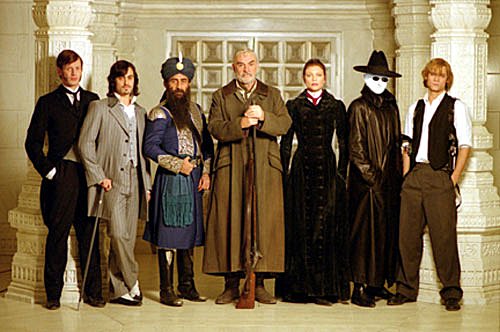
All this makes Porsche's Volkswagen ummm.... errrrr....call it a pecadillo, all the more incredible, and the losses suffered by the investment equivalent of "The League of Extraordinary Gentlemen" all the more schaudenfraudelicious. Larry Robbins prescient Glenview, David Einhorn's wily Greenlight, Halvorsen's mighty Viking, Singer's calculating Elliot Associates, Carlson's swaggering Black Diamond, as well as SAC, Tiger Asia, and Perry, and another more than forty, well-snookered, plaintiffs all got smoked. There were undoubtedly many more, who, like the guy who tried to open a bottle of Champagne with a corkscrew, were too embarrassed to put their name in the lights.
Some think, and argue persuasively that Porsche is well-guilty of outright fraud. I am certainly not qualified to judge the legal merits, but as a detached observer, and one who tries hard NOT to be a

So despite my opening lament, upon reflection, I finish with a tad more optimism, knowing that The League are not infallible, and that they do, from time-to-time, get it horribly wrong. Maybe this should be Martoma's and SAC's defense ("what the hell! i was at RISK!! the Doc coulda been talking out his ass!!). But it also seems that in continuing to pursue the suit to the end that there is a fundamental asymmetry, a lack of sportsmanship in taking one's market lumps. One wonders if Martoma's expert network Doc WAS fabricating material non-public information...would he be sued?
Saturday, April 20, 2013
Another One Bites The Dust (yet another update)
Things, people, and/or ideas believed to have integrity now seemingly compromised...(the second updated and expanded version)
Reinhart & Rogoff
Gold
Jérôme Cahuzac
Japanese Yen
Jamie Dimon/JP Morgan
Bitcoin
Banca Monte dei Paschi di Siena
LULU
IKEA Meatballs
Wen Jiabao as "Humble Servant of The People
Lance Armstrong
Top Ten Lists
NYSE
Facebook
Austerity as an Economic Panacea
Harvard Students' Academic Honesty
BLS Statistics
Cyclical Recovery
Book Reviews
Strong Computer Passwords
Toyota
'Organic' Food
Money Velocity
Patents
Undecided Voters
Hospitals
The Food Pyramid
Purity of '.999 Fine Gold Bars
Penn State Football
"Top of the Pops"
Fareed Zakaria
The "risk-free" rate
LIBOR as a Benchmark
Public Sector Pensions
HFT as a Beneficial Provider of liquidity
Diversifying properties of Hedge Fund's
Einstein's Theory of Special Relativity
Celtic Rangers
Macroeconomic Forecasts
John Paulson
FRB Open Market Operations
Standardized Educational Testing
Swiss National Bank
A Relaxing Cruise
WTI as Oil Benchmark
Olympus Corp.
TEPCO
Payment Protection Insurance
DSK
HM Revenue & Customs
Sony Playstation Network
Google
Privacy
Social Mobility
Actuarial Return Assumptions for Pension Funds
Marmite
Ryan Giggs
Acupuncture
USA Govt AAA
France AAA
Voicemail
Boob Jobs
Snooker
David Einhorn
Nuclear Power
Deepwater Drilling
Tiger Woods
Professional Cricket
Sumo
Professional Cycling
High-Frequency Trading
Professional Baseball
FIFA
Professional Tennis
Municipal Bond Underwriting
The Catholic Church
Track & Field Athletics
NCAA Sports
US Congress
UK Parliament
Analyst Research
Credit Ratings
Banks
Newtonian Physics
The Stock Market
The Food Pyramid
Incentive Stock Options
Reinsurance Brokerage
Lou Dobbs
The Mortgage-Backed Securities Market
Hedge Funds
Social Security
Government Balance Sheets
Tooth Fairy
Errr ummm Professional Wrestling is starting to look good by comparison - at least it makes no pretensions to be anything other than it is. What's left?
Errr ummm Professional Wrestling is starting to look good by comparison - at least it makes no pretensions to be anything other than it is. What's left?
Sunday, April 14, 2013
In Search of Sonmi-451

Indeed, on the latter front, Abe must presently be feeling rather good. Speculators have (to date) done all the heavy lifting - front-runing official intervention, thereby reversing half of the de-risking puke of carry-trades that vaulted the Yen from 115 to 85 back in 2008. It is important to note that this move is convergence upon "normal" from its lingering (and rather dumb, stupid, ludicrous - choose your adjective) divergence caused by the Yen's safe-haven masquerade. What is normal? Licking my finger and sticking it up on the air, I would offer that 105ish would hardly offend anyone official. But who knows. What I do know is that short yen is now the most crowded trade in the world. And if you recall in 1998 and 2008, we all (or should) know how THAT worked out for those left holding the shitbag position. That said, the bank of Japan appears committed to taking everyone out of their positions this time. Or so the thinking goes. Perhaps that is what makes it (to them) such a proverbial lay-up? Short as many Yen as you want (with no cost of carry) and no matter what, the BoJ will allow you to "redeem" your position at a profit (provided you haven't done anything stupid with the proceeds, like, for example, buying French 10-years, or Gold - the former yet to egg investors' faces. But before, as The Cleaner (Harvey Keitel's "Pulp Fiction" character), uttered to Travolta & Samuel L., "Well, let's not start s*cking each other's d!ck$ quite yet!", it is worth contemplating the unpopularity of writing very large 10-digit checks (in dollars!) to hedge funds - many of whom have no qualms themselves using WWII market-torture techniques upon sovereign governments - which will be required for the franking and banking of Speculators paper gains on their aggregate monster positions.
Commentators have been using some rather big and important phrases to describe Abenomics. "....Biggest blah blah blah in generation...", "...blah blah commitment not seen before blah blah", "will ahieve their inflation target of blah blah blah" because blah blah it's different this time blah ..." (these are conjured and not verbatim, but you undoubtedly understand the rhetoric). To be sure a weaker yen will flatter balance sheets from the ginormous overseas investments enterprises have made during the past two decades of industrial hollowing. And currency translation will make income statements look prettier too - both for exporters and those translating external sales and earnings. This will have some virtuous feedback effects as investors raise expectations that may impact stock prices, and even encourage some further investment on tghe margins. But, after all is said and done in whatever timeframe this feedback loop takes to work its way through markets, there is, and I believe, there will remain, a decided lack of demand for money to make physical investments in Japan as the demographic determinism that is Japan's irrefutable course over the next thirty years, bears down upon the population, economy and markets. It is an event that I have no recollection of ever having been witnessed as a result of something wholly voluntary, non-environmental, non-plague, non-externally-induced and non-military related. And to me, it is fast-approaching, coming into closer view like a large and solid rampart-of-a-wall, and printing money is like pissing on the wall in some Joshua-like hope this little stream of urine will bring it down.
Which brings me back to David Mitchell. What Japan needs is NOT monetization, nor Abenomics. What Japan needs is Clonenomics, or more specifically, what Japan needs is Sonmi-451 and her brothers and sisters. Not Asimo - which consumes not - but living, breathing, Clones. Or, if technology is still wanting, or morally repugnant, at least more babies and bodies - lots and lots of little Yoshi's and Kumiko's. New consumers to replace (and support) the old. Immigrants, BTW, work too. In the absence of a concerted policy to this effect, it is difficult (for me) to imagine how QE, or monetization, or any other policy will somehow spur the desired effect is sufficient size to overcome the demographic steeple. Try as I might, it remains, in my mind, fanciful to attach too-high a probability on a profound result. What is likely is that - as before - these attempts will find themselves goosing asset prices in unexpected places until .... the next puke.
Friday, April 05, 2013
On Bitcoin....
Ocassionally, an image can describe a phenomena better than words. Not often, but sometimes....

Thursday, March 28, 2013
Path to the Ignoble Investment Hall of Fame
And so yet another long/short equity fund launches. Good luck, and I wish you success with your investments and the growth of your company. Ummm, just one question. Your press release states you will "target an annual return of between 15 and 25%", presumably buying shares you think will go up and selling shares you think will, in a perfect world, go down, or, at worst, go up less. I just want to know: How the frick do you "target" long/short returns on a calendar-year basis in the equity market!!?!?? And you are not alone in purporting to whip up this secret return sauce ex-ante. Surely you mean that you are "expecting" returns of 15 to 25% and hopefully, this expectation will be based upon historical experience over a sufficiently long and diverse period, as well as a dumb strategy composite that at the very least might provide a benchmark. Not that investors should expect there to be any correlation between YOUR expected returns and your actual returns. Indeed, if one had $5 (not the inflation in the metaphor) for every basis point drift on every managers' expected versus actual, one would be rather well-off. But if one really does target return, one would surmise that there are conditions under which you would have no positions, or others in which your returns would be much much bigger, and that you could, would or should target returns of 100%. Or mightn't you just keep an eighth to a quarter of the position so you could continue to "target 15 to 25%"??!? Or maybe, should volatility become comatose, and expected returns get squeezed quite low, you might employ mondo-mondo leverage in order to achieve your target, kinda like Merriweather and LTCM did in 1998 (and Merriweather did yet again with JWM). THIS, I suspect, is the problem with targeting return. It could - and often does - lead you right into the Absurdist Wonderland of Nonsene for those silly enough to religiously pursue such a course.
I reckon the truth, in long/short equity where one is following a strategy which is not the equity equivalent of the Grand Unified Theory , is that one cannot target jack-shit. The market giveth what it does, when it wants to, and it will laugh - often derisively - until you and the majority of others cry proverbial "Uncle!". And if its in the mood, it will carry out those that follow the taken and position accordingly thereafter, before yielding. Allocate accordingly, attenuate your leverage depending upon your orientation to the ever-present tail risk, take what the market gives you, but for heaven's sake, don't target return, and just get rid of it (along with the meaningless attempt-to-impress summation of the Management Team's aggregate years of experience) from any and all published material else your potential investors think of YOU in the same sentence as the Investment Ignoble Hall -of-Famer, John Merriweather.
I reckon the truth, in long/short equity where one is following a strategy which is not the equity equivalent of the Grand Unified Theory , is that one cannot target jack-shit. The market giveth what it does, when it wants to, and it will laugh - often derisively - until you and the majority of others cry proverbial "Uncle!". And if its in the mood, it will carry out those that follow the taken and position accordingly thereafter, before yielding. Allocate accordingly, attenuate your leverage depending upon your orientation to the ever-present tail risk, take what the market gives you, but for heaven's sake, don't target return, and just get rid of it (along with the meaningless attempt-to-impress summation of the Management Team's aggregate years of experience) from any and all published material else your potential investors think of YOU in the same sentence as the Investment Ignoble Hall -of-Famer, John Merriweather.
Monday, March 18, 2013
Cork-Screwed?
Often, when one sees something incredibly absurd - one struggles to find a logical explanation. "The Dartford Crossing" is one such infuriatingly-stupid example that should make both economists and motorists weep.
To being with, the UK, has few toll roads. Road license fees and petrol taxes ostensibly are meant to fund the upkeep and maintenance of highways. Outside of the M6, and a handful of bridges/tunnels, there are no additional usage fees outside the taxes/fee mentioned. This is both good and bad. No tolls certainly speeds traffic. But it also provides a hidden subsidy lowering transport costs, suffers from the tragedy of the commons where every stray beer-can and plastic shopping finds its way to roadside, and there is little incentive to maintain roads which are potholed and it seem chronically underfunded and poorly-maintained. There are also fairness issues associated with this. The French, by contrast, have gone the private route for their major arteries, which delivers a large network of amazingly smooth, quiet, clean, safe roads, with excellent technological investment and adoption to further speed the flow, albeit at eye-wateringly expensive prices of something like EUR10 per hundred km. One need only take the A6 out of Paris from the Porte d-Orleans in order to experience the difference between the public and private management. And though there are the occasional "bouchon" (cork=traffic jam), price DOES keep people (and HGVs) off the motorways, and there is choice with the N-roads or "Route National" adjacent to most motorways that remain free, though subject to congestion, and vagaries of local traffic. Switzerland takes a somewhat middle ground, adopting a peculiarly Swiss-style solution: the Vignette. This is a CHF45 annual decal one must affix to their windscreen if they wish to use the (generally clean, safe and well-kept) motorways. Excepting those crossing the border into Switzerland via a motorway who are forced to buy one by commercially-minded border guards, it relies on the honor system, with harsh penalties for rule-breakers. The result is a hybrid pay-by-use with the efficiency gains that result from eliminating toll booths and collection bottlenecks. Their alternatives are typically more limited by the geography of Switzerland, and in any event HGVs (trucks) are often forced to traverse the nation via the rail network, or take a large and long detour through France or Austria.
Now, back to Dartford. The day I am sitting for half-an-hour in a tailback caused by toll-collection, I read an article extolling transport pricing's positive externalities. In it, Krugman is thankful for a VoxEU piece quantifying the benefits of investment in public transport, and road pricing in causing people to switch to public transport. All well and good. Dartford's tolls were kept ostensibly as a means to use pricing to discourage use, as much as they were kept to generate revenue for a threadbare Treasury. But Dartford is the ONLY passage to the east of London (that is not a boat), and it is the most critical and vital link in the ring-road around London, and the only way for HGVs to get to and from the Channel Tunnel. There are no rail links or alternative routes. In effect, the supply curve is completely inelastic, and so too, are the demand curves. The only result from toll collection is the cause of massive negative externalities in the form of endless traffic jams, pollution, inefficient lost output and waiting time, and increased consumption of fossil fuel. There is are no redeeming qualities to the imposition of tolls (the infrastructure has been paid for and then some) other than pecuniary short-term gain to the Treasury at the expense of massive negative externalities. It makes you want to rip your hair out. Worse still given the inelastic demand and supply curves, they charge during the busiest times yet waive the charge when its empty, when, the public interest would be served by the opposite: making it free and zooming everyone through when its busy and charging when it's empty, and the negative externalities are greatly diminished.
Am I missing something? Analysis by more competent economists would be appreciated....
To being with, the UK, has few toll roads. Road license fees and petrol taxes ostensibly are meant to fund the upkeep and maintenance of highways. Outside of the M6, and a handful of bridges/tunnels, there are no additional usage fees outside the taxes/fee mentioned. This is both good and bad. No tolls certainly speeds traffic. But it also provides a hidden subsidy lowering transport costs, suffers from the tragedy of the commons where every stray beer-can and plastic shopping finds its way to roadside, and there is little incentive to maintain roads which are potholed and it seem chronically underfunded and poorly-maintained. There are also fairness issues associated with this. The French, by contrast, have gone the private route for their major arteries, which delivers a large network of amazingly smooth, quiet, clean, safe roads, with excellent technological investment and adoption to further speed the flow, albeit at eye-wateringly expensive prices of something like EUR10 per hundred km. One need only take the A6 out of Paris from the Porte d-Orleans in order to experience the difference between the public and private management. And though there are the occasional "bouchon" (cork=traffic jam), price DOES keep people (and HGVs) off the motorways, and there is choice with the N-roads or "Route National" adjacent to most motorways that remain free, though subject to congestion, and vagaries of local traffic. Switzerland takes a somewhat middle ground, adopting a peculiarly Swiss-style solution: the Vignette. This is a CHF45 annual decal one must affix to their windscreen if they wish to use the (generally clean, safe and well-kept) motorways. Excepting those crossing the border into Switzerland via a motorway who are forced to buy one by commercially-minded border guards, it relies on the honor system, with harsh penalties for rule-breakers. The result is a hybrid pay-by-use with the efficiency gains that result from eliminating toll booths and collection bottlenecks. Their alternatives are typically more limited by the geography of Switzerland, and in any event HGVs (trucks) are often forced to traverse the nation via the rail network, or take a large and long detour through France or Austria.
Now, back to Dartford. The day I am sitting for half-an-hour in a tailback caused by toll-collection, I read an article extolling transport pricing's positive externalities. In it, Krugman is thankful for a VoxEU piece quantifying the benefits of investment in public transport, and road pricing in causing people to switch to public transport. All well and good. Dartford's tolls were kept ostensibly as a means to use pricing to discourage use, as much as they were kept to generate revenue for a threadbare Treasury. But Dartford is the ONLY passage to the east of London (that is not a boat), and it is the most critical and vital link in the ring-road around London, and the only way for HGVs to get to and from the Channel Tunnel. There are no rail links or alternative routes. In effect, the supply curve is completely inelastic, and so too, are the demand curves. The only result from toll collection is the cause of massive negative externalities in the form of endless traffic jams, pollution, inefficient lost output and waiting time, and increased consumption of fossil fuel. There is are no redeeming qualities to the imposition of tolls (the infrastructure has been paid for and then some) other than pecuniary short-term gain to the Treasury at the expense of massive negative externalities. It makes you want to rip your hair out. Worse still given the inelastic demand and supply curves, they charge during the busiest times yet waive the charge when its empty, when, the public interest would be served by the opposite: making it free and zooming everyone through when its busy and charging when it's empty, and the negative externalities are greatly diminished.
Am I missing something? Analysis by more competent economists would be appreciated....
Friday, March 15, 2013
Prospecting
In a world where formerly hated assets are on fire, gold miners remain hanging from the investment equivalent of the naughty-tree. Despite the hate mail that routinely stuffs my inbox from the people offended by my occasional mocking views of gold itself, I would highlight that my views on the shiny yellow metal have never been "personal", but are on par with the same healthy skeptical treatment I give to any asset class or investment that has been touted, bought, annointed with deity-like powers, spawning an entire industry of proponents whose opinions, by nature of their conflicted interest, are more than worthless to the would-be investor. As for the relative investment thesis, Mr Buffett did a fine job of articulating the advantage of attractively-price assets with cash-flow (and growth potential) versus inert but highly conductive lumps of metal dug out of the ground only to be re-buried.
All of that said, the miners are cheap by any backward, forward or relative measure. Their businesses are enviable - despite rising costs, poor management and shooting themselves in the foot - insofar as costs remain low by comparison with what they sell their product for. And they are hated. Lowly-leveraged. And under-owned. All this while their natural admirers (who I have known to mock) are hoarding last-year's coins, bars and ingots. The investment non-sequitir, of course, is that the so-called great rotation into stuff, is ignoring this gold mining stuff. Now I understand the overcapacity in iron ore, and other non-ferrous things, on top of concern about the condition of their largest consumer. Yet, the market cannot have it both ways: bidding up stuff for debasement fear on hand, and avoiding it for the opposite fear on the other. Puzzling. Yet, if it be stagflation that emerges as our nemesis, it would seem to me that the spreads between certain heavy industrial cash-flow yielding assets on one-hand, and gold mining concerns on the other, would - in the medium term - be unsustainable. For you don't have to love gold to like gold miners: just not HATE (note the upper case emphasis) it.
Thursday, March 07, 2013
Take The Zero-Hedge Test
Being permanently bearish on equities definitely pays.
Just ask Zero-Hedge. Unfortunately, for wool-dyed pessimists and the other overly-skeptical black sheep of the thundering herd, it pays apocalyptic newsletter writers' paychecks, and Zero-Hedge/Tyler Durden's Manhattan bar tabs rather than those who permanently position against market priapism. And it's worse than zero-sum because those who are optimistically-challenged often pay for the bad advice - whether directly in subscriptions, inflated margins on retail bullion products, or indirectly via page-views and click-throughs AND then they get hosed by the market.
The first step to improving behaviour toxic to one's own self interest is admit one has a problem. As an aid to help those who have difficulty in distinguishing "a bearish trade" from "the lead boots of anger and pessimism", I've devised a little something I call the Zero-Hedge Test to determine more precisely whether readers objective realities are sufficiently paranoid, pessimistic, anti-social and rantingly angry to warrant more serious help.
Instructions: Circle the letter that best describes the adjacent image:

a. a glass of water
b. glass of water, half-empty
c. glass of water, half-full
d. glass of errrr ummm , Grey Goose vodka? (NB: ed. choice)
e. The US Government must have stolen half of a glass of water.
 a. First black elected (and first to be re-elected) President of the USA
b. Barack Hussein Obama
c. A Former Senator from Illinois
d. tall guy who used to like to sneak a cigarette now & then
e. Jezebel, dark Sith Lord Vader Emperor & Chief of the Plunge Protection Team. Odious non-American african muslim responsible for taking away our world-beating healthcare, encouraging the immigrants and foreigners who took our our jobs, and formulating a secret plan to put two-dads in every home .
 a. Something that still buys a 12oz can of Coca-Cola
b. A greenback, worth a dollar, which, on average, an American is paid each 4 minutes of work
c. A US Federal Reserve Banknote almost universally accepted in exchange for goods and services the world over
d. A cocaine hoovering apparatus c1978
e. Worthless fiat toiletpaper, so useless that bric-a-brac, watches, baseball cards or bitcoin should be more preferred than this P.o.S. that forms part of the elders of Zion grand plan to steal your labour savings before eating your babies.
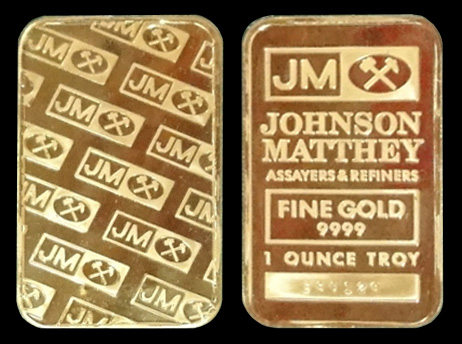 a. six would-be wedding bands
b. 1oz novelty of pure gold smelted by JM
c. Au = element #79 on Periodic Table
d. Reward for a 9.59 sec 100m
e. The solution to all our financial problems...changer of men from liberal faggot zionist atheist swine into god-fearing hardworking people of fortitude and rectitude...curer of cancer, balancer of budgets....purifier of all our precious bodily fluids and divinely-given laws....come, my preciousssss...
 a. ummm Europe?
b. Site of the war which was believed to be the war to end all wars (excepting the worse one that immediately followed)
c. Continent with mix of culture, cuisine, history, engineering, and civilized living standards
d. A place for Brits to go on holiday
e. Socialist commie cesspit of looney bureaucrats, unworkable financial alliances, gulag-healthcare systems, leading the world in obstinate unions, lazy workers, regulatory morass and geographical epi-center of the soon-to-be-arriving disintegration of civilized life on earth.
 a. a bull market
b. an uptrend
c. a squiggly line
d. reflection of long-term (nominal) growth
e. an accident waiting to happen caused by insane, stupid, or insanely stupid people, or conspirators doing insane and stupid things that will end very very badly with the dystopian destruction of the civilized economy as we know it and reversion to an economic life of warlords and barter using nuggets of gold and silver as portrayed in that film with Kevin Costner, "The Postman"....
 a. beginning of a 5-year bull market
b. beginning of an uptrend
c. a squiggly-line
d. technical reversal of severely oversold position
e. an obvious orchestrated short-squeeze caused by the elders of zion and their 0.1% lackeys controlling the Soros-Rubin-Banker-Fed-Axis pulling the levers at the Fed Plunge Protection Team for the sake of enriching their cabal whilst duping and hiding the truth of how the rich steal money from hardworking ordinary Americans
 a. a pooled investment in Gold
b. a low-cost alternative to buying, holding, storing & insuring physical commodities
c. an easy liquid way to bet on the price of gold
d. useful asset allocation tool for diversification
e. a conspiracy to defraud honest hard-working speculative investors who've put their hard-earned savings into physical bullion held at secure vaults outside the USA, who have been cheated by the depressing influence these instrument have on the physical gold price by diluting the buying power which would otherwise raise the price of Gold benefitting all the other paranoid gold-bugs and survivalists who've already bought physical bullion in the form of coins at significant premiums or for delivery in a secure vault outside the USA.
 a provider of goods for the shelves of Walmart
b. ambitious nation that has (for the moment) successfully lifted hundreds of milllions of her citizens out of poverty
c. future demographic bomb resulting from 1-child policy
d. one of the oldest civilizations who made fine silks when most europeans were donning animal skins
e. yellow peril mercantilist currency manipulator who took our jobs (please watch -C.) who are taking the places of children of hard-working americans at our top universities and the trading rooms on Wall Street, and who are taking over ownership of our country
 a. a man with a beard
b. Nobel-prive winning economist
c. Princeton Prof & contentious NYT columnist
d. Consistent proponent of the view that it is better to try to grow rather than austerity our way out of economic depression.
e. A liberal faggot anti-christ he-Devil, devoted to Keynes and insulting to the spirit of the greatest economist of all time: Ludvig von Mises causing vilifiers to wonder why the USA Govt can increase its credit card bill, when if they do it (individually), they just get mean letters from Capital One or the card-services department at their bank; just wants to take the money of hardworking Americans and give it to entitlement-cheats who make babies to collect welfare and food stamps so they can buy drugs and Fritos (in that order).
 a. impractical fashion trend
b. An accessory when listening to late-night radio
c. a joke from ser. 6, ep. 6 of Big Bang Theory
d. art project c.1977 gone very wrong
e. an important tool in preventing aliens and the American government from influencing your thoughts and controlling your brain which is one of the best kept secrets along with the PPT, George Soros' role as the leader of the conspiracy by the Elders of Zion to take over the world financial system and rule the world and keep the hard-working man dumb and stupid and rig the system against hard-working Americans.
How to Score:
a=1pt; b=1pt; c=1pt; d=1pt; e=5pts
Interpreting the results:
0 - 11 - Surely a grad from an effeminate liberal east-coast university
12 - 22 - Got some financial redneck potential in you
23 - 33 - Wishing you had a Kazcynski-cabin of your own?
34 - 44 - Likely owner of guns, ammo, & survivalist subscriber
45 - 55 - Honorary Fight Club Member; NB: The NSA is watching you...
Just ask Zero-Hedge. Unfortunately, for wool-dyed pessimists and the other overly-skeptical black sheep of the thundering herd, it pays apocalyptic newsletter writers' paychecks, and Zero-Hedge/Tyler Durden's Manhattan bar tabs rather than those who permanently position against market priapism. And it's worse than zero-sum because those who are optimistically-challenged often pay for the bad advice - whether directly in subscriptions, inflated margins on retail bullion products, or indirectly via page-views and click-throughs AND then they get hosed by the market.
The first step to improving behaviour toxic to one's own self interest is admit one has a problem. As an aid to help those who have difficulty in distinguishing "a bearish trade" from "the lead boots of anger and pessimism", I've devised a little something I call the Zero-Hedge Test to determine more precisely whether readers objective realities are sufficiently paranoid, pessimistic, anti-social and rantingly angry to warrant more serious help.
Instructions: Circle the letter that best describes the adjacent image:
a. a glass of water
b. glass of water, half-empty
c. glass of water, half-full
d. glass of errrr ummm , Grey Goose vodka? (NB: ed. choice)
e. The US Government must have stolen half of a glass of water.
b. Barack Hussein Obama
c. A Former Senator from Illinois
d. tall guy who used to like to sneak a cigarette now & then
e. Jezebel, dark Sith Lord Vader Emperor & Chief of the Plunge Protection Team. Odious non-American african muslim responsible for taking away our world-beating healthcare, encouraging the immigrants and foreigners who took our our jobs, and formulating a secret plan to put two-dads in every home .
b. A greenback, worth a dollar, which, on average, an American is paid each 4 minutes of work
c. A US Federal Reserve Banknote almost universally accepted in exchange for goods and services the world over
d. A cocaine hoovering apparatus c1978
e. Worthless fiat toiletpaper, so useless that bric-a-brac, watches, baseball cards or bitcoin should be more preferred than this P.o.S. that forms part of the elders of Zion grand plan to steal your labour savings before eating your babies.
b. 1oz novelty of pure gold smelted by JM
c. Au = element #79 on Periodic Table
d. Reward for a 9.59 sec 100m
e. The solution to all our financial problems...changer of men from liberal faggot zionist atheist swine into god-fearing hardworking people of fortitude and rectitude...curer of cancer, balancer of budgets....purifier of all our precious bodily fluids and divinely-given laws....come, my preciousssss...
b. Site of the war which was believed to be the war to end all wars (excepting the worse one that immediately followed)
c. Continent with mix of culture, cuisine, history, engineering, and civilized living standards
d. A place for Brits to go on holiday
e. Socialist commie cesspit of looney bureaucrats, unworkable financial alliances, gulag-healthcare systems, leading the world in obstinate unions, lazy workers, regulatory morass and geographical epi-center of the soon-to-be-arriving disintegration of civilized life on earth.

b. an uptrend
c. a squiggly line
d. reflection of long-term (nominal) growth
e. an accident waiting to happen caused by insane, stupid, or insanely stupid people, or conspirators doing insane and stupid things that will end very very badly with the dystopian destruction of the civilized economy as we know it and reversion to an economic life of warlords and barter using nuggets of gold and silver as portrayed in that film with Kevin Costner, "The Postman"....
b. beginning of an uptrend
c. a squiggly-line
d. technical reversal of severely oversold position
e. an obvious orchestrated short-squeeze caused by the elders of zion and their 0.1% lackeys controlling the Soros-Rubin-Banker-Fed-Axis pulling the levers at the Fed Plunge Protection Team for the sake of enriching their cabal whilst duping and hiding the truth of how the rich steal money from hardworking ordinary Americans
b. a low-cost alternative to buying, holding, storing & insuring physical commodities
c. an easy liquid way to bet on the price of gold
d. useful asset allocation tool for diversification
e. a conspiracy to defraud honest hard-working speculative investors who've put their hard-earned savings into physical bullion held at secure vaults outside the USA, who have been cheated by the depressing influence these instrument have on the physical gold price by diluting the buying power which would otherwise raise the price of Gold benefitting all the other paranoid gold-bugs and survivalists who've already bought physical bullion in the form of coins at significant premiums or for delivery in a secure vault outside the USA.
b. ambitious nation that has (for the moment) successfully lifted hundreds of milllions of her citizens out of poverty
c. future demographic bomb resulting from 1-child policy
d. one of the oldest civilizations who made fine silks when most europeans were donning animal skins
e. yellow peril mercantilist currency manipulator who took our jobs (please watch -C.) who are taking the places of children of hard-working americans at our top universities and the trading rooms on Wall Street, and who are taking over ownership of our country
b. Nobel-prive winning economist
c. Princeton Prof & contentious NYT columnist
d. Consistent proponent of the view that it is better to try to grow rather than austerity our way out of economic depression.
e. A liberal faggot anti-christ he-Devil, devoted to Keynes and insulting to the spirit of the greatest economist of all time: Ludvig von Mises causing vilifiers to wonder why the USA Govt can increase its credit card bill, when if they do it (individually), they just get mean letters from Capital One or the card-services department at their bank; just wants to take the money of hardworking Americans and give it to entitlement-cheats who make babies to collect welfare and food stamps so they can buy drugs and Fritos (in that order).
b. An accessory when listening to late-night radio
c. a joke from ser. 6, ep. 6 of Big Bang Theory
d. art project c.1977 gone very wrong
e. an important tool in preventing aliens and the American government from influencing your thoughts and controlling your brain which is one of the best kept secrets along with the PPT, George Soros' role as the leader of the conspiracy by the Elders of Zion to take over the world financial system and rule the world and keep the hard-working man dumb and stupid and rig the system against hard-working Americans.
How to Score:
a=1pt; b=1pt; c=1pt; d=1pt; e=5pts
Interpreting the results:
0 - 11 - Surely a grad from an effeminate liberal east-coast university
12 - 22 - Got some financial redneck potential in you
23 - 33 - Wishing you had a Kazcynski-cabin of your own?
34 - 44 - Likely owner of guns, ammo, & survivalist subscriber
45 - 55 - Honorary Fight Club Member; NB: The NSA is watching you...
Monday, March 04, 2013
Golden Nuggets

To say that a good idea attracts imitators is to reveal (in the words of former RJR CEO F. Ross Johnson) a blinding glimpse of the obvious. And so from the first spread-betters like IG Index, arbing the UK tax code, we now have hundreds of imitators, each offering global market access, tight spreads, sexy-GUIs (shame on you for thinking that's in any way perverted!), and up to 1000-to-1 leverage (now THAT'S perverted!).
However, it is not the imitators but the wackiness and direction that things are moving. Take for example "Banc de Binary", who annoyingly has been monopolizing the banner ad space across my browser (thanks Google!). They call themselves (in the spirit of uber-bullshit) "Private Option Bankers", but it's merely an on-line bucket-shop specializing in rainman-like options. There is no mention of THEIR internalization, risk-management or hedging or their capital ANYWHERE, though, from their glossies, there appears to be lots of croupiers , ooops I mean "experts" ready to help you place your bets errr ummm I mean trades. Call me old school, but in my book it is almost always better to be a seller of insurance than a buyer, and better to be the house than the punter excepting when one is exposed to mandated or life-threatening unhedgable risks that one can ONLY mitigate via insurance. Our friendly "PRivate Option Bankers" however, have managed to combine BOTH aspects into one business. It is, of course, highly predatory, and I will wager this "banc" will NOT be a household name in 10 years next to Ameritrade or Schwab.
Predation raises the good question of who or what is their market. It's likely the same as another big-spender with their annoying Flash ads occupying yet more of my banner ad-space (cycling with the binary bank) on my browser - one called Inter-Trader.Com What exacty is is Inter-Trader.com? Have a look. Is it just another on-line bucket-shop? Is it about investing? Is it about trading? Is it about gambling? Is it a about partying? It seems to be all of these things! Just read the "About" section:
InterTrader Limited is part of the bwin.party family.
bwin.party was formed from the merger of bwin Interactive Entertainment AG and PartyGaming Plc in April 2011 to create the world’s largest listed online gaming company.
For further information go to www.bwinparty.com
So, there you have it: the prescient and growing on-line financial buccaneer encompasses investment, trading, gambling, entertainment, gaming and partying online all rolled into one - though not necessarily in that order. To reorder them in terms of likely target customer profile it might be: Gambling, gaming, entertainment, trading, partying, and that's it. Sadly, FWIW, we don't see the word Investment too much in their website.
All this begs the question: how will banks and securities firms respond to customers' seeming demands for entertainment and hedonism while investing? There is nothing worse than than the slow and painful torture of watching one's customers drift away without effective response. Bear Stearns (and others) have tried hiring entertainers (at least that's what they called former Fed Governor Wayne Angell when he was their lead currency strategist). I leave that one open for you to provide the requisite "strategic advice"...
Friday, March 01, 2013
What is a Banker?



Friday, February 15, 2013
God's Honest Truths
It's the God's honest financial truth that....
...central banks know exactly what they are doing
...Stock Beta's are stable
...SAC doesn't tolerate trading on material non-public information
..."Expert networks" do not violate insider trading boundaries
..."Chinese walls" are effective in protecting the sanctity of information
...Wall St. sell-side research is far more accurate than flipping a coin
...I can't wait to fund the HF launch or yet another recently-minted-MBA with a couple of years at OZM or similar.
...VAR is the most useful of risk measure (and it cures traders' hemorrhoids too!)
...A HF Compliance Department's role is make sure rules and regulations are followed
...Fed bond buying is not distorting the long end of credit markets
...Brokers never front-run large customer orders
...Volatility is a good indicator of risk.
...Tail Risk Funds are a good way to protect against downside risk in equities
...Securities firms are typically innocent when they settle a claim but "neither admit nor deny guilt"
...FX Bucket shops place high priority on their customers' interests
...There is no relationship between campaign finance and political influence
...HFT is inherently good for markets
...Risk-parity strategies are long-gamma and will not prove systemically destabilizing
...Hedge Funds represent good value for investors
...Monster success in the investment business is 95% skill and 5% luck.
...Price momentum makes perfect economic sense.
...Hedge Fund Managers receive fair compensation for their work
...When I want level-headed analysis of financial markets I go to Zerohedge
...The CPI accurately represents the median household's experienced rate of inflation
...Public Sector Defined Benefit Pension & Healthcare promises are inviolable
...Former AIG CEO Hank Greenberg is not bitter
...Fragmentation of equity trading venues has been boon for investors
...Golden Sachs is a fun place to work
...There is a cabal of puppet-masters who conspire to manipulate the Gold and Silver markets down, in their spare time they manipulate the US Equity market higher.
...US Military spending is justified by global security threats
...Things would be much better if the world were on a Gold Standard. Oh and BTW fiat money also causes rickets.
...SAC pays the highest commissions for the good NCAA chit-chat and the friendly service
...2&20 is the best way to align investors' interests with their agents
...No public interest is the best public interest
...A GPs carried interest, without doubt, should remain capital gains and not income
...What goes up must come down
...Insider Trading should be legalized.
...PE's use of high interest expense to transfer profits to offshore affiliates doesn't damage the public interest.
...The majority of retail FX traders don't blow up
..."Privatizing profits and socializing losses" makes an excellent foundation for US healthcare policy
...Tax rates and revenues in the US are historically high, ergo, it is expenditure that needs to be cut
...Cutting Govt spending in a downturn in order to cut budget deficits narrows fiscal shortfalls
...Investment Managers always tell the truth when explaining their "process"
...Oligopolists rarely collude
...Wall St. security analysts are adept at avoiding hackneyed metaphors in their research reports
Wednesday, February 13, 2013
Sharp Ratio Redefined
A Fund tear sheet came across my desk yesterday that caught my attention. It was from the bluest of blue-chip shops - a household name in the HF world touting a multi-system trend-following offering. What caught my eye was their incredible Sharp Ratio (TM by me). In case you think I've made an error, read on. Putting aside the five years of of impressive pro-forma modeled returns juxtaposed against their four years of less-than-pedestrian actual returns, yielding an actual Sharpe Ratio that was within a pubic-hair of zero, and a negative Sortino, with returns that would be challenged to best CP rates over the period of actual investment, their Sharp Ratio remained one of the best I've ever encountered. What then precisely IS the Sharp Ratio? The Sharp (sans "e" of the Nobel laureate) is the ratio of legalistic dross, explanatory footnotes, disclaimers etc. for every imaginable global jurisdiction prepared by razored lawyers and marketing minions in relation to the actual financially descriptive information contained in the tear-sheet. By this estimation, this Global Trading Fund's offering boasted a Sharp of 9. Yes, nine pages of unintelligible floatsam supporting a page detailing ostensibly undesirable returns with heightened risk! Oh, how the mighty have fallen, and and my condolences to the sods whose dead money remains in that kafka-esque eddy. When does one simply pull the plug rather than spend the resources to increase the Sharp Ratio?
Thursday, January 31, 2013
Elemental Insider Trading - Mid-Term Exam
Mid Term Examination
Graduate School of Business,
Dept of Financial Contrapreneurship
Adjunct Prof. D. Levine
MBA Course: 501 : Elemental Insider Trading
Student Name____________________ Date____________________________
Instructions: Examinations will be disclosed to all students at the same time. No penalties will be given for students who manage to obtain the exam before disclosure (either in part or in whole) unless incontrovertible evidence can be established as to one's guilt. Perfect test scores will not be considered proof of cheating, however, students who ARE caught red-handed will be made an example of, sent before a disciplinary council and will have their Graduate Student Common Room privileges immediately suspended.
1. "More's Law" of insider trading hypothesizes the relationship between
(a) Trading Intel stock based upon your expert network and receiving a Wells Notice for inside trading
(b) The frequency one trades on inside information with the likelihood that one will be caught
(c) The relative size of one's typical inside trade to one's uninformed trade with the likelihood one will be caught.
(d) The amount of commission one pays his broker with the probability of receiving the first call before the first call
(e) The more money one has to the ability to better-lawyer oneself in order to avoid getting caught or weasel out if one is indicted
2. Insider Trading that contravenes existing laws is far from homogenous. It manifests itself in many shapes and sizes. Match the phrase from Column-A which most closely matches the transgression of the Perps in Column-B, by placing the correct name from Column-B in the center line:
--------A---------------------------B--------------
misappropriation____________________Vincent Chiarella
fiduciary breach____________________Raj Rajaratnum
an inside job_______________________Martin Lipton
sense of entitlement________________The Wily Brothers
friendly advice_____________________SAC/Matthew Martoma
back-scratching_____________________Joe Nacchio
Great Train Robbery_________________David Einhorn
organized conspiracy________________Martha Stewart
financial doping____________________Sam Waksal
opportunistic shoplifting___________Rajat Gupta
f*ck compliance!____________________Todd Newman
3. What statement most closely approximates the insider-trading equivalent of the US Military's "Don't Ask - Don't Tell" policy?
(a) "Your BEST ideas...Just give me your 'BEST, MOST CERTAIN, CAN'T LOSE IDEAS'"
(b) "You're paid to perform: how you do it is your own business"
(c) "Whatever you do, DO NOT bring me into your circle of trust...it's enough that I trust YOU"
(d) "We PAY to be the first call before the first call..."
(e) "The rules are: No tips by e-mail, no tips on recorded lines"
(f) All of the above
4. At which venue is one MOST likely to cultivate material public non-public information? Explain your answer.
(a) A Wall St Bridge Club
(b) The Cotton Club
(c) The Country Club
(d) The Harvard Club
(e) Business Roundtable
(f) Son's little-league game in Greenwich
5. Complete the following phrase: Dumpster diving as a means of gathering material non-public information is NOT illegal because:
(a) they were throwing the away the information anyway
(b) it is public in that anyone could, if they had the same grit and determination as me, dumpster dive
(c) Any simpleton knows to shred confidential information with a powerful cross-shredder if they don't want someone else to read it
(d) most companies don't own the dumpsters. The dumpsters are property of the landlord or the contracted refuse company
(e) It is already public as external lawyers, accountants, bankers, advisors, as well as cleaners, printers, personal assistants, legal & compliance, the CEO, and all manner of other staff members have already disseminated it to friends and family
6. Correctly identify the landmark US legal case aborting the legality of insider trading?
(a) Roe v. Wade
(b) Roe v. O'Hagan
(c) U.S. v. R Foster Winans
(d) U.S. v. O’Hagan
(e) State of NY v Bud Fox
(f) H Kwiatowski v. Angell, Bear Stearns et. al.
(g) State of Texas v. Johnson
7. Which of the following was accused of insider trading but did not or has not gone to jail NOR admitted guilt?
(a) Doug DeCinces and Eddie Murray
(b) Art Samberg
(c) The Wily Brothers
(d) Mark Cuban
(e) Ed Brogan
(f) None of the above
(g) All of the above
8. Complete the sentence with the statement that makes it most accurate:
"Trading in the shares of a stock BEFORE an article is to be published in order to profit from the anticipated reaction in the market is not insider trading because:
(a) it's always "old news"
(b) no one is their right mind would follow what a journalist says since everyone knows everyone who could have traded on it before publishing, will have traded on it.
(c) CNBC and friends of Jim Cramer do it all the time - and HE went to Harvard Law!
(d) The Supreme Court did NOT definitively rule such activity was "Insider Trading" (that decision was 4-4), rather it is mere "Fraud"
(e) the courts are full with more important media cases like, for example, the Duchess of Cambridge's boobs
9. Matthieu, a hypothetical portfolio manager at a large and very profitable hedge fund, discusses a potential trade with his detail-oriented boss. The trade is, for the avoidance of doubt, obviously based upon material non-public information murkily obtained from off-limits sources in ways that contravene existing laws, even by the dubious standards of expert networks. From the point of view of Matthieu's Boss, which of the following statements would most likely constitute "plausible deniability" in regards to the conversation:
(a) "My wife was calling me every two minutes nagging me with questions about whether bathroom #15 should be "periwinkle" or "talcum violet" so I really didn't hear a word he said"
(b) "Matthieu? Never heard of him"
(c) "I thought he was dead - at least he will be"
(d) "I got 700 people working for me and you know what....they all look the same to me"
(e) "When you have more than five kids let's see what YOU can remember"
(f) "We've got a firm-wide policy NOT to use material non-public information. I've got [insert double-digit number here] compliance officers, and [insert another double-digit number here] externally retained lawyers making sure that's the case. Experts we use to supplement our research sign agreements that they won't provide information in violation of existing laws. My guys know that, and they know better than to tell me if in a moment of weakness or greed, they transgressed. THWWAAACK! Ball in your court..."
10. You are a portfolio manager with a LARGE holding in a UK-based drinks company you like. The company and its bankers have privately contacted you wishing to sound out existing shareholders about "possible changes to the firm's capital structure to improve it's balance sheet", which you suspect, but haven't been definitively informed, can only mean the issuance of shares. They want to arrange a conference call. Do you:
(a) Sell your entire position, then ask questions later
(b) Sell your entire position, then inform compliance
(c) Join conference call, confirm suspicions, THEN sell your entire position
(d) Join conference call, confirm suspicions, sell entire position, AND go short
(e) Join conference call, confirm suspicions, sell your entire position crushing the stock, AND go short and then ask compliance if that was OK?
11. It's Christmas time. An old friend on the sell side "in a position to know" calls you bearing a "gift" and tells you that a major Japanese bank is planning a very very VERY large convertible bond issue that is in the final stages of preparation. Do you:
(a) politely decline the "gift" on the basis of ethics
(b) thank him by moving as much PB business as you can to the bank
(c) take down as much stock as your lines will let you borrow
(d) sell-short as much stock as you can whether you can borrow it or not
(e) sell-short as much stock as you can in ALL the Japanese banks whether you can borrow it or not
(f) All of the above
(g) None of the above
12. As a Member of Congress, sitting on important committees, you occupy a powerful position in the world of finance, and have a fiduciary responsibility to your constituents and the bodies you serve. You have just finished attending a briefing from the Chairman of the Federal Reserve Board and the Treasury Secretary about the impending disclosure to the public of the perilous state of a number of the largest banks. Do you
(a) Immediately sell all of your stock mutual funds
(b) Immediately sell all of your shareholdings of perilous banks
(c) Buy shares in Goldman Sachs
(d) Both A&B
(e) Both AB&C
(f) Do nothing yourself, but tip-off journalists that the Reps from the other party might just do something self-servingly unethical with the information despite there not being a prohibition against it
13. You are the Chief Executive Officer of a large listed technology company. You are a driven Type-A personality and you never like to leave any crumbs on the table. You know your quarter is going to be way light both on revenues and net, but that it's likely temporary. You still own mounds of stock and that it will get hammered (not least because some of your less-equified guys are talking to HFs through their Expert Network of choice). Do you:
(a) sell some stock in a disclosable transaction for "diversification purposes"
(b) collar the stock in an undisclosed transaction
(c) insure you have a 10b5-2 plan in place that allows you to automatically sell stock without regards to your material non-public information
(d) re-price your options AFTER the stock is crushed
(e) use your material non-public information of future revenues to team-up with some private equity friends and recommend to the board a buy-out, to take the company private, triggering your golden parachute and guaranteeing a golden handshake
14. Which of the following was neither indicted NOR served time on insider trading charges?
(a) Dennis Levine ;)
(b) Bill Hwang
(c) Ivan Boesky
(d) Raj Rajaratnum
(e) Arthur Samberg
(f) Michael Milken
(g) Sam Waksal
(h) I will pay $500 (cash) to my professor for the correct answer at the end of the exam
15. From a legal point of view, what form of communication leaves the least audit trail, and is safest for trafficking in material non-public information:
(a) Electronic mail
(b) Encrypted electronic mail
(c) Cell Phone
(d) Recorded Landline to recorded landline
(e) Cell Phone to recorded landline
(f) Cell phone to cell phone
(g) Pay-as-you-go Cell to pay-as-you-go cell
16. When speaking to a source of material non-public information, what is the MOST important question to ask:
(a) How certain are you?
(b) Where did YOU get the information?
(c) When is the event likely to happen?
(d Is this conversation being taped?
(e) Are you wearing a wire
17. With respect to insider-trading laws which of the following does NOT constitute material non-public information upon which to trade?
(d) Dumpster Diving
(e) Sell-side delivery of ideas via "Alpha-capture" systems
(f) None of the Above
(g) All of the Above
18. Which of the following is the most effective legal defense against spending time incarcerated for insider trading breaches:
(a) Ernest Saunder's "I can't remember, I must have Alzheimers defense"
(b) Peter Young's "I'm Crazy As a Coot" defense
(c) The audacious "I am a Time Traveller" defense
(d) The SAC "Trading is a very complicated Mosaic" defense
(e) The SAC "I trust my Subordinates" defense
(f) The Einhorn "I specifically asked NOT to be an insider" defense
(g) The Sergeant Shultz "I Know Nothing...NOTHING" defense
19. What is the best occupation (excluding being an HFM and getting The Call Before the First Call ) for obtaining material non-public market-moving information upon which to trade:
(a) Financial Printer
(b) Nanny to M&A Banker
(c) Limo Driver
(d) Corporate Finance Lawyer
(e) Auditor
(f) High-end Female Escort with HFM clientele
20. The most effective tool for law-enforcement officials to catch and prosecute insider-trading abuses is:
(a) wire taps
(b) interception of electronic communication
(c) Dissemination of "bogus but plausible" honeypot information
(d) surveillance of market transactions
(e) analysis of improbable HFM returns
21. Rank the ethical justifications for insider Trading in order of their validity (from most to least):
(a) insider trading profits "trickle down"
(b) they represent a source of charitable contributions
(c) if you don't do it, someone else will
(d) it's a victimless crime
(e) it increases market efficiency
(f) it is an important source of employment
(g) it's guaranteed by the 1st amendment
(h) it's legal in Liechtenstein and Mauritius
Extra Credit#1: (Use Separate page if required): You are a PM at a large HF. You are presenting your investment thesis to the Boss, a thesis that crucially is based-upon material non-public information - in this instance, a definitive earnings "miss", that you've obtained through one of your frat brothers. Construct a written case for pulling the trigger without incriminating yourself or entwining The Boss, but nonetheless conveys the opportunity and it's certainty.
Extra Credit#2: Please provide your professor a current real-world example of Material Non-Public Information including relevant dates, and actions, preferably gleaned from your work experience, family or professional connections, or friendly social network, that you believe will impact the company's stock price accordingly, and why and in which direction you think it will move. Please include the details and nature of your source material.(NB: If providing this information in writing creates a moral dilemma for you, then you are encouraged to leave a detailed message on my private answering machine, where the message will be promptly deleted).
Graduate School of Business,
Dept of Financial Contrapreneurship
Adjunct Prof. D. Levine
MBA Course: 501 : Elemental Insider Trading
Student Name____________________ Date____________________________
Instructions: Examinations will be disclosed to all students at the same time. No penalties will be given for students who manage to obtain the exam before disclosure (either in part or in whole) unless incontrovertible evidence can be established as to one's guilt. Perfect test scores will not be considered proof of cheating, however, students who ARE caught red-handed will be made an example of, sent before a disciplinary council and will have their Graduate Student Common Room privileges immediately suspended.
1. "More's Law" of insider trading hypothesizes the relationship between
(a) Trading Intel stock based upon your expert network and receiving a Wells Notice for inside trading
(b) The frequency one trades on inside information with the likelihood that one will be caught
(c) The relative size of one's typical inside trade to one's uninformed trade with the likelihood one will be caught.
(d) The amount of commission one pays his broker with the probability of receiving the first call before the first call
(e) The more money one has to the ability to better-lawyer oneself in order to avoid getting caught or weasel out if one is indicted
2. Insider Trading that contravenes existing laws is far from homogenous. It manifests itself in many shapes and sizes. Match the phrase from Column-A which most closely matches the transgression of the Perps in Column-B, by placing the correct name from Column-B in the center line:
--------A---------------------------B--------------
misappropriation____________________Vincent Chiarella
fiduciary breach____________________Raj Rajaratnum
an inside job_______________________Martin Lipton
sense of entitlement________________The Wily Brothers
friendly advice_____________________SAC/Matthew Martoma
back-scratching_____________________Joe Nacchio
Great Train Robbery_________________David Einhorn
organized conspiracy________________Martha Stewart
financial doping____________________Sam Waksal
opportunistic shoplifting___________Rajat Gupta
f*ck compliance!____________________Todd Newman
3. What statement most closely approximates the insider-trading equivalent of the US Military's "Don't Ask - Don't Tell" policy?
(a) "Your BEST ideas...Just give me your 'BEST, MOST CERTAIN, CAN'T LOSE IDEAS'"
(b) "You're paid to perform: how you do it is your own business"
(c) "Whatever you do, DO NOT bring me into your circle of trust...it's enough that I trust YOU"
(d) "We PAY to be the first call before the first call..."
(e) "The rules are: No tips by e-mail, no tips on recorded lines"
(f) All of the above
4. At which venue is one MOST likely to cultivate material public non-public information? Explain your answer.
(a) A Wall St Bridge Club
(b) The Cotton Club
(c) The Country Club
(d) The Harvard Club
(e) Business Roundtable
(f) Son's little-league game in Greenwich
5. Complete the following phrase: Dumpster diving as a means of gathering material non-public information is NOT illegal because:
(a) they were throwing the away the information anyway
(b) it is public in that anyone could, if they had the same grit and determination as me, dumpster dive
(c) Any simpleton knows to shred confidential information with a powerful cross-shredder if they don't want someone else to read it
(d) most companies don't own the dumpsters. The dumpsters are property of the landlord or the contracted refuse company
(e) It is already public as external lawyers, accountants, bankers, advisors, as well as cleaners, printers, personal assistants, legal & compliance, the CEO, and all manner of other staff members have already disseminated it to friends and family
6. Correctly identify the landmark US legal case aborting the legality of insider trading?
(a) Roe v. Wade
(b) Roe v. O'Hagan
(c) U.S. v. R Foster Winans
(d) U.S. v. O’Hagan
(e) State of NY v Bud Fox
(f) H Kwiatowski v. Angell, Bear Stearns et. al.
(g) State of Texas v. Johnson
7. Which of the following was accused of insider trading but did not or has not gone to jail NOR admitted guilt?
(a) Doug DeCinces and Eddie Murray
(b) Art Samberg
(c) The Wily Brothers
(d) Mark Cuban
(e) Ed Brogan
(f) None of the above
(g) All of the above
8. Complete the sentence with the statement that makes it most accurate:
"Trading in the shares of a stock BEFORE an article is to be published in order to profit from the anticipated reaction in the market is not insider trading because:
(a) it's always "old news"
(b) no one is their right mind would follow what a journalist says since everyone knows everyone who could have traded on it before publishing, will have traded on it.
(c) CNBC and friends of Jim Cramer do it all the time - and HE went to Harvard Law!
(d) The Supreme Court did NOT definitively rule such activity was "Insider Trading" (that decision was 4-4), rather it is mere "Fraud"
(e) the courts are full with more important media cases like, for example, the Duchess of Cambridge's boobs
9. Matthieu, a hypothetical portfolio manager at a large and very profitable hedge fund, discusses a potential trade with his detail-oriented boss. The trade is, for the avoidance of doubt, obviously based upon material non-public information murkily obtained from off-limits sources in ways that contravene existing laws, even by the dubious standards of expert networks. From the point of view of Matthieu's Boss, which of the following statements would most likely constitute "plausible deniability" in regards to the conversation:
(a) "My wife was calling me every two minutes nagging me with questions about whether bathroom #15 should be "periwinkle" or "talcum violet" so I really didn't hear a word he said"
(b) "Matthieu? Never heard of him"
(c) "I thought he was dead - at least he will be"
(d) "I got 700 people working for me and you know what....they all look the same to me"
(e) "When you have more than five kids let's see what YOU can remember"
(f) "We've got a firm-wide policy NOT to use material non-public information. I've got [insert double-digit number here] compliance officers, and [insert another double-digit number here] externally retained lawyers making sure that's the case. Experts we use to supplement our research sign agreements that they won't provide information in violation of existing laws. My guys know that, and they know better than to tell me if in a moment of weakness or greed, they transgressed. THWWAAACK! Ball in your court..."
10. You are a portfolio manager with a LARGE holding in a UK-based drinks company you like. The company and its bankers have privately contacted you wishing to sound out existing shareholders about "possible changes to the firm's capital structure to improve it's balance sheet", which you suspect, but haven't been definitively informed, can only mean the issuance of shares. They want to arrange a conference call. Do you:
(a) Sell your entire position, then ask questions later
(b) Sell your entire position, then inform compliance
(c) Join conference call, confirm suspicions, THEN sell your entire position
(d) Join conference call, confirm suspicions, sell entire position, AND go short
(e) Join conference call, confirm suspicions, sell your entire position crushing the stock, AND go short and then ask compliance if that was OK?
11. It's Christmas time. An old friend on the sell side "in a position to know" calls you bearing a "gift" and tells you that a major Japanese bank is planning a very very VERY large convertible bond issue that is in the final stages of preparation. Do you:
(a) politely decline the "gift" on the basis of ethics
(b) thank him by moving as much PB business as you can to the bank
(c) take down as much stock as your lines will let you borrow
(d) sell-short as much stock as you can whether you can borrow it or not
(e) sell-short as much stock as you can in ALL the Japanese banks whether you can borrow it or not
(f) All of the above
(g) None of the above
12. As a Member of Congress, sitting on important committees, you occupy a powerful position in the world of finance, and have a fiduciary responsibility to your constituents and the bodies you serve. You have just finished attending a briefing from the Chairman of the Federal Reserve Board and the Treasury Secretary about the impending disclosure to the public of the perilous state of a number of the largest banks. Do you
(a) Immediately sell all of your stock mutual funds
(b) Immediately sell all of your shareholdings of perilous banks
(c) Buy shares in Goldman Sachs
(d) Both A&B
(e) Both AB&C
(f) Do nothing yourself, but tip-off journalists that the Reps from the other party might just do something self-servingly unethical with the information despite there not being a prohibition against it
13. You are the Chief Executive Officer of a large listed technology company. You are a driven Type-A personality and you never like to leave any crumbs on the table. You know your quarter is going to be way light both on revenues and net, but that it's likely temporary. You still own mounds of stock and that it will get hammered (not least because some of your less-equified guys are talking to HFs through their Expert Network of choice). Do you:
(a) sell some stock in a disclosable transaction for "diversification purposes"
(b) collar the stock in an undisclosed transaction
(c) insure you have a 10b5-2 plan in place that allows you to automatically sell stock without regards to your material non-public information
(d) re-price your options AFTER the stock is crushed
(e) use your material non-public information of future revenues to team-up with some private equity friends and recommend to the board a buy-out, to take the company private, triggering your golden parachute and guaranteeing a golden handshake
14. Which of the following was neither indicted NOR served time on insider trading charges?
(a) Dennis Levine ;)
(b) Bill Hwang
(c) Ivan Boesky
(d) Raj Rajaratnum
(e) Arthur Samberg
(f) Michael Milken
(g) Sam Waksal
(h) I will pay $500 (cash) to my professor for the correct answer at the end of the exam
15. From a legal point of view, what form of communication leaves the least audit trail, and is safest for trafficking in material non-public information:
(a) Electronic mail
(b) Encrypted electronic mail
(c) Cell Phone
(d) Recorded Landline to recorded landline
(e) Cell Phone to recorded landline
(f) Cell phone to cell phone
(g) Pay-as-you-go Cell to pay-as-you-go cell
16. When speaking to a source of material non-public information, what is the MOST important question to ask:
(a) How certain are you?
(b) Where did YOU get the information?
(c) When is the event likely to happen?
(d Is this conversation being taped?
(e) Are you wearing a wire
17. With respect to insider-trading laws which of the following does NOT constitute material non-public information upon which to trade?
(a) Logging the number of cars in the parking lot of a mfg. co. during the graveyard shift
(b) Twitter tweets about a rumoured acquisition
(c) Yahoo Finance BBs discussion of whisper numbers
(d) Dumpster Diving
(e) Sell-side delivery of ideas via "Alpha-capture" systems
(f) None of the Above
(g) All of the Above
18. Which of the following is the most effective legal defense against spending time incarcerated for insider trading breaches:
(a) Ernest Saunder's "I can't remember, I must have Alzheimers defense"
(b) Peter Young's "I'm Crazy As a Coot" defense
(c) The audacious "I am a Time Traveller" defense
(d) The SAC "Trading is a very complicated Mosaic" defense
(e) The SAC "I trust my Subordinates" defense
(f) The Einhorn "I specifically asked NOT to be an insider" defense
(g) The Sergeant Shultz "I Know Nothing...NOTHING" defense
19. What is the best occupation (excluding being an HFM and getting The Call Before the First Call ) for obtaining material non-public market-moving information upon which to trade:
(a) Financial Printer
(b) Nanny to M&A Banker
(c) Limo Driver
(d) Corporate Finance Lawyer
(e) Auditor
(f) High-end Female Escort with HFM clientele
20. The most effective tool for law-enforcement officials to catch and prosecute insider-trading abuses is:
(a) wire taps
(b) interception of electronic communication
(c) Dissemination of "bogus but plausible" honeypot information
(d) surveillance of market transactions
(e) analysis of improbable HFM returns
21. Rank the ethical justifications for insider Trading in order of their validity (from most to least):
(a) insider trading profits "trickle down"
(b) they represent a source of charitable contributions
(c) if you don't do it, someone else will
(d) it's a victimless crime
(e) it increases market efficiency
(f) it is an important source of employment
(g) it's guaranteed by the 1st amendment
(h) it's legal in Liechtenstein and Mauritius
Extra Credit#1: (Use Separate page if required): You are a PM at a large HF. You are presenting your investment thesis to the Boss, a thesis that crucially is based-upon material non-public information - in this instance, a definitive earnings "miss", that you've obtained through one of your frat brothers. Construct a written case for pulling the trigger without incriminating yourself or entwining The Boss, but nonetheless conveys the opportunity and it's certainty.
Extra Credit#2: Please provide your professor a current real-world example of Material Non-Public Information including relevant dates, and actions, preferably gleaned from your work experience, family or professional connections, or friendly social network, that you believe will impact the company's stock price accordingly, and why and in which direction you think it will move. Please include the details and nature of your source material.(NB: If providing this information in writing creates a moral dilemma for you, then you are encouraged to leave a detailed message on my private answering machine, where the message will be promptly deleted).
Subscribe to:
Posts (Atom)

 Posts
Posts


I am no apologist for banks, least not for German Banks, who've rarely missed an opportunity to
missjoin a crisis. That said, I do reckon that these presumed obscene numbers and ratios are an artifact of their securities financing business (including liquid markets delta-one and all manner of back-to-back swaps as it is for MS, UBS, and CA). All such undertakings cause a balance-sheet gross up of assets, but take no account of margin or collateral that is the equivalent of (if not superior to) bank equity in regards to financed assets.Consider, for example, if a DB customer deposits $100 at DB, and borrows a further $600 from DB to buy a total of $700 of bonds. DB's core equity is unchanged, but both the assets and liabilities on their balance sheet have increased. But the $100 of equity the client has deposited/pledged/posted is, to the bank, the equivalent (and I'd argue superior to) $100 of core equity because under the terms of the loan, it is "first loss", where the bank maintains strict covenants over the type of collateral, minimum required margin in the acct, rights to liquidate under certain conditions, and so forth. So before the bank loses a penny, the margin must completely evaporate. In practice, demands for additional margin/collateral are issued as soon as agreed thresholds are perforated. Failure to perform triggers a liquidation of positions by the bank, NOT to the detriment of the bank, but to their customer who bears the equity-like risk of the positions. Moreover, it's contiunously marked-to-market, in contrast to a traditional bank loan that is typically unsecured and unmargined initially, slow-moving to reprice, not subject to variation margin, and difficult to call-in or on-sell.
But for all such securities companies who finance positions similarly, this equity/collateral of the client, this equity-like buffer upon which they lend against the entirety customers' position, doesn’t show up on THEIR balance sheet as equity, but rather as a liability, offset by the investment assets held on their clients behalf. No matter that, under the example above, the capital ratio is > than 15% with all the covenant cards proverbially-stacked in their favour. So, a 2% tier-1 to assets ratio is a rather meaningless measure of risk, loss or actual capital sufficiency in relation to it's positions. One would need to know the bank's tier-one equity PLUS customer equity and/or liquid-market collateral held in order to make a sensible apples-to-apples comparison before declaring them a hazard.
Furthermore, financed positions like prime brokerage (as well as repo, delta-one) are typically liquid market instruments. No illiquids. No binary instruments like CatBonds. Sensibly large haircuts and low leverage for concentrated volatile positions (e..g. a Biotech portfolio), outsized position in relation to its historical liquidity, higher, but by no means stupid finance for liquid, well-hedged diversified stuff. Over two decades (speaking as a customer) they have all (DB, MS, GS, UBS, CA) extremely good risk management and control - much better in fact than the oversight of their own prop traders. And they are positively draconian in comparison to the terms of an ordinary commercial bank loan.
Vice-Chairman Hoenig is not the first to scare people with non-apple-to-apple comparisons that dramatically misunderstand the nature of these relatively prudent and well-risk-managed financing businesses (oh god, I know this sounds like an ass-lick straight from "Pseuds Corner" but its true!). Which is not to say they are without risk, but that this risk is not accurately reflected (i.e. severely overstated) in the too-often cited bogus ratios. There are lots of legitimate reasons to take aim at the banks in general, and Deutsche Bank in particular be it LIBOR manipulation, tax fraud, hiding losses, etc., but using a mis-specified capital-to-assets ratio, unfit for purpose, is disingenuine and not one of them - especially if one's purpose is to understand their actual capital position and consequential risk, free from hyperbole.