And so yet another long/short equity fund launches. Good luck, and I wish you success with your investments and the growth of your company. Ummm, just one question. Your press release states you will "target an annual return of between 15 and 25%", presumably buying shares you think will go up and selling shares you think will, in a perfect world, go down, or, at worst, go up less. I just want to know: How the frick do you "target" long/short returns on a calendar-year basis in the equity market!!?!?? And you are not alone in purporting to whip up this secret return sauce ex-ante. Surely you mean that you are "expecting" returns of 15 to 25% and hopefully, this expectation will be based upon historical experience over a sufficiently long and diverse period, as well as a dumb strategy composite that at the very least might provide a benchmark. Not that investors should expect there to be any correlation between YOUR expected returns and your actual returns. Indeed, if one had $5 (not the inflation in the metaphor) for every basis point drift on every managers' expected versus actual, one would be rather well-off. But if one really does target return, one would surmise that there are conditions under which you would have no positions, or others in which your returns would be much much bigger, and that you could, would or should target returns of 100%. Or mightn't you just keep an eighth to a quarter of the position so you could continue to "target 15 to 25%"??!? Or maybe, should volatility become comatose, and expected returns get squeezed quite low, you might employ mondo-mondo leverage in order to achieve your target, kinda like Merriweather and LTCM did in 1998 (and Merriweather did yet again with JWM). THIS, I suspect, is the problem with targeting return. It could - and often does - lead you right into the Absurdist Wonderland of Nonsene for those silly enough to religiously pursue such a course.
I reckon the truth, in long/short equity where one is following a strategy which is not the equity equivalent of the Grand Unified Theory , is that one cannot target jack-shit. The market giveth what it does, when it wants to, and it will laugh - often derisively - until you and the majority of others cry proverbial "Uncle!". And if its in the mood, it will carry out those that follow the taken and position accordingly thereafter, before yielding. Allocate accordingly, attenuate your leverage depending upon your orientation to the ever-present tail risk, take what the market gives you, but for heaven's sake, don't target return, and just get rid of it (along with the meaningless attempt-to-impress summation of the Management Team's aggregate years of experience) from any and all published material else your potential investors think of YOU in the same sentence as the Investment Ignoble Hall -of-Famer, John Merriweather.
Thursday, March 28, 2013


Monday, March 18, 2013
Cork-Screwed?
Often, when one sees something incredibly absurd - one struggles to find a logical explanation. "The Dartford Crossing" is one such infuriatingly-stupid example that should make both economists and motorists weep.
To being with, the UK, has few toll roads. Road license fees and petrol taxes ostensibly are meant to fund the upkeep and maintenance of highways. Outside of the M6, and a handful of bridges/tunnels, there are no additional usage fees outside the taxes/fee mentioned. This is both good and bad. No tolls certainly speeds traffic. But it also provides a hidden subsidy lowering transport costs, suffers from the tragedy of the commons where every stray beer-can and plastic shopping finds its way to roadside, and there is little incentive to maintain roads which are potholed and it seem chronically underfunded and poorly-maintained. There are also fairness issues associated with this. The French, by contrast, have gone the private route for their major arteries, which delivers a large network of amazingly smooth, quiet, clean, safe roads, with excellent technological investment and adoption to further speed the flow, albeit at eye-wateringly expensive prices of something like EUR10 per hundred km. One need only take the A6 out of Paris from the Porte d-Orleans in order to experience the difference between the public and private management. And though there are the occasional "bouchon" (cork=traffic jam), price DOES keep people (and HGVs) off the motorways, and there is choice with the N-roads or "Route National" adjacent to most motorways that remain free, though subject to congestion, and vagaries of local traffic. Switzerland takes a somewhat middle ground, adopting a peculiarly Swiss-style solution: the Vignette. This is a CHF45 annual decal one must affix to their windscreen if they wish to use the (generally clean, safe and well-kept) motorways. Excepting those crossing the border into Switzerland via a motorway who are forced to buy one by commercially-minded border guards, it relies on the honor system, with harsh penalties for rule-breakers. The result is a hybrid pay-by-use with the efficiency gains that result from eliminating toll booths and collection bottlenecks. Their alternatives are typically more limited by the geography of Switzerland, and in any event HGVs (trucks) are often forced to traverse the nation via the rail network, or take a large and long detour through France or Austria.
Now, back to Dartford. The day I am sitting for half-an-hour in a tailback caused by toll-collection, I read an article extolling transport pricing's positive externalities. In it, Krugman is thankful for a VoxEU piece quantifying the benefits of investment in public transport, and road pricing in causing people to switch to public transport. All well and good. Dartford's tolls were kept ostensibly as a means to use pricing to discourage use, as much as they were kept to generate revenue for a threadbare Treasury. But Dartford is the ONLY passage to the east of London (that is not a boat), and it is the most critical and vital link in the ring-road around London, and the only way for HGVs to get to and from the Channel Tunnel. There are no rail links or alternative routes. In effect, the supply curve is completely inelastic, and so too, are the demand curves. The only result from toll collection is the cause of massive negative externalities in the form of endless traffic jams, pollution, inefficient lost output and waiting time, and increased consumption of fossil fuel. There is are no redeeming qualities to the imposition of tolls (the infrastructure has been paid for and then some) other than pecuniary short-term gain to the Treasury at the expense of massive negative externalities. It makes you want to rip your hair out. Worse still given the inelastic demand and supply curves, they charge during the busiest times yet waive the charge when its empty, when, the public interest would be served by the opposite: making it free and zooming everyone through when its busy and charging when it's empty, and the negative externalities are greatly diminished.
Am I missing something? Analysis by more competent economists would be appreciated....
To being with, the UK, has few toll roads. Road license fees and petrol taxes ostensibly are meant to fund the upkeep and maintenance of highways. Outside of the M6, and a handful of bridges/tunnels, there are no additional usage fees outside the taxes/fee mentioned. This is both good and bad. No tolls certainly speeds traffic. But it also provides a hidden subsidy lowering transport costs, suffers from the tragedy of the commons where every stray beer-can and plastic shopping finds its way to roadside, and there is little incentive to maintain roads which are potholed and it seem chronically underfunded and poorly-maintained. There are also fairness issues associated with this. The French, by contrast, have gone the private route for their major arteries, which delivers a large network of amazingly smooth, quiet, clean, safe roads, with excellent technological investment and adoption to further speed the flow, albeit at eye-wateringly expensive prices of something like EUR10 per hundred km. One need only take the A6 out of Paris from the Porte d-Orleans in order to experience the difference between the public and private management. And though there are the occasional "bouchon" (cork=traffic jam), price DOES keep people (and HGVs) off the motorways, and there is choice with the N-roads or "Route National" adjacent to most motorways that remain free, though subject to congestion, and vagaries of local traffic. Switzerland takes a somewhat middle ground, adopting a peculiarly Swiss-style solution: the Vignette. This is a CHF45 annual decal one must affix to their windscreen if they wish to use the (generally clean, safe and well-kept) motorways. Excepting those crossing the border into Switzerland via a motorway who are forced to buy one by commercially-minded border guards, it relies on the honor system, with harsh penalties for rule-breakers. The result is a hybrid pay-by-use with the efficiency gains that result from eliminating toll booths and collection bottlenecks. Their alternatives are typically more limited by the geography of Switzerland, and in any event HGVs (trucks) are often forced to traverse the nation via the rail network, or take a large and long detour through France or Austria.
Now, back to Dartford. The day I am sitting for half-an-hour in a tailback caused by toll-collection, I read an article extolling transport pricing's positive externalities. In it, Krugman is thankful for a VoxEU piece quantifying the benefits of investment in public transport, and road pricing in causing people to switch to public transport. All well and good. Dartford's tolls were kept ostensibly as a means to use pricing to discourage use, as much as they were kept to generate revenue for a threadbare Treasury. But Dartford is the ONLY passage to the east of London (that is not a boat), and it is the most critical and vital link in the ring-road around London, and the only way for HGVs to get to and from the Channel Tunnel. There are no rail links or alternative routes. In effect, the supply curve is completely inelastic, and so too, are the demand curves. The only result from toll collection is the cause of massive negative externalities in the form of endless traffic jams, pollution, inefficient lost output and waiting time, and increased consumption of fossil fuel. There is are no redeeming qualities to the imposition of tolls (the infrastructure has been paid for and then some) other than pecuniary short-term gain to the Treasury at the expense of massive negative externalities. It makes you want to rip your hair out. Worse still given the inelastic demand and supply curves, they charge during the busiest times yet waive the charge when its empty, when, the public interest would be served by the opposite: making it free and zooming everyone through when its busy and charging when it's empty, and the negative externalities are greatly diminished.
Am I missing something? Analysis by more competent economists would be appreciated....
Friday, March 15, 2013
Prospecting
In a world where formerly hated assets are on fire, gold miners remain hanging from the investment equivalent of the naughty-tree. Despite the hate mail that routinely stuffs my inbox from the people offended by my occasional mocking views of gold itself, I would highlight that my views on the shiny yellow metal have never been "personal", but are on par with the same healthy skeptical treatment I give to any asset class or investment that has been touted, bought, annointed with deity-like powers, spawning an entire industry of proponents whose opinions, by nature of their conflicted interest, are more than worthless to the would-be investor. As for the relative investment thesis, Mr Buffett did a fine job of articulating the advantage of attractively-price assets with cash-flow (and growth potential) versus inert but highly conductive lumps of metal dug out of the ground only to be re-buried.
All of that said, the miners are cheap by any backward, forward or relative measure. Their businesses are enviable - despite rising costs, poor management and shooting themselves in the foot - insofar as costs remain low by comparison with what they sell their product for. And they are hated. Lowly-leveraged. And under-owned. All this while their natural admirers (who I have known to mock) are hoarding last-year's coins, bars and ingots. The investment non-sequitir, of course, is that the so-called great rotation into stuff, is ignoring this gold mining stuff. Now I understand the overcapacity in iron ore, and other non-ferrous things, on top of concern about the condition of their largest consumer. Yet, the market cannot have it both ways: bidding up stuff for debasement fear on hand, and avoiding it for the opposite fear on the other. Puzzling. Yet, if it be stagflation that emerges as our nemesis, it would seem to me that the spreads between certain heavy industrial cash-flow yielding assets on one-hand, and gold mining concerns on the other, would - in the medium term - be unsustainable. For you don't have to love gold to like gold miners: just not HATE (note the upper case emphasis) it.
Thursday, March 07, 2013
Take The Zero-Hedge Test
Being permanently bearish on equities definitely pays.
Just ask Zero-Hedge. Unfortunately, for wool-dyed pessimists and the other overly-skeptical black sheep of the thundering herd, it pays apocalyptic newsletter writers' paychecks, and Zero-Hedge/Tyler Durden's Manhattan bar tabs rather than those who permanently position against market priapism. And it's worse than zero-sum because those who are optimistically-challenged often pay for the bad advice - whether directly in subscriptions, inflated margins on retail bullion products, or indirectly via page-views and click-throughs AND then they get hosed by the market.
The first step to improving behaviour toxic to one's own self interest is admit one has a problem. As an aid to help those who have difficulty in distinguishing "a bearish trade" from "the lead boots of anger and pessimism", I've devised a little something I call the Zero-Hedge Test to determine more precisely whether readers objective realities are sufficiently paranoid, pessimistic, anti-social and rantingly angry to warrant more serious help.
Instructions: Circle the letter that best describes the adjacent image:

a. a glass of water
b. glass of water, half-empty
c. glass of water, half-full
d. glass of errrr ummm , Grey Goose vodka? (NB: ed. choice)
e. The US Government must have stolen half of a glass of water.
 a. First black elected (and first to be re-elected) President of the USA
b. Barack Hussein Obama
c. A Former Senator from Illinois
d. tall guy who used to like to sneak a cigarette now & then
e. Jezebel, dark Sith Lord Vader Emperor & Chief of the Plunge Protection Team. Odious non-American african muslim responsible for taking away our world-beating healthcare, encouraging the immigrants and foreigners who took our our jobs, and formulating a secret plan to put two-dads in every home .
 a. Something that still buys a 12oz can of Coca-Cola
b. A greenback, worth a dollar, which, on average, an American is paid each 4 minutes of work
c. A US Federal Reserve Banknote almost universally accepted in exchange for goods and services the world over
d. A cocaine hoovering apparatus c1978
e. Worthless fiat toiletpaper, so useless that bric-a-brac, watches, baseball cards or bitcoin should be more preferred than this P.o.S. that forms part of the elders of Zion grand plan to steal your labour savings before eating your babies.
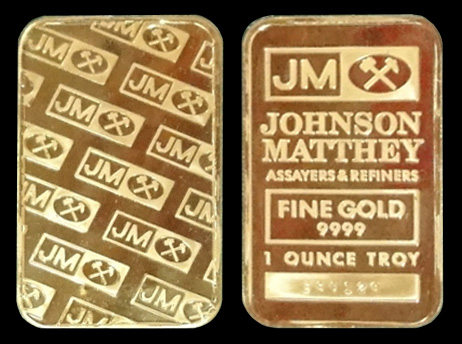 a. six would-be wedding bands
b. 1oz novelty of pure gold smelted by JM
c. Au = element #79 on Periodic Table
d. Reward for a 9.59 sec 100m
e. The solution to all our financial problems...changer of men from liberal faggot zionist atheist swine into god-fearing hardworking people of fortitude and rectitude...curer of cancer, balancer of budgets....purifier of all our precious bodily fluids and divinely-given laws....come, my preciousssss...
 a. ummm Europe?
b. Site of the war which was believed to be the war to end all wars (excepting the worse one that immediately followed)
c. Continent with mix of culture, cuisine, history, engineering, and civilized living standards
d. A place for Brits to go on holiday
e. Socialist commie cesspit of looney bureaucrats, unworkable financial alliances, gulag-healthcare systems, leading the world in obstinate unions, lazy workers, regulatory morass and geographical epi-center of the soon-to-be-arriving disintegration of civilized life on earth.
 a. a bull market
b. an uptrend
c. a squiggly line
d. reflection of long-term (nominal) growth
e. an accident waiting to happen caused by insane, stupid, or insanely stupid people, or conspirators doing insane and stupid things that will end very very badly with the dystopian destruction of the civilized economy as we know it and reversion to an economic life of warlords and barter using nuggets of gold and silver as portrayed in that film with Kevin Costner, "The Postman"....
 a. beginning of a 5-year bull market
b. beginning of an uptrend
c. a squiggly-line
d. technical reversal of severely oversold position
e. an obvious orchestrated short-squeeze caused by the elders of zion and their 0.1% lackeys controlling the Soros-Rubin-Banker-Fed-Axis pulling the levers at the Fed Plunge Protection Team for the sake of enriching their cabal whilst duping and hiding the truth of how the rich steal money from hardworking ordinary Americans
 a. a pooled investment in Gold
b. a low-cost alternative to buying, holding, storing & insuring physical commodities
c. an easy liquid way to bet on the price of gold
d. useful asset allocation tool for diversification
e. a conspiracy to defraud honest hard-working speculative investors who've put their hard-earned savings into physical bullion held at secure vaults outside the USA, who have been cheated by the depressing influence these instrument have on the physical gold price by diluting the buying power which would otherwise raise the price of Gold benefitting all the other paranoid gold-bugs and survivalists who've already bought physical bullion in the form of coins at significant premiums or for delivery in a secure vault outside the USA.
 a provider of goods for the shelves of Walmart
b. ambitious nation that has (for the moment) successfully lifted hundreds of milllions of her citizens out of poverty
c. future demographic bomb resulting from 1-child policy
d. one of the oldest civilizations who made fine silks when most europeans were donning animal skins
e. yellow peril mercantilist currency manipulator who took our jobs (please watch -C.) who are taking the places of children of hard-working americans at our top universities and the trading rooms on Wall Street, and who are taking over ownership of our country
 a. a man with a beard
b. Nobel-prive winning economist
c. Princeton Prof & contentious NYT columnist
d. Consistent proponent of the view that it is better to try to grow rather than austerity our way out of economic depression.
e. A liberal faggot anti-christ he-Devil, devoted to Keynes and insulting to the spirit of the greatest economist of all time: Ludvig von Mises causing vilifiers to wonder why the USA Govt can increase its credit card bill, when if they do it (individually), they just get mean letters from Capital One or the card-services department at their bank; just wants to take the money of hardworking Americans and give it to entitlement-cheats who make babies to collect welfare and food stamps so they can buy drugs and Fritos (in that order).
 a. impractical fashion trend
b. An accessory when listening to late-night radio
c. a joke from ser. 6, ep. 6 of Big Bang Theory
d. art project c.1977 gone very wrong
e. an important tool in preventing aliens and the American government from influencing your thoughts and controlling your brain which is one of the best kept secrets along with the PPT, George Soros' role as the leader of the conspiracy by the Elders of Zion to take over the world financial system and rule the world and keep the hard-working man dumb and stupid and rig the system against hard-working Americans.
How to Score:
a=1pt; b=1pt; c=1pt; d=1pt; e=5pts
Interpreting the results:
0 - 11 - Surely a grad from an effeminate liberal east-coast university
12 - 22 - Got some financial redneck potential in you
23 - 33 - Wishing you had a Kazcynski-cabin of your own?
34 - 44 - Likely owner of guns, ammo, & survivalist subscriber
45 - 55 - Honorary Fight Club Member; NB: The NSA is watching you...
Just ask Zero-Hedge. Unfortunately, for wool-dyed pessimists and the other overly-skeptical black sheep of the thundering herd, it pays apocalyptic newsletter writers' paychecks, and Zero-Hedge/Tyler Durden's Manhattan bar tabs rather than those who permanently position against market priapism. And it's worse than zero-sum because those who are optimistically-challenged often pay for the bad advice - whether directly in subscriptions, inflated margins on retail bullion products, or indirectly via page-views and click-throughs AND then they get hosed by the market.
The first step to improving behaviour toxic to one's own self interest is admit one has a problem. As an aid to help those who have difficulty in distinguishing "a bearish trade" from "the lead boots of anger and pessimism", I've devised a little something I call the Zero-Hedge Test to determine more precisely whether readers objective realities are sufficiently paranoid, pessimistic, anti-social and rantingly angry to warrant more serious help.
Instructions: Circle the letter that best describes the adjacent image:
a. a glass of water
b. glass of water, half-empty
c. glass of water, half-full
d. glass of errrr ummm , Grey Goose vodka? (NB: ed. choice)
e. The US Government must have stolen half of a glass of water.
b. Barack Hussein Obama
c. A Former Senator from Illinois
d. tall guy who used to like to sneak a cigarette now & then
e. Jezebel, dark Sith Lord Vader Emperor & Chief of the Plunge Protection Team. Odious non-American african muslim responsible for taking away our world-beating healthcare, encouraging the immigrants and foreigners who took our our jobs, and formulating a secret plan to put two-dads in every home .
b. A greenback, worth a dollar, which, on average, an American is paid each 4 minutes of work
c. A US Federal Reserve Banknote almost universally accepted in exchange for goods and services the world over
d. A cocaine hoovering apparatus c1978
e. Worthless fiat toiletpaper, so useless that bric-a-brac, watches, baseball cards or bitcoin should be more preferred than this P.o.S. that forms part of the elders of Zion grand plan to steal your labour savings before eating your babies.
b. 1oz novelty of pure gold smelted by JM
c. Au = element #79 on Periodic Table
d. Reward for a 9.59 sec 100m
e. The solution to all our financial problems...changer of men from liberal faggot zionist atheist swine into god-fearing hardworking people of fortitude and rectitude...curer of cancer, balancer of budgets....purifier of all our precious bodily fluids and divinely-given laws....come, my preciousssss...
b. Site of the war which was believed to be the war to end all wars (excepting the worse one that immediately followed)
c. Continent with mix of culture, cuisine, history, engineering, and civilized living standards
d. A place for Brits to go on holiday
e. Socialist commie cesspit of looney bureaucrats, unworkable financial alliances, gulag-healthcare systems, leading the world in obstinate unions, lazy workers, regulatory morass and geographical epi-center of the soon-to-be-arriving disintegration of civilized life on earth.

b. an uptrend
c. a squiggly line
d. reflection of long-term (nominal) growth
e. an accident waiting to happen caused by insane, stupid, or insanely stupid people, or conspirators doing insane and stupid things that will end very very badly with the dystopian destruction of the civilized economy as we know it and reversion to an economic life of warlords and barter using nuggets of gold and silver as portrayed in that film with Kevin Costner, "The Postman"....
b. beginning of an uptrend
c. a squiggly-line
d. technical reversal of severely oversold position
e. an obvious orchestrated short-squeeze caused by the elders of zion and their 0.1% lackeys controlling the Soros-Rubin-Banker-Fed-Axis pulling the levers at the Fed Plunge Protection Team for the sake of enriching their cabal whilst duping and hiding the truth of how the rich steal money from hardworking ordinary Americans
b. a low-cost alternative to buying, holding, storing & insuring physical commodities
c. an easy liquid way to bet on the price of gold
d. useful asset allocation tool for diversification
e. a conspiracy to defraud honest hard-working speculative investors who've put their hard-earned savings into physical bullion held at secure vaults outside the USA, who have been cheated by the depressing influence these instrument have on the physical gold price by diluting the buying power which would otherwise raise the price of Gold benefitting all the other paranoid gold-bugs and survivalists who've already bought physical bullion in the form of coins at significant premiums or for delivery in a secure vault outside the USA.
b. ambitious nation that has (for the moment) successfully lifted hundreds of milllions of her citizens out of poverty
c. future demographic bomb resulting from 1-child policy
d. one of the oldest civilizations who made fine silks when most europeans were donning animal skins
e. yellow peril mercantilist currency manipulator who took our jobs (please watch -C.) who are taking the places of children of hard-working americans at our top universities and the trading rooms on Wall Street, and who are taking over ownership of our country
b. Nobel-prive winning economist
c. Princeton Prof & contentious NYT columnist
d. Consistent proponent of the view that it is better to try to grow rather than austerity our way out of economic depression.
e. A liberal faggot anti-christ he-Devil, devoted to Keynes and insulting to the spirit of the greatest economist of all time: Ludvig von Mises causing vilifiers to wonder why the USA Govt can increase its credit card bill, when if they do it (individually), they just get mean letters from Capital One or the card-services department at their bank; just wants to take the money of hardworking Americans and give it to entitlement-cheats who make babies to collect welfare and food stamps so they can buy drugs and Fritos (in that order).
b. An accessory when listening to late-night radio
c. a joke from ser. 6, ep. 6 of Big Bang Theory
d. art project c.1977 gone very wrong
e. an important tool in preventing aliens and the American government from influencing your thoughts and controlling your brain which is one of the best kept secrets along with the PPT, George Soros' role as the leader of the conspiracy by the Elders of Zion to take over the world financial system and rule the world and keep the hard-working man dumb and stupid and rig the system against hard-working Americans.
How to Score:
a=1pt; b=1pt; c=1pt; d=1pt; e=5pts
Interpreting the results:
0 - 11 - Surely a grad from an effeminate liberal east-coast university
12 - 22 - Got some financial redneck potential in you
23 - 33 - Wishing you had a Kazcynski-cabin of your own?
34 - 44 - Likely owner of guns, ammo, & survivalist subscriber
45 - 55 - Honorary Fight Club Member; NB: The NSA is watching you...
Monday, March 04, 2013
Golden Nuggets

To say that a good idea attracts imitators is to reveal (in the words of former RJR CEO F. Ross Johnson) a blinding glimpse of the obvious. And so from the first spread-betters like IG Index, arbing the UK tax code, we now have hundreds of imitators, each offering global market access, tight spreads, sexy-GUIs (shame on you for thinking that's in any way perverted!), and up to 1000-to-1 leverage (now THAT'S perverted!).
However, it is not the imitators but the wackiness and direction that things are moving. Take for example "Banc de Binary", who annoyingly has been monopolizing the banner ad space across my browser (thanks Google!). They call themselves (in the spirit of uber-bullshit) "Private Option Bankers", but it's merely an on-line bucket-shop specializing in rainman-like options. There is no mention of THEIR internalization, risk-management or hedging or their capital ANYWHERE, though, from their glossies, there appears to be lots of croupiers , ooops I mean "experts" ready to help you place your bets errr ummm I mean trades. Call me old school, but in my book it is almost always better to be a seller of insurance than a buyer, and better to be the house than the punter excepting when one is exposed to mandated or life-threatening unhedgable risks that one can ONLY mitigate via insurance. Our friendly "PRivate Option Bankers" however, have managed to combine BOTH aspects into one business. It is, of course, highly predatory, and I will wager this "banc" will NOT be a household name in 10 years next to Ameritrade or Schwab.
Predation raises the good question of who or what is their market. It's likely the same as another big-spender with their annoying Flash ads occupying yet more of my banner ad-space (cycling with the binary bank) on my browser - one called Inter-Trader.Com What exacty is is Inter-Trader.com? Have a look. Is it just another on-line bucket-shop? Is it about investing? Is it about trading? Is it about gambling? Is it a about partying? It seems to be all of these things! Just read the "About" section:
InterTrader Limited is part of the bwin.party family.
bwin.party was formed from the merger of bwin Interactive Entertainment AG and PartyGaming Plc in April 2011 to create the world’s largest listed online gaming company.
For further information go to www.bwinparty.com
So, there you have it: the prescient and growing on-line financial buccaneer encompasses investment, trading, gambling, entertainment, gaming and partying online all rolled into one - though not necessarily in that order. To reorder them in terms of likely target customer profile it might be: Gambling, gaming, entertainment, trading, partying, and that's it. Sadly, FWIW, we don't see the word Investment too much in their website.
All this begs the question: how will banks and securities firms respond to customers' seeming demands for entertainment and hedonism while investing? There is nothing worse than than the slow and painful torture of watching one's customers drift away without effective response. Bear Stearns (and others) have tried hiring entertainers (at least that's what they called former Fed Governor Wayne Angell when he was their lead currency strategist). I leave that one open for you to provide the requisite "strategic advice"...
Friday, March 01, 2013
What is a Banker?



Friday, February 15, 2013
God's Honest Truths
It's the God's honest financial truth that....
...central banks know exactly what they are doing
...Stock Beta's are stable
...SAC doesn't tolerate trading on material non-public information
..."Expert networks" do not violate insider trading boundaries
..."Chinese walls" are effective in protecting the sanctity of information
...Wall St. sell-side research is far more accurate than flipping a coin
...I can't wait to fund the HF launch or yet another recently-minted-MBA with a couple of years at OZM or similar.
...VAR is the most useful of risk measure (and it cures traders' hemorrhoids too!)
...A HF Compliance Department's role is make sure rules and regulations are followed
...Fed bond buying is not distorting the long end of credit markets
...Brokers never front-run large customer orders
...Volatility is a good indicator of risk.
...Tail Risk Funds are a good way to protect against downside risk in equities
...Securities firms are typically innocent when they settle a claim but "neither admit nor deny guilt"
...FX Bucket shops place high priority on their customers' interests
...There is no relationship between campaign finance and political influence
...HFT is inherently good for markets
...Risk-parity strategies are long-gamma and will not prove systemically destabilizing
...Hedge Funds represent good value for investors
...Monster success in the investment business is 95% skill and 5% luck.
...Price momentum makes perfect economic sense.
...Hedge Fund Managers receive fair compensation for their work
...When I want level-headed analysis of financial markets I go to Zerohedge
...The CPI accurately represents the median household's experienced rate of inflation
...Public Sector Defined Benefit Pension & Healthcare promises are inviolable
...Former AIG CEO Hank Greenberg is not bitter
...Fragmentation of equity trading venues has been boon for investors
...Golden Sachs is a fun place to work
...There is a cabal of puppet-masters who conspire to manipulate the Gold and Silver markets down, in their spare time they manipulate the US Equity market higher.
...US Military spending is justified by global security threats
...Things would be much better if the world were on a Gold Standard. Oh and BTW fiat money also causes rickets.
...SAC pays the highest commissions for the good NCAA chit-chat and the friendly service
...2&20 is the best way to align investors' interests with their agents
...No public interest is the best public interest
...A GPs carried interest, without doubt, should remain capital gains and not income
...What goes up must come down
...Insider Trading should be legalized.
...PE's use of high interest expense to transfer profits to offshore affiliates doesn't damage the public interest.
...The majority of retail FX traders don't blow up
..."Privatizing profits and socializing losses" makes an excellent foundation for US healthcare policy
...Tax rates and revenues in the US are historically high, ergo, it is expenditure that needs to be cut
...Cutting Govt spending in a downturn in order to cut budget deficits narrows fiscal shortfalls
...Investment Managers always tell the truth when explaining their "process"
...Oligopolists rarely collude
...Wall St. security analysts are adept at avoiding hackneyed metaphors in their research reports
Wednesday, February 13, 2013
Sharp Ratio Redefined
A Fund tear sheet came across my desk yesterday that caught my attention. It was from the bluest of blue-chip shops - a household name in the HF world touting a multi-system trend-following offering. What caught my eye was their incredible Sharp Ratio (TM by me). In case you think I've made an error, read on. Putting aside the five years of of impressive pro-forma modeled returns juxtaposed against their four years of less-than-pedestrian actual returns, yielding an actual Sharpe Ratio that was within a pubic-hair of zero, and a negative Sortino, with returns that would be challenged to best CP rates over the period of actual investment, their Sharp Ratio remained one of the best I've ever encountered. What then precisely IS the Sharp Ratio? The Sharp (sans "e" of the Nobel laureate) is the ratio of legalistic dross, explanatory footnotes, disclaimers etc. for every imaginable global jurisdiction prepared by razored lawyers and marketing minions in relation to the actual financially descriptive information contained in the tear-sheet. By this estimation, this Global Trading Fund's offering boasted a Sharp of 9. Yes, nine pages of unintelligible floatsam supporting a page detailing ostensibly undesirable returns with heightened risk! Oh, how the mighty have fallen, and and my condolences to the sods whose dead money remains in that kafka-esque eddy. When does one simply pull the plug rather than spend the resources to increase the Sharp Ratio?
Thursday, January 31, 2013
Elemental Insider Trading - Mid-Term Exam
Mid Term Examination
Graduate School of Business,
Dept of Financial Contrapreneurship
Adjunct Prof. D. Levine
MBA Course: 501 : Elemental Insider Trading
Student Name____________________ Date____________________________
Instructions: Examinations will be disclosed to all students at the same time. No penalties will be given for students who manage to obtain the exam before disclosure (either in part or in whole) unless incontrovertible evidence can be established as to one's guilt. Perfect test scores will not be considered proof of cheating, however, students who ARE caught red-handed will be made an example of, sent before a disciplinary council and will have their Graduate Student Common Room privileges immediately suspended.
1. "More's Law" of insider trading hypothesizes the relationship between
(a) Trading Intel stock based upon your expert network and receiving a Wells Notice for inside trading
(b) The frequency one trades on inside information with the likelihood that one will be caught
(c) The relative size of one's typical inside trade to one's uninformed trade with the likelihood one will be caught.
(d) The amount of commission one pays his broker with the probability of receiving the first call before the first call
(e) The more money one has to the ability to better-lawyer oneself in order to avoid getting caught or weasel out if one is indicted
2. Insider Trading that contravenes existing laws is far from homogenous. It manifests itself in many shapes and sizes. Match the phrase from Column-A which most closely matches the transgression of the Perps in Column-B, by placing the correct name from Column-B in the center line:
--------A---------------------------B--------------
misappropriation____________________Vincent Chiarella
fiduciary breach____________________Raj Rajaratnum
an inside job_______________________Martin Lipton
sense of entitlement________________The Wily Brothers
friendly advice_____________________SAC/Matthew Martoma
back-scratching_____________________Joe Nacchio
Great Train Robbery_________________David Einhorn
organized conspiracy________________Martha Stewart
financial doping____________________Sam Waksal
opportunistic shoplifting___________Rajat Gupta
f*ck compliance!____________________Todd Newman
3. What statement most closely approximates the insider-trading equivalent of the US Military's "Don't Ask - Don't Tell" policy?
(a) "Your BEST ideas...Just give me your 'BEST, MOST CERTAIN, CAN'T LOSE IDEAS'"
(b) "You're paid to perform: how you do it is your own business"
(c) "Whatever you do, DO NOT bring me into your circle of trust...it's enough that I trust YOU"
(d) "We PAY to be the first call before the first call..."
(e) "The rules are: No tips by e-mail, no tips on recorded lines"
(f) All of the above
4. At which venue is one MOST likely to cultivate material public non-public information? Explain your answer.
(a) A Wall St Bridge Club
(b) The Cotton Club
(c) The Country Club
(d) The Harvard Club
(e) Business Roundtable
(f) Son's little-league game in Greenwich
5. Complete the following phrase: Dumpster diving as a means of gathering material non-public information is NOT illegal because:
(a) they were throwing the away the information anyway
(b) it is public in that anyone could, if they had the same grit and determination as me, dumpster dive
(c) Any simpleton knows to shred confidential information with a powerful cross-shredder if they don't want someone else to read it
(d) most companies don't own the dumpsters. The dumpsters are property of the landlord or the contracted refuse company
(e) It is already public as external lawyers, accountants, bankers, advisors, as well as cleaners, printers, personal assistants, legal & compliance, the CEO, and all manner of other staff members have already disseminated it to friends and family
6. Correctly identify the landmark US legal case aborting the legality of insider trading?
(a) Roe v. Wade
(b) Roe v. O'Hagan
(c) U.S. v. R Foster Winans
(d) U.S. v. O’Hagan
(e) State of NY v Bud Fox
(f) H Kwiatowski v. Angell, Bear Stearns et. al.
(g) State of Texas v. Johnson
7. Which of the following was accused of insider trading but did not or has not gone to jail NOR admitted guilt?
(a) Doug DeCinces and Eddie Murray
(b) Art Samberg
(c) The Wily Brothers
(d) Mark Cuban
(e) Ed Brogan
(f) None of the above
(g) All of the above
8. Complete the sentence with the statement that makes it most accurate:
"Trading in the shares of a stock BEFORE an article is to be published in order to profit from the anticipated reaction in the market is not insider trading because:
(a) it's always "old news"
(b) no one is their right mind would follow what a journalist says since everyone knows everyone who could have traded on it before publishing, will have traded on it.
(c) CNBC and friends of Jim Cramer do it all the time - and HE went to Harvard Law!
(d) The Supreme Court did NOT definitively rule such activity was "Insider Trading" (that decision was 4-4), rather it is mere "Fraud"
(e) the courts are full with more important media cases like, for example, the Duchess of Cambridge's boobs
9. Matthieu, a hypothetical portfolio manager at a large and very profitable hedge fund, discusses a potential trade with his detail-oriented boss. The trade is, for the avoidance of doubt, obviously based upon material non-public information murkily obtained from off-limits sources in ways that contravene existing laws, even by the dubious standards of expert networks. From the point of view of Matthieu's Boss, which of the following statements would most likely constitute "plausible deniability" in regards to the conversation:
(a) "My wife was calling me every two minutes nagging me with questions about whether bathroom #15 should be "periwinkle" or "talcum violet" so I really didn't hear a word he said"
(b) "Matthieu? Never heard of him"
(c) "I thought he was dead - at least he will be"
(d) "I got 700 people working for me and you know what....they all look the same to me"
(e) "When you have more than five kids let's see what YOU can remember"
(f) "We've got a firm-wide policy NOT to use material non-public information. I've got [insert double-digit number here] compliance officers, and [insert another double-digit number here] externally retained lawyers making sure that's the case. Experts we use to supplement our research sign agreements that they won't provide information in violation of existing laws. My guys know that, and they know better than to tell me if in a moment of weakness or greed, they transgressed. THWWAAACK! Ball in your court..."
10. You are a portfolio manager with a LARGE holding in a UK-based drinks company you like. The company and its bankers have privately contacted you wishing to sound out existing shareholders about "possible changes to the firm's capital structure to improve it's balance sheet", which you suspect, but haven't been definitively informed, can only mean the issuance of shares. They want to arrange a conference call. Do you:
(a) Sell your entire position, then ask questions later
(b) Sell your entire position, then inform compliance
(c) Join conference call, confirm suspicions, THEN sell your entire position
(d) Join conference call, confirm suspicions, sell entire position, AND go short
(e) Join conference call, confirm suspicions, sell your entire position crushing the stock, AND go short and then ask compliance if that was OK?
11. It's Christmas time. An old friend on the sell side "in a position to know" calls you bearing a "gift" and tells you that a major Japanese bank is planning a very very VERY large convertible bond issue that is in the final stages of preparation. Do you:
(a) politely decline the "gift" on the basis of ethics
(b) thank him by moving as much PB business as you can to the bank
(c) take down as much stock as your lines will let you borrow
(d) sell-short as much stock as you can whether you can borrow it or not
(e) sell-short as much stock as you can in ALL the Japanese banks whether you can borrow it or not
(f) All of the above
(g) None of the above
12. As a Member of Congress, sitting on important committees, you occupy a powerful position in the world of finance, and have a fiduciary responsibility to your constituents and the bodies you serve. You have just finished attending a briefing from the Chairman of the Federal Reserve Board and the Treasury Secretary about the impending disclosure to the public of the perilous state of a number of the largest banks. Do you
(a) Immediately sell all of your stock mutual funds
(b) Immediately sell all of your shareholdings of perilous banks
(c) Buy shares in Goldman Sachs
(d) Both A&B
(e) Both AB&C
(f) Do nothing yourself, but tip-off journalists that the Reps from the other party might just do something self-servingly unethical with the information despite there not being a prohibition against it
13. You are the Chief Executive Officer of a large listed technology company. You are a driven Type-A personality and you never like to leave any crumbs on the table. You know your quarter is going to be way light both on revenues and net, but that it's likely temporary. You still own mounds of stock and that it will get hammered (not least because some of your less-equified guys are talking to HFs through their Expert Network of choice). Do you:
(a) sell some stock in a disclosable transaction for "diversification purposes"
(b) collar the stock in an undisclosed transaction
(c) insure you have a 10b5-2 plan in place that allows you to automatically sell stock without regards to your material non-public information
(d) re-price your options AFTER the stock is crushed
(e) use your material non-public information of future revenues to team-up with some private equity friends and recommend to the board a buy-out, to take the company private, triggering your golden parachute and guaranteeing a golden handshake
14. Which of the following was neither indicted NOR served time on insider trading charges?
(a) Dennis Levine ;)
(b) Bill Hwang
(c) Ivan Boesky
(d) Raj Rajaratnum
(e) Arthur Samberg
(f) Michael Milken
(g) Sam Waksal
(h) I will pay $500 (cash) to my professor for the correct answer at the end of the exam
15. From a legal point of view, what form of communication leaves the least audit trail, and is safest for trafficking in material non-public information:
(a) Electronic mail
(b) Encrypted electronic mail
(c) Cell Phone
(d) Recorded Landline to recorded landline
(e) Cell Phone to recorded landline
(f) Cell phone to cell phone
(g) Pay-as-you-go Cell to pay-as-you-go cell
16. When speaking to a source of material non-public information, what is the MOST important question to ask:
(a) How certain are you?
(b) Where did YOU get the information?
(c) When is the event likely to happen?
(d Is this conversation being taped?
(e) Are you wearing a wire
17. With respect to insider-trading laws which of the following does NOT constitute material non-public information upon which to trade?
(d) Dumpster Diving
(e) Sell-side delivery of ideas via "Alpha-capture" systems
(f) None of the Above
(g) All of the Above
18. Which of the following is the most effective legal defense against spending time incarcerated for insider trading breaches:
(a) Ernest Saunder's "I can't remember, I must have Alzheimers defense"
(b) Peter Young's "I'm Crazy As a Coot" defense
(c) The audacious "I am a Time Traveller" defense
(d) The SAC "Trading is a very complicated Mosaic" defense
(e) The SAC "I trust my Subordinates" defense
(f) The Einhorn "I specifically asked NOT to be an insider" defense
(g) The Sergeant Shultz "I Know Nothing...NOTHING" defense
19. What is the best occupation (excluding being an HFM and getting The Call Before the First Call ) for obtaining material non-public market-moving information upon which to trade:
(a) Financial Printer
(b) Nanny to M&A Banker
(c) Limo Driver
(d) Corporate Finance Lawyer
(e) Auditor
(f) High-end Female Escort with HFM clientele
20. The most effective tool for law-enforcement officials to catch and prosecute insider-trading abuses is:
(a) wire taps
(b) interception of electronic communication
(c) Dissemination of "bogus but plausible" honeypot information
(d) surveillance of market transactions
(e) analysis of improbable HFM returns
21. Rank the ethical justifications for insider Trading in order of their validity (from most to least):
(a) insider trading profits "trickle down"
(b) they represent a source of charitable contributions
(c) if you don't do it, someone else will
(d) it's a victimless crime
(e) it increases market efficiency
(f) it is an important source of employment
(g) it's guaranteed by the 1st amendment
(h) it's legal in Liechtenstein and Mauritius
Extra Credit#1: (Use Separate page if required): You are a PM at a large HF. You are presenting your investment thesis to the Boss, a thesis that crucially is based-upon material non-public information - in this instance, a definitive earnings "miss", that you've obtained through one of your frat brothers. Construct a written case for pulling the trigger without incriminating yourself or entwining The Boss, but nonetheless conveys the opportunity and it's certainty.
Extra Credit#2: Please provide your professor a current real-world example of Material Non-Public Information including relevant dates, and actions, preferably gleaned from your work experience, family or professional connections, or friendly social network, that you believe will impact the company's stock price accordingly, and why and in which direction you think it will move. Please include the details and nature of your source material.(NB: If providing this information in writing creates a moral dilemma for you, then you are encouraged to leave a detailed message on my private answering machine, where the message will be promptly deleted).
Graduate School of Business,
Dept of Financial Contrapreneurship
Adjunct Prof. D. Levine
MBA Course: 501 : Elemental Insider Trading
Student Name____________________ Date____________________________
Instructions: Examinations will be disclosed to all students at the same time. No penalties will be given for students who manage to obtain the exam before disclosure (either in part or in whole) unless incontrovertible evidence can be established as to one's guilt. Perfect test scores will not be considered proof of cheating, however, students who ARE caught red-handed will be made an example of, sent before a disciplinary council and will have their Graduate Student Common Room privileges immediately suspended.
1. "More's Law" of insider trading hypothesizes the relationship between
(a) Trading Intel stock based upon your expert network and receiving a Wells Notice for inside trading
(b) The frequency one trades on inside information with the likelihood that one will be caught
(c) The relative size of one's typical inside trade to one's uninformed trade with the likelihood one will be caught.
(d) The amount of commission one pays his broker with the probability of receiving the first call before the first call
(e) The more money one has to the ability to better-lawyer oneself in order to avoid getting caught or weasel out if one is indicted
2. Insider Trading that contravenes existing laws is far from homogenous. It manifests itself in many shapes and sizes. Match the phrase from Column-A which most closely matches the transgression of the Perps in Column-B, by placing the correct name from Column-B in the center line:
--------A---------------------------B--------------
misappropriation____________________Vincent Chiarella
fiduciary breach____________________Raj Rajaratnum
an inside job_______________________Martin Lipton
sense of entitlement________________The Wily Brothers
friendly advice_____________________SAC/Matthew Martoma
back-scratching_____________________Joe Nacchio
Great Train Robbery_________________David Einhorn
organized conspiracy________________Martha Stewart
financial doping____________________Sam Waksal
opportunistic shoplifting___________Rajat Gupta
f*ck compliance!____________________Todd Newman
3. What statement most closely approximates the insider-trading equivalent of the US Military's "Don't Ask - Don't Tell" policy?
(a) "Your BEST ideas...Just give me your 'BEST, MOST CERTAIN, CAN'T LOSE IDEAS'"
(b) "You're paid to perform: how you do it is your own business"
(c) "Whatever you do, DO NOT bring me into your circle of trust...it's enough that I trust YOU"
(d) "We PAY to be the first call before the first call..."
(e) "The rules are: No tips by e-mail, no tips on recorded lines"
(f) All of the above
4. At which venue is one MOST likely to cultivate material public non-public information? Explain your answer.
(a) A Wall St Bridge Club
(b) The Cotton Club
(c) The Country Club
(d) The Harvard Club
(e) Business Roundtable
(f) Son's little-league game in Greenwich
5. Complete the following phrase: Dumpster diving as a means of gathering material non-public information is NOT illegal because:
(a) they were throwing the away the information anyway
(b) it is public in that anyone could, if they had the same grit and determination as me, dumpster dive
(c) Any simpleton knows to shred confidential information with a powerful cross-shredder if they don't want someone else to read it
(d) most companies don't own the dumpsters. The dumpsters are property of the landlord or the contracted refuse company
(e) It is already public as external lawyers, accountants, bankers, advisors, as well as cleaners, printers, personal assistants, legal & compliance, the CEO, and all manner of other staff members have already disseminated it to friends and family
6. Correctly identify the landmark US legal case aborting the legality of insider trading?
(a) Roe v. Wade
(b) Roe v. O'Hagan
(c) U.S. v. R Foster Winans
(d) U.S. v. O’Hagan
(e) State of NY v Bud Fox
(f) H Kwiatowski v. Angell, Bear Stearns et. al.
(g) State of Texas v. Johnson
7. Which of the following was accused of insider trading but did not or has not gone to jail NOR admitted guilt?
(a) Doug DeCinces and Eddie Murray
(b) Art Samberg
(c) The Wily Brothers
(d) Mark Cuban
(e) Ed Brogan
(f) None of the above
(g) All of the above
8. Complete the sentence with the statement that makes it most accurate:
"Trading in the shares of a stock BEFORE an article is to be published in order to profit from the anticipated reaction in the market is not insider trading because:
(a) it's always "old news"
(b) no one is their right mind would follow what a journalist says since everyone knows everyone who could have traded on it before publishing, will have traded on it.
(c) CNBC and friends of Jim Cramer do it all the time - and HE went to Harvard Law!
(d) The Supreme Court did NOT definitively rule such activity was "Insider Trading" (that decision was 4-4), rather it is mere "Fraud"
(e) the courts are full with more important media cases like, for example, the Duchess of Cambridge's boobs
9. Matthieu, a hypothetical portfolio manager at a large and very profitable hedge fund, discusses a potential trade with his detail-oriented boss. The trade is, for the avoidance of doubt, obviously based upon material non-public information murkily obtained from off-limits sources in ways that contravene existing laws, even by the dubious standards of expert networks. From the point of view of Matthieu's Boss, which of the following statements would most likely constitute "plausible deniability" in regards to the conversation:
(a) "My wife was calling me every two minutes nagging me with questions about whether bathroom #15 should be "periwinkle" or "talcum violet" so I really didn't hear a word he said"
(b) "Matthieu? Never heard of him"
(c) "I thought he was dead - at least he will be"
(d) "I got 700 people working for me and you know what....they all look the same to me"
(e) "When you have more than five kids let's see what YOU can remember"
(f) "We've got a firm-wide policy NOT to use material non-public information. I've got [insert double-digit number here] compliance officers, and [insert another double-digit number here] externally retained lawyers making sure that's the case. Experts we use to supplement our research sign agreements that they won't provide information in violation of existing laws. My guys know that, and they know better than to tell me if in a moment of weakness or greed, they transgressed. THWWAAACK! Ball in your court..."
10. You are a portfolio manager with a LARGE holding in a UK-based drinks company you like. The company and its bankers have privately contacted you wishing to sound out existing shareholders about "possible changes to the firm's capital structure to improve it's balance sheet", which you suspect, but haven't been definitively informed, can only mean the issuance of shares. They want to arrange a conference call. Do you:
(a) Sell your entire position, then ask questions later
(b) Sell your entire position, then inform compliance
(c) Join conference call, confirm suspicions, THEN sell your entire position
(d) Join conference call, confirm suspicions, sell entire position, AND go short
(e) Join conference call, confirm suspicions, sell your entire position crushing the stock, AND go short and then ask compliance if that was OK?
11. It's Christmas time. An old friend on the sell side "in a position to know" calls you bearing a "gift" and tells you that a major Japanese bank is planning a very very VERY large convertible bond issue that is in the final stages of preparation. Do you:
(a) politely decline the "gift" on the basis of ethics
(b) thank him by moving as much PB business as you can to the bank
(c) take down as much stock as your lines will let you borrow
(d) sell-short as much stock as you can whether you can borrow it or not
(e) sell-short as much stock as you can in ALL the Japanese banks whether you can borrow it or not
(f) All of the above
(g) None of the above
12. As a Member of Congress, sitting on important committees, you occupy a powerful position in the world of finance, and have a fiduciary responsibility to your constituents and the bodies you serve. You have just finished attending a briefing from the Chairman of the Federal Reserve Board and the Treasury Secretary about the impending disclosure to the public of the perilous state of a number of the largest banks. Do you
(a) Immediately sell all of your stock mutual funds
(b) Immediately sell all of your shareholdings of perilous banks
(c) Buy shares in Goldman Sachs
(d) Both A&B
(e) Both AB&C
(f) Do nothing yourself, but tip-off journalists that the Reps from the other party might just do something self-servingly unethical with the information despite there not being a prohibition against it
13. You are the Chief Executive Officer of a large listed technology company. You are a driven Type-A personality and you never like to leave any crumbs on the table. You know your quarter is going to be way light both on revenues and net, but that it's likely temporary. You still own mounds of stock and that it will get hammered (not least because some of your less-equified guys are talking to HFs through their Expert Network of choice). Do you:
(a) sell some stock in a disclosable transaction for "diversification purposes"
(b) collar the stock in an undisclosed transaction
(c) insure you have a 10b5-2 plan in place that allows you to automatically sell stock without regards to your material non-public information
(d) re-price your options AFTER the stock is crushed
(e) use your material non-public information of future revenues to team-up with some private equity friends and recommend to the board a buy-out, to take the company private, triggering your golden parachute and guaranteeing a golden handshake
14. Which of the following was neither indicted NOR served time on insider trading charges?
(a) Dennis Levine ;)
(b) Bill Hwang
(c) Ivan Boesky
(d) Raj Rajaratnum
(e) Arthur Samberg
(f) Michael Milken
(g) Sam Waksal
(h) I will pay $500 (cash) to my professor for the correct answer at the end of the exam
15. From a legal point of view, what form of communication leaves the least audit trail, and is safest for trafficking in material non-public information:
(a) Electronic mail
(b) Encrypted electronic mail
(c) Cell Phone
(d) Recorded Landline to recorded landline
(e) Cell Phone to recorded landline
(f) Cell phone to cell phone
(g) Pay-as-you-go Cell to pay-as-you-go cell
16. When speaking to a source of material non-public information, what is the MOST important question to ask:
(a) How certain are you?
(b) Where did YOU get the information?
(c) When is the event likely to happen?
(d Is this conversation being taped?
(e) Are you wearing a wire
17. With respect to insider-trading laws which of the following does NOT constitute material non-public information upon which to trade?
(a) Logging the number of cars in the parking lot of a mfg. co. during the graveyard shift
(b) Twitter tweets about a rumoured acquisition
(c) Yahoo Finance BBs discussion of whisper numbers
(d) Dumpster Diving
(e) Sell-side delivery of ideas via "Alpha-capture" systems
(f) None of the Above
(g) All of the Above
18. Which of the following is the most effective legal defense against spending time incarcerated for insider trading breaches:
(a) Ernest Saunder's "I can't remember, I must have Alzheimers defense"
(b) Peter Young's "I'm Crazy As a Coot" defense
(c) The audacious "I am a Time Traveller" defense
(d) The SAC "Trading is a very complicated Mosaic" defense
(e) The SAC "I trust my Subordinates" defense
(f) The Einhorn "I specifically asked NOT to be an insider" defense
(g) The Sergeant Shultz "I Know Nothing...NOTHING" defense
19. What is the best occupation (excluding being an HFM and getting The Call Before the First Call ) for obtaining material non-public market-moving information upon which to trade:
(a) Financial Printer
(b) Nanny to M&A Banker
(c) Limo Driver
(d) Corporate Finance Lawyer
(e) Auditor
(f) High-end Female Escort with HFM clientele
20. The most effective tool for law-enforcement officials to catch and prosecute insider-trading abuses is:
(a) wire taps
(b) interception of electronic communication
(c) Dissemination of "bogus but plausible" honeypot information
(d) surveillance of market transactions
(e) analysis of improbable HFM returns
21. Rank the ethical justifications for insider Trading in order of their validity (from most to least):
(a) insider trading profits "trickle down"
(b) they represent a source of charitable contributions
(c) if you don't do it, someone else will
(d) it's a victimless crime
(e) it increases market efficiency
(f) it is an important source of employment
(g) it's guaranteed by the 1st amendment
(h) it's legal in Liechtenstein and Mauritius
Extra Credit#1: (Use Separate page if required): You are a PM at a large HF. You are presenting your investment thesis to the Boss, a thesis that crucially is based-upon material non-public information - in this instance, a definitive earnings "miss", that you've obtained through one of your frat brothers. Construct a written case for pulling the trigger without incriminating yourself or entwining The Boss, but nonetheless conveys the opportunity and it's certainty.
Extra Credit#2: Please provide your professor a current real-world example of Material Non-Public Information including relevant dates, and actions, preferably gleaned from your work experience, family or professional connections, or friendly social network, that you believe will impact the company's stock price accordingly, and why and in which direction you think it will move. Please include the details and nature of your source material.(NB: If providing this information in writing creates a moral dilemma for you, then you are encouraged to leave a detailed message on my private answering machine, where the message will be promptly deleted).
Friday, January 25, 2013
Storting Socks
Quickly scanning Wednesdays' Abnormal Returns, I saw a link Tadas culled entitled "How To Efficiently Sort Stocks" which as a quantitatively-oriented investor, thought might be of interest given Berk's provocative though now dated, paper Sorting Out Sorts (or his JoF article which followed). I rolled up my sleeves and sharpened my pencil, and was very amused by the Kotke.org post (detailed below):
Of course, it was Socks, and not Stocks, and I smiled amusedly at my brain's sloppy shortcuts. But upon reflection, given the increasingly short half-life of most quantitative or systematic strategies, the post might just as well have been describing investment strategies, their allocators, and how they are seemingly implemented:
1) Throw out all your old stocks (or underperforming portfolio managers).
2) Go to Clarifi, Tradestation or your data-miner of choice and rank all potential strategies. (or to save time, or if you're a cloner, rank all stocks by something resembling their active weight presence in the portfolios of top-performing hedge funds based on 13F-HRs and intermediate filings)
3) When you need new stocks, pick the top 5 performing strategies, or the aggregate high-conviction clone portfolio
4) When you notice your Stocks are wearing out or your strategy returns decaying, goto step 1.
This is not a lament, nor a mean-spirited poke at cloners, though it highlights the potential, increasingly severe, feedback effects, more fundamentally-oriented practitioners must navigate.
How to efficiently sort socks JAN 22 2013
From Stack Overflow, a question about how to efficient sort a pile of socks.
Yesterday I was pairing the socks from the clean laundry, and figured out the way I was doing it is not very efficient. I was doing a naive search -- picking one sock and "iterating" the pile in order to find its pair. This requires iterating over n/2 * n/4 = n^2/8 socks on average.
As a computer scientist I was thinking what I could do? sorting (according to size/color/...) of course came into mind to achieve O(NlogN) solution.
And everyone gets it wrong. The correct answer is actually:
1) Throw all your socks out.
2) Go to Uniqlo and buy 15 identical pairs of black socks.
3) When you want to wear socks, pick any two out of the drawer.
4) When you notice your socks are wearing out, goto step 1.
QED
Of course, it was Socks, and not Stocks, and I smiled amusedly at my brain's sloppy shortcuts. But upon reflection, given the increasingly short half-life of most quantitative or systematic strategies, the post might just as well have been describing investment strategies, their allocators, and how they are seemingly implemented:
1) Throw out all your old stocks (or underperforming portfolio managers).
2) Go to Clarifi, Tradestation or your data-miner of choice and rank all potential strategies. (or to save time, or if you're a cloner, rank all stocks by something resembling their active weight presence in the portfolios of top-performing hedge funds based on 13F-HRs and intermediate filings)
3) When you need new stocks, pick the top 5 performing strategies, or the aggregate high-conviction clone portfolio
4) When you notice your Stocks are wearing out or your strategy returns decaying, goto step 1.
This is not a lament, nor a mean-spirited poke at cloners, though it highlights the potential, increasingly severe, feedback effects, more fundamentally-oriented practitioners must navigate.
Wednesday, January 23, 2013
(H)Edge(s)
In the event you haven't read it, there is superb essay in n+1 entitled Edge and The Art Collector. In it, Gary Sernovitz (whom I'd never read before) compares/contrasts edge in art with edge in investing, with particular respect to Steve Cohen and SAC. Of acute interest (in the factual realm vs. the philosophical or aesthetic) is a good description of SACs systematic exploitation of paying up for the call before the first call, honed by SAC, but also (not mentioned therein) well-employed by Marshall Wace's TOPS and similar first-mover strategies. This symbiotically leads directly back to the enablers on the sell-side are always seeking ways to monetize research, maximize revenue and get paid for even the slightest perceived info leg-up (release of research report, recommendation change, analyst estimate change etc.) that they themselves cannot legally exploit.
Saturday, January 19, 2013
Olympus & TeamJapan (as Explained By S. Suzuki)
I've written a lot about Olympus Corporation. I unconciously mentioned their zaitech first in "We Are All Zaitech Now" - a post primarily about Repo-105, back in October 2010 - that almost a year before FACTA! Long-Term Memory was my first discussion of the FATCA revelation which set the ball rolling. It correctly connected the dots suggesting Gyrus et. al. was an attempt at zaitech cleanup, NOT fraud. "Throwing Good Money After Bad" further expanded upon my belief that bizarre advisory fees were an attempt to finally dispose of losses - a discussion that was a full three weeks before Olympus' ex-President Woodford even suspected it was zaitech related. The clean-up attempt paradoxically was the opposite of fraud in the sense it is trying to reverse the fraud and ineptitude committed years in the past. Unfortunately (and amusingly), the attempts were themselves fraudulent, and even more inept than the original sins. Kikukawa Quits - Olympus Soars...But Why? still two weeks before Woodford himself knew, laid out in detail why I was virtually certain it was a cover-up of a cover-up. In Capitulation, marking Olympus' "come-clean day", I suggested that confirmation of the obvious removes the risk and uncertainty. Despite that, SWFs and other non-Japanese investors liquidated on baseless fears of criminal prosecution delisting or further bad revelations. Monkey On Your Back further explained why Olympus was cheap and why the market was wrong at YEN700. End Run makes analogies to the excellent WSJ schematic of the Company's two decades of zaitech cover-up. Finally, The Cats In The Hat Won't Be Coming Back was my post-mortem on the near-anniversary - one that took the form of a somewhat unflattering review of former Olympus President's Woodford's book "Exposure". In it, I suggest while fraudulent, and dumb it differs from Enron-like malfeasance, and that there is no words or phrase in the english language to describe the lack of personal profit and different intention of what Olympus management did over the years.
Through the affair, this "je ne sais quoi" of intention that we see as willfull shareholder neglect is a recurrent theme which Mr Woodford, activists, and foreign investors would have, and should have been more aware. It explains the behaviour of what in a 2008 post I called TeamJapan, (i.e. Olympus Senior Management, their Board of Directors, their bankers, and Olympus' large corporate shareholders, service providers, as well as regulators). I wrote the post to explain why TCI's run at 9513 (Elec Power Development) was assinine and stupid (from the point of view of TCI's Investors'). It goes to the heart of the behavioural response of almost all Japanese actors and is reprinted for you below....
Through the affair, this "je ne sais quoi" of intention that we see as willfull shareholder neglect is a recurrent theme which Mr Woodford, activists, and foreign investors would have, and should have been more aware. It explains the behaviour of what in a 2008 post I called TeamJapan, (i.e. Olympus Senior Management, their Board of Directors, their bankers, and Olympus' large corporate shareholders, service providers, as well as regulators). I wrote the post to explain why TCI's run at 9513 (Elec Power Development) was assinine and stupid (from the point of view of TCI's Investors'). It goes to the heart of the behavioural response of almost all Japanese actors and is reprinted for you below....
TEAMJAPAN (AS EXPLAINED BY S. SUZUKI)
Christopher Hohn and his TCI are obviously NOT Suzuki parents, for if they were, they would have better understood what they up against in terms of TeamJapan.
Shinichi Suzuki's Nurtured by Love, The Classic Approach to Talent Education is an illuminating account of his philosophy regarding life, music, and learning. For those who do not know of Mr Suzuki, he is the father of a global musical instruction movement which posits that everyone has the aptitude and is capable of reaching a decent level of musicianship with consistent effort and practice. Teaching begins young, and employs a methodical progression focused upon sound and mastery and continued practice of prior achievements. It is wonderfully Japanese, in the the most admiring sense - the love part of my love/hate with Japan.
In the book, (which I recommend to everyone whether they are interested in music or not) he recounts an anecdote from his days at the Nagoya Commericial School where he was class president for four years running. The motto of the school was "First Character, Then Ablity". Noble enough. And so he explains:
During the final examinations, one of the students whom I shall call A, was discovered by B to be cheating and B announced the fact loudly to the teacher in charge. A was then sent out o the classroom, which was by then in an uproar. But when the examination was over, and as soon as the studentswere out in the passage, another student C, leaped upon informer B, a big boy, asking him what kind of friends he thought he was, and hit him. The others joined in and they all gave 'B' a sound thrashing. I was still in the classroom. It all happened in the twinkling of an eye. Presently they sent for me, the class president to come to the faculty rom. "What is meaning of this outrageous attack? Were you aware of it?"

Suzuki replied (and recall that he is a pacifist, a thoroughly gentle human being with the highest moral character displayed is countless ways throughout his life):
Suzuki: "I was. I struck him too."
Faculty: What? who are the students that struck him?
Suzuki: All the members of the class, Sir.
Faculty: And you think you did right, do you?
Suzuki: I do not sir. I think it was wrong to cheat. But I think it was extremely unfriendly to report him sir. Please punish us....
If only Hohn had learned violin the Suzuki-way, he could have saved his investors a lot of money, not to mention loss of face....
Sunday, January 13, 2013
SAC Intrigue - Current Bookmaker Odds
BetUnfair Limited : Current Bookmaker Odds
Event: Outcome of SAC/Steve Cohen Investigation
EVENT/OUTCOME SELECTION .............. Price
------------------------------------- -------
Martoma U-Turns by 30th June............1/4
> than 1 other SAC Mgr Indicted.........3/5
SAC Redemptions Suspended...............2/1
Cohen Personal Assets Frozen............3/1
Blackstone Redeems < Jul 1 2014.........3/5
SAC AUM Jan 1 2014 > $10bn..............8/1
Cohen Deal Struck - Profit Forfeit.....3/1
+Int+Huge Fine BUT No admission Guilt
SAC Pays At least 8-Digit Fine.........2/11
SAC Pays At least 9-Digit Fine..........3/8
SAC Pays > than 10-Digit Fine...........2/3
Cohen Indicted..........................3/2
Bail Set at < $5,000,000................4/3
Bail Set at > $5mm < $10mm..............5/4
Bail Set at $10mm++.....................5/4
No Bail................................99/1
Cohen Case Goes to Jury Trial...........4/1
Ex-Wife Testifies at trial..............7/2
Cohen Found NOT Guilty in Jury Trial....3/2
Cohen Found Guilty in Jury Trial........3/2
Cohen retains Geoff Boies...............6/1
Cohen retains Alan Dershowitz...........5/1
Cohen Consults With OJ.................50/1
Elan Investors File Civil Suit..........2/3
Ruth Madoff sues SAC .................100/1
Fred Wilpon sues SAC..................100/1
Cohen Admits Guilt/Plea bagains........75/1
Feds File Charges Then Drop Case .....100/1
No Charges/No Trial/No Fines Dec 2014..25/1
Cohen Seen Mowing Own Grass...........500/1
Event: Outcome of SAC/Steve Cohen Investigation
EVENT/OUTCOME SELECTION .............. Price
------------------------------------- -------
Martoma U-Turns by 30th June............1/4
> than 1 other SAC Mgr Indicted.........3/5
SAC Redemptions Suspended...............2/1
Cohen Personal Assets Frozen............3/1
Blackstone Redeems < Jul 1 2014.........3/5
SAC AUM Jan 1 2014 > $10bn..............8/1
Cohen Deal Struck - Profit Forfeit.....3/1
+Int+Huge Fine BUT No admission Guilt
SAC Pays At least 8-Digit Fine.........2/11
SAC Pays At least 9-Digit Fine..........3/8
SAC Pays > than 10-Digit Fine...........2/3
Cohen Indicted..........................3/2
Bail Set at < $5,000,000................4/3
Bail Set at > $5mm < $10mm..............5/4
Bail Set at $10mm++.....................5/4
No Bail................................99/1
Cohen Case Goes to Jury Trial...........4/1
Ex-Wife Testifies at trial..............7/2
Cohen Found NOT Guilty in Jury Trial....3/2
Cohen Found Guilty in Jury Trial........3/2
Cohen Appeals...........................2/9
Guilty - Fine but No Jail..............10/1
Guilty - < 1 years.....................10/1
Guilty - > 1 < 3 year...................4/1
Guilty - > 3 years......................5/1
Cohen on Cover Time Magazine............5/1
Cohen Indicted under RICO Act...........4/1Cohen on Cover Time Magazine............5/1
Cohen retains Geoff Boies...............6/1
Cohen retains Alan Dershowitz...........5/1
Cohen Consults With OJ.................50/1
Elan Investors File Civil Suit..........2/3
Ruth Madoff sues SAC .................100/1
Fred Wilpon sues SAC..................100/1
Cohen Admits Guilt/Plea bagains........75/1
Feds File Charges Then Drop Case .....100/1
No Charges/No Trial/No Fines Dec 2014..25/1
Cohen Seen Mowing Own Grass...........500/1
Wednesday, January 09, 2013
Learning to Be A Central Banker in 10 Easy Steps (Update)
Welcome Mark Carney! I am certain many people have been offering you advice on what to me appears to be a rather thankless task. Undoubtedly your experience at the Squid will have given you the necessary sharp elbows and diplomacy to thrive, and your Canadian upbringing arms you with the right amount of earnestness for public service. Nonetheless, I thought you might find something worthy below in the primer I penned for Mr Bernanke in the waning days of 2007. Best of luck in your mission! Oh, and one final piece of advice: No matter how seductive and enthralling you might initially find the quality of life here in Blighty (considering the digs the Old Lady will finance for you), DO NOT NOT SELL YOUR CANADIAN BOLTHOLE. The novelty wears off quickly and England all-too-quickly becomes Moosonee without the clean air and the blue Walleye...
* * * * * * * * * * * * * * * * * * * *
Learning to Be A Central Banker in 10 Easy Steps
 Start with one policy - for example - interest rates. Place the policy ball in your right hand and begin by lowering rates. which causes the ball be tossed-up into the air, in an arc, and land in your left hand. Note how, when the policy ball is in your left hand and you raise rates, the ball returns in an arc to your right hand. Repeat several times to get the feel. (Note this doesn't work if you are left-handed)

Now with he first policy ball in your left hand, take a second policy ball in your right hand, say the value of the US dollar. Notice how when you lower interest rates while the PBoC, and other official buyers in BRICs and GCC countries buy Long Bonds, the 2nd policy ball, the Dollar, feels heavy as if it wants to fall to the ground. Exerting appropriate pressure, you must force it up to arc, after which it should fall back down landing in the left hand.

Now with interest rates in your left hand, and the FX value of the dollar in your right hand, try to toss the rates lower, and as they arc downwards, you will need to jettison the dollar. Be certain to avoid the common mistake of throwing up rates too high if the dollar is NOT falling.
 After letting the dollar fall for a while (note the nice concave arcing pattern in the picture), you will need to catch it with your right hand firmly by attempting to pay some lip-service to a strong-dollar policy. This permits the official entities who are at once your friends and your enemies, to get off the hook by buying dollars under the premise that you do care about its value.
 Warning: Under no circumstance should you allow the policy balls to collide by lowering rates AND letting the dollar fall. Or else you might ultimately have to raise rates, making the introduction of the 3rd policy ball very difficult.

Get the hang of things by practicing tossing the two balls, raising and lowering interest rates as required, and jawboning (and where necessary) letting the dollar fall to floor. See if you do this while reciting Humphrey-Hawkins-like testimony, and answering your wife's questions.
 Now quickly, you will find a third ball in your hand whether your ready for it or not, for as rates have been raised to pay lip service to inflation and the falling dollar, the third ball, economic growth, needs to be tossed into the air. Be careful NOT to make the common mistake of walking in circles while juggling the balls.

Irrespective of how high you toss it, will begin arcing lower as the economy begins to falter. Just before you catch the falling economy with your left hand, you will have thrown the rates ball back your right, while the dollar accelerates its decline towards your left, such that you can start all over again. It is essential to avoid changing the policies in a staggered rhythm.
 As the economy climbs back on its arc to your right, you will be catching interest interest rates with your left, having sent the dollar on a stronger trajectory with your right, before repeating the exercise. Be sure not to launch the interest rate ball too high or too far in front of you.

Congress at this point will be demanding that you pay the most attention to the economy ball, so you must learn to turn your back (on them), and see if you can juggle behind your back as in the diagram (right).
CONGRATULATIONS! You are now ready to set monetary policy for the largest economy in the world!!
NEXT WEEK: In your next lesson we'll introduce balls 4 and 5 in the form of a sub-prime crisis, and banking system solvency issues, just for fun!
* * * * * * * * * * * * * * * * * * * *
Learning to Be A Central Banker in 10 Easy Steps
 Start with one policy - for example - interest rates. Place the policy ball in your right hand and begin by lowering rates. which causes the ball be tossed-up into the air, in an arc, and land in your left hand. Note how, when the policy ball is in your left hand and you raise rates, the ball returns in an arc to your right hand. Repeat several times to get the feel. (Note this doesn't work if you are left-handed)
Now with he first policy ball in your left hand, take a second policy ball in your right hand, say the value of the US dollar. Notice how when you lower interest rates while the PBoC, and other official buyers in BRICs and GCC countries buy Long Bonds, the 2nd policy ball, the Dollar, feels heavy as if it wants to fall to the ground. Exerting appropriate pressure, you must force it up to arc, after which it should fall back down landing in the left hand.

Now with interest rates in your left hand, and the FX value of the dollar in your right hand, try to toss the rates lower, and as they arc downwards, you will need to jettison the dollar. Be certain to avoid the common mistake of throwing up rates too high if the dollar is NOT falling.
 After letting the dollar fall for a while (note the nice concave arcing pattern in the picture), you will need to catch it with your right hand firmly by attempting to pay some lip-service to a strong-dollar policy. This permits the official entities who are at once your friends and your enemies, to get off the hook by buying dollars under the premise that you do care about its value.
 Warning: Under no circumstance should you allow the policy balls to collide by lowering rates AND letting the dollar fall. Or else you might ultimately have to raise rates, making the introduction of the 3rd policy ball very difficult.
Get the hang of things by practicing tossing the two balls, raising and lowering interest rates as required, and jawboning (and where necessary) letting the dollar fall to floor. See if you do this while reciting Humphrey-Hawkins-like testimony, and answering your wife's questions.
 Now quickly, you will find a third ball in your hand whether your ready for it or not, for as rates have been raised to pay lip service to inflation and the falling dollar, the third ball, economic growth, needs to be tossed into the air. Be careful NOT to make the common mistake of walking in circles while juggling the balls.
Irrespective of how high you toss it, will begin arcing lower as the economy begins to falter. Just before you catch the falling economy with your left hand, you will have thrown the rates ball back your right, while the dollar accelerates its decline towards your left, such that you can start all over again. It is essential to avoid changing the policies in a staggered rhythm.
 As the economy climbs back on its arc to your right, you will be catching interest interest rates with your left, having sent the dollar on a stronger trajectory with your right, before repeating the exercise. Be sure not to launch the interest rate ball too high or too far in front of you.
Congress at this point will be demanding that you pay the most attention to the economy ball, so you must learn to turn your back (on them), and see if you can juggle behind your back as in the diagram (right).
CONGRATULATIONS! You are now ready to set monetary policy for the largest economy in the world!!
NEXT WEEK: In your next lesson we'll introduce balls 4 and 5 in the form of a sub-prime crisis, and banking system solvency issues, just for fun!
Subscribe to:
Comments (Atom)

 Posts
Posts


