Thursday, October 27, 2011

Kikukawa Quits - Olympus soars (but why?) or Covering Up The Cover-up

Farewell then, Kikukawa. Bloomberg reported his departure today. Does it change anything at all? Has the uncertainty gone? No. Amongst other things, in his parting statement he said

“I apologize for causing concerns due to the share decline triggered by the replacement of the previous president,” “There is no corruption” [in past acquisitions]....

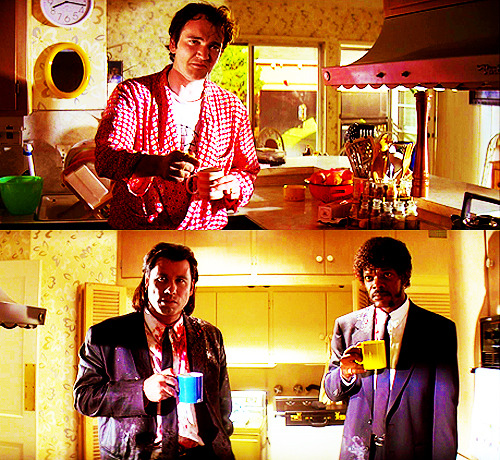
His choice of words  is precise and no accident. Like Tarantino in his own Pulp Fiction's "Bonnie Situation", one has to laugh at Kikukawa. In the Bonnie Situation, Tarantino is upset NOT because Travolta and Jackson have brought a dead body to his house, but because his wife will be home soon and mind find out. Kikukawa, was NOT apologizing for anything apart from the disrepute to the company and fall in the share price. To his credit, there likely was NOT (in Clinton-esque truthiness) corruption in the scrutinized acquisitions. They were likely made in good faith and at toughly negotiated prices. The actual advisors (who conducted the M&A work) were probably paid appropriately and thus the actual advisors received nowhere near the amounts claimed, and a follow-up of the money-trail would likely confirm this. No funds were criminally siphoned to Switzerland (or Cyprus or Malta) to pay Yakuza or to prevent blackmail in one form or another, nor did they find their way to Hawaii  to fund villas for the board. I just wish to reiterate, one more time, I think this is really about hiding and disposing two-decade-old Zaitech losses, which have been cloaked and/or re-punted in hope of repair, but due to market evolutions, remain financially gangrenous. Embedding these still-unrepaired losses into "advisors fees" were seemingly (at the time, when not under scrutiny) a plausible way to try to finally put them behind the company without having to lose face over their origin, or the subsequent bumbled face-saving attempts to hide them. Kikukawa may have architected, or merely approved this final ill-fated stab at exorcising them, but I think when revealed it will be that he was, more importantly, running protection to cover up the covering-up of mistakes made long-ago. Kikukawa's fault (apart from the cultural baggage preventing him from coming clean) was the arrogance to assume Woodford would let the proverbial sleeping dogs lie when told to not to worry about it. Woodford's sacking was due to the honorable mistake of not going "All-in" with Kikukawa and his Board of Subs (sic?). He probably didn't know (if I am right) of the losses origin, for at the time, he was a likely an endoscope salesman.  I do wonder however, what Woodford would have done if Kikukawa had taken him in confidence and revealed all history, explaining the reasons for historical subterfuge. Would he have reluctantly supported the somewhat better inentions of the Board of Subs?

Coming clean, where a cover-up of the cover-up has been made, is an all or nothing affair. Of course, if I am right, historical accounts will have be restated, though since these will be one-time charges, far back in time, they should have no bearing on the present operations, thus lifting of uncertainty thus allowing  the business - once again - be valued on the basis of a world-class high-margin medical instruments company with a rather significant though problematic legacy camera unit. Now, back to Greece's haircut.. 

PS - The Bonnie Situation clip above really is apt for the description of Olympus' situation, and should be watched if only to start the day with a laugh....

Tuesday, October 18, 2011

Throwing Good Money [or Honor] After Bad

When shit hits the proverbial fan of a corporate leader (or inexperienced trader) in the west, they might, in the panic of the moment, be more inclined to respond by "throwing good money after bad" in a desperate Hail-Mary attempt to miraculuously snatch victory from the seemingly inevitable jaws of defeat. Some Reg-D "Death Spiral" deals undoubtedly fall into this category as does Nick Leeson and other trading losses martingaled directly to prison. In Japan, the S.O.P. seems to be concoct some other half-baked quarter-truth or non-truth (i.e. outright fabrication) in a desperate attempt to avoid the dreaded shame, embarrassment (even the unlikely jail!) and subsequent ritual skewering that inevitably follows being caught in whatever indecently illegal act one was undertaking or had undertaken.

I am intrigued by the Olympus Corporation's and former President and Chairman Tsuyoshi Kikukawa's behaviour. I am not in the least surprised. Nor am I shocked (for I am not though I soon will be) long. Not because I shouldn't be but because one could almost predict it. Not of course specifically Olympus's corporate trousers being precisely caught around their ankles, but rather the general class of corporate response to a potentially shame-inducing crisis, that at some point would reveal the series of decisions that lead to the point of being in so deep, one has no choice but to continue the charade (or at least one FEELS there is no choice).

I have been reminded by different folk on various occasions of the old adage: "never lie to your doctor, your lawyer, or your accountant". I cannot help but wonder whether this holds true for The Olympus Corporations Japanese managers and directors in regards to their new Chief Executive, Mr Woodford. I wonder whether they would even consider NOT disclosing the full truth a blood-relative of a lie. One would guess however that his response, might be different to those with soiled hands, or those fearing the resulting stigmata of FD, with its sordid details.

The facts as revealed by Mr Kikuwa and the Olympus Corporation just do not make logical sense. There is a story here, not yet disclosed. I think it is related to the legacy Zaitech losses. Rather than come clean and have to bow very low in admitting one-and-a-half decades of more or less continuous deceitful accounting to hide and cover them up, they tried an alternative exit. Perhaps they thought that exit could be written down more easily without embarrassing questions to the WA of Olympus. Perhaps they thought Plan B was that if brought to the spotlight, a person rather than the organization might fall on his sword claiming "good intentions" but "bad investment". Uncompliant auditors however, who might force greater disclosure and footnoting placing a new (foreign) CEO in a potentially compromising position, was probably not under the meat of their distribution of probable outcomes (howver much it should have been).

The next few weeks will be fascinating. For what its worth, I like Olympus. For what its worth, I like buying into fundamentally-sound enterprises, with good assets, brands, and/or technological leaders in their fields, that have large one-time writedowns (however mischievously generated). Hanover Compressor (HC), OMG, El Paso (EP), Yakult (2267) are such examples, to name a few. It is something I can, at the very least, understand, without having to judge or condone it, however morbidly fascinated I might be in the personal details enroute to the perditious act(s). I reckon Olympus will fit this pattern, though cannot wait for the truth to come out.

Monday, October 17, 2011

Long-Term Memory?

I worked with a guy who in the mid-nineties once claimed hush-hushedly to have structured a big series of "repair bonds" for the Olympus Corporation. He was not boasting, but trying to help. For this was interesting to me for no other reason than I was managing a reasonably-sized long-short book primarily in Japan, and such information hitherto was (except for precious few) completely unknown to the market. It was concurrent to the exposition that many Japanese companies had such liabilities, yet the analysts I queried about the possibility of such liabilities at Olympus laughed it off with incredulity, as they cheered the stock higher with estimate upgrades and near-ubiquitous buy recommendations.

For those wondering what a "repair-bond" is, it is a financial transaction - typically structured [unsurprisingly] by foreign bankers, primarily (but not exclusively - Hello O.P.L.- U.P.S.!!) in Japan which for an example might replace an existing trading position or security deep under water (with a large typically undisclosed mark-to-market loss) with a long-duration security that they can mark to par, but which really isn't worth par if not held to maturity. There are many flavors of such shenanigans. Many Japanese companies (and Refco!!) used a variation of "pass-the-parcel" to move undeclared liabilities between their multitudes of subsidiaries with differing fiscal year-ends in order to elude the auditors. Others, tried to shuttle the remainder of a position into something more aggressive (like Martin Armstrong's PEI) to try and win-back what they'd lost which is/was almost universally a lousy idea.

The Japanese seem more susceptible to such schemes since losing face is decidedly of great importance - above and beyond the financial loss. So crucial is it, that counterparties devised convoluted pathways to reimburse a financial to avoid embarrassment and culpability on all accounts for all concerned.

Olympus' gargantuan black hole recently disclosed allegedly caused by bizarre transactions with brass-plate offshore entities is of a magnitude not dissimilar to that which was purported to have existed 15 years ago. Yield or investment opportunities for repair have been few and far between. Anything non-yen denominated has imploded, has anything Japanese stock-market related. One must wonder whether the hole is in someway related to these now ancient legacy losses - stuck to Olympus' shoe like a piece bubble-gum. Perhaps the foreign CEO came to understand, whatever his personal inclination to come clean and "Do a Bill Clinton", that this was not, in Japan, as easy as it seemed. Of course, this may not be related to the Zaitech fiddling and diddling clean-up. But, then again, perhaps it might....

Wednesday, October 05, 2011

When Around the Bend the Yen Descends...

In May of 2007, when almost everything seemed Hunky-Dory, the sober-minded BCA forecast EURJPY of >180. In a note of reply to this extrapolation of this prevailing trend into the future, I took a stab as to which side of the distribution the fat-tail might be hiding. With certainty, we now know where it was (Cass-1, BCA-Nil). Since The Reckoning began in earnest [and risk-off] pushed USDJPY below par, many have tried their hand shorting JPY. Armageddonist Kyle Bass (somewhat wrongly one might point out) forecast its demise several years ago in a lengthy piece arguing that JPY is essentially guano (my word not his though upon reflection I realize I've erred in my wordchoice as guano IS extremely valauble). And swaggering big-picture dudes talking their books at Drobny's pow-wows, have featured short JPY trades more or less continuously since 2009, with each episode leading to the formation of a nascent trend, though each subsequently ending with a head-on into the electronic herd and other mysterious flow.

JPY now sits at 76 and some bits versus USD, and circa 103 basis the European unit. This is NOT a post forecasting the imminent demise of the Yen. My hide too lies besides Friends of Drobny, reckoning that the end of Q1 was the denoument, though I still think it will pay sufficiently in the next 12mo, despite being egg-faced on the timing. But that is not the point of this post.

What I encourage you to do is put your imagination caps on for a few minutes. Not that you need them to inspect the collateral damage of a currency appreciating up towards 50% vs. the worlds other two largest units. Of course during the past two decades Japan has followed the US and Europe in hollowing its base, setting up shop first abroad in its largest market, then all over southeast asia and subsequently in China and beyond. The global manufacturing enterprises thus created can absorb some of the shock. And they do hedge their FX too, providing additional triage. But as in the mid-1990s squeeze, Japanese enterprises' product prices abroad have not moved with the currency, as manufacturers have chosen to stomach lower margins in order to retain markets, customers and volumes rather than cede them to competitors. This is one of the primary reasons trade gaps are sticky. And it is not necessarily irrational, particularly if one believes the curse of an over-valued exchange rate to be temporary.

Investors have observed the carnage and voted with their feet. Many large exporters have dived beneath their 2008 crisis-lows, plumbing price and valuation depths not seen for a deacde (or more). Their brethren that haven't sunk so low are chasing their coat-tails. It is, to use a technical term, ugly. And as usual, there is circularity since banks remain large shareholders, and despite their clean-er balance sheets (clean meaning not laden with US Housing, and peripheral Euro sovereign exposure), experience stress upon capital ratios with each new lurch down in the broader indices.

The pessimist (and the quant, and the fundamental screener) looks and sees uncompetitive enterprises, and all the red flags associated with declining sales and margin erosion. Five-year histo sales growth of MINUS 15 to 20%. Same in operating profits (or worse). Some reflects reality for zombie co's remain and continue to produce in comical Shaun Of The Dead fashion. However, under the circumstances, the numbers of these JPY-sensitives actually demonstrate some superhuman adaptive skills. They have managed (so far) to avoid being fatally torpedoed by the currency, and in the main, keeping the declines in operating profits to almost-tenable levels. Their income statements, when viewed in dollars or Euros, of course tell another picture. In this imaginary land, historical top-line growth for companies this size and breadth have been respectable - even ignoring The New Normal. One must imagine the sensitivity of their OPs to fanatasize about what lies below, though any of the brokers will share their forecasts as will the companies themselves (if you chance the latter). But a USDJPY at par would unarguably bring a polished lustre (and apparent top-line revenue growth) to what are presently tarnished in diminished local currency value translations. The circularity works through the system. Bank capital re-inflates, reducing stress, and encouraging an expansion of lending. The Government's balance sheet, too smartens as currency losses on the trillion or so of their US T-Bonds diminish and their USD coupon receipts contributes to government coffers. Worker bonuses rise, consumption edges higher and consequentially, suicides drop. Maybe even whaling might finally be abandoned!! (I exaggerate on this last point.)

Rose-tinted glasses...yes, perhaps. But the grimmest view of JPY-sensitives by investors are also seeing a distorted view of the world (Stevie Wonder's Sunglasses?!!?) since the JPY is no SGD CHF NOK SEK or CAD. It is JPY and it is, irresepctive of its levitation, Bat-Shit. The current prevailing view is one that myopically assumes the status quo remains, and makes no judgement upon where the fat-tail is NOW, and what those impacts (whenever the fat-tail shows itself) will be.

Japanese companies are already some of the cheapest in the world. Admittedly, sometimes for good reason (hostile to shareholders, poor governance, truly dismal prospects). When regressed against peers along value and growth axes, they are the cheapest, but also with the lowest growth. It is, I submit, worth more closely examining the idea that the apparent lame-duck growth (shrinkage, more accurately, in local JPY terms) has more to do with the extemes of the JPY rather than the ossification one encounters in the type of value traps enroute to ignominy. In precisely the same way fair-weather friends make themselves scarce at the first signs of trouble, or the young, beautiful gold-digger abandons her balding sugar-daddy when SEC investigation bankruptcy is on the horizon, so have investors fled from otherwise sound (and cheap!!) enterprises, in the process driving them to multiples of diminished cash-flow expectations or, even better, free cash-flow expectations that would have made Graham or Dodd or both salivate. And these enterprises are not shells of their former selves, hollowed-out by predators and asset-strippers, but companies that continue to invest robust proportions of revenues in R&D, and remain on the leading-edge of their respective markets.

It is true that many Japanese companies remain hostile to foreign investors, pay hommage to a wider constituency than that narrow-defined by shareholders, and are undoubtedly poor communicators. To their credit, their corporate GINI's would make American executive management blush; they can, and are willing and able to make longer-run ivnestment decisions that American mgmt can only dream of; and they have spent the last two decades relentlessly (and deftly) avoided being cast upon the Scylla of vaulting energy prices and the Charybdis of an elephantizing exchange rate. What doesn't kill you makes you stronger - not in the proverbial sense, but, as my youngest too-often exclaims "For Real!". One needn't recount here, after two deacdes of being squeezed vise-like, the output unit of GDP per input barrel of oil and labour which by comparison will only conjure images of profligate lard-ass Yanks driving Lincoln Continentals, and Cadillacs of the type that causes Jeremy Clarkson to spit venom and derision. Yes, maybe the Japanese don't do finance like GS or MS, nor do they do activism like Warren Lichtenstein or Nelson Peltz, having had their near-death brush with Zaitech. But then again, maybe NOT emulating US IBs and their financial shenannigans is not such a bad thing, all considered. At the corporate level, they are, at this stage, more likely to be financially STD-free, despite their less-than-salubrious past.

I find myself getting bulled-up as I write this, but THAT is not the point, nor my conclusion. The allure may merely be in relation to the rest of the trolls, who are not as far along in their metastases. The point is that when the world is driving by looking out the rear window and extrapolating the recent past ad infinitum into the future, discounting or ignoring causes, at the expense of reasonably weighing the probabilities of alternate future realities, one can ascertain on which side of the distribution the fat-tail resides. And that, to me, seems where we are at the moment. And I have put my imagination-hat on and think the visions neither far-fetched, nor even that far off.

Tuesday, October 04, 2011

Rolling Stocks

Guns, ammo, foodstuffs, palladium, rare old photographs, P&G, cheap utilities, signed first-edition books, proficient food retailers with scale, a farm, water companies, TIPs, Norwegian Kronor, CRESY, RYN, Southern Queensland cotton farms, lowly-levered prime REITs in Paris, cheap big pharma, BDX, Gazprom, Lukoil, Total etc. I can think of many reasonable and liquid stores of value that may suffice over polarised outcomes. But Japanese private railways (outside JR East and West and maybe Keisei) fail to enter into the realm of (at least my own) imagination.

Perhaps, they are, through a certain lens "low risk" if one employs a myopic definition that includes beta, volatility, and market cap (but ignores debt, constantly depreciating assets, capex requirements, future demographic challenges, and the fact that they are denominated in a currency at the likely pinnacle of relative performance). But they ARE at least assets versus the alternative of a promise by a politically dysfunctional system (ignoring the premium one is paying for many given their bloated accumulated liabilities). But by this measure, prime Class-A real estate, arguably longer-lasting assets, or the cabled monopoly telecommunication backbone of Japan, can be had with much more attractive present (and potentially future) earnings yields, granting greater upside potential other things the same. Yes rents can (and do) fall, but so (one might posit) does passenger traffic in the advent of depression.

Nonetheless, Japanese private rails, particularly the least-attractive turds, have been vaulting ahead inverse-step-for-inverse-step to meaty riskier assets, irrespective of growth, earnings momentum, or prevailing value. Yes the Japanese rails are emblematic of global markets in general during the past two months of unraveling undoing the best-laid trading plans, or fastidious reasearch. For their rise is (IMHO) unlikely to represent a search for truly obscure alternative stores of value, but rather signifiy the deleveraging process itself. What was bought (if it can) must be sold. And what has been sold (short) evidently must be bought. And make no mistake: fundamental value, momentum, growth long vs. short investors have been short the rails. No need to be clever, or conjure improbable theories of how Tobu or Nagoya will (finally) extract value from its real estate holdings which in any event are on offer elsewhere at half of book. But just as every proverbial dog has its day, rest assured that once the scramble through exit subsides, there will be numerous days that will have their dog.

Wednesday, September 28, 2011

Boob Tube

British television sucks indeed! Hardly an escape from a day at the office in The City. One quick look at one small corner from this evening's TV Guide reveals the following...

Jerry Bruckheimer's Chase
The marshals search for a fugitive hedge fund fraudster who swindled his victims out of millions of dollars. However, their search becomes even more urgent when they discover a former Russian Mob Boss (and ex-investor) is also looking for their man. Meanwhile, Jimmy begins a day-trading scheme with Luke (with little success)
Category: Detective/Thriller
Channel: Sky Living 12:00am Wed 28 Sep

Rating
7.3

CSI: Crime Scene Investigation
One of Langston's former students is found dead, drawing the team into the murky world of Greek Government Debt. Questions arise as to whether the girl's thesis - investigating Goldman Sachs role in hiding the true state of Greece's national income statement and balance sheet - could have put her in harm's way as she got close to exposing the evidential Smoking Gun. The Exorcist director William Friedkin (really - no fooling!-Ed.) takes charge of the crime drama's 200th episode
Category: Detective/Thriller
Channel: Sky Living 1:00am Wed 28 Sep

Rating
7.5

Numb3rs
Still reeling from Don's back-stabbing by a gang of Tea Party supporters, Charlie throws himself into a new case: to track down a serial killer(s) responsible for murdering all of important bits of the President's Healthcare legislation. As the mathematician's colleagues start to question his numbers, he discovers that the murderer stalks his victims first and is about to strike again, this time against proposed higher tax rates fopr the wealthy. David Krumholtz and Rob Morrow star in the 100th episode chronicling criminal drama.
Category: Detective/Thriller
Channel: ITV3 1:15am Wed 28 Sep

Rating
7.9
Law & Order: Special Victims Unit
The team is called in when a French bank is found to have murdered the entire firm's profits and all the evidence points to one of their traders - a disturbed man who refuses to take his medication. However, the discovery of a new, second and surviving victim (a Swiss bank), in London blows the lid off their theory
Category: Detective/Thriller
Channel: QUEST 2:00am Wed 28 Sep

Rating
8.0

Law & Order
Lupo and Bernard investigate when a prominent and highly-bonussed Hedge Fund Banker is kidnapped and brutally tortured.
Category: Detective/Thriller
Channel: Sky1 2:50am Wed 28 Sep

Rating
6.5
Law & Order: Special Victims Unit
An ordinary person, Dee P. Pull is found raped and dazed, but refuses to press charges because she is unable to either comprehend or remember the circumstances surrounding the crime. As Benson and Stabler set about piecing together the events, two former fraternity boys become the main suspects. Drama, starring Christopher Meloni and Mariska Hargitay
Category: Detective/Thriller
Channel: QUEST 3:00am Wed 28 Sep

Rating
8.0

Bonuses
(SIC, surely this should be "Bones")
Stephen Fry resumes his role as psychiatrist Dr Wyatt, who helps Booth and Brennan uncover the truth behind the collapse of Lehman Brothers. Dan Castellenata, who voices Homer in The Simpsons, also appears (as Dick Fuld)
Category: Detective/Thriller
Channel: Sky Living 3:30am Wed 28 Sep

Rating
9.0

The Defenders
A man is caught carrying synthetic CDOs with their serial numbers filed away, and the legal duo work together in an effort to see whether they can get the charges against him dropped. Meanwhile, Nick receives a personal plea from the SEC, whose sister is trying to prevent the unnecessary death of a bear...
Category: Detective/Thriller
Channel: FX 3:55am Wed 28 Sep

Rating
6.0

Friday, September 23, 2011

The AGony

AGony
AGast
AGamemnon
AGape
AGgravat
AGoraphobia
AGgravated
AGgression
AGgrieve
AGitated
AGita
AGnosia

Wednesday, September 21, 2011

Shit Happens (An ongoing Saga)


During the six years that shorts have been waiting for the remarkable Greenhill & Co share price to diminish more dramatically, several of my children have seen the front and back of adolescence; flash memory has expanded exponentially in capacity while collapsing in price; all of my old iPods resemble the rather ridiculous-looking Motorola Flip-Phone with cheesy antenna; emerging markets have come and gone and come again; Americans have witnessed the denoument and implosion of a housing bubble previously thought attributable only to the Japanese; the ascent (and probable descent) of the first non-white-male President; as well as two World Cups and the same number of Olympiads.

It must now be acknowledged that shorts were "right", pyrrhic victory that it now seems. That is if they are still around, in business or with position, all which should not be assumed with any degree of certainty. For full-disclosure, I have not been short, not for lack of interest or conviction, but rather due to my restrained risk-tolerance when it comes to *fuck-you* stocks. They are no by means ubiquitous, butneither are they uncommon. Even casual observers will note their high short-interest, their confounding behaviour on down-days (as well as up-days), their constrained float; their adoration by growth and momentum investors alike; their typically outrageous absolute and relative valuations, and a specialness that is, at the end-of-the-day, through the eyes of the skeptic, just not that special. That case for the [eventual] fat left-hand tail, still is insufficient for the risk-intolerant short, or the PM with risk-intolerant investors. And perhaps rightly so, since over the interval above, most everyone has moved up, on, away, or more sadly, expired.

Trend-followers, of course, rarely wax lyrically or wistfully about their prey, and for their detachment, they are decidely better off. Yet it is worth pondering the question that IF the investment thesis is so tenuously related to the presence of one man, Mr George, who it must be said could run himself over with his Jet-ski, get terminally blindsided by a snowboarder in Aspen, made brain-mush by sirloin-steak prions, be stricken at any moment by anything from antibiotic-resistant MRSA, to very lethal lightning itself, one would imagine that such champions of Greenhill would have applied the same forethought at all times. That assumes such lack of relative price reasonableness was the chief cause of GHLs relative fuckiness.

That however, would be too simplistic. More likely, GHL is a simply marvel of market complexity and dynamics - of shorts squeezed and replaced by others, who iun turn were rubbed-out by market events for return of capital, punctuated by index inclusions, long love-affairs by those adoring closely-held, growth, or someother alluring attribute and whose accumulation induced yet another financial hemorrhoid for the unfortunate prevailing short interests. Revel in its wonder, but I will keep chanting the mantra: Do not short on valuation (without a sackful of better reasons....)

Monday, September 19, 2011

Joyriding


I couldn't help but smile with amusement at Kweku Abdoli's parting facebook post. Not because I ever threw the trader's equivalent of a "Hail Mary" pass. I've never countenanced such, and if I look introspectively, this is also perhaps my Achille's Heel, suffering as I do from excessive risk aversion. No. The smile-leading-to-guffaws ending in "Holy Fucking Shit!" was because I've been to my share of Grateful Dead concerts with the refrain
And its real and it wont go away, oh no
I cant get around and I cant run away
I need a miracle every day.
indelibly embossed upon my grey-matter more than 30 years later.

There are so many places to start with this one: The former Lehman Bros ummm errrr **risk manager** supposedly at the risk-helm; that it occurred within the supposed sober-minded Swiss Bastion of Stability (remaining CHF Longs take note and please re-examine thesis!!); The sheer size of the loss (WTF kind of nominal exposures did it take to generate that magnitude of red-ink?!?!?); and that, while dwarfing other rogue trading losses, still seems trifling in comparison to Madoff, GreeceIrelandPortugalUSACalifornia, FNM&FRE, and, yes, UBS's own US sub-prime write-offs and subsequent equity raise; AIG/Cassano's ridiculuous carpet-bombing of the market with sub-prime "puts", and so forth. These of course will be examined in (hopefully amusing) detail by everyone else, the results I am currently enjoying.

But the thing that struck me as most incongruous was that an apparently rather mediocre guy, with apparently no meaningful experience, or nepostistic "piston"-like ties to the bank, moves in two short years from the bank's graduate training program to head of the Delta-One Desk at one of the world's Top-10, perhaps Top-5, market institutions. See my eyes: they are blinking somewhat uncontrollably in surprise and fascination. If I had only known!! UBS would have been my counterparty of choice. Maybe I am a slow learner (I am of course!). Perhaps, as one suffering from over-aversion to risk, I tend to overestimate the complexity of things and am irrationally fearful of the number of ways one can get buggered and blind-sided. Perhaps I am unusual in my appreciation for how many less-than-salubrious ways a counter-party can "pick you off" (though I think not). And I look at UBS's competitors, be it Morgan or Goldman, and their younger MDs or desk-head 'wunderkinds' were/are generally rather impressive folk - the kind that only trench-weathered warriors would likely appoint for THEY have been around the proverbial block and DO (or should) know the score. All which leads me to back to the point of "What was UBS Management thinking promoting a guy in diapers to a war-zone flak-taking position of gravitas??!?" There is no shortage of talent around. It is not as if he is ENA-Oxbridge-MIT-CalTech apprenticed with Fisher Black or Paul Wilmott or interned five summers with Paul Julian Tudor-Soros-Bacon. It is absolsutely puzzling HOW HE OBTAINED THE KEYS TO THE CAR??

If you know, or think you know, then please do tell....(Kewpie Doll prize to best explanation!)

Sunday, August 14, 2011

Texan-Sized Bullshit

Everything is bigger in Texas. People's confidence. Their sense of self-importance. Their huntin' and fishin' stories. Their cars. Their homesteads. Their universities. Their ruminants' horns. The size (and destructiveness) of their insects. The quantity of food on their plates, and consequently, the size of their bottoms. Oh, and lest I forget the size of their rhetorical bullshit, which mechanically emerges whenever a Texan candidate covets a seat at the head of the national political table.

Rick Perry may be a nice guy, just as Michelle Bachmann may make for an entertaining and illuminating dinner-party guest. In this regard, I make no judgment of Mr Perry. He may also be very competent and highly intelligent. He may be a good administrator, and may make a great president. Here, I will readily admit that I am not sufficiently informed to have an opinion.

What I take exception to, and find exceptionally dishonest (and believe the American People should take note as well) is for Mr Perry to associate his policies or administration of the affairs of Texas with the avoidance of the more general financial malaise engulfing the nation as a whole, though in particular, the coasts and rust belt. I say this because Mr Perry, as Governor of Texas has had absolutely nothing to do with rising agricultural land values, more-than robust oil prices, vaulting agricultural commodity prices, a steadily growing oil-services industry, and population growth trends (whether due to fertility or net internal and external migration) in excess of national averages which diminishes supply-demand imbalances in the real estate market. Upon reflection, I cannot say the last bit with absolute authority as Mr Perry may have made some "personal contributions" to these trends both within his family,and a-la DSK, though there is no evidence to either support (or deny) this latter possibility. The point is, Texas, as an economy, is, like Saudi, fortuitously-placed in the current global economy to relatively prosper - both fiscally and economically. Of course this wasn't always, as the late-80s oil bust combined with soft ag. prices demonstrated and where Governor's Clement's and White's liability were similarly negligible.

Like Al Gore's ridiculous claim to be father of the internet, please Mr Perry, do not take credit for what is not yours, as it demonstrates a supreme lack of moral character, forsake the Texan-sized bullshit and demagoguery, and focus upon what you and your administration have accomplished that somehow might be relevant to your stewardship of the nation.

Wednesday, July 20, 2011

The Price is...ummm....errrr.... Wrong (Part 2)

Many moons ago, while at university, I had a dog - a cross between a Chow-Chow and an Alsatian (the snout, eyes and dimension of the chow, with the shorter fur, muscularity, ears, and demeanor of the shepherd). Chow, as he was called, (named by a housemate at his moment of maximum apathy) had an iron constitution cultivated through years of his solo carousing, particularly his late night visits to the back of the local pizzeria, and his rummaging of the neighborhood's rubbish bins. When not on the prowl, Chow spent most of his time on our gently-sloping 4x3 meter first floor front roof - "guarding" his errr ummm....castle.  He was an odd a sight - such that he became a bit of a local celebrity, and a well-loved local fixture. So, when I looked out the window and saw he'd vomited his (and our) dinner of the "freshly" caught and grilled bluefish fillets that "friends" had brought as proof of their fishing exploits,  I suspected that I, too, might soon meet a similar fate.

Food poisoning is NOT fun. Food poisoning that results from bad fish can be unspeakably horrible. Leaving out the most gruesome bits, I found myself the next scorcher-of-a-July morning with a fever rallying like the price of Silver after a bubble-vision interview with Jim Rogers, or the Bunker-Hunt's declaration that they were in possession of most of the Comex warehouse receipts. I experienced a cycle of chills and sweats such that when my then GF who was worried by my moans and climbing fever, took me to a private clinic nearby (the only one open on a Sunday morning), I left the house wrapped in blanket despite the triple-digit [fahrenheit] temperature. Not exaggerating, I was unable to sit upright in the chair in the waiting room such were the shivers and vertiginous undulations. As my friend dispensed formalities with the clerk-nurse, so I laid myself on the floor of the empty waiting room. "How would you like to pay?" queried the bespectacled overweight nurse-cum-bouncer in the most deadpan of tones. "Errrr, can't we do this after?" my friend said, "I mean, look at him (pointing to me on the floor) he's, like, pretty bad". Receptionist replied (expressionless again) as if she was uttering the most normal thing in the world: "No, you cannot see the doctor until you have paid." "I'll write her a check", I managed between groans, having followed the conversation between the near- hallucinations (the kind that makes one maniacal about Ayn Rand as described in Tobias Wolff's"Old School"), the chills and the somersaulting of the waiting room. Nurse-Bouncer return-volleyed: "I am sorry, we don't take personal checks". "WTF....WTFFingF.....@%$!! Was all I could utter, though it is unclear how comprehensible it was, if audible at all. Suffice to say, this was Sunday, mid-day, in the low-rent 'burbs, before cell-phones, before the internet, before ubiquitous ATMs, before debit cards, and at a time when credit cards were hardly inventory in the typical undergraduate student's billfold. So I lay there, shivering as if I were atop the Eiger in January, despite the 100F heat and mid-summer humidity outside. Fortunately, payment was sorted out by a phone-call to GFs mother who was kind enough to send eldest sister down with funds. Welcome to the American Healthcare System!, I cursed afterwards.  In hindsight, I should have gone to the hospital, but at THAT time, our belief was that The Hospital (with upper-case "H") was reserved for CRITICAL things - a limb being sewn back on it's owner, brain surgery, C-section births, removing buckshot from Dick Cheney's ass, gunshot and/or stab wounds and the like. I still shake my head and ask whether it really happened, but it did - just as described.

Time-leap nearly three decades forward. Eldest daughter recently had a heart scare during athletics, in the UK. Nothing critical, but something unknown which begged investigation. The attending GP suggested that she see a specialist. By nature of her residence, she's covered by the NHS. Rationing queue meant the earliest appointment was six weeks. However, if she wanted to jump the queue, the specialist will see her privately immediately. Cost? GBP800. That is just for the consultation - presumably (though not assuredly) including the ECG & stress test(s). Rather than be pick-pocketed by over-enterprising UK cardiologist, we are able to get an appointment at a private practice near our home in France (BTW, contrary to popular belief in the US and the UK, all practices in France are private) in two weeks coinciding with her next visit home. She undergoes a thorough exam, stress tests and ECG. Useful but inconclusive. Cost? GBP100. (Note: That is not the co-payment. That is the invoiced amount!!). In the absence of seeing her when another episode might arises, he recommends an MRI (with hi-tech contrast media etc.) to rule out the worst. We make an appointment (also at a private clinic) for two-days hence. Tests are completed. New machines. Super high-tech gear. Cost? GBP125, inclusive of radiographer's reading and opinion. This is, again, NOT the co-pay (in US lingo), but the private price to the customer. This is the usual and customary cost reimbursed by the State Single Payer. They extend the same price to me without question, so I don't have to be Kaiser Permanente to obtain their volume discount. Each visit type or procedure has a price. That is that. Full transparency. Not one price for the insurance company and the other "retail walk-in's". One price.  One of my children had a small tongue-tie clipped at a suburban New York hospital. The anaesthesiologist alone charged $800 (and that was 10 years ago) for the 10-minutes and two-jokes (not including the cost of the anaesthetic itself), while the full procedure was $6000 (retail, walk-in, rack-rate price).  In France they do this as an outpatient procedure in the ENT surgeon's office with a local anaesthetic, for less than a twentieth of the price.  I can only imagine what my daughter's same two cardiological and radiological consultations and procedures would have cost in the US (but would be fascinated whether anyone knows the range of prices one might encounter).

The troubling thing to an Economist (or me at least, lest I shame Economists if such a thing were possible), is the sheer discrepancy between these actual prices. These are factors of 6x between the private UK price and private French price (even before the USA weighs in). We are not talking about a hospital in India where the reward for saving 75% on your procedure is an untreatable staphylococcus infection that might very-well kill you.  Remember, the French cardiologists and radiologists are private. They are running businesses. They are free to charge what they want. Their equipment is not subsidized, so presumably the fees per scan and payback periods of their MRI scanner must make some economic sense. This is not Greece or Portugal sovereign, and French banks are notoriously hard-nosed with domestic small business customers who get their sums wrong (unlike the lax scrutiny they gave to Europe's peripheral sovereigns. Admittedly, prices in the 16th of Paris would be somewhat higher, but nonetheless my region is one of the wealthiest in France. So one might ask, Why is this so?

Well for a start, French doctors and specialists are probably underpaid. But they are not starving, though they are clearly bearing some of the difference, particularly GPs and Dentists. Why don't they just charge more? Well, for one, most people wouldn't pay or couldn't pay, and would seek out the provider charging the usual and customary reimbursed by the Single Payor. France also has a single nationwide healthcare IT system interfacing with all providers which is a huge advantage, both from a cost and ability to track fraud point of view. And the The Single Payor has the entire risk pool, which prevents the state from getting all the expensive chronic conditions, and the private sector cherry-picking the good risk, and privatizing (i.e. pocketing most or the majority of the fatter underwriting profit), and so not passing it on the insured person, or the state who is the ultimate underwriter. And of course the State does get the chronic conditions. And happily so, because  its all well and good for Libertarians to say this is "unfair" to the healthy or the young, who are paying more than they actuarily should (in isolation), except one never knows when or who chronic will strike, and it could be YOU. Americans have never grasped this democratic fact, sufficiently to make generational sharing a priority. The concept of a "pre-existing condition" doesn't exist in France. The insured cost IS socialized, by design (and efficiently so!) and for the overwhelming majority (excepting those with private planes), everyone is better off.  There is NO ONE in the French Healthcare civil service earning anywhere close to what directors and senior officers at private US HMOs, Health Insurers, and Hospital Groups extract from patients, corporate customers, taxpayers and shareholders.  By an unimaginably huge factor. No one (least of all the CEOs, Directors, and managers of the French Healthcare infrastructure) has suggested that the French State "Demutualize", as they did in the US (driven by the lure of exceptional parochial gain.  Even the Private providers of French "Top-Up" Health Insurance are dominated by private but non-profit mutuals.  The largesse of corporate health insurance hierarchies are not reproduced over-and-over so that there are fewer pigs at the trough extracting for their private benefit, every healthcare dollar they can seize, which is the apparent SOP in the USA. The French run a utilitarian ship, without having their board meetings in exotic places, or the award of share options for doing what they are paid to do: their job. And it shows. Perhaps it's too utilitarian, but it is clear (unless you are in the business of surgically extracting dollars from the various constituents) which side the public-as-financier and benefactor should err on. 

Does this make the French stupid for not more aggressively taking advantage of extraction opportunities? What by implication does this say about the USA? France spends approximately 12% of GDP for which citizens receive universal coverage, better outcomes, full choice of providers, total portability, no rationing, and most important perhaps, no exclusions. This is more spending than the UK NHS's 9% but 7% of GDP LESS than the USA's fragmented, byzantine system, so weird and absurd that you couldn't design it as such, or replicate it if you tried. That is 7% of $14 trillion GDP or the equivalent of spending approximately a trillion dollars  (yes $1,000,000,000,000) LESS and achieving SUBSTANTIALLY MORE. Because this is a rather important point, it bears repeating again (and again!). Universal coverage (i.e., yes,  Everyone); Complete Freedom of Choice (you can visit any doctor you choose); Prescription Meds covered with nominal co-pays.  NO EXCLUSIONS FOR PRE-EXISTING CONDITIONS (one never knows who may afflicted next, defeating the entire purpose of "insurance"). Complete portability (i.e.. no worries when you change jobs or if get fired). Reimbursement for alternative therapies (Naturopathy, acupuncture, prevention, etc.), latest technology in more or less similar proportions as the US, and separate extended-coverage insurance offered by the private market to pay for private rooms, vision care, top specialists, fashion eyewear, travel health insurance, etc. -  all for 7% of GDP LESS spend than the USA. Medicare-like "insurance", that primarily pays  the bills of Gran's third hip replacement, Pap's coronary roto-rootering or by-pass, or daily Lipitor ration, but doesn't level the cost across the risk-pool over one's life-cycle can hardly be called insurance, but rather are just direct transfer payments under the guise of "insurance". France, by contrast, levies social security taxes upon all (attenuated by ability to pay), set at something which equates to one's share of the expenditure across the whole population. There are shortfalls to be certain, but these are measured in numbers with zeros that remain tethered to reality and bridgeable. Everyone who can must contribute by law according to a strict schedule, for which in return, citizens are legally entitled to coverage. It is a crackingly good, fair, not to mention pragmatic approach to the problem.  

Yet, champions of the US system will still claim its "better", and are afraid of losing what they have. When my father was diagnosed with lung-cancer, his Health insurance company refused to pay for the Tarceva prescribed by his attending cancer specialist. Tarceva is VERY expensive. And admittedly, it is for most, rarely a cure. Yet the specialist, (at the Ivy teaching hospital) who was one of the top specialists in the field of the type of cancer he was treating, prescribed the medicine and was told by the insurance company that they will not pay. The prescription was based upon the patient's cancer's likely sensitivity to the compound. THAT is the much-vaunted  US Healthcare system: rife with conflicts of interest; maximum extraction, no transparency, little logic that is not parochially self-serving. When I went to my local pharmacy (here in France) and explained  my father's situation to my friendly pharmacist, she just couldn't understand, and looked at me as if I was from Mars. It was inconceivable to her. In her world, if the doctor is licensed, he is presumed to know best.  The Single-payor is obliged to pay for the procedures and medicines the doctor prescribes. No questions (unless there is fraud or ethical situation). Apologists for US Healthcare Byzantium will point out the possibility of fraud and abuse. Let it be said: there is abuse and fraud. But is remains the exception rather than the rule, and even with abuse and fraud included they still spend only 12% of GDP on Healthcare. Yes ~12% vs. US ~19%.

But perhaps, the French are just be Healthier?. The outcome statistics could be masking what are essentially lifestyle and societal differences: better diet, more exercise, less processed food, universal coverage that encourages preventive care and early detection that, in a virtuous circle, lower costs. But the French smoke like chimneys and drink alcohol like camels at an oasis after a Sahara crossing. They eat food that often is more fat than anything else (for breakfast, lunch, and dinner). And obesity is rising rapidly here too. But they do eat better (more fresh veg, and lots of fresh fruit). They eat seasonally. Their coffees are measured by the thimble, they they have more of them, while the concept of the Big Gulp, and Supersize meals, meet with amusement and derision, despite the growing popularity of Starbucks and ubiquity of McDonalds. To be sure the reasons are numerous, and while a factor, lifestyle while important, is probably not dominant.

It is surprising that France has not become a destination for healthcare tourists. It is surprising that in the UK, there is no middle ground between public and private healthcare such that one's NHS benefit is not applied to one's private visit. But it is more surprising (and alarming) that socialized medicine (a misnomer if ever there was one when applied to France) is met with derision by most, and that America doesn't look to emulate the better organized healthcare systems in developed nations around the globe.  Sure there are dedicated professionals who should be lauded. But they exist elsewhere too. I look in earnest for the virtues of the American healthcare system, and they are systemically absent, save my old highly-competent NYC dentist who charged a very reasonable rate for my visits - so long as it was in cash. A Saint? An altruist? Nope, just four ex-wives with a claim on every reported depreciating dollar....      
Thursday, June 30, 2011

The Other Kind of [Inflation]


Grade inflation has been a growing problem through the Anglo-Saxon world for decades now. From the ridiculous "Everyone is a Winner" meme, to the intense distaste for grading on a curve it has become easier-than-ever for EVERYONE to do better [or at least appear to do so]. Perfection, it would seem, has become more ubiquitous, something to be cheered were it not for the total utter bullshit of the supposition. This is perhaps related to the divergence between a society's perception of reality, and that which resembles objective reality (at least that which can best be triangulated through the intersecting vectors of others experience and tangible comps). Even France has suffered from a lowering of the bar, where historically the perfect 20/20 was virtually unobtainable as an example of the belief that no one is perfect - least of all a novice. 'Tis a shame from my curmudgeonly chair.

"Free-ranging, massaged spring-veal milk-fed from the udders of organic mountain-raised cows, triple-lacquered in a traditional slow-cooked three-nation-three-fortified wine reduction emollient, served on a bed of  a trio of hand-picked high-altitude wild mushrooms scoured from pastures and surrounding woodland of the Haylesdaleford organic farm paired with a duet of Egyptian-garlic-braised Spinach from the Franciscan Monk's Abbey's Farm grown between 700 and 900m in altitude for the perfect tenderness, and hand-crushed Blue-potato mash...."  Errrrrr ......yum???!?? No, rather the opposite - as the embellishment upon more honest "Veal & Potatoes - let the prep speak for itself" nearly makes me vomit.

There has been, needless to say, inflation in humanity's waistlines, which is plain for all to see, perhaps related to inflation in portion sizes as well as calorific value. And there has been a grand inflation in expectations - not the traditional form that refers to future price expectations, but rather expectations of what the life will and should offer, and more importantly, in what they deserve.  This is not universal, though I put to you it is more prevalent in the Anglo-Saxon countries, where the divorce between expected effort and expected reward has inflated the most. Of course, no one can fail to have witnessed the rather frightening inflation in bullshit itself, evidenced chiefly by the rhetorical vacancy of the populist American Right and the "news" and information service pandering to its customers, though it must be said that they have no monopoly given the left's increasing drift from reality-based tethers such as confronting the ability to finance their initiatives without doing an electoral "Mondale". One could see this - across the tax-paying electorate as inflating selfishness - now in its third decade.   

The financial world is not immune, and in many respects, is the champion of inflating hyperbole. From Fund complexes stroking the virtue of their single top-quartile fund with a short history in a stable nexto to thirty-losers, to the near-universal confusion of beta for alpha, inflation is prevalent. Perhaps most notably has been the inflation in the boundaries of what grey-areas are SOP, be they front-running, cynically-bent research, or what BS is required to move the financial merchandise du jour out the door.   My own pet peeve, the one that makes my eyes roll in their sockets is the inane claim of the budding partnership of still-green MBAs in Get-Rich-Mode reaching for respectability by claiming "100 more than years of combined experience...." or whatever number in whatever permutation of ridiculousness. In any form, be it the Tear-Sheet of an emerging fund manager trying to raise money, or the bio of the management team of any start-up, this singularly bogus over-reaching phrase transmutes a potentially slick and informative presentation document into scrap-paper for utilitarian shopping lists, children's colourful doodles or electronic trash-basket-filler.   

So while markets remain on inflation watch, we, as citizens, should be more vigilant in fighting tooth-and-nail against the arguably more pernicious and endemic [other] inflation...

Friday, June 24, 2011

Limey Beans

The English are moaning about how expensive things are. They don't know the half of it. A small Bag of Starbuck's Italian Roast Beans at my local (ground at 4-1/2 for my lovely, well-machined stainless Alessi stove-top expresso device) in Switzerland sets one back CHF8.50 (more than USD$10 for American readers). Same bag (though sometimes I go for the even-darker Sumatra or French-Roast) in "high-priced" London is GBP3.70 (more or less USD $6.00. ). For the operationally challenged (who shouldn't have a CMC or ForexPro account nor be trading currencies in any event), this is a 66% premium for the Helvetian-sourced variety of Starbucks finest, deliciously-oily beans.

The Baristas in London, I can tell you, seem only to keen to ground the purchased beans, and it is also unlikely that Starbucks is magnanimously selling their bags at a loss there (though I read this week their >600 outlets are just breaking even). Yes, there are VAT differences, and labour-market differentials, but my bag'o'beans from Geneva was more or less the same price three years ago (as are the Limey Beans). Prices, evidently, are indeed sticky downwards, and profit margins evidently variable at the other end of the spectrum.

Firmly ensconced at the small end of the vanity spectrum, sporting an ancient anorak, failing footwear, tattered trousers, and a seriously-old-and-simple early-generation Swatch, I must confess to having  modest needs when it comes to trimming my locks - not because I resemble James Carville, but primarily - because I just do not care. A quick run through with a Number-3 razor and I'll be out the door five minutes later - perhaps ten minutes with a shampoo and a straight-blade scrape. The median in London (from my non-scientific experience) is GBP17.50 (USD$28) though the truly brave can do better at the risk of emerging a butchered Mohican.  Median men's price to be quickly coiffed in Geneva is CHF50 (USD$60). When in the dollar-zone, I used to pay $10, though admittedly I had to endure the incessant complaints and xenophobic right-wing politics that was part-and-parcel of the service.

There are no shortage of decent Pizzerias in London replete with iconic red-chequered table-cloths, wood-burning ovens and genuinely-accented servers. The median price for a reasonable fresh-cooked bubbling edible disc is somewhere in the GBP7.50 (USD12-) though this can rise to USD15 depending upon the venue and extras.  Our favourite (and we are not alone as it can be annoyingly busy and raucous) Geneva-based pizza fabricator, Luigia, will spin and prep his freshly-made offerings for CHF16.50 (nearly USD$20) with a topping or two taking you to CHF22 (USD26). Two glasses of Nero d'Avola (USD13ea) , a shared generous plate of Calamari (USD35!!!!), and departs significantly poorer than one entered. I would pity the Swiss, except most of the patrons are NOT local Helvetians. For they, I can tell you, are all in France shopping.

One could reasonably argue these examples have been cherry-picked. And they might be right. But they are the most obvious every-day manifestations of The Wrong Price I see in my weekly travels. One could of course, go on: UK airport sandwich $5; Swiss airport sandwich $9; Swiss modern italian chaise USD1,500, indentical in UK USD800. And so on. Switzerland is - in its entirety - the The Wrong Price. And not by a little. Perhaps sterling is cheap. Perhaps the dollar is VERY cheap. Yet Americans seem more than willing to supply both labour and goods as well as services at what seem like - on a relative basis - to be absurdly cheap prices and rates. And for the most part, this does not look set to change dramatically, not on the scale discrepancies. Granted taxes, energy and social costs are much diminished, but this is not so in the UK. It seems to be purely a matter of the Wrong Price, driven by financial flows, with the real economy apparently ignorant of these flows - excepting those who live on borders.

I am not saying the specs seeking a turn, the fearful who are paranoid, sovereign accumulators who are unspoiled for alternative choice-of-stores, nor the unsavoury who are delivering bucket-fulls as a patrimony for posterity into hopefully-safe-and-untouchable coffers are wrong to be doing WHAT they are doing. It is however worth scrutinizing whether WHAT they are doing, is being done at a decidedly WRONG price....

Sunday, May 15, 2011

A Quarter of a Century Later....

In general, I admire the french civil service. Not everything. Not all the time. But both relatively and absolutely, their performance should give anti-Statists pause for thought about their position (not that such dogmatists will ever do so). Sometimes, however, they do fuck-up. Sometimes quite badly. Such as, for example, twenty-five years ago in New Zealand (youngsters see inset photo to the left).. Ummm errrrrr great plan guys!! A Franco Bay-of-Pigs of sorts.

Time travel back to the present, a quarter-of -a-century later, and after reading today's lead story, one must wonder whether Agents Prieur and Mafart have been seconded back into service - this time on an even more ignoble plan to sink (no pun intended) the political fortunes of DSK, presently polling several percentage points ahead of Mssr Sarkozy, even after the announcement of the soon-to-emerge mini-Bruni. Ouch! Decisive action appears to have been called for. Some shit that, once thrown, will stick stick stick.

I am not saying he doesn't have a dark side. You don't really know someone until they come an live with you (and even then there is still.....ummm errrr stuff that....). I am not saying he didn't do it. Heck almost everyone has something that might not withstand public scrutiny and microscopic examination. But this one just seems implausible. In all my years, and too numerous hotel stays, I've never been cornered in my hotel room by the J-Lo hot chambermaid (and, then, in the micro instant of having emerged clothes-less from shower, schocked by the instrusion, thought: Wow she's hot! Followed by "Hey babe wanna fuck??!? No? Really, no? Well then I'll just have to force you...." Oh, yea, and we gonna be quick, 'cause I got ze plane to catch". Perhaps that is because that lot are all swarming by the suites upstairs looking for the bigger fish (like DSK?),  rather than the plebeian closets where I hole up. But c'mon. In the run-up to an imminent election? When you are the the front-runner? And about to depart for an important meeting with Chancellor Merkel about some trifling matter about the future of the periphery of Europe? (Frau M can wait.....right?!??).  Forcible detainment?? After having been busted and having apologized for shagging a (rather willing, it would seem) colleague??  It just smacks of a set-up. A rather dirty, dirty-trick, that needn't be true, but merely cause some fence-sitters to come to the conclusion that the devil you know may just be marginally better than an accused rapist.

Any thoughts on this one guys & girls........??!?

Wednesday, May 11, 2011

'Tis a Shame There Is No More Shame

So the Home Team managed to salvage a categorical victory after the embarassing whitewashing to Michael Lauer's defense team. Bravo, chaps! Well done! Hopefully this might be the start of some more serious flogging of the at least some of the more notorious contrapreneurs and cheaters of this past decade.

It was sad (for the criminal justice system) that Lancer's Lauer slipped away. However, I cannot decide which of the black hats' perpetrations were more offensive. Lauer blatantly and cynically stole from those who had relied upon him as a fiduciary for his own parochial gain. He seemingly did this in a most premeditated and calculated manner such that there was (to the cognoscenti) no doubt about his intentions. This is willful fraud and deceit and should be dealt with harshly since failure to do so condones the behaviour and spawns others to pursue such malfeasance.

Raj, in his defense, didn't commit fraud, nor violate the trust placed in him as a fiduciary, unless potential disgorgement of profits is on the list, though it is probable that (like SAC) many investors knew he was stretching the proverbial envelope. Rather, he stole from the faceless market, though it must said, there were indeed willing others on the other side of his trades. The thing is, they were willing participants at the price, and, it is likely, would have transacted anyway with a counterparty. I was about to add "fair or foul", to that last sentence, however, it is almost certain they would NOT have transacted given the material non-public information teased from umm ...errrr.... it seems nearly everyone from every profession. But that is the risk to every trader's trade: someone knows more than you; someone can forcast better you, someone like Wayne Gretzky sees the play unfold better than you, seemingly in slow-motion while it  passes lesser mortals by until its too late. But Raj Rajaratnum is no Wayne Gretzky. He is a cheat, that knew the rules, but decided to clearly and cynically break the rules for parochial monetary gain and it would seem to feed his ego. By extension, it was also Fraud, since the many investors who did NOT know he was cheating were fraudulently deceived. They thought they were buying the services of a thorough researcher - NOT a cheating scumbag, who parlayed his position into a circle-jerk of favors to big fish and minnows alike. Like Madoff, the Fraud allowed him to create a larger fraud and leverage little cheats and deceptions into something systematically large, to the point where (like the reinsurance price-fixing scandal, or like Lichtenstein's Steel Partners ramping of in-portfolio shares in order to colelct more performance fees) it becomes entrenched, and SOP for the wanna-get-rich crowd pursuing a fatuous dream.

Whew...now that I have got that off my tits, I still cannot say who should be drawn and quartered first (though I lean towards Lauer for pure calculating cynicism).

One final thought: it is a shame there is no shame. I recall a youthful summer spent in Northern Ireland. On a visit to friends in lovely Armagh, in search of something other to do than drink endless pints of Guinness, I went for a tour  of the Observatory. When I returned to the pub with my tales, all the locals had a laugh as they recounted with glee the story of a local senior clergyman who'd been caught diddling some of the younger members of his flock (no pun intended). Rather than let him be shipped anonymously to the clink, or assigned elsewhere by the church, the townsfolk insisted he visibly remain in Armagh, and was assigned to tour-guide at the local landmark (none other than the Observatory!!) - one visited by school children from all over Northern Ireland. Such was the notoriety his case, he was, in effect, publicly shamed, humiliated, and ridiculed day-in and day-out for his remaining years, in a manner that arguably was more severe than jail. Though in Japan (and pehaps some other traditional societies) shame remains truly a stigma and a veritable deterrent to all manner of rule-breaking, we, in the modern west, have lost virtually all semblence of shame, and in many cases, are the worse for it.

And Michael Lauer, who despite losing the civil case, is planning a return to Hedge Fund Management.... 

Monday, May 02, 2011

Break Out

I caught a few moments of Tom Keene at the Milken Conference yesterday, on Bloomberg TV. I am ever-more amused by the ads run for the concentrated demographic of those who voluntarily watch real-time financial television, and have written about my indignation at the increasingly high-tech ones run by the FX Bucket Shops, a view sympathetically shared by my friends at FT-Alphaville.

Almost as amusing, though slightly less macabre than the coming retail FX train wreck, was Bloomberg's ad touting its own "Launch Pad" kit, a part of its professional service. As a user of Bloomberg since its inception, I have mostly respect for the system and what its management team have built - obliterating all competitors en-route.  Of course, Bloomberg has its flaws which are significant (and which I won't go into here), but the pitch was that you Launch Pad allows you to customize YOUR view of the market, and tailor their data to YOUR desires, in order for YOU to stay informed, so that when the market BREAKS OUT!!!! (yay! whooopeeee!!), you can spot it and TAKE ADVANTAGE of the MOVE. (end of the flashy bits and accompanying thumping escalating rhythmic dramatic music). Whew, now that our blood pressures are south of the near-month price of Cotton, perhaps we might examine what is wrong with this picture.

If I am to understand Bloomberg's ad agency, the world is sitting around passively. Drinking coffee. Making sexist (but not too-politically incorrect) jokes, watching talking heads on BTV tell us what is going to happen, or erroneous attributions about why something just happened. Then, quite randomly perhaps, the market MOVES, and everyone else NOW, AFTER THE MOVE, with the help of their Bloomberg system, takes note of the move, and decides how they are going to react to THE MOVE. And, according to Bloomberg, this is what THEY NEED, because this is the way THEY look at the market, and Bloomberg can help you stay on top.

Think of the absurdity of this. Think of it multiplied across the Bloomberg installed base. Across the number of trading rooms of banks and brokerages across the world. Wait. Watch. See somebody else do something significant, and then try to jump on the train. And then, when IF you manage to successfully get on the train, and the train is, by chance, going in the direction you expect, you then, one would suppose, go back to the water-cooler, and wait for someone else to do something significant in the opposite direction, which  you would, by extension, follow again trying to leap from the train to safety before a larger train wreck. Does that about sum it up?

Thursday, April 28, 2011

WTF

So Michael Lauer is free, and clear and free and clear.  It is a shitty shitty day for justice, and a victory for extractors and contrapreneurs alike. Pump-and-dump is a rotten game cynically preying upon the ignorant, the greedy, ignorantly greedy and the greedily ignorant. Machiavellian schemes of orchestrated share ramping through related-party vehicles transacting amongst themselves is patently Fraud (with an upper-case F). It likely that it was YOUR pension fund that was hit and YOU should be mightily pissed off.

One might speculate that in the intervening years, events have conspired to make Mr Lauer's antics and pilferage appear petty by comparison. And this too is shameful, and dishonest in its roots. Oh, and what's up with the eight years it took to come to trial? It is a very long time. Too long. This also is sad. Fortunately, there is an amusing punch-line to the story: Mr Lauer says that he is going to get back into the hedge fund business!!!

I hope he gets what he deserves, because he didn't deserve what he got.

Friday, April 22, 2011

I *Heart* Jack Lew

Well-worth watching Charlie Rose's interview with Jack Lew. Consummately measured and balanced, uber-informed, politically astute and sensitive, Lew tackles most major political-economic issues facing the US, from taxes, deficits, inequality, healthcare, ageing & social security.  He comes across with a knowledge one sees in one's BEST history teacher, with the demeanor of the best coach/father one saw amongst the other kids - the kind that is thoughtful, but never yells (in public), and is always constructive and positive in his criticism, and champions the values necessary to the success of the team. Such a man (or woman!) is oh-so-needed in this position - less to  create consensus from amongst the vicious partisans across the aisle, but rather in order to appeal directly to the American people who will undoubtedly find sense in his patient explanation and no-nonsense communication style.

Saturday, April 16, 2011

25 Things I Learned in the 25 Years After My First 21 Years

I have long wondered what they put in the drinking water at George Mason University. This recent post by Dr Bryan Caplan attracted much attention in the blogosphere. Whatever is in the water seems to be causing conjecture to morph into the realm of the categorically immutable. But perhaps this assuredness is merely part of his philosophical territory. It is so effective, it inspired me to reflect upon 25 things I learned in the 25 years after my first 21 years. This doesn't include the several years I spent unlearning many of the things I learned in my first 21 years (and note these are in no particular order).

Economics:

1. Supply and demand in itself fails to solve countless mysteries, particularly where externalities are rife, corruption abounds (both large and small), and markets rather less-than-perfect (which are many).

2. Almost anyone can understand supply and demand if explained calmly enough (and with stick-figure or cute warm-and-fuzzy "Hello Kitty"-like animation), except perhaps Art Laffer and Maria Bartiromo.

3. Poverty is terrible, but poverty amidst gluttonous plenty is worse such that income redistribution complementing economic "growth" (where "growth" results in increasing and unprecedented skewness of income distribution) is better than growth alone.

4. The causes of unemployment are varied and complex and include (amongst other things) high executive wages, oligopoly, corporate rent-seeking, and capital's excessive short-termism

5. Free competition that results in unchecked collusive oligopolies and de facto monopolies often results in the diffused abuse of consumers for the parochial benefit of managers and shareholders.

6. Free beer is always far superior to perfect beer.

7. Bad governments combined with a poorly informed electorate - with or without fiat money - have little control over real GDP or employment.

8. Hazardous morals,  particularly in insurance and reinsurance markets, result directly from the pull of greed and its tendency to adversely select unduly self-interested agents.

9. Optimism about the economy and the future, however true it may prove to be, is a poor substitute for critical thinking and trying to do better.

10. Communism was a disaster primarily because of poor fashion sense.

Philosophy:

11.  The greatest philosophical mistake is to ignore a Blinding Glimpse of the Obvious.

12.  The second greatest philosophical mistake is to believe that the prior statement is either philosophical or a mistake.

13. Betting on whether or not a debate will resolve "what's obvious" is easier than betting on the stock market.

14. There are no such things as an anti-empirical dualistic unicorns, and even if there were, they wouldn't resemble moral facts.

15.  If you look too hard for something, you end up looking up your own arse. (thanks to Iain Owings)

Politics:

16. Believers voting is, in itself, irrational, since whatever prevailed would have been divine will.

17  Libertarian (and farther right) beliefs that "The public interest is best served by no public interest" is total bollocks.

18. Government may not provide the best solutions to externalities problems, nonetheless, government's attempts to address such problems are better than waiting for "the market" to miraculously conceive solutions inimical to their parochial financial interests.

19. All government, existing policy and expenditure requires reflection and critical introspection to insure  its continued relevancy and appropriateness for the prevailing times that it serves: this applies to the structure, and institutions, as well as the programs and initiatives, despite its heresy to strict interpreters of the constitution.

20. Paternalism should not be viewed in the pejorative. A Parents responsibility is (quite rightly) to set fair boundaries, and subsequently [justly] encourage adherence as well as enforce them with consequences if violated. In addition to being fair and just, they indeed change over time and epoch. However, the Parent who neglects these responsibilities, as well as the children who rebel and/or subvert for fun or parochial interest,  very often conjure problems to majority of others.  

22. Archetypical Conservatives and archetypical Progressives are actually more different than cynics believe, traits distributed in roughly similar proportions across all societies of the world. By nature they are fundamentally predisposed towards different values, particularly with respect to preserving tradition and accepting change, respectively.

24. However, like Yin and Yang, both traits are useful and required to govern more optimally, via constructive embracing of change, but throttling its speed in order to avoid the upset that change typically brings.  Understanding this reality should encourage everyone to compromise rather than polarize.

25. It is quite obvious that America has a Government Revenue Shortfall problem, rather than a Government Expenditure Problem (since spending is bottom quartile, and revenue bottom quintile compared to peers), AND that the revenue shortfall is caused by historically low tax receipts collected from the wealthy, demonstrated by comparatively low marginal rates vs. last 8 decades of economic history. Far from stimulating growth (ahhhem....errrr Dr. Laffer...??!?!), these comparatively low marginal rates over the past decades have enriched a very few quite dramatically, while impoverishing the next generation of the many in terms of per capital debt.

(errrr... umm.... that's quite enough "things I've learned" hurled upon you)

Wednesday, April 13, 2011

Credit Where Credit is Due

Shame on Michael Lewis (apparently suffering a bout of PJ O'Rourke syndrome) for his woeful Bloomberg piece satirizing of the Fed handling of disclosure relating to liquidity provision in the heat of the moment. I am all for satire and criticism and satirical criticism is even better. But one must be careful to be "more or less right", else one becomes a demagogue - using a kernel of truth or plausibility to prey upon ignorance or misunderstanding   - say for example, like Glenn Beck.

To be certain, the US Federal reserve is not perfect. They have indeed made policy errors - sometimes in the pursuit of politics, some in defense of the moneyed class, sometimes  out of accidental miscalculation, while others in the pursuit of some strange misguided Randian philosophy cherished by the former Chairman. However, the provision of liquidity to almost any and all against well-relaxed collateral  - be they domestic or foreign - in the heat of the moment of monetary meltdown cannot and should not be fault nor belittled. In fact, everyone should take a moment and say "Thank You!" to Mr Bernanke (rather than Gordon Brown) not for savng the world, but most certainly for preventing more preventable depths of the crisis.  I wrote notes for a piece still sitting in posting drafts after I read Ron Paul's utterly inane remarks about the same upon release of the files suggesting that rather than a Thank You, his extension of emergency liquidity in the heat of the moment of the crisis demonstrated the Fed should be abolished.
If fault is to be found, it would be in the generosity of Fed pricing. They could have extracted a pound of flesh, and in my opinion, should have as a punitive slap to those surfing the edge of peak credit, or liquidity mis-match.

However, no public nor private purpose would have been served by allowing financial markets to cascade into oblivion due to system-wide requirements sell position into a falling market to make position. We would have needed to coin a new more-modern phrase for 21st century-style Herstatt risk, that would have been global, and grinded the real economy to a halt along with the financial economy. Sure, we would have recovered from that, and certain people that didn't lose (and perhaps should have) would have, but others (perhaps undeserving) would have benefitted, watering down justice. As it was, the dislocation took us way into overshoot, so imagine where it would have taken us without the liquidity provision. Is there a place where the tag line "I've fallen, but I can't get up" is true? Where is the Hayekian virtue in finding out when (the extreme outcome) is in fact preventable? Perhaps it will prove only a palliative. That is still alright as far as I am concerned, measuring "alight" against the public interest.  I am far far far more afraid of the deficits and the effect of interest rate shocks upon large, cumulative borrowings concentrated at the short end of the curve. QE still bothers me little.

So if Lewis et. al wanted to use their satire to greater advantage and good, they should give credit where credit is due, and set their sights upon diminished top-end tax-rates, a broken healthcare system, defense spending, and clipping the tail of future liabilities to restore confidence in fiscal future diminishing the risk of an interest rate ambush, or future loss of confidence causing a another cascade.