Errr ummm Professional Wrestling is starting to look good by comparison - at least it makes no pretensions to be anything other than it is.
Tuesday, August 31, 2010
Another One Bites The Dust
Things formerly with integrity now seemingly compromised...
Professional Cricket
Sumo
Professional Cycling
High-Frequency Trading
Professional Baseball
FIFA
Professional Tennis
Municipal Bond Underwriting
The Catholic Church
Athletics
US Congress
UK Parliament
Analyst Research
Credit Ratings
Banks
Newtonian Physics
The Stock Market
The Food Pyramid
Incentive Stock Options
Reinsurance Brokerage
Lou Dobbs
The Mortgage-Backed Securities Market
Hedge Funds
Social Security
Government Balance Sheets
Errr ummm Professional Wrestling is starting to look good by comparison - at least it makes no pretensions to be anything other than it is.
Errr ummm Professional Wrestling is starting to look good by comparison - at least it makes no pretensions to be anything other than it is.


Saturday, August 28, 2010
Pop-Quiz: Terms of Trade
Terminology is important but often abused. Some employ it to obfuscate the truth. Others to legitimize something that oughtn't be. I doubt this Pop Quiz will ever be given to MBA students but I reckon it's worthy of a go....
Instructions: Choose the Word, Phrase or Answer that best describes its preceding passage:
1. It's nearing the end of the fiscal quarter. The CFO is concerned that leverage ratios are too high. You've located some friendly (reasonably-rated) counterparties who've more cash than investment opportunities and who are happy to take the other side of temporary financing trades that will reduce ratios to levels that won;t offend analysts, provided you guarantee the counterparty they will make their spread and not lose money. This is termed:
(a) Balance Sheet Reporting Optimization
(b) Window-dressing
(c) Lipstick on a Pig
(d) Repo 105 (tnx WT!)
(f) Rather Illegal
(g) Bigger (unearned) Bonuses All-Around (Again)
(h) All the above
2. You are the senior manager of an Equity Trading desk at a large Investment Banking firm. Amongst your activities, you act as agency broker for customer flow, employing some algorithms that fill customer agency orders at the prevailing best bid or best offer. In addition, your high-frequency trading desk, using it's co-located servers, market-maker status and memberships on multiple-venues and dark-pools, has tools that allow your desk (with a very high-degree of certitude) to execute inside the spread. Many of your customers give you discretion (assuming execution risk) yet, you always fill customer orders at the prevailing best-bid or offer - always keeping the spread achieved on internalization of orders for The House . This is termed:
(a) Advanced Customer Facilitation Algorithms
(b) A conflict of interest
(c) Great business (if you can get it)!!
(d) Stealing and Questionably ethical
(e) The funder of your coveted house in the Hamptons
(f) Within the letter of the law but not the spirit
(g) All of the Above
3. You started an FX bucket shop that offers an electronic trading platform and extremely high leverage to retail clients. The platform gives the impression you are executing their trades in a a large central and open marketplace. You use all manner of advertising to entice the punters in. Initially, of course, you did execute their trades in the marketplace in order to hedge your risk, but you found that the life expectancy of the average small-time retail FX punter to be measured not far beyond nano-seconds, and that they are, en masse, usually wrong. As a result, you've stopped "hedging" and now more or less take the other side of all their risk, despite little regulation, oversight or capital adequacy. This situation is termed:
(a) Optimal Use of Scarce Risk-Capital Resources
(b) Dead clever
(c) The logical thing to do
(d) "a Bonnie Situation" (*)
(e) Less than ethical
(f) An accident waiting to happen
(g) disingenuous for not adequately disclosing the credit risk of acting as principal
(h) Eponymously...The Sting
(i) All the above
(*="Bonnie Situation" as seen in Pulp Fiction)
4. For your investment bank employer, you structured a fantastic deal (meaning your bank made lots of money when it was inked!). While the initiator of the deal was its impetus, you easily found counterparties for the other side of the deal requiring only a smidgeon of truth-stretching, the normal amount of obfuscation and truth-dodging, in addition to the requisite amount of white-lying necessary to get it done. Sadly the deal went raaather pear-shaped for The Bank, the Buyers, The American People, and indeed you - everyone except the initiator (who subsequently became a folk hero, not to mention richer than Croessus). From your view, it's best termed:
(a) Sacre Bleu!!
(b) An Ethical Wake-up Call
(c) An erreur of judgement (in use of e-mail and bravado)
(d) A montagne out of a molehill
(e) Being Hung-Out To Dry
(f) Being The Scapegoat
(g) Poor Disclosure in not Insuring all representations are embedded in the fine print of the fine print of the Prospectus
5. Your company has a quality problem. As a result of - quite literally - the company's good luck, you will make TOO much money this year, and though questionable, you decide that you want to defer a portion of it over the next several years, since you know The Street has an inexplicable preference for "growth and stability" to "feast and famine", irrespective if both leave you in the same financial place. Just as fortunately, as it would happen, one of the richest men in the world can help you do this (for a price, of course) as he is as sweet, as anyone there is, with words as they relate to the letter of the law (not to mention The regulators and Politicians) . This is best termed:
(a) Temporal Income Statement Classification Optimization
(b) Do As I Say, Not As I Do
(c) Conservative Earnings Management
(d) A Public Relations Disaster
(e) Business as Usual
(f) Criminal Fraud
(g) Finite Reinsurance
(h) All of the Above
6. You lucked-out and that little software widget you wrote has turned into a multi-billion-dollar company. Your 25% stake in what is ostensibly a wildly-overvalued company is priced by the market at over US$ 300 million - most of which you'd like to "bank" (though, being a skeptic, not literally). One catch: the shares would immediately tank if you sold, so you arrange long-term structured collars, that you can borrow against and which lock-in your sales price within a price corridor. Fortunately you don't have to file anything with the SEC until the derivatives are exercised - likely years into the future. This is termed:
(a) An executive hedging transaction assisting portfolio diversification
(b) A de-facto forward sale
(c) Bona-fide smoke and mirrors sale
(d) A sham trade
(e) One that looks like a sale, smells like a sale, but ABRA-CADABRA!...It isn't!
(f) A regulatory free lunch
7. The private investment management company you founded has done well for investors and ostensibly yourself, and has grown into an international multi-billion dollar business. Clannishly secretive by nature, trying hard to avoid the spotlight , you wish to protect your profile by preventing any public dissemination or discussion of your investment performance by investigating and prosecuting someone responsible for alledged indiscrete violations to so-called privacy entitlements despite the huge number of external investors - many of whom have their own transparency and disclosure necessities. This is termed:
(a) Enforcing Contractual Rights to Keep Private Information Private
(b) Being a First-Class Bully
(c) Hilarious
(d) Ludicrous
(e) Pedantic
(f) Hilarous, ludicrous, and pedantic.
(g) Oh, and Pointless - since any Competitor with the faintest urge to know can easily find out if they want
8. As a lawyer for a major Government regulatory organisation, you investigated and filed charges against a major Investment Bank for market abuse and trading transgressions in which they were, as the saying goes, caught "red-handed". Yet you have negotiated a proposed settlement of the charges for a payment of a large (though not excessively painful) sum of money, but as is customary with such settlements, the accussed will "neither admit nor deny guilt". This is termed:
(a) Realization of a Positive Expected Return From a Regulatory Gamble
(b) No-Fault Financial Regulation
(c) Spoils of Rent-Seeking
(d) A Travesty of Justice
(e) A Bloody-Good Deal (for them)
(f) Not Biting the Hand...(That Will Feed You When You Leave the SEC)
(g) All of the above
9. You like Peter Lynch before you, are the manager a now-massive-sized public fund. While you are not bigger than the market, you are often the largest marginal player. You've cultivated a public persona and use your soapbox to influence investor opinion to help shift your positions in sizes that would otherwise be impossible to move without eating all of your incremental return, rather than for the sake of bona-fide improvement in public-policy . This is termed:
(a) Free Publicity & Excellent Public Relations
(b) Talking your book
(c) Do as I Do, Not as I Say
(d) Beware of pseudo-"acquaintances" bearing seeming gifts
(e) Less-than-ethical
(f) Caveat Emptor
10. You ran a Hedge Fund (or commercial bank, or investment bank) that racked-up good returns (for a while), and then imploded due to amongst other things: hubris, overconfidence, mis-calculation and mis-extrapolation of equity and credit availability, common credit exposures, stupid and illiquid investments, excessive leverage, and subsequent negative impacts due to the redemption and liquidation cycle . Since the implosion happened when you were at your peak asset base, one can honestly say that you lost more money than you ever made, even if in the unlikely case early investors got their original investments back. Nonethless, despite your investors getting hosed, and remaining side-pocketed, you banked $100mm - FREE AND CLEAR!!. This is termed:
(c) No Regrets
(d) Don't Explain
(f) Strange Fruit
(g) Mad World
Tuesday, August 17, 2010
Anchors Away
 Long before the internet bubble, synthetic CDOs, asset-swapping convertibles and high-frequency front-running, the sexy strategy which added numerous zeros to many-a-skeptical portfolio manager's trust fund was the dull but reliable strategy of shorting IPOs. This used to rank near the top of tried and trusty ways to, in a rare pursuit, beat the house. After all, there never was any satisfactory justification for for the 2x to 4x-plus valuation leap between final VC financing rounds and the lipsticked-pig's tarted-up presentation to the public at-large as a listed entity. Of course, we realize, now, from indictments, accusations, kiss-and-tells, e-mail records seized by public prosecutors that even the nutty interlude was for the most part, not Salem-like, ergot-induced mass-delusion, but careful (and admittedly artful) manipulation and orchestration by the underwriting puppeteers - one which assured (no pun intended) that the ass of any shorts (besides the underwriter hisself and perhaps a few cronies), was blue, bluer and bluest. Masterful, yes, but not sufficiently discreet to pass my muster. And yes, some, with strong constitutions, deep pockets, low leverage, and locked-in investors, did manage a large when the lightwave phenomena was finally extinguished.
Japan, aside from a precious few small-float growth issues, has remained proverbial fertile ground for new-issue skeptics - right up to today. Take, for instance, the much trumpeted $11bn dollar demutualization listing of century-old Dai-Ichi Life in April of this year. One would be forgiven for confusing chart (above left) with a ship's anchor, so relentlessly has it plummeted. I am certain you can imagine other metaphors (a skydiver, a sugar-cube sinking in a cup of mint-tea, or a twirly-whirly-gig falling from an oak tree). Nonetheless, despite the number of like-behaving IPOs, they (whoever "they" may be, though "they" is likely the people of Japan via their pension fund managers) have, over the years, kept coming back for more. Perhaps the repeated humiliation is as pleasant as playing a familiar video game, or cycling the same course. Unlike other pursuits, familiarity apparently doesn't breed contempt, and so Dai-Ichi was miraculously able to flog a reasonable slug of stock at YEN 170,000, sure in their knowledge of the ire and contempt investors might soon hold them.
So, here we now sit in mid-August - deep in summer lethargy, which is perhaps an apt time to ponder whether or not"they" have been punished enough. Perhaps those who took a flyer on it, have now all flown. And just as the moon has its reliable phases, perhaps the shorts too must soon cover. For those opportunistic folk didn't fund their trust funds holding out for the Rapture...
Thursday, August 12, 2010
Hello Myrna Loy

Such style success has historically been, if not cyclical, then irregular at best. Older practitioners know this, and the more honest do not shy away from it in their marketing pitches, though many have admittedly watered-down its purity in recent years with diversified programmes and time-frames ostensibly to smooth returns for more risk-averse investors. In its purer form, the fat years have indeed been fat but historically fewer and farther between, whereas the lean years, though more numerous as they have been have (at least for the more disciplined) been negative, though of decidedly smaller magnitudes than the positive. The honest argument (stylistically) remains that such modestly positive aggregate returns with admittedly high variability and prolonged periods of drought have high utility due to their unusual lack of traditional asset class correlations during times of stress. Fair enough. And while intellectually I must admit that I remain snobbish about such a seemingly mindless pursuit, I do accept the premise of the arguments and their agnostic point of departure with regards to the underlying and believe there is a role for such in portfolios. A victory perhaps for function over form.
That said, I believe one can state that during the last decade, price trends across markets and asset classes have been reasonably attractive to this pursuit stylistically - perhaps more attractive than historically one might surmise or forecast it ought to have been. Now, of course, each epoch is different. This epoch may indeed be driven by forces that cause prices to maintain long extended trends that bear no relation to the apparent mean-reversion (stylistically-speaking) of the past. This is an argument one might make with fortitude, given the macro state of the world. But, then again, perhaps not. Perhaps not because perhaps stylistically too many moths may have been attracted to the stylistic flame. Perhaps because the volatility of volatility might have increased and (Hello Myrna) the return of episodic whipsaws might be both more numerous and of heretofore not seen magnitudes that, in a word, bugger existing model parameters, and perhaps more importantly to those who've over-specified, bugger the adaptations to emergent regimes.
It might be foolish to forecast with certitude such a future. Nonetheless, I suspect there is a sea-change about, a sea-change worthy of contemplation in the same thought as Myrna and Spencer. There can be no table-pounding in this regard, for it is not proverbial low-hanging fruit. But for the introspective (and Andy Grove paranoid) it is always worth looking around to see who is playing, how they are playing, and in what relative size they are playing. The now-hackneyed "Risk-on, Risk-Off" paradigm being exemplary. For when too many pursue the same, using similar methods, returns inevitably drop, while unexpected shit happens. So look around, observe, and ruminate upon the old saw..."too clever by half".
Monday, August 09, 2010
What Goes Up Might Come Down - Less 20% or So....
Having periodically spit venom at some notorious Japanese activists for pursuing business models that (at least in this observer's opinion) were rather obviously on a collision course to enrich themselves to a far greater extent than their less-fortunate investors, I was pleased to see the recent working paper released last quarter by Hamao, Kutsuna and Matsos entitled "Activist Investing in Japan: The First Ten Years".
The abstract echoing some of my sentiments, and noteworthy of attention for allocators reads:
My vilification has NOT been of the seeming opportunity, nor of the potential benefits to shareholders (and society) of energizing possibly moribund managements, but rather the Activists apparently cynical disregard of their own shareholders by using the weight of new money (or available leverage) to goose prices of existing positions well-beyond the levels of a reasonable exit to either a trade-buyer or private equity buyer, or even levels that make sense for management to buyback shares, presumably for the sole purpose of parochial gain - notably around incentive-fee crystallization dates. In other words: the racket of unsuccessful pursuit. While the authors do not address my specific pet-peeve, their aggregate data do suggest pedestrian returns indicative of (at least in part) the omnipresent agent-principal conflicts of the investment manager, who by all account have not made out poorly despite the rather modest aggregates.
Errrrr...ummm....Did I hear someone say "Multi-Year Clawback Clauses"??!?
The abstract echoing some of my sentiments, and noteworthy of attention for allocators reads:
This paper provides a comprehensive look at the first decade of foreign investor activism in Japan, the second largest stock market in the world with many underperforming and cash-rich firms. Barriers to shareholder activism have historically been high but we document an unprecedented wave of block acquisitions by hedge fund and other investors with a total of 916 stakes reported in the period between 1998 and 2009. There is, on average, a modest positive stock price reaction to the announcement of activist investments, particularly for events involving hostile funds. The long-run returns on activism are low overall, but positive for events involving hostile funds. We find that while activists have forced target firm managers to increase their payouts compared to peer firms, there is no evidence of major operational improvements or restructuring. Finally, after 2006 there was a widespread adoption of "poison pills" by firms, particularly those targeted by activists, and a subsequent drop in investor activism. Our paper illustrates the limits to shareholder activism in a country where the takeover market is thin and cannot be used by the activist investor as an exit strategy.
My vilification has NOT been of the seeming opportunity, nor of the potential benefits to shareholders (and society) of energizing possibly moribund managements, but rather the Activists apparently cynical disregard of their own shareholders by using the weight of new money (or available leverage) to goose prices of existing positions well-beyond the levels of a reasonable exit to either a trade-buyer or private equity buyer, or even levels that make sense for management to buyback shares, presumably for the sole purpose of parochial gain - notably around incentive-fee crystallization dates. In other words: the racket of unsuccessful pursuit. While the authors do not address my specific pet-peeve, their aggregate data do suggest pedestrian returns indicative of (at least in part) the omnipresent agent-principal conflicts of the investment manager, who by all account have not made out poorly despite the rather modest aggregates.
Errrrr...ummm....Did I hear someone say "Multi-Year Clawback Clauses"??!?
Monday, August 02, 2010
Wily Wyly's
I used to smile sophmorically at the sight of a Dentist named Dr Fang, or a Plastic Surgery clinic named Dr Tuck, just as I have long-chuckled at the sight of the The Wyly Brothers moniker in print. Monday morning quarterbacking is always easy, but I can tell you that there was always something fishy about the way their stocks traded (both Sterling Software and Sterling Commerce) - and now, of course, we know why. Wealthy self-made Texans (however grey their machinations), it seems, are inherently disdainful of regulation and authority, and a sucker for low-hanging fruit irrespective of prevailing law. But rather than being "men" about it (so to speak), and simply taking their operation private at an early stage, or checking out and becoming a citizen of Belize (like Tory Chair Michael Ashcroft or paper-cup scion Kenneth Dart) or creating their own island state with its own zero-tax and regulatory regime (like the Berkley Brothers), the Wyly's chose to speaketh in forked tongues, milking the system for its benefits, while systematically gaming it in reasonably cynical fashion. Even sadder, they authored a now-dubious book about their formula success - one which undoubtedly excluded a few ignoble "trucs de chef". The Wyly's, it would seem, expected nothing more than proverbially "having their cake whilst eating it too" versus paying more than their share of tax, forgoing illegal trading gains, or limiting their presence in their beloved fire-ant state to 180 days per calendar year.
There are lessons for the contrarian here, and ammunition for those trying to explain the price momentum phenomena: The Wyly brothers were not alone. I do not mean "alone" in the sense of being in the company of Mr Waksal or Mrs Stewart. Rather, I mean that their entourage, like the Remoras (or sucker fish) feeding upon their hosts errr umm crumbs, was omnipresent in riding the coat-tails of each abuse of material non-public information. Indeed, the daisy-chain is unlikely to have stopped there. Humans DO learn quickly where the fish are hiding, and all manner of observant executing trader, back-office clerk, and/or personal assistant, will surely have suspected the cause and effect of winning trades. Beyond that, information is power, and is often used to curry favor for those looking to reward or impress. In short, it is a picture-postcard of inside information seepage and dissemination which is that bane of the options market-maker(s) (like Timber Hill and Susquehanna) who are routinely skewered by such realities. Today, add to this the front-running cunning of the lurking high-freq cherry-pickers, and information is amplified quickly and rapidly, perhaps to the point of forcing would-be bidders' hands earlier than desired. Of course bogus rumours are subject to the same amplification lessening the pain for the dedicated, bona-fide jobbers, and hopefully (for them) they are far more numerous - sufficient to overcome the Wyly fat tail. Needless to say, the government should share some of the spoils with the bona-fide market-makers whose asses were made blue. For it is they from whom the money was stolen. I can see the ambulance-chasers chining up as I press "Post"....
Thursday, July 29, 2010
Golden Castles?

Many wise observers and practitioners from Keynes and Triffin to Roubini and Grantham have thought of Gold as a barbarous relic. Let it be said, to the delight of Goldbugs, that I frown upon such a pejorative (at least for the duration of this post). Gold is championed as a store of value because as Goldbugs rightly point out.... it's always been a store of value. No need for further elegant rhetoric with such an historical pedigree. Circular, yes, but circularity is of small consequence in the search for a universal store of value (so long, perhaps, as one leaves the little chestnut called "price" asides). More pessimistic zealots, of say the Goldline variety, suffering both political and economic disillusionment, fear the worst Orlovian outcome - the one where BOTH politics and economics yield to chaos, (and for those so inclined if prophecy be requited, thereafter The Rapture). Gold - along with guns, ammo, and canned spam (not necessarily in that order) is seen as the best hedge of the former while "Just saying No!" may facilely suffice in the latter.
For the moment, I will not question the foundations of the fears that Gold fulfills, nor will I question the time-honored pedigree it has acquired through history. But in my travels this summer I believe I have found another [possibly] ignored asset that should be considered by both the fearful and disillusioned alike. Quite simply, I am thinking of Strategic Castle Fortifications. More specifically, those which are typically perched above or adjacent to strategic trade routes and valley passes for they more than others benefit from geographical positioning, at least as rare if not rarer than the yellow metal itself. Whether at the mouth of an ascending pass through the the mountains, or an entrance to a fertile alluvial valley between hills, or above a narrows in a trafficked river, such fortifications have extracted rents in time-honoured fashion since man was able to construct them.
It is hard to fault the quality of their materials as they were built to withstand both siege and full frontal assault. They boast excellent visibility for offensive and defensive manouevres, vast arrays of dungeons to imprison (and for the less politically correct amongst us, perhaps to torture) one's adversaries, as well as to cellar requisite libations to accompany the sunsets. Admitttedly it costs a few krugerrands to redo the roof, but that is true of any substantial villa or mas with a reasonable patina and square-footage beneath. Of course quality and utility aren't everything. Many of these fortifications sport some of the finest views and scenery in the land. Yes, the strategic routes beneath them have now evolved into autoroutes, autoipistas or autobahns of 6 lanes or more, with all manner of household and commerical traffic passing at great speed. And The State rather frowns upon abusing their full geo-strategic potential but during more backward and less progressive historical times, the return of which the fearful are most afeared, these could be seen as giant tollbooth - a function to which like the hopes invested in Gold - they might readily return.
But the similarities to Gold do not stop with their historical, novelty, and aesthetic qualities. Much to the Goldbugs delight, it takes great effort and expense to excavate and elevate such a fortification and engineer it, just as it takes enormous earthmovers and energy to coax the miniscule concentrations of gold from the surrounding ore in which it lies embedded. And of course, like the small Brinksmat army, and London Vault required to protect one's Golden hoard, so too does it take a small army to extract fees for passage and guard against would-be usurpers. Piracy is not easy. And just as Gold has been subject to seizure and confiscation by governments and brigands alike, so too, the biggest risk to extracting tolls from such a property is insuring that appropriate tribute (and respect) is given to the State or Lord or the land.
Granted, Gold's main advantage is its divisibility. But, in Orlovian post-modernity, there may be a social model that would allow some (and just like gold, but a choice few) similarly minded folk - i.e. those with a hyper-active foresight, perhaps with a white-collar occupation that might be irrelevant in an Orlovian future, who want a share in a hedge against such societal breakdown, to pool their resources and potentially pursue a new occupation as a co-proprietor and partner in an enterprise that extracts tribute from prescient geographical investment.
Thursday, July 01, 2010
Channelling Levi Strauss
 I have long been a proponent of the Levi Strauss approach to most highly-sought-after though long-odds pursuits. Of course I do not mean the Structuralist-School member of the Academie Francaise, but the utiilitarian SF-based purveyor of dry-goods, who kitted out the miner-forty-niners searching for the motherlode out west. Most never found what they sought, but Mr Strauss (the retailer) did mighty-well supplying the essentials clothes and tools for them to dig for their dreams.
So as we remain amidst a modern-day financial gold rush, IF one is skittish about the utility of gold itself, the probability of hitting the proverbial home-run with the yellow metal already at multiples of its former price in less-stressed times, or if one is concerned about more practical aspects of converting it into usable bits come Orlovian outcomes, or if one be in the camp that believes eventually that inflation and fiscal yawn will be met with either tight money or market vigilantism - devil take the hindmost, it may be worth thinking about how to channel the spirit of Levi Strauss (the dry-goods retailer - not the philosopher).
One of the main challenges with bullion is where to keep it. The home is frequently not a safe place - not without the retrofitting by Diebold or such. Saftey-deposit boxes are better, but ownership is recorded and in a banking holiday, could be opened and seized by the State. The banks are capitalising by increasing their vault capacity to cater to the new owners, distrustful of keeping it ummm errrr anywhere.
One could open a a family of Gold ETFs. Although Mr Einhorn dumped his for the physical because he found it cheaper to store than the mgmt fee, there is no reason why a 10bp management fee ETF for physical Gold bullion isn't out there already. Heck with GLD now with a market cap of $50,000,000,000, 10bps is $50,000,000, a cool fee for a passively-managed investment Fund with a single yellow asset.
 The late Mr Strauss would have appreciated a chain of Retail Gold Storage Vaults that provides storage, exchanging like quantities, assaying, market-making. It is obvious that a largegold bar would be useless at the town market, and even 1-oz eagles or Krugerrands are overkill for daily business. Hence the need for a real nationwide retail bullion bank that would exhcange local IOUs in claims on smaller quantities. Of course the Fed might have something to say about this... But here, the brand extension possiilities are large. For example what about Beretta Bullion Bank? One could deposit their bullion and withdraw some ammo? Free weapon with large deposits etc. Or Smith & Wesson Bullion Bank. Now, what idiot would tempt their fate trying to rob an institution guarded by heavily armed Sam Elliott-type (see photo right)?
There is room in the brave new world of Gold $5000++ for speciialized transportation services. Everyone knows that Brinks guards are fat, lazy and given their wages, are wholly not committed to their job. And why should they be?? In the world of Gold $5000, you want bad-ass motherfuckers like Blackwater (or rather XE Services as they are now known), with no qualms about shooting first and asking questions later, or queasiness regarding torture, guarding your hard-earned speculative savings. Indeed you may have to pay them more than Brinks, but as the rather pertinent saying goes: "Fifty percent of a Gldmine is better than one-hundred percent of nothing...".
If not a proper bullion bank, then perhaps a more Professional Retail Shop. At least make it look serious. Makle it LOOK more like a bank rather than a bad stamp collectors or used baseball card shoppe, in the low-rent dead-end section of the mall. With Gold $5000, this baby should have brand-new neon, and be front-and-center, next to the big fountain in the central plaza.
There are still other ways to ride the Gold $5000 bandwagon. You can start up your very own Canadian (or Australian) Junior mining company, where all you need is a piece of derelict land, a hole, a press release, a PO Box and a Vancouver listing. If ever you wanted to sell pennies for a dollar, this is the way. Or, you could broker mining machinery, trade/distribute heap-leaching chemicals, sell your own version of "Miracle Bullion Polish" on late night TV or QVC. Or better still, you could, like my old boss in my very first post-university job, hire a bunch boiler-room snake-oil hucksters to harass gullible senior citizens via telephone to part with their meagre savings by buying bullion from YOU at heavily-marked-up prices, and with exhorbitant storage contracts, something they did while riding exer-cycles in a windowless, furnitureless room in what was once known as The World Trade Center. Some people have no shame....
Friday, June 25, 2010
Ten Commandments For Fiscal Adjustment
Never more relevant than this precise moment, the Ten Commandments for Fiscal Adjustment (in advanced Economies) have been proverbially carved into a semi-official tablet by IMF Director of Research, Dr Olivier Blanchard, And they are good, wise and just. Sufficiently so that the general polity should take careful note, else the Austerians, the facile macro-vigilantism of the electronic punting herd, or the GlenRonPaulBeck's of the world gain sufficient traction to insure that a new-normal arrives amidst sufficiently grandiose [and probably unnecessary] dislocation.
Do pass it on to your nearest legislator, elected representative, candidate of choice, beneficiary of fiscal promises or privilege now-untenable, or so-called fat-cat who has benefitted asymmetrically from the previous fiscal regime in the US (and UK +Japan too) that rather obviously low-balled the revenue side of the National Income Statement for nearly a decade, or uber-protectionist. The abyss beneath the inflation/deflation ridge-line we are collectively navigating is just that - an abyss. And such a good map, followed carefully, is the type of sensible guide that might just prevent the type catastrophic tumble looming in its absence.
Do pass it on to your nearest legislator, elected representative, candidate of choice, beneficiary of fiscal promises or privilege now-untenable, or so-called fat-cat who has benefitted asymmetrically from the previous fiscal regime in the US (and UK +Japan too) that rather obviously low-balled the revenue side of the National Income Statement for nearly a decade, or uber-protectionist. The abyss beneath the inflation/deflation ridge-line we are collectively navigating is just that - an abyss. And such a good map, followed carefully, is the type of sensible guide that might just prevent the type catastrophic tumble looming in its absence.
Monday, June 21, 2010
Newton Rules!

IF this analogy is true, might we liken our situation to anything more real in the world around us - something more than a dramatic TV series (however popular) - something we might relate to more easily? The answer is yes, there are some splendid examples.


Monday, June 14, 2010
Irony-Watch #6: Deactivating the Activists
As readers will know, I dislike the sentiments of undeserved entitlement. Not that I include health-insurance, public transport or a basic social safety-net as entitlement, despite its pejorative coinage. Rather, what I find loathsome is the sense of entitlement that, for example, certain senior corporate managers display that abuses both shareholders and employees for the primary purpose of parochial gain, or the type where political representatives abuse power for private gain at the expense of the public interest. The latest research into the psychology of power (as summarized by The Economist magazine) discusses results that show marked differences in corruptive behaviour depending upon whether the person in a position of control believes they "deserve it". In other words, power only corrupts the so-called entitled.
Activist investors historically purported to ferret out such senses of entitlement at the expense of shareholders in order to challenge managers where it was believed egregious AND of course, where a buck could be made (though not necessarily in that order). A potentially noble pursuit complementing its lucrativeness, if indeed as Elvis Costello sang, their aim is "true".
Yet, curiously, all is not well in Tara where Carpetbaggers such as Christopher Hohn's TCI. Atticus, Warren Lichtenstein's Steel, and Baran's Symphony Financial (SFP) are finding themselves in - how shall we term it - interesting positions visa-vis their very own investors, many of whom did or would like to get their money back, yet are faced with gates, lock-ups, etc that preclude such actions - at least to the letter of the prevailing Information Memorandum governing the rules of the letter of their investment. Of course while the spirit may suggest other courses of action, the letter is permitting the manager to hang on to the assets, collecting not-insignificant management fees (read: a lot by mortal measures), whilst the investor whose many resides in dubious, concentrated, often illiquid, positions stews, fumes and waits.
All which raises the possibility that the garden variety of activist's aim may NOT be so true, and hypocrisy may be prevailing for the sake of squeezing yet more (if at this stage of underwaterness only management fees) from hapless investors. Of course I could be wrong, and shutdown, orderly liquidation or simply distribution in-kind to shareholders may pose more problems and be more costly than staying the course, than I am presently able to conceive. But then again, maybe not. There is certainly no shortage of capable, more competent people willing to watch the paint dry on such large concentrated illiquid positions for a fraction of the prevailing management fees currently be collected.
Activist investors historically purported to ferret out such senses of entitlement at the expense of shareholders in order to challenge managers where it was believed egregious AND of course, where a buck could be made (though not necessarily in that order). A potentially noble pursuit complementing its lucrativeness, if indeed as Elvis Costello sang, their aim is "true".
Yet, curiously, all is not well in Tara where Carpetbaggers such as Christopher Hohn's TCI. Atticus, Warren Lichtenstein's Steel, and Baran's Symphony Financial (SFP) are finding themselves in - how shall we term it - interesting positions visa-vis their very own investors, many of whom did or would like to get their money back, yet are faced with gates, lock-ups, etc that preclude such actions - at least to the letter of the prevailing Information Memorandum governing the rules of the letter of their investment. Of course while the spirit may suggest other courses of action, the letter is permitting the manager to hang on to the assets, collecting not-insignificant management fees (read: a lot by mortal measures), whilst the investor whose many resides in dubious, concentrated, often illiquid, positions stews, fumes and waits.
All which raises the possibility that the garden variety of activist's aim may NOT be so true, and hypocrisy may be prevailing for the sake of squeezing yet more (if at this stage of underwaterness only management fees) from hapless investors. Of course I could be wrong, and shutdown, orderly liquidation or simply distribution in-kind to shareholders may pose more problems and be more costly than staying the course, than I am presently able to conceive. But then again, maybe not. There is certainly no shortage of capable, more competent people willing to watch the paint dry on such large concentrated illiquid positions for a fraction of the prevailing management fees currently be collected.
Friday, June 11, 2010
Perfect Imperfection
As a humble financial critic, I don't really "do" book reviews. But I will share a secret (though it won't be one for long) which relates to Tom Rachman's recently released (and amazingly, first) novel entitled "The Imperfectionists". In a form of literary "Pay It Forward", I chanced upon a review a few weeks ago in a broadsheet, a review that was so effusive as to pique my bullshit detector, though I remained sufficiently intrigued that at first chance I nipped into Blackwell's on Charing Cross Road, vaguely describing the subject to one of the staff. Fortunately it was the Fiction buyer who has intimate recall of what he's bought, so I plopped down my depreciating sterling in exchange for a hardback copy.
The novel revolves around a selection of mostly unendearing characters that have intersected four decades in the life of a fictional Rome-based old-school newspaper (presumably modeled, at least in part, upon the International Herald Tribune for whom he reported). The fact that they are unendearing (my spell-check denying the validity of this description) on the surface violates a golden rule which is the audience needs to care about his characters. Yet, Rachman has miraculously stood this imperative on its head, and opted for, as the title suggests - highly flawed subjects - who, one by one, are enviscerated by his narrative, their dialogue events, their choices and actions. Perhaps, this is not incongruous, for it is their flagrant flaws which lure the reader.
Literature Nobel-prize-winner Elias Canetti, in The Earwitness, unmercifully caricatured behavioural archetypes in a parsimonious but brutal assault upon human flaws and their product. It is dark, and however sympathetically critical the reader may wish, there is no attempt to amuse, leaving the reader deeply unsettled, perhaps like Canetti himself. Rachman, focused upon his caricatures, employs satire, wit, punctuated with measured philosophical observations imbued into the dialogue, to reveal their flaws that, unlike Canetti's archetypes, are so real and close-to-the-metaphorical-bone that that reader cannot help but be interested, whether out of morbid fascination or voyeuristic schadenfraude for those harsher judges, though in the honest, I believe there will be sympathy whether deserved or not.
I will not spoil any plots by championing this effort further, but I will advise you - whether for entertainment or to help [temporarily] purge oneself of the knot-in-the-stomach like consequences of systemic discontinuity, to buy it and read it. And Mr Rachman, if you chance upon this plug on your behalf, I will gladly buy the beers if you can reveal even in part, just how you pulled this off.
Wednesday, June 02, 2010
Farewell Then Hatoyama Yukio
So farewell
then
Hatoyama
Yukio
Now
the ex-
Prime-
Minister
of Japan
Despite
making promises
you couldn't keep -
you achieved
more than
you
know...
Primarily
by giving perspective
to sentiments
regarding our own
FUBAR
system(s).
(with apologies to EJ Thribb aged 380 days)
P.S. For proper insight and analysis on the subject, visit http://shisaku.blogspot.com/
then
Hatoyama
Yukio
Now
the ex-
Prime-
Minister
of Japan
Despite
making promises
you couldn't keep -
you achieved
more than
you
know...
Primarily
by giving perspective
to sentiments
regarding our own
FUBAR
system(s).
(with apologies to EJ Thribb aged 380 days)
P.S. For proper insight and analysis on the subject, visit http://shisaku.blogspot.com/
Monday, May 31, 2010
No Soup For You!

Thursday, May 27, 2010
Japan Watch: An Important Emergent Trend
There is a most troubling trend afoot in Japan. No, it is not the further perplexing descent of JGB yields, the failure of a newly appointed Finance Ministers to survive longer than the time it takes to slow-roast a nice Gigot, the SFP Value Realization Fund's attempt to block Matsuya's takeover defense provisions despite their inexorable slide into the sunset, or the lack of a third-handle on the Yen. Rather, I refer to the peculiar practice of merged companies failing to find an appropriate moniker, resulting in tortured names for time-honoroured companies that resemble legal partnerships, or, even worse, the adoption of mneumonic abbreviations that could be mistaken for the chemical designation of food colouring, or a UN NGO.
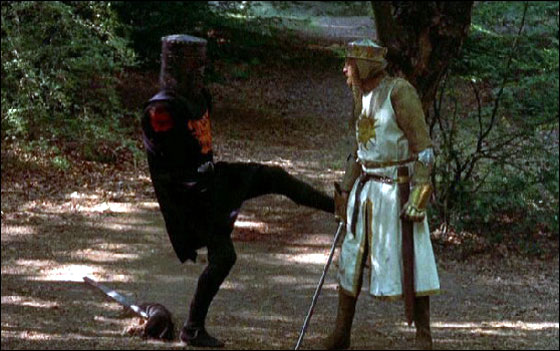
I cannot say when it started, but bank mergers were perhaps first. Recall the 1990 merger of Mitsui and Taiyo Kobe Bank into, yes, Mitsui-Taiyo Kobe Bank which morphed, briefly into "Sakura"before melting into Sumitomo. And of course Sanwa, Tokai and Toyo married to become UFJ, and like the Monty Python knight with "only a flesh wound", survived phagocytosis by Mitsubishi to yield "Mitsubishi-UFJ". The venerable Takugin, early banking casualty of the Bubble, partly dismembered and disemboweled lives as Sapporo-Hokuyo. Chuo-Mitsui (Trust Banking), Sumitomo-Osaka (Cement), Hokuetsu-Kishu (Paper), GS-Yuasa (Batteries), Isetan-Mitsukoshi (Retail), Konica-Minolta (Precision), Kyowa-Kirin (Pharma), Sumitomo-Mitsui (Insurance), Maruha-Nichiro (Marine Prods), Daiichi-Sankyo, Dainippon-Sumitomo (both Pharma) are further examples of corporate diplomacy insuring that the preservation of tradition, organizational honor and management face trumped any meaningfully rational attempt at branding.
Some have rebranded when the "Wa" has been disturbed and reputations irreparably tarnished. Daiwa Bank, which not blew through its capital (and then some!) but was the residence of Toshihide Iguchi, one of the first to hide mammoth-amounts of [losing] trade tickets in desk, became "Resona" when the government merged it with Nara, Asahi, and Kinki-Osaka Banks. Ditto the merged near-bankrupts Nissho Iwai and Nichimen who agreed upon Sojitz, (meaning "Double" or "Twin") presumably to demonstrate it was a merger of financially pathetic equals. However, the most notorious was the creation of Aozora (literally "Blue Sky")and Shinsei (meaning "New born") out of the rotting putrid carcasses of LTCB and NCB.
Cellular giant KDDI - the merger between the KDD and DDI - could be forgiven since both firms were themselves acronyms to begin with, and the merger resulted ostensibly in major savings by eliminating 2 upper-case "D's" (presumably one "D" from each for the sake of equality). Seven & I, the merger of retailing affiliates Ito Yokado and Seven-Eleven were ill-advised by their branding consultants (if they had one), for the result is an alphabetic number with an ampersand and a dangling consonant. Ummm, yeah.
J-Front raised my eyebrows, choosing unusually to ditch their legacy parents of Daimaru and Matsuzakaya (the joke of the price-weighted Nikkei 225 in 1990). The attempt was valiant, but there is something unsettling about the result, at least in English, for "Front" while possibly meaning store front, or two battle fronts, commonly has more nefarious connotations as in a fake or dupe. Clearly they didn't go out to any English focus groups on this one. Kawasaki & NKK Steel's merger into JFE was more successful in jettisoning the baggage of legacy for the future - whatever may be implied by JFE (Japan Ferrous Enterprise?). But somehow the acronym seems to fit the technical nature of the steel industry.
JX Holdings is entirely more mysterious, even sinister, with the association popping into my head being the evil Baron Silas von Greenback, the toad playing foil to Danger Mouse and Penfold. It was the result of Nippon Oil and Japan Energy which itself arose from Nippon Mining's earlier acquisitions. I suppose it IS economical in this age of the slimmed-down new normal. Heck, only two letters! Imagine the savings on stationary, business cards, and more importantly, signage.
But the coup d'grace goes to the insurance sector, where imagination and vision has always been in short supply. Where there were thirteen there are now four. Mitsui F&M and Sumitomo F&M, became yes Mitsui-Sumitomo, whereafter they joined with Aoi (itself the result of a merger between Dai-Tokyo & Chiyoda) and Nippon Life affiliate Nissay Dowa, to become, yes, you guessed it: "MS & AD Holdings". And since it is important not to rock the boat, "Nippon F&M who only a few years ago bedded Koa F&M, the progeny imaginatively known as "Nippon Koa", decided to merge with Yasuda ("Sompo" after gobbling minnows Taisei and Nissan F&M) to become none other than "NKSJ Holding".
I cannot say when it started, but bank mergers were perhaps first. Recall the 1990 merger of Mitsui and Taiyo Kobe Bank into, yes, Mitsui-Taiyo Kobe Bank which morphed, briefly into "Sakura"before melting into Sumitomo. And of course Sanwa, Tokai and Toyo married to become UFJ, and like the Monty Python knight with "only a flesh wound", survived phagocytosis by Mitsubishi to yield "Mitsubishi-UFJ". The venerable Takugin, early banking casualty of the Bubble, partly dismembered and disemboweled lives as Sapporo-Hokuyo. Chuo-Mitsui (Trust Banking), Sumitomo-Osaka (Cement), Hokuetsu-Kishu (Paper), GS-Yuasa (Batteries), Isetan-Mitsukoshi (Retail), Konica-Minolta (Precision), Kyowa-Kirin (Pharma), Sumitomo-Mitsui (Insurance), Maruha-Nichiro (Marine Prods), Daiichi-Sankyo, Dainippon-Sumitomo (both Pharma) are further examples of corporate diplomacy insuring that the preservation of tradition, organizational honor and management face trumped any meaningfully rational attempt at branding.
Some have rebranded when the "Wa" has been disturbed and reputations irreparably tarnished. Daiwa Bank, which not blew through its capital (and then some!) but was the residence of Toshihide Iguchi, one of the first to hide mammoth-amounts of [losing] trade tickets in desk, became "Resona" when the government merged it with Nara, Asahi, and Kinki-Osaka Banks. Ditto the merged near-bankrupts Nissho Iwai and Nichimen who agreed upon Sojitz, (meaning "Double" or "Twin") presumably to demonstrate it was a merger of financially pathetic equals. However, the most notorious was the creation of Aozora (literally "Blue Sky")and Shinsei (meaning "New born") out of the rotting putrid carcasses of LTCB and NCB.
Cellular giant KDDI - the merger between the KDD and DDI - could be forgiven since both firms were themselves acronyms to begin with, and the merger resulted ostensibly in major savings by eliminating 2 upper-case "D's" (presumably one "D" from each for the sake of equality). Seven & I, the merger of retailing affiliates Ito Yokado and Seven-Eleven were ill-advised by their branding consultants (if they had one), for the result is an alphabetic number with an ampersand and a dangling consonant. Ummm, yeah.
J-Front raised my eyebrows, choosing unusually to ditch their legacy parents of Daimaru and Matsuzakaya (the joke of the price-weighted Nikkei 225 in 1990). The attempt was valiant, but there is something unsettling about the result, at least in English, for "Front" while possibly meaning store front, or two battle fronts, commonly has more nefarious connotations as in a fake or dupe. Clearly they didn't go out to any English focus groups on this one. Kawasaki & NKK Steel's merger into JFE was more successful in jettisoning the baggage of legacy for the future - whatever may be implied by JFE (Japan Ferrous Enterprise?). But somehow the acronym seems to fit the technical nature of the steel industry.
JX Holdings is entirely more mysterious, even sinister, with the association popping into my head being the evil Baron Silas von Greenback, the toad playing foil to Danger Mouse and Penfold. It was the result of Nippon Oil and Japan Energy which itself arose from Nippon Mining's earlier acquisitions. I suppose it IS economical in this age of the slimmed-down new normal. Heck, only two letters! Imagine the savings on stationary, business cards, and more importantly, signage.
But the coup d'grace goes to the insurance sector, where imagination and vision has always been in short supply. Where there were thirteen there are now four. Mitsui F&M and Sumitomo F&M, became yes Mitsui-Sumitomo, whereafter they joined with Aoi (itself the result of a merger between Dai-Tokyo & Chiyoda) and Nippon Life affiliate Nissay Dowa, to become, yes, you guessed it: "MS & AD Holdings". And since it is important not to rock the boat, "Nippon F&M who only a few years ago bedded Koa F&M, the progeny imaginatively known as "Nippon Koa", decided to merge with Yasuda ("Sompo" after gobbling minnows Taisei and Nissan F&M) to become none other than "NKSJ Holding".
Sunday, May 16, 2010
Financial Mother Goose

Hello all. It is a lazy Sunday. And so I thought I'd share some amusement between finishing a great read "My Father's Island" (which only took six years to get around to finally reading from Galapagos trip), and the springtime yard work which awaits...
HUGE DIDDLE DIDDLE
Huge diddle, diddle,
The CFO fiddles,
The 'counts to be released very soon;
The CEO laughed
To see the report,
Knowing his share price will be launched to the moon.
HA1 HA! QUANT MAN
"Ha! Ha! quant man,
Have you any tools"?
"Yes sir, yes sir,
Three disk fullz";
"One for my trading",
"One to entertain",
"...And one which will be the cause
Of my firm's financial pain."
I SAW A MAN A-TRADING
I saw a man a-trading,
Trading on the CME;
He thought he was so clever
When his winnings he could see !
He dreamed of comfits in his cabin,
And Red Ferrari's he might hold;
The clothes which would be made of silk,
And buckets filled of gold.
But short four lacks of silver
And a billion of the dollar
levered huge, Without a stop,
Felt like concrete upon his collar.
So the man-a-trading,
now empty was his sack;
Said to his investors,
"Just one more - I'll make it back!"
OLD WARREN BUFFET
Old Warren Buffett
Sat on his tuffet,
Eating the turds that others threw away;
Along came a prosecutor,
Querying bogus finite deals and ummm errrr,
Frightened Mr Buffet ran away.
[ed.: leaving Ferguson to the wolves...]
OLD KING COAL
Old King Coal
Was a very cheap fuel,
And a very cheap fuel was he;
He smoked from all pipes,
dug up from earth's bowels,
setting tons of CO2 free.
Each burner, he had a riddle,
And a very fine riddle had he;
"Is there nothing that's clean and as cheap??!?" ,
Oh, there's none so rare,
As can compare
With old King Coal and his cheapness thee!
A TREND IS....
A Trend is like an onion:
You taste it with delight;
But when it's gone you wonder,
Whatever made you bite
THIS LITTLE PIGGY
This little PIIGy was slammed by the market;
This little PIIGy sat tight at home;
This little PIIGy made some budget cuts;
And this little PIIGy made none;
But this little PIIGy cried, "ouch, ouch, ouch!
All the way to the IMF's home.
THE SEC DOESN'T PEEP
The SEC doesn't keep, the safety of peeps
in sight, in order to defend them;
They left their charges alone, so they could hone,
multitudinious ways to fleece 'em.
The SEC didn't peep, since they were asleep,
only dreaming of frauds committed;
But when they awoke, they found it not a joke,
For the customers were still being pilfered.
Then up they took, their little crook,
Determined for to find them;
They found them indeed, but it made their heart bleed,
For Goldman had deleted all their e-mails behind them.
Please feel free to contribute your own....
Tuesday, May 11, 2010
Awe and Wonderment (A Brief History of)

The failure of the UAL buyout but a few years later caused a similar albeit less-manic panic, but HAL's cables had been disconnected, and L.O.R. disgraced. It was mostly the risk-arbs and short-premium option market-makers who were skewered. Wondrous awe was perhaps the most apt description again in fall 1998 when the Yen moved fifteen big figures overnight as puked carry trades presumably pushed other short yen positions over the get-me-out precipice. "Shit happens", it must said. So "Leverage is poison!" became the watchword, (for a year or two). The tech-wreck was tame and in slow-motion by comparison. Reality bit slowly, and in any event, the bear market in most stocks began in 1998. The melt-up was the thing most noteworthy. The tail end in fall 2002 displayed some pyrotechnics, but these were at the individual stock level, and (perhaps rightfully) reflected the portfolio craters once Enron, WorldCom, and Adelphia (to name a few) once filled.
Despite various spikes, dips and swoons, it wasn't until the summer of 2007 that "awe and wonderment" were again applicable. Crowded trades, too much capital, too much leverage, and evolved (not necessarily for the better) market mechanisms conspired impale many naive and/or overconfident quants to impale upon the proverbial hot-poker - one that remain stubbornly lodged in its orifice causing the largest continue delevering and amplifying the cascade for quarters more until being overshadowed by Peak Credit its profound private deleveraging and transfer onto the public balance sheet. This need not recounting since the blogosphere was fully oiled suffice to say the authorities prevented further feedback-induced cascade selling of position to make position that would have led to even deeper systemic financial insolvency.
Again, last week, "awe and wonderment" were apt descriptors of the action (or lack of it) in the S&P and Euro-Yen cross. More than 10 handles on each in a seeming vacuum during but a precious-few minutes. Ouch!, indeed. Most leave school thinking markets (of major instruments) more or less infinitely broad and deep, with multitudes of participant types - each with different opinions, yielding liquidity functions that draw out size deepening bids or offers the more price moves, thereby dampening volatility. Except when it doesn't. When "shit happens" as it inevitably does. We live in a brave new world. A world where black is white and where white can be black at the flick of a switch (or the triggering of threshold panic response in an trading strategy or risk-management algorithm). Predatory sniffers intensify their efforts. Normal buyers are forced to puke and become sellers. Further stops are triggered. More systematic trend-following programs are triggered initiating new positions in the same direction. Normal liquidity providers suspend activities. It is the market equivalent of Alan Shepard's six-iron drive on the gravity-less moon, prices untethered by buyers and sellers knowledgeable of their transactions. And one watches with awe and wonderment, at the edifice which has evolved, quite certain that this is the shot across-the-bow exposing the inherent systemic instability of the machines, who are only as good their young masters.
Friday, May 07, 2010
Sovereign Shock and Awe
I have long argued that preemptive action - in the form of a good (read: conservative) policy mix - should be the preferred route of governments. The upside vs. downside of pursuing pedal-to-the-metal policy mixes is now being witnessed (in Anglo-Saxon land). The marginal upside (and its positive externalities), on a probability-adjusted basis never, in my opinion, outweighed the risks to systemic stability engendered in neglectful policy pandering to the present at the expense of the future. Europe too must accept its culpability, unable as it was to resist the Siren's call of me-too spend-now, worry-later goosing. But that was then, and this is now. Democracy in complex modernity (again, not solely in Anglo-Saxon land) has failed to deliver prudent management of the State's affairs (for different reasons). Libertarians may still argue markets were not free enough, but the reality of prolonged markets distortions by mercantilists that man-slaughtered bond market vigilantism, should have been enough to seek redress through tighter fiscal policy, tighter monetary policy (as implied by the Taylor rule), or both. Regulatory neglect, across financial centres, too played its part in the [hopefully] now-regretful feedback loop.
But pre-emptive action - the brave type witnessed in Germany's VAT rise several years ago - has been almost wholly absent for almost three decades. Since the days of Carter's malaise speech, and his subsequent electoral spanking, pulling "a Mondale", that is, even suggesting that taxes might need to rise to prudently satisfy the financing requirements of the State's expenditure has a been a political death-wish. The people have got what they asked for (more for less) year-in and year-out - and they should be both mindful and regretful in their culpability. A few developed countries have (politically) managed better, but this is likely a vestiges of collective memory or austere protestantism. I have recognized this, and thus argued, in particular, that the US will not, indeed cannot, fix the problem until the proverbial wagon has lost its wheels evidenced by an exemplary Team America Vomit-scene extraordinaire.
What should have been done has been evident to grown-ups (and some children) in the realms of fiscal, monetary, regulatory policy for the past decade-and-a-half. But again, that was then, and this is now. The present medicine is far more painful now, as any practitioner could forecast. And so despite knowing what is necessary, and the pain such obvious solutions will cause (no matter justly apportioned and implemented) discussions with a wise man yesterday raised an interesting question in regards to their acceptance and adoption by the polity. He posited that shock-therapy (not in the IMF sense), but in the sudden event occurance sense inherently is psychologically easier for humans to bear to bear than, how shall I call it, a prolonged gradual stoic voluntary austerity. The shock whether default, restructuring, etc. he argued, removes the oppositional barriers, and focuses peoples attention more clearly on the future and solutions, than on protection of parochial interests.
I have been somewhat idealistically prejudiced towards a northern-european rationalism, hence believed that neglect and financial demagoguery was more of a failure of political leadership and communication than of will. Regretfully, the political processes and media failures within our democracies coupled with general financial ignorance and the belief in The State Tooth Fairy cause me to relent, and seriously entertain the superiority of Shock-and-Awe as an motivator and aggregator or requisite political will, not just in the USA.
But pre-emptive action - the brave type witnessed in Germany's VAT rise several years ago - has been almost wholly absent for almost three decades. Since the days of Carter's malaise speech, and his subsequent electoral spanking, pulling "a Mondale", that is, even suggesting that taxes might need to rise to prudently satisfy the financing requirements of the State's expenditure has a been a political death-wish. The people have got what they asked for (more for less) year-in and year-out - and they should be both mindful and regretful in their culpability. A few developed countries have (politically) managed better, but this is likely a vestiges of collective memory or austere protestantism. I have recognized this, and thus argued, in particular, that the US will not, indeed cannot, fix the problem until the proverbial wagon has lost its wheels evidenced by an exemplary Team America Vomit-scene extraordinaire.
What should have been done has been evident to grown-ups (and some children) in the realms of fiscal, monetary, regulatory policy for the past decade-and-a-half. But again, that was then, and this is now. The present medicine is far more painful now, as any practitioner could forecast. And so despite knowing what is necessary, and the pain such obvious solutions will cause (no matter justly apportioned and implemented) discussions with a wise man yesterday raised an interesting question in regards to their acceptance and adoption by the polity. He posited that shock-therapy (not in the IMF sense), but in the sudden event occurance sense inherently is psychologically easier for humans to bear to bear than, how shall I call it, a prolonged gradual stoic voluntary austerity. The shock whether default, restructuring, etc. he argued, removes the oppositional barriers, and focuses peoples attention more clearly on the future and solutions, than on protection of parochial interests.
I have been somewhat idealistically prejudiced towards a northern-european rationalism, hence believed that neglect and financial demagoguery was more of a failure of political leadership and communication than of will. Regretfully, the political processes and media failures within our democracies coupled with general financial ignorance and the belief in The State Tooth Fairy cause me to relent, and seriously entertain the superiority of Shock-and-Awe as an motivator and aggregator or requisite political will, not just in the USA.
Thursday, April 08, 2010
What Glitters Is...Sweet??!??
I met a chap while waiting in the queue to ascend the Grand Montets, after a particularly heavy snowfall. Unlike the ultra-gregarious Swedes, the loud but polite Brits, or the serious and contemplative back-country types with the Phat boards, shovel and extensible avalanche pole, he had his nose buried in Soros' latest book, as good as a conversation starter for an obsessive financial type as there is.
Starting with the [now seemingly forgotten] crisis, we talked of many things, before it turned to "Gold", which he volunteered, he thought was dumb. Not that he thought the vaulting price was stupid. He offered no opinion of that. But, he said, the war years were tough. Really tough. (He was not of Serbian descent, as it would happen). He'd seen his friends, he explained, do the smash-n-grab (not literally) thing following the disintegration of what was Yugoslavia, rolling up ill-gotten gains into (amongst other material objects) hoards of gold. Their hedge. Their so-called mad money, for which he said chided them at the time, though to little effect. But, he went on, when things got really dire, there was no market for it. There was no way under the circumstances to reasonably convert the hoards to what one really needed. As a result, the going rate was all over the map, but half-ounce or ounces were commonly traded for sugar and flour in ratios that would make the wealth-hedging gold-bug weep. I listened intently, though it was just an anecdote, but an interesting one nonetheless.
And so it is with some wonder that I notice that a great number of admirers of the most precious metal also seemingly (if I might take liberty with a generalization) are predisposed to believe that coincidental to the impending fiat money collapse will be a breakdown in the Rule of Law. Admittedly, gold may serve (or already have served) well as a tonic against large monetary dilution, incessant quantitative easing, continued unsterilized central bank consumption of newly-issued Treasury debt or merely fears of the aforementioned. But but do they think will happen when they really need it, like, trading those coins pure-gold coins (bling broach, or watch), for something tangible. If history is a guide, they will get sooooooo totally hosed. There is a non-sequitir in their belief structure that somehow a few guns, bit-a-ammo, stash-o-gold, a Kazcynski-cabin maybe some C-4 and a coupla' detonators, will keep them more-than-buoyant during ummm errr the re-ordering.
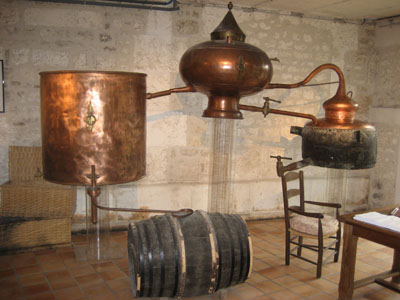
Viewed from this point, gold is a trade, for ruminating upon my Bosnian acquaintance's anecdote, there is a point - call it the "Oh Fuck moment" beyond which Gold is quite sub-optimal, and sugar, petrol, some vegetable seeds, a goat or two, an alembic, all make seeming better sense. Or, perhaps in the extreme, the best hedge in the event (if you believe in the event) of a breakdown in the rule of law, is to BE the baddest thug, and/or join/align yourself with the meanest thugs around, a paradoxical feedback loop that leads one down a disturbing rathole indeed.
But what is Jim Rogers thinking will happen when and if law and order breaks down? Does he expect to cross the border (on his motorcycle?) to the (recently nationalized) Swiss depository holding his metal, and expect it just to be handed over to him? "How would you like it, Monsieur - in the big shiny bars or the shiny petite pieces??" Will he put it in his sidecar? How will he get it home - to Singapore? He would presumably need a small and loyal army, which if well-organized might, themselves, think twice about prevailing errr ummm distribution of wealth. I say this somewhat tongue-in-cheek, but I am sure readers can conjure others.
The fear trade is obvious, but it's a fear trade. I have no answers. But I can spot a financial non-sequitir from a distance, and it deserves some exposition and further mental kneading.
Starting with the [now seemingly forgotten] crisis, we talked of many things, before it turned to "Gold", which he volunteered, he thought was dumb. Not that he thought the vaulting price was stupid. He offered no opinion of that. But, he said, the war years were tough. Really tough. (He was not of Serbian descent, as it would happen). He'd seen his friends, he explained, do the smash-n-grab (not literally) thing following the disintegration of what was Yugoslavia, rolling up ill-gotten gains into (amongst other material objects) hoards of gold. Their hedge. Their so-called mad money, for which he said chided them at the time, though to little effect. But, he went on, when things got really dire, there was no market for it. There was no way under the circumstances to reasonably convert the hoards to what one really needed. As a result, the going rate was all over the map, but half-ounce or ounces were commonly traded for sugar and flour in ratios that would make the wealth-hedging gold-bug weep. I listened intently, though it was just an anecdote, but an interesting one nonetheless.
And so it is with some wonder that I notice that a great number of admirers of the most precious metal also seemingly (if I might take liberty with a generalization) are predisposed to believe that coincidental to the impending fiat money collapse will be a breakdown in the Rule of Law. Admittedly, gold may serve (or already have served) well as a tonic against large monetary dilution, incessant quantitative easing, continued unsterilized central bank consumption of newly-issued Treasury debt or merely fears of the aforementioned. But but do they think will happen when they really need it, like, trading those coins pure-gold coins (bling broach, or watch), for something tangible. If history is a guide, they will get sooooooo totally hosed. There is a non-sequitir in their belief structure that somehow a few guns, bit-a-ammo, stash-o-gold, a Kazcynski-cabin maybe some C-4 and a coupla' detonators, will keep them more-than-buoyant during ummm errr the re-ordering.
Viewed from this point, gold is a trade, for ruminating upon my Bosnian acquaintance's anecdote, there is a point - call it the "Oh Fuck moment" beyond which Gold is quite sub-optimal, and sugar, petrol, some vegetable seeds, a goat or two, an alembic, all make seeming better sense. Or, perhaps in the extreme, the best hedge in the event (if you believe in the event) of a breakdown in the rule of law, is to BE the baddest thug, and/or join/align yourself with the meanest thugs around, a paradoxical feedback loop that leads one down a disturbing rathole indeed.
But what is Jim Rogers thinking will happen when and if law and order breaks down? Does he expect to cross the border (on his motorcycle?) to the (recently nationalized) Swiss depository holding his metal, and expect it just to be handed over to him? "How would you like it, Monsieur - in the big shiny bars or the shiny petite pieces??" Will he put it in his sidecar? How will he get it home - to Singapore? He would presumably need a small and loyal army, which if well-organized might, themselves, think twice about prevailing errr ummm distribution of wealth. I say this somewhat tongue-in-cheek, but I am sure readers can conjure others.
The fear trade is obvious, but it's a fear trade. I have no answers. But I can spot a financial non-sequitir from a distance, and it deserves some exposition and further mental kneading.
Monday, March 29, 2010
CDA Biz to CDA Gov: Raise Taxes! (Wot?!???)
According to the Globe & Mail, Canadian business executives say it's time to raise taxes? What?? Surely this is some mistake. What could they possibly be thinking? Is there something wrong with the water? Don't they know this is pure unadulterated heresy? Don't they believe (like their southern neighbours certainly do) this is akin to declaring "war" on their class and the future of the nation? Don't they understand what higher taxes actually mean....and what they lead too? (Answer: bureaucracy, give-aways, free-lunches, Nancy Pelosi's, yada yada yada, and more SOCIALISM, of course). The poll must be tainted. The Globe & Mail must be biased, run by Che Guevara fashionista Marxist-Lenninst sympathizers. And all this time, we've been looking at that long divide to the south, when, the REAL menace has been lurking to the north. It's clearly time Americans locked down their northern border or else we will soon be over-run with....ummm...... errrrr......prudence and, heaven forbid, common sense.
Subscribe to:
Comments (Atom)

 Posts
Posts