Monday, May 31, 2010
No Soup For You!


Thursday, May 27, 2010
Japan Watch: An Important Emergent Trend
There is a most troubling trend afoot in Japan. No, it is not the further perplexing descent of JGB yields, the failure of a newly appointed Finance Ministers to survive longer than the time it takes to slow-roast a nice Gigot, the SFP Value Realization Fund's attempt to block Matsuya's takeover defense provisions despite their inexorable slide into the sunset, or the lack of a third-handle on the Yen. Rather, I refer to the peculiar practice of merged companies failing to find an appropriate moniker, resulting in tortured names for time-honoroured companies that resemble legal partnerships, or, even worse, the adoption of mneumonic abbreviations that could be mistaken for the chemical designation of food colouring, or a UN NGO.
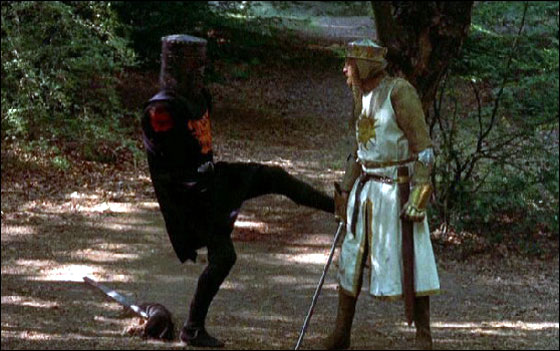
I cannot say when it started, but bank mergers were perhaps first. Recall the 1990 merger of Mitsui and Taiyo Kobe Bank into, yes, Mitsui-Taiyo Kobe Bank which morphed, briefly into "Sakura"before melting into Sumitomo. And of course Sanwa, Tokai and Toyo married to become UFJ, and like the Monty Python knight with "only a flesh wound", survived phagocytosis by Mitsubishi to yield "Mitsubishi-UFJ". The venerable Takugin, early banking casualty of the Bubble, partly dismembered and disemboweled lives as Sapporo-Hokuyo. Chuo-Mitsui (Trust Banking), Sumitomo-Osaka (Cement), Hokuetsu-Kishu (Paper), GS-Yuasa (Batteries), Isetan-Mitsukoshi (Retail), Konica-Minolta (Precision), Kyowa-Kirin (Pharma), Sumitomo-Mitsui (Insurance), Maruha-Nichiro (Marine Prods), Daiichi-Sankyo, Dainippon-Sumitomo (both Pharma) are further examples of corporate diplomacy insuring that the preservation of tradition, organizational honor and management face trumped any meaningfully rational attempt at branding.
Some have rebranded when the "Wa" has been disturbed and reputations irreparably tarnished. Daiwa Bank, which not blew through its capital (and then some!) but was the residence of Toshihide Iguchi, one of the first to hide mammoth-amounts of [losing] trade tickets in desk, became "Resona" when the government merged it with Nara, Asahi, and Kinki-Osaka Banks. Ditto the merged near-bankrupts Nissho Iwai and Nichimen who agreed upon Sojitz, (meaning "Double" or "Twin") presumably to demonstrate it was a merger of financially pathetic equals. However, the most notorious was the creation of Aozora (literally "Blue Sky")and Shinsei (meaning "New born") out of the rotting putrid carcasses of LTCB and NCB.
Cellular giant KDDI - the merger between the KDD and DDI - could be forgiven since both firms were themselves acronyms to begin with, and the merger resulted ostensibly in major savings by eliminating 2 upper-case "D's" (presumably one "D" from each for the sake of equality). Seven & I, the merger of retailing affiliates Ito Yokado and Seven-Eleven were ill-advised by their branding consultants (if they had one), for the result is an alphabetic number with an ampersand and a dangling consonant. Ummm, yeah.
J-Front raised my eyebrows, choosing unusually to ditch their legacy parents of Daimaru and Matsuzakaya (the joke of the price-weighted Nikkei 225 in 1990). The attempt was valiant, but there is something unsettling about the result, at least in English, for "Front" while possibly meaning store front, or two battle fronts, commonly has more nefarious connotations as in a fake or dupe. Clearly they didn't go out to any English focus groups on this one. Kawasaki & NKK Steel's merger into JFE was more successful in jettisoning the baggage of legacy for the future - whatever may be implied by JFE (Japan Ferrous Enterprise?). But somehow the acronym seems to fit the technical nature of the steel industry.
JX Holdings is entirely more mysterious, even sinister, with the association popping into my head being the evil Baron Silas von Greenback, the toad playing foil to Danger Mouse and Penfold. It was the result of Nippon Oil and Japan Energy which itself arose from Nippon Mining's earlier acquisitions. I suppose it IS economical in this age of the slimmed-down new normal. Heck, only two letters! Imagine the savings on stationary, business cards, and more importantly, signage.
But the coup d'grace goes to the insurance sector, where imagination and vision has always been in short supply. Where there were thirteen there are now four. Mitsui F&M and Sumitomo F&M, became yes Mitsui-Sumitomo, whereafter they joined with Aoi (itself the result of a merger between Dai-Tokyo & Chiyoda) and Nippon Life affiliate Nissay Dowa, to become, yes, you guessed it: "MS & AD Holdings". And since it is important not to rock the boat, "Nippon F&M who only a few years ago bedded Koa F&M, the progeny imaginatively known as "Nippon Koa", decided to merge with Yasuda ("Sompo" after gobbling minnows Taisei and Nissan F&M) to become none other than "NKSJ Holding".
I cannot say when it started, but bank mergers were perhaps first. Recall the 1990 merger of Mitsui and Taiyo Kobe Bank into, yes, Mitsui-Taiyo Kobe Bank which morphed, briefly into "Sakura"before melting into Sumitomo. And of course Sanwa, Tokai and Toyo married to become UFJ, and like the Monty Python knight with "only a flesh wound", survived phagocytosis by Mitsubishi to yield "Mitsubishi-UFJ". The venerable Takugin, early banking casualty of the Bubble, partly dismembered and disemboweled lives as Sapporo-Hokuyo. Chuo-Mitsui (Trust Banking), Sumitomo-Osaka (Cement), Hokuetsu-Kishu (Paper), GS-Yuasa (Batteries), Isetan-Mitsukoshi (Retail), Konica-Minolta (Precision), Kyowa-Kirin (Pharma), Sumitomo-Mitsui (Insurance), Maruha-Nichiro (Marine Prods), Daiichi-Sankyo, Dainippon-Sumitomo (both Pharma) are further examples of corporate diplomacy insuring that the preservation of tradition, organizational honor and management face trumped any meaningfully rational attempt at branding.
Some have rebranded when the "Wa" has been disturbed and reputations irreparably tarnished. Daiwa Bank, which not blew through its capital (and then some!) but was the residence of Toshihide Iguchi, one of the first to hide mammoth-amounts of [losing] trade tickets in desk, became "Resona" when the government merged it with Nara, Asahi, and Kinki-Osaka Banks. Ditto the merged near-bankrupts Nissho Iwai and Nichimen who agreed upon Sojitz, (meaning "Double" or "Twin") presumably to demonstrate it was a merger of financially pathetic equals. However, the most notorious was the creation of Aozora (literally "Blue Sky")and Shinsei (meaning "New born") out of the rotting putrid carcasses of LTCB and NCB.
Cellular giant KDDI - the merger between the KDD and DDI - could be forgiven since both firms were themselves acronyms to begin with, and the merger resulted ostensibly in major savings by eliminating 2 upper-case "D's" (presumably one "D" from each for the sake of equality). Seven & I, the merger of retailing affiliates Ito Yokado and Seven-Eleven were ill-advised by their branding consultants (if they had one), for the result is an alphabetic number with an ampersand and a dangling consonant. Ummm, yeah.
J-Front raised my eyebrows, choosing unusually to ditch their legacy parents of Daimaru and Matsuzakaya (the joke of the price-weighted Nikkei 225 in 1990). The attempt was valiant, but there is something unsettling about the result, at least in English, for "Front" while possibly meaning store front, or two battle fronts, commonly has more nefarious connotations as in a fake or dupe. Clearly they didn't go out to any English focus groups on this one. Kawasaki & NKK Steel's merger into JFE was more successful in jettisoning the baggage of legacy for the future - whatever may be implied by JFE (Japan Ferrous Enterprise?). But somehow the acronym seems to fit the technical nature of the steel industry.
JX Holdings is entirely more mysterious, even sinister, with the association popping into my head being the evil Baron Silas von Greenback, the toad playing foil to Danger Mouse and Penfold. It was the result of Nippon Oil and Japan Energy which itself arose from Nippon Mining's earlier acquisitions. I suppose it IS economical in this age of the slimmed-down new normal. Heck, only two letters! Imagine the savings on stationary, business cards, and more importantly, signage.
But the coup d'grace goes to the insurance sector, where imagination and vision has always been in short supply. Where there were thirteen there are now four. Mitsui F&M and Sumitomo F&M, became yes Mitsui-Sumitomo, whereafter they joined with Aoi (itself the result of a merger between Dai-Tokyo & Chiyoda) and Nippon Life affiliate Nissay Dowa, to become, yes, you guessed it: "MS & AD Holdings". And since it is important not to rock the boat, "Nippon F&M who only a few years ago bedded Koa F&M, the progeny imaginatively known as "Nippon Koa", decided to merge with Yasuda ("Sompo" after gobbling minnows Taisei and Nissan F&M) to become none other than "NKSJ Holding".
Sunday, May 16, 2010
Financial Mother Goose

Hello all. It is a lazy Sunday. And so I thought I'd share some amusement between finishing a great read "My Father's Island" (which only took six years to get around to finally reading from Galapagos trip), and the springtime yard work which awaits...
HUGE DIDDLE DIDDLE
Huge diddle, diddle,
The CFO fiddles,
The 'counts to be released very soon;
The CEO laughed
To see the report,
Knowing his share price will be launched to the moon.
HA1 HA! QUANT MAN
"Ha! Ha! quant man,
Have you any tools"?
"Yes sir, yes sir,
Three disk fullz";
"One for my trading",
"One to entertain",
"...And one which will be the cause
Of my firm's financial pain."
I SAW A MAN A-TRADING
I saw a man a-trading,
Trading on the CME;
He thought he was so clever
When his winnings he could see !
He dreamed of comfits in his cabin,
And Red Ferrari's he might hold;
The clothes which would be made of silk,
And buckets filled of gold.
But short four lacks of silver
And a billion of the dollar
levered huge, Without a stop,
Felt like concrete upon his collar.
So the man-a-trading,
now empty was his sack;
Said to his investors,
"Just one more - I'll make it back!"
OLD WARREN BUFFET
Old Warren Buffett
Sat on his tuffet,
Eating the turds that others threw away;
Along came a prosecutor,
Querying bogus finite deals and ummm errrr,
Frightened Mr Buffet ran away.
[ed.: leaving Ferguson to the wolves...]
OLD KING COAL
Old King Coal
Was a very cheap fuel,
And a very cheap fuel was he;
He smoked from all pipes,
dug up from earth's bowels,
setting tons of CO2 free.
Each burner, he had a riddle,
And a very fine riddle had he;
"Is there nothing that's clean and as cheap??!?" ,
Oh, there's none so rare,
As can compare
With old King Coal and his cheapness thee!
A TREND IS....
A Trend is like an onion:
You taste it with delight;
But when it's gone you wonder,
Whatever made you bite
THIS LITTLE PIGGY
This little PIIGy was slammed by the market;
This little PIIGy sat tight at home;
This little PIIGy made some budget cuts;
And this little PIIGy made none;
But this little PIIGy cried, "ouch, ouch, ouch!
All the way to the IMF's home.
THE SEC DOESN'T PEEP
The SEC doesn't keep, the safety of peeps
in sight, in order to defend them;
They left their charges alone, so they could hone,
multitudinious ways to fleece 'em.
The SEC didn't peep, since they were asleep,
only dreaming of frauds committed;
But when they awoke, they found it not a joke,
For the customers were still being pilfered.
Then up they took, their little crook,
Determined for to find them;
They found them indeed, but it made their heart bleed,
For Goldman had deleted all their e-mails behind them.
Please feel free to contribute your own....
Tuesday, May 11, 2010
Awe and Wonderment (A Brief History of)

The failure of the UAL buyout but a few years later caused a similar albeit less-manic panic, but HAL's cables had been disconnected, and L.O.R. disgraced. It was mostly the risk-arbs and short-premium option market-makers who were skewered. Wondrous awe was perhaps the most apt description again in fall 1998 when the Yen moved fifteen big figures overnight as puked carry trades presumably pushed other short yen positions over the get-me-out precipice. "Shit happens", it must said. So "Leverage is poison!" became the watchword, (for a year or two). The tech-wreck was tame and in slow-motion by comparison. Reality bit slowly, and in any event, the bear market in most stocks began in 1998. The melt-up was the thing most noteworthy. The tail end in fall 2002 displayed some pyrotechnics, but these were at the individual stock level, and (perhaps rightfully) reflected the portfolio craters once Enron, WorldCom, and Adelphia (to name a few) once filled.
Despite various spikes, dips and swoons, it wasn't until the summer of 2007 that "awe and wonderment" were again applicable. Crowded trades, too much capital, too much leverage, and evolved (not necessarily for the better) market mechanisms conspired impale many naive and/or overconfident quants to impale upon the proverbial hot-poker - one that remain stubbornly lodged in its orifice causing the largest continue delevering and amplifying the cascade for quarters more until being overshadowed by Peak Credit its profound private deleveraging and transfer onto the public balance sheet. This need not recounting since the blogosphere was fully oiled suffice to say the authorities prevented further feedback-induced cascade selling of position to make position that would have led to even deeper systemic financial insolvency.
Again, last week, "awe and wonderment" were apt descriptors of the action (or lack of it) in the S&P and Euro-Yen cross. More than 10 handles on each in a seeming vacuum during but a precious-few minutes. Ouch!, indeed. Most leave school thinking markets (of major instruments) more or less infinitely broad and deep, with multitudes of participant types - each with different opinions, yielding liquidity functions that draw out size deepening bids or offers the more price moves, thereby dampening volatility. Except when it doesn't. When "shit happens" as it inevitably does. We live in a brave new world. A world where black is white and where white can be black at the flick of a switch (or the triggering of threshold panic response in an trading strategy or risk-management algorithm). Predatory sniffers intensify their efforts. Normal buyers are forced to puke and become sellers. Further stops are triggered. More systematic trend-following programs are triggered initiating new positions in the same direction. Normal liquidity providers suspend activities. It is the market equivalent of Alan Shepard's six-iron drive on the gravity-less moon, prices untethered by buyers and sellers knowledgeable of their transactions. And one watches with awe and wonderment, at the edifice which has evolved, quite certain that this is the shot across-the-bow exposing the inherent systemic instability of the machines, who are only as good their young masters.
Friday, May 07, 2010
Sovereign Shock and Awe
I have long argued that preemptive action - in the form of a good (read: conservative) policy mix - should be the preferred route of governments. The upside vs. downside of pursuing pedal-to-the-metal policy mixes is now being witnessed (in Anglo-Saxon land). The marginal upside (and its positive externalities), on a probability-adjusted basis never, in my opinion, outweighed the risks to systemic stability engendered in neglectful policy pandering to the present at the expense of the future. Europe too must accept its culpability, unable as it was to resist the Siren's call of me-too spend-now, worry-later goosing. But that was then, and this is now. Democracy in complex modernity (again, not solely in Anglo-Saxon land) has failed to deliver prudent management of the State's affairs (for different reasons). Libertarians may still argue markets were not free enough, but the reality of prolonged markets distortions by mercantilists that man-slaughtered bond market vigilantism, should have been enough to seek redress through tighter fiscal policy, tighter monetary policy (as implied by the Taylor rule), or both. Regulatory neglect, across financial centres, too played its part in the [hopefully] now-regretful feedback loop.
But pre-emptive action - the brave type witnessed in Germany's VAT rise several years ago - has been almost wholly absent for almost three decades. Since the days of Carter's malaise speech, and his subsequent electoral spanking, pulling "a Mondale", that is, even suggesting that taxes might need to rise to prudently satisfy the financing requirements of the State's expenditure has a been a political death-wish. The people have got what they asked for (more for less) year-in and year-out - and they should be both mindful and regretful in their culpability. A few developed countries have (politically) managed better, but this is likely a vestiges of collective memory or austere protestantism. I have recognized this, and thus argued, in particular, that the US will not, indeed cannot, fix the problem until the proverbial wagon has lost its wheels evidenced by an exemplary Team America Vomit-scene extraordinaire.
What should have been done has been evident to grown-ups (and some children) in the realms of fiscal, monetary, regulatory policy for the past decade-and-a-half. But again, that was then, and this is now. The present medicine is far more painful now, as any practitioner could forecast. And so despite knowing what is necessary, and the pain such obvious solutions will cause (no matter justly apportioned and implemented) discussions with a wise man yesterday raised an interesting question in regards to their acceptance and adoption by the polity. He posited that shock-therapy (not in the IMF sense), but in the sudden event occurance sense inherently is psychologically easier for humans to bear to bear than, how shall I call it, a prolonged gradual stoic voluntary austerity. The shock whether default, restructuring, etc. he argued, removes the oppositional barriers, and focuses peoples attention more clearly on the future and solutions, than on protection of parochial interests.
I have been somewhat idealistically prejudiced towards a northern-european rationalism, hence believed that neglect and financial demagoguery was more of a failure of political leadership and communication than of will. Regretfully, the political processes and media failures within our democracies coupled with general financial ignorance and the belief in The State Tooth Fairy cause me to relent, and seriously entertain the superiority of Shock-and-Awe as an motivator and aggregator or requisite political will, not just in the USA.
But pre-emptive action - the brave type witnessed in Germany's VAT rise several years ago - has been almost wholly absent for almost three decades. Since the days of Carter's malaise speech, and his subsequent electoral spanking, pulling "a Mondale", that is, even suggesting that taxes might need to rise to prudently satisfy the financing requirements of the State's expenditure has a been a political death-wish. The people have got what they asked for (more for less) year-in and year-out - and they should be both mindful and regretful in their culpability. A few developed countries have (politically) managed better, but this is likely a vestiges of collective memory or austere protestantism. I have recognized this, and thus argued, in particular, that the US will not, indeed cannot, fix the problem until the proverbial wagon has lost its wheels evidenced by an exemplary Team America Vomit-scene extraordinaire.
What should have been done has been evident to grown-ups (and some children) in the realms of fiscal, monetary, regulatory policy for the past decade-and-a-half. But again, that was then, and this is now. The present medicine is far more painful now, as any practitioner could forecast. And so despite knowing what is necessary, and the pain such obvious solutions will cause (no matter justly apportioned and implemented) discussions with a wise man yesterday raised an interesting question in regards to their acceptance and adoption by the polity. He posited that shock-therapy (not in the IMF sense), but in the sudden event occurance sense inherently is psychologically easier for humans to bear to bear than, how shall I call it, a prolonged gradual stoic voluntary austerity. The shock whether default, restructuring, etc. he argued, removes the oppositional barriers, and focuses peoples attention more clearly on the future and solutions, than on protection of parochial interests.
I have been somewhat idealistically prejudiced towards a northern-european rationalism, hence believed that neglect and financial demagoguery was more of a failure of political leadership and communication than of will. Regretfully, the political processes and media failures within our democracies coupled with general financial ignorance and the belief in The State Tooth Fairy cause me to relent, and seriously entertain the superiority of Shock-and-Awe as an motivator and aggregator or requisite political will, not just in the USA.
Thursday, April 08, 2010
What Glitters Is...Sweet??!??
I met a chap while waiting in the queue to ascend the Grand Montets, after a particularly heavy snowfall. Unlike the ultra-gregarious Swedes, the loud but polite Brits, or the serious and contemplative back-country types with the Phat boards, shovel and extensible avalanche pole, he had his nose buried in Soros' latest book, as good as a conversation starter for an obsessive financial type as there is.
Starting with the [now seemingly forgotten] crisis, we talked of many things, before it turned to "Gold", which he volunteered, he thought was dumb. Not that he thought the vaulting price was stupid. He offered no opinion of that. But, he said, the war years were tough. Really tough. (He was not of Serbian descent, as it would happen). He'd seen his friends, he explained, do the smash-n-grab (not literally) thing following the disintegration of what was Yugoslavia, rolling up ill-gotten gains into (amongst other material objects) hoards of gold. Their hedge. Their so-called mad money, for which he said chided them at the time, though to little effect. But, he went on, when things got really dire, there was no market for it. There was no way under the circumstances to reasonably convert the hoards to what one really needed. As a result, the going rate was all over the map, but half-ounce or ounces were commonly traded for sugar and flour in ratios that would make the wealth-hedging gold-bug weep. I listened intently, though it was just an anecdote, but an interesting one nonetheless.
And so it is with some wonder that I notice that a great number of admirers of the most precious metal also seemingly (if I might take liberty with a generalization) are predisposed to believe that coincidental to the impending fiat money collapse will be a breakdown in the Rule of Law. Admittedly, gold may serve (or already have served) well as a tonic against large monetary dilution, incessant quantitative easing, continued unsterilized central bank consumption of newly-issued Treasury debt or merely fears of the aforementioned. But but do they think will happen when they really need it, like, trading those coins pure-gold coins (bling broach, or watch), for something tangible. If history is a guide, they will get sooooooo totally hosed. There is a non-sequitir in their belief structure that somehow a few guns, bit-a-ammo, stash-o-gold, a Kazcynski-cabin maybe some C-4 and a coupla' detonators, will keep them more-than-buoyant during ummm errr the re-ordering.
Viewed from this point, gold is a trade, for ruminating upon my Bosnian acquaintance's anecdote, there is a point - call it the "Oh Fuck moment" beyond which Gold is quite sub-optimal, and sugar, petrol, some vegetable seeds, a goat or two, an alembic, all make seeming better sense. Or, perhaps in the extreme, the best hedge in the event (if you believe in the event) of a breakdown in the rule of law, is to BE the baddest thug, and/or join/align yourself with the meanest thugs around, a paradoxical feedback loop that leads one down a disturbing rathole indeed.
But what is Jim Rogers thinking will happen when and if law and order breaks down? Does he expect to cross the border (on his motorcycle?) to the (recently nationalized) Swiss depository holding his metal, and expect it just to be handed over to him? "How would you like it, Monsieur - in the big shiny bars or the shiny petite pieces??" Will he put it in his sidecar? How will he get it home - to Singapore? He would presumably need a small and loyal army, which if well-organized might, themselves, think twice about prevailing errr ummm distribution of wealth. I say this somewhat tongue-in-cheek, but I am sure readers can conjure others.
The fear trade is obvious, but it's a fear trade. I have no answers. But I can spot a financial non-sequitir from a distance, and it deserves some exposition and further mental kneading.
Starting with the [now seemingly forgotten] crisis, we talked of many things, before it turned to "Gold", which he volunteered, he thought was dumb. Not that he thought the vaulting price was stupid. He offered no opinion of that. But, he said, the war years were tough. Really tough. (He was not of Serbian descent, as it would happen). He'd seen his friends, he explained, do the smash-n-grab (not literally) thing following the disintegration of what was Yugoslavia, rolling up ill-gotten gains into (amongst other material objects) hoards of gold. Their hedge. Their so-called mad money, for which he said chided them at the time, though to little effect. But, he went on, when things got really dire, there was no market for it. There was no way under the circumstances to reasonably convert the hoards to what one really needed. As a result, the going rate was all over the map, but half-ounce or ounces were commonly traded for sugar and flour in ratios that would make the wealth-hedging gold-bug weep. I listened intently, though it was just an anecdote, but an interesting one nonetheless.
And so it is with some wonder that I notice that a great number of admirers of the most precious metal also seemingly (if I might take liberty with a generalization) are predisposed to believe that coincidental to the impending fiat money collapse will be a breakdown in the Rule of Law. Admittedly, gold may serve (or already have served) well as a tonic against large monetary dilution, incessant quantitative easing, continued unsterilized central bank consumption of newly-issued Treasury debt or merely fears of the aforementioned. But but do they think will happen when they really need it, like, trading those coins pure-gold coins (bling broach, or watch), for something tangible. If history is a guide, they will get sooooooo totally hosed. There is a non-sequitir in their belief structure that somehow a few guns, bit-a-ammo, stash-o-gold, a Kazcynski-cabin maybe some C-4 and a coupla' detonators, will keep them more-than-buoyant during ummm errr the re-ordering.
Viewed from this point, gold is a trade, for ruminating upon my Bosnian acquaintance's anecdote, there is a point - call it the "Oh Fuck moment" beyond which Gold is quite sub-optimal, and sugar, petrol, some vegetable seeds, a goat or two, an alembic, all make seeming better sense. Or, perhaps in the extreme, the best hedge in the event (if you believe in the event) of a breakdown in the rule of law, is to BE the baddest thug, and/or join/align yourself with the meanest thugs around, a paradoxical feedback loop that leads one down a disturbing rathole indeed.
But what is Jim Rogers thinking will happen when and if law and order breaks down? Does he expect to cross the border (on his motorcycle?) to the (recently nationalized) Swiss depository holding his metal, and expect it just to be handed over to him? "How would you like it, Monsieur - in the big shiny bars or the shiny petite pieces??" Will he put it in his sidecar? How will he get it home - to Singapore? He would presumably need a small and loyal army, which if well-organized might, themselves, think twice about prevailing errr ummm distribution of wealth. I say this somewhat tongue-in-cheek, but I am sure readers can conjure others.
The fear trade is obvious, but it's a fear trade. I have no answers. But I can spot a financial non-sequitir from a distance, and it deserves some exposition and further mental kneading.
Monday, March 29, 2010
CDA Biz to CDA Gov: Raise Taxes! (Wot?!???)
According to the Globe & Mail, Canadian business executives say it's time to raise taxes? What?? Surely this is some mistake. What could they possibly be thinking? Is there something wrong with the water? Don't they know this is pure unadulterated heresy? Don't they believe (like their southern neighbours certainly do) this is akin to declaring "war" on their class and the future of the nation? Don't they understand what higher taxes actually mean....and what they lead too? (Answer: bureaucracy, give-aways, free-lunches, Nancy Pelosi's, yada yada yada, and more SOCIALISM, of course). The poll must be tainted. The Globe & Mail must be biased, run by Che Guevara fashionista Marxist-Lenninst sympathizers. And all this time, we've been looking at that long divide to the south, when, the REAL menace has been lurking to the north. It's clearly time Americans locked down their northern border or else we will soon be over-run with....ummm...... errrrr......prudence and, heaven forbid, common sense.
We Are All Zaitech Now
Repo 105 has come and gone in the media - a mere Tourette's tic-of-a-reaction. Lots of shock and indignation (in which, surprisingly, NY law firms came out looking good), along with calls for some good ol "hang 'em high" Fuld-targetted vigilanteism, but not the amount of introspection one might expect. Former bank analyst, John Hempton, now CIO at Sydney Bronte Capital made the very important point (in Repo 105's Antecedents: Ken Lewis) that Repo 105 was an old trick, commonly used by many firms to - without mincing words - brazenly deceive. "Bed & Breakfast" trades are of course common in equity-land too, by hedge funds and banks, used to tart things up for prying eyes when out in public. John points the finger at Bank of America as an example (and what he believes is MUFJ on the other side) highlighting the difference between average assets over the quarter and end-of-quarter measures (witnessing the inverse at MUFJ). There are of course other explanations, but John's sleuthing makes sense, conjecture though it remains.
I remember the scathing denunications and indignation coming from the USA in regards to the arguably laughable and ludicrous zaitech shenanigans in Japan, at its height during the early 90s. So pure and transparent was the US by comparison (so Japan's critics argued), that by comparison, one could have no confidence in the Japanese accounts. And after Yakult, Olympus, and admissions by other companies that the financial assets on their balance sheets were not real, the skeptics were proved right.
- Tainted & conflicted analysts passing off conjured fiction as "research"
- Largest mutual fund companies complicity in mutual-fund timing scandals that systematically defrauded longer-term investors for the benefit of the management company and short-term trader;
- Rampant, options back-dating by managements for self-gain, systematic balance sheet and income statement fabrication across a wide universe of securities whether channel-stuffing or any other manner of creative accounting;
- Systematic altering of pension-fund return assumptions to reduce required corporate contributions to pad EPS;
- Ludicrous, unbenchmarked and grossed-up executive comp schemes, structured by boards appointed by management themselves;
- Endemic abuse of SPVs and tax-havens for balance sheet distortion and tax avoidance;
- Bid-rigging by brokers (supposedly working for their clients) across the entire reinsurance industry with complicity by the reinsurers themselves;
- Acceptance and use by major companies of "finite-insurance" to directly smooth earnings, at best willfully deceitful, and at worst, completely fraudulent;
- The wholesale capture and corruption of the ratings agencies who were at the very center of financial money markets;
This is before one even talks about the abuse of securitisation-run-amok, and the shadow banking system. And I have undoubtedly left a few out. All these things were/are criminal in the spirit of the law, and most to the letter. It has gotten to the point where one must look very hard for the honest company with real down home values, I suppose like Berkshire Hathawy. Ahhh, yes, one points to Warren Buffett and that pillar of sobriety, Warren and Berkshire Hathway. Errr ummm, except that even the revered WB was front-and-center to the finite reinsurance game of providing earnings-smoothing "insurance" and earnings management to those in need. Anything to make a buck.
At least the Japanese bowed their heads in shame, and eventually fessed-up and took the painful medicine. Mr Buffett, as the example of the American solution by contrast, disavowed himself of all knowledge of these activities, for crimes which his loyal underling is now rotting in jail. With Repo-105, only the number of zeros have gotten larger, and the fact that they were caught red-handed. However, the pattern of behavoiur of what is normal, remains completely out of bounds to what prevailed, and what is required in modernity to enforce the rules of fairness and what remains of trust, else the entire system unravels towards lawless chaos, or an authoritarian nightmare arbitrarily awarding the spoils to the cadre of cronies. How have we fallen so far? How is it our society grants the rights and privileges seemingly without the responsibilities? These are the questions we should be asking ourselves when looking at Repo-105....
The natural question implied by Repo 105 and by John's accusation, in the bigger picture is, "How endemic is this raping of the spirit of the law", not just in finance but across our society ? Wasn't Enron and Sarbox was supposed to usher in a new era?
But that was then. And (despite Boesky and no shortage of similar dithering in the grey netherworlds) then), "What is Normal" now, in the USA (particularly in finance) has travelled a long long way, as a mere inventory across the timeline reveals (noting that these were systematic crimes - not idiosyncratic:
- Tainted & conflicted analysts passing off conjured fiction as "research"
- Largest mutual fund companies complicity in mutual-fund timing scandals that systematically defrauded longer-term investors for the benefit of the management company and short-term trader;
- Rampant, options back-dating by managements for self-gain, systematic balance sheet and income statement fabrication across a wide universe of securities whether channel-stuffing or any other manner of creative accounting;
- Systematic altering of pension-fund return assumptions to reduce required corporate contributions to pad EPS;
- Ludicrous, unbenchmarked and grossed-up executive comp schemes, structured by boards appointed by management themselves;
- Endemic abuse of SPVs and tax-havens for balance sheet distortion and tax avoidance;
- Bid-rigging by brokers (supposedly working for their clients) across the entire reinsurance industry with complicity by the reinsurers themselves;
- Acceptance and use by major companies of "finite-insurance" to directly smooth earnings, at best willfully deceitful, and at worst, completely fraudulent;
- The wholesale capture and corruption of the ratings agencies who were at the very center of financial money markets;
This is before one even talks about the abuse of securitisation-run-amok, and the shadow banking system. And I have undoubtedly left a few out. All these things were/are criminal in the spirit of the law, and most to the letter. It has gotten to the point where one must look very hard for the honest company with real down home values, I suppose like Berkshire Hathawy. Ahhh, yes, one points to Warren Buffett and that pillar of sobriety, Warren and Berkshire Hathway. Errr ummm, except that even the revered WB was front-and-center to the finite reinsurance game of providing earnings-smoothing "insurance" and earnings management to those in need. Anything to make a buck.
At least the Japanese bowed their heads in shame, and eventually fessed-up and took the painful medicine. Mr Buffett, as the example of the American solution by contrast, disavowed himself of all knowledge of these activities, for crimes which his loyal underling is now rotting in jail. With Repo-105, only the number of zeros have gotten larger, and the fact that they were caught red-handed. However, the pattern of behavoiur of what is normal, remains completely out of bounds to what prevailed, and what is required in modernity to enforce the rules of fairness and what remains of trust, else the entire system unravels towards lawless chaos, or an authoritarian nightmare arbitrarily awarding the spoils to the cadre of cronies. How have we fallen so far? How is it our society grants the rights and privileges seemingly without the responsibilities? These are the questions we should be asking ourselves when looking at Repo-105....
Friday, March 26, 2010
"Serving the Nation's Dreams..."

Leaving the tongue out of the cheek for moment, Teachers' are a clever lot. And there is much one might infer from such bids: that asset ownership of quality or monopoly concessions (call them utilities) are a better and safer bet than cash, bonds or government credit; that these assets have inherent properties that hedge (partially) against inflation since revenues (and hence margins) are nominally indexed; and that IF this given the safety profile, is a cash proxy, there are as few short-term yield-plays with asset-backed safety anywhere near those of such a deal. But as a quasi-government organisation, perhaps the most interesting and ironic inference (if the preceding is correct) is that is signifies a distrust and skepticism of government itself by government. Governments would be well-served to heed such growing sentiments of distrust, else they lose one of their most important assets: trust.
Saturday, March 20, 2010
In Praise of Free Lunches
I enjoy skilled writing as much as I enjoy good debate. Former Ms. Equity Private, author of the occasional Finem Respice, and I believe more recently, ZeroHedge co-conspiratress, "Marla", provides both. In the past, I was flattered that she took yours truly to task over my lyrically-nostalgic view of the nobility inherent in Japanese paternalism, and the derision I heaped upon certain so-called activist carpertbaggers. Judged by the resulting comments, her reply was met with certain suspicion by readers.
Now it is my opportunity to return her favours. Consistent to her beliefs, Madam EP zealously champions the primacy of the market in general, and a view opposing The State's role in Health Insurance detailed in this very articulate though, I believe, ultimately misguided post, in which she draws comparisons between risk-bearing insurance, (whether marine or catastrophe), and healthcare. Subsequently she forecasts incipient doom to those who tread the interventionist path, which for her, is but an entree to indict all manner of so-called redistributive free-lunches, with the focus remaining pejoratively upon "socialized" medicine.
It is hard to disagree with the logical veneer of many of her points. For example, there is much merit in the thought that were one to...
While utterly true in capial-intensive lines, this has little to do with health insurance, which, from the health insurers perspective, (particularly where the risk pool is wide and deep), I will argue, is essentially a TPA (third-party administrator) function.
The containment of systemically unaffordable, unsustainable privilege (as we have seen in Greece or Detroit) is always met with with righteous indignation, whether they are unions (the whipping boys of the right), bankers (the whipping boys of the left), or service providers who (in the case of healthcare feel it appropriate to discriminate pricing in ways that humiliate the uninformed (and even the informed) with seeming randomly-generated prices that bear little relation to the cost of services provided.
To be certain, cost-cutting can be painful. And one can conjure some possible negative externalities. But do not be frightened by threats conjured by medical, medical device, and pharmaceutical lobbies, as societally we attempt (finally!!!) to share market information amongst ourselves in order to drive health spending from >18% of GDP to some OECD median. France, with its single-payor has no shortage of doctors or nurses. No shortage of quality pharmaceuticals available to all at dramatically lower prices than in the USA. No shortage of pharmaceutical or biotech innovation. No paucity of stents, surgical bypasses, nor cancer treatment centers. And no shortage of sensibility when it comes to non-partisan pragmatic design, and implementation of public health policy. Obviously, mistakes have been, and continue to be made. But they are, generally-speaking, corrected in a forward-thinking, iterative process. And the fact remains they spend 4 to 5% of GDP LESS than the US (combined public and private expenditure) and achieve universal coverage with better overall outcomes, at least as measured by independent healthcare advocacy groups. How much longer, and what calamity will it take for genuine non-partisan pragmatic reflection from all sides to meditate upon others success (and failure) then emulate and implement accordingly?
Now it is my opportunity to return her favours. Consistent to her beliefs, Madam EP zealously champions the primacy of the market in general, and a view opposing The State's role in Health Insurance detailed in this very articulate though, I believe, ultimately misguided post, in which she draws comparisons between risk-bearing insurance, (whether marine or catastrophe), and healthcare. Subsequently she forecasts incipient doom to those who tread the interventionist path, which for her, is but an entree to indict all manner of so-called redistributive free-lunches, with the focus remaining pejoratively upon "socialized" medicine.
It is hard to disagree with the logical veneer of many of her points. For example, there is much merit in the thought that were one to...
"Kill risk pricing information, insurance is doomed."
She oh-so-rightfully points out that
This is indeed true the sparser the event set, and the more remote on the tail the probability of loss. It's trickiness (along with bog-standard human greed, and shortsightedly constructed asymmetrical incentives) are some of the reasons why there are feast and famine underwriting cycles in many lines, with reinsurance being most exemplary. However, the deceptively simple truism ignores that the more perfect the information and the more diversified the risk pool, the more one approaches perfection in the pricing of risk. Admittedly, even with the best models and information, it is likely that it never will be possible to bulls-eye the odds on a satellite spontaneously combusting during launch, or a Tokyo Quake laying waste to the night-owl haunts of Roponggi. But healthcare IS decidedly different. So-called underwriting losses ARE highly predictable across the population, as are both sides of the income statement (particularly where there is a single-payor with intimate knowledge of the cost-side of the equation). And unlike Lloyds or other Catastrophe Insurance examples, the implied leverage in Healthcare across the population is extremely low. Insuring Florida or GOM Wind, or California Quake and other peak risks are the opposite on all accounts, which is why (in these lines) capital is almost always insufficient relative to the potential required cover, and one of the reasons why peak-risk reinsurance prices, are elevated. Her lack of appreciation of these differences is revealed as she attempts t0 apply her classical definition of insurance.
"Risk pricing is tricky at the best if times."
the presence of some probability of loss (risk) and the ability to transfer it (typically for a fee or premium) to an entity or entities with capital (one hopes) across which it can then be diversified.
It is not picking nits to suggest (even yielding at least some uncertainty) that capital requirements for the optimal diversifying entity across the risk-pool are miniscule in comparison to that required to make good on a tempest-tortured or pillaged fully-laden East India Co. vesse,l Northridge Quake, or a Cat5 named "Cassie" ploughing through Miami.
Mlle. EP rightly (no pun intended) continues that
a sentiment which I violently agree with (at least, to-date, in the USA), and so point out, by extension, that "cheap" healthcare therefore cannot be a right. Indeed Healthcare is no more a right than Liberty or the sanctity of owning property which become rights when men (sorry girls, but it was men) declared it thus. I would argue that hierarchical domination is the natural order within human and similar branches of the animal kingdom, and that individual "rights" ascended only through the organization of society and the extension of laws to guarantee present cornerstones such as freedom and property rights. Healthcare follows in this vein of argument. Liberty, (and in other nations) universal health insurance covereage and public finance of basic insurance for those unable to pony-up, are not naturally-conferred, but societal constructs not as a result of their ordination by a deity-of-choice, but because they yield meaningfully large positive externalities far in excess of their costs.
which is undoubtedly correct when she indicts subsidized prop-cat insurance that encourages the brazen to construct houses on known flood plains, or exposed coastal areas prone to extreme disasters, privatizing the gains and socializing the losses through the insurance subsidy. Though such political intervention in the prop-cat markets are certain vote-winners where interest-intensity is elevated, this is not the primary driver in regards to health insurance, where the intent is precisely the opposite. The public policy objective (given the very low underwriting risk) is NOT to legislate subsidy, but to finally price the so-called risk at its true actuarial cost, and extend the savings to insured AND as importantly, to the taxpayers who are currently insuring parts of the market due to market failure, information asymmetries and the like. There is nothing myopic about the desire to know the price across the population. Armed with the true costs of basic coverage, a relatively simple actuarial exercise for a single-payor even before tackling the systemic inconsistencies and conflicts (e.g. doctors owning hospitals, etc.), one can then discuss the quite separate public finance issue of how to extend insurance to those presently unable to afford it. This is not to say that one could not conjure an image of a hideously comprehensive and unaffordable system that makes little sense either in terms of systemic incentives or finance, but this is NOT what currently exists in France, Germany, Netherlands, Belgium or Canada, nor what should be considered for implementation in the US.
Miss EP then capitulates, stating the obvious that
Indeed, not for a PE professional customer's viewpoint perhaps, but for the meaningfully large percentage of Americans who live paycheck-to-paycheck, it is. Her point was my point: health insurance is essentially a TPA function. Premiums in, claims out. play the float (when there is one), carve-up and cherry-pick the risk-pool and capture the fat tail. But this very fragmentation does precisely what Libertarians purport to detest: privatize the gains and socialize the losses.
Then Miss EP gets contentious. She asserts:
Universal health insurance has many positive externalities reasonably outweighing any unlikely negative errors stemming from the accuracy of the risk-pricing component itself. Enhanced family stability and reduced anxiety, increased corporate managerial focus as our enterprises are relieved of managing (though not necessarily contributing towards the finance of) legacy, current, future and burdens; improved health and productivity; freed-up emergency-rooms in hospitals; lower absenteeism; diminished costs resulting from earlier intervention; increased labour-force flexibility making part-time employment a viable alternative for many; a large percentage savings of GDP that can be usefully channelled into economically virtuous free-market things like venture capital and attendant enterprise creation, rather than funding Richard Scrushy-like vintage car collections for future healthcare contrapreneur wanna-be's gaming a broken system. It has the ability to create a consistent and honest accounting of costs, allowing the the forthright discussion of choices at hand, be it rationing of services or the trade-offs between the nature of the basic insurance coverage provided, and that which can be afforded. These are powerful and compelling reasons to NOT fragment the risk pool.
Miss E.P. is of course right to viscerally feel as she does about about discrimination, and the perceived unfairness of presently healthy people footing the bill for the unlucky, unwise, or just plain self-destructive. But these protestations are bogus. For in the real world of real insurance, life is far from fair as much by design as by chance. A Cat-5 rolling across Florida, or a well-placed 7.5 California quake will result in higher insurance prices everywhere, in primary and reinsurance prices alike. The cost of insurance IS at the least, the cost of insuring on an aggregate basis. Only happenstance and serendipity separate winners from losers in this game. Healthcare insurance by contrast, benefits from low implied leverage, low volatility of losses, a reasonably short-tail, and de-minimus capital costs which on a practical basis diminish contrary protests due to solvency or fears of implicit or explicit guarantee. Importantly, there are many knobs to turn in order to attenuate the potential mismatch between side of the income statement: premium levels, co-pays, benefits, usual and customaries, are all within the arsenal, and all can be turned at a moment's notice where the public interest is concerned. There are indeed fault-lines over whether the a 45 year old should be granted the right to fertility treatment, whether the requirement for Viagra is merely "a shame" or a legitimately reimbursable expense. Wiser folks than I have agreeably determined this in the systems of our peers, and so I am certain that we, too, if pushed would be able to appropriately decide as well.
Yet, Miss EP doesn't stop there. She makes a further great big leap from gubmint disintermediation in the health insurance market (consolidation is perhaps a more accurate term) to a Glenn Beck-like conspiracy that healthcare reform is merely a guise for politicians to gift out $20,000 per family- in a paranoid belief that the primary purpose of a national health-insurance scheme is a stealth wealth grant to the masses clamouring to suckle the teat of the government milchcow. She has, by the end of her missive, seemingly missed the obvious virtue in simple risk-sharing, and the necessity of bringing some order and rationality to costs, in lieu of a mantra that resembles "...don't get sick...don't get sick, AND don't get old.."
Healthcare isn't and never was a "right"
She continues with yet another correct observation that
"Mandating myopic risk pricing for political reasons is nothing more than a rank subsidy."
Miss EP then capitulates, stating the obvious that
Habitual reimbursement for regular, recurring costs is not insurance, people.
Then Miss EP gets contentious. She asserts:
"...it actually takes very little wattage to understand that discrimination is the very purpose of insurance. In fact, insurers employ legions of experts toiling away to practice the most base sort of discrimination every day. They are called "underwriters."
Not to be pedantic, but actually, the ones toiling away and finding the anomalies are called "actuaries". The underwriters are the ones with the gift of gab, who cut class at uni (if they went to one), buy the drinks, and pay for the less-than-salubrious forms of entertainment on behalf of their clients. (Apologies in advance to my friends who are underwriters, if you think this an exaggeration). Yet, while discrimination is indeed the route to profitable underwriting, it doesn't follow that it is the route to better risk-pricing. It certainly yields a more profitable spread in regards to return upon capital deployed, but doesn't deterministically push prices towards actuarial value. Good discrimination is essentially predatory zero-sum behaviour - an exercise in torturing the data until it yields a profitable anomaly, one where the underwriter (thanks to his clever actuary) captures the lion's share, leaving the underwritten, begrudgingly, the crumbs. It also strikes at the heart of what makes Health Insurance patently different from other insurance markets mentioned which is that Health Insurance is a necessary exercise in Generational Smoothing. Tempests afflicting laden triple-masters, or natural disasters do not care in the least about the age profile of who is insured. But maladies of senescence do. Health insurance, therefore, is necessarily an exercise in everyone who can paying a percentage of the entire risk pool for the duration of the life-cycle, to prevent privatisation of the profits and socialisation of the costs, which is to the detriment of BOTH insured and the taxpaying "underwriters" of last resort. It is not merely fair, but it is seemingly the only way to assure that finance-able insurance is, in fact, finance-able, regardless of age, or existing conditions, precisely because one cannot know who, what, when or if one will be afflicted, and/or what side of the tracks one will be inhabitating when and if "it" happens. This, it seems to me, captures the more pertinent characteristics of insurance more relevant to healthcare, the insured, and it's associated social utility. To place underwriting profit in front of such practical utility is a rather bizarre approach to the problem--solving of quite real-world problems that the real world (in America, at least) has proven itself incapable of solving.
Universal health insurance has many positive externalities reasonably outweighing any unlikely negative errors stemming from the accuracy of the risk-pricing component itself. Enhanced family stability and reduced anxiety, increased corporate managerial focus as our enterprises are relieved of managing (though not necessarily contributing towards the finance of) legacy, current, future and burdens; improved health and productivity; freed-up emergency-rooms in hospitals; lower absenteeism; diminished costs resulting from earlier intervention; increased labour-force flexibility making part-time employment a viable alternative for many; a large percentage savings of GDP that can be usefully channelled into economically virtuous free-market things like venture capital and attendant enterprise creation, rather than funding Richard Scrushy-like vintage car collections for future healthcare contrapreneur wanna-be's gaming a broken system. It has the ability to create a consistent and honest accounting of costs, allowing the the forthright discussion of choices at hand, be it rationing of services or the trade-offs between the nature of the basic insurance coverage provided, and that which can be afforded. These are powerful and compelling reasons to NOT fragment the risk pool.
Miss E.P. is of course right to viscerally feel as she does about about discrimination, and the perceived unfairness of presently healthy people footing the bill for the unlucky, unwise, or just plain self-destructive. But these protestations are bogus. For in the real world of real insurance, life is far from fair as much by design as by chance. A Cat-5 rolling across Florida, or a well-placed 7.5 California quake will result in higher insurance prices everywhere, in primary and reinsurance prices alike. The cost of insurance IS at the least, the cost of insuring on an aggregate basis. Only happenstance and serendipity separate winners from losers in this game. Healthcare insurance by contrast, benefits from low implied leverage, low volatility of losses, a reasonably short-tail, and de-minimus capital costs which on a practical basis diminish contrary protests due to solvency or fears of implicit or explicit guarantee. Importantly, there are many knobs to turn in order to attenuate the potential mismatch between side of the income statement: premium levels, co-pays, benefits, usual and customaries, are all within the arsenal, and all can be turned at a moment's notice where the public interest is concerned. There are indeed fault-lines over whether the a 45 year old should be granted the right to fertility treatment, whether the requirement for Viagra is merely "a shame" or a legitimately reimbursable expense. Wiser folks than I have agreeably determined this in the systems of our peers, and so I am certain that we, too, if pushed would be able to appropriately decide as well.
Yet, Miss EP doesn't stop there. She makes a further great big leap from gubmint disintermediation in the health insurance market (consolidation is perhaps a more accurate term) to a Glenn Beck-like conspiracy that healthcare reform is merely a guise for politicians to gift out $20,000 per family- in a paranoid belief that the primary purpose of a national health-insurance scheme is a stealth wealth grant to the masses clamouring to suckle the teat of the government milchcow. She has, by the end of her missive, seemingly missed the obvious virtue in simple risk-sharing, and the necessity of bringing some order and rationality to costs, in lieu of a mantra that resembles "...don't get sick...don't get sick, AND don't get old.."
If a well-functioning, reasonably cost-effective system of national health insurance was merely a utopian dream, or if the current American system was viable in any way other than providing prima-donna services to the top veneer of the income scree, I could empathize with the skepticism of Miss EP. But it's not. The chaotic American model of healthcare and its finance is irredeemably broken. There are many examples of meaningfully better-functioning systems providing universal coverage with excellent care and outcomes, while spending far less - well-organizaed systems in between the UK's 9% of GDP achieved with near-draconian rationing, and the 18%-plus of GDP consumed in the US while still leaving a meaningfully large percentage without coverage. The existence of such tangible realities amongst our peers, all with levels of intervention between these extremes, provide a well-worn path for us to follow, and reap the subsequent benefits if we choose to suspend the misconceived belief that social insurance is a "free lunch" replete with only negative externalities, abuse and fraud that will ultimately lead to an America ruled by a Politburo headed Fidel Castro, Jr.
To be certain, cost-cutting can be painful. And one can conjure some possible negative externalities. But do not be frightened by threats conjured by medical, medical device, and pharmaceutical lobbies, as societally we attempt (finally!!!) to share market information amongst ourselves in order to drive health spending from >18% of GDP to some OECD median. France, with its single-payor has no shortage of doctors or nurses. No shortage of quality pharmaceuticals available to all at dramatically lower prices than in the USA. No shortage of pharmaceutical or biotech innovation. No paucity of stents, surgical bypasses, nor cancer treatment centers. And no shortage of sensibility when it comes to non-partisan pragmatic design, and implementation of public health policy. Obviously, mistakes have been, and continue to be made. But they are, generally-speaking, corrected in a forward-thinking, iterative process. And the fact remains they spend 4 to 5% of GDP LESS than the US (combined public and private expenditure) and achieve universal coverage with better overall outcomes, at least as measured by independent healthcare advocacy groups.
Sunday, March 14, 2010
Matsuya - An SFP Pre and Post-Mortem
 Once in a while, whether by happenstance or serendippity, one does hit the proverbial bulls-eye. A few readers were kind enough to pay a compliments to yours truly over posts related to SFP Value Realization Fund and their Russian Roulette fun-and-games with one of my long-favored shorts, Matsuya Co Ltd (8237) published in late 2007 under the title Matsuya (8237) - Good Luck - (You'll Need it....!!), which painted a scenario eerily close to that which came to pass. I reprint it here by request...
 Matsuya (8237) - Good Luck ! ( You'll Need It....)
Symphony Financial Partners 'SFP Value Realization Fund, is a buyer of what, to a growth or GARP-investor is micro-cap and nano-cap detritus. It does so in large, concentrated and, once-acquired, unmarketable sizes. This comes with the attendant benefit of creating what (I have termed as) "market-impact options" where once a position is acquired, the manager can typically use their persistent and concentrated buying-power that results from unused leverage, self-generated market-to-market profits, topped-up with cash from additional subscriptions to their Fund, to goose the prevailing stock-prices of companies in which The Fund already has large positions. Fortunately (mostly for SFP management) investors have been none-too-inquisitive about such practices, so long as they've been able to report P's rather than L's when crunch-time (at quarter-end) arrives.
Their biggest (reported) commitment to-date has been the lamest and least-profitable of remaining department stores, Matsuya Co. Ltd. (TSE Code# 8237), which seemingly has absorbed perhaps a fifth to a quarter of the fund's gross long assets. The rationale for said position is a belief (which I have no reason to doubt) that their flagship Ginza store is worth far more as a veritable hole-in-the-ground, than it is as a time-honored Tokyo shopping and dining destination. Optimistic rumor has it that the block-long site-alone is worth upwards of USD$1.5billion, set against a current market cap of $1.1 bn.
Now I will admit to being a sucker for such "hidden asset stories", particularly in under-covered small and mid-cap names. And I am not alone for there is a (or used to be) an entire slew of funds focused on the so-called hidden asset game in Japan. So much for efficient markets, I guess. But given that some of these funds have been in existence for a decade and half, with fees far outstripping any investment return, it might be wise to ask the question: Is it a reasonable expectation for a carpetbagging gaijin portfolio investor to be successful in pressuring a time-honored Japanaese company to restructure or otherwise disassemble itself for the short-term parochial profit of foreign cage-rattlers?
Many - mostly those accruing management fees from their investors on Saturdays & Sundays - take an optimistic view as one might expect them to. They see positive change, management that is more sympathetic to "creating shareholder value" (the vernacular for asset stripping), despite the sh*t-kicking that activists have received on TOC (8841), Bulldog (2804), J-Power (9513), Fuji TV (4676), amongst other forays.
What IS true, once one dispenses with the hyperbole, is that some good companies continue to evolve into even better companies, but I, personally, harbour large doubts as to the overlap between these enterprises, and the low-hanging rotten no-growth fruit targeted by Steele, SFP, and other seekers of embedded-value-on-the-cheap.
I do not pretend to know the inner workings of Matsuya. So obscure is it - despite its billion$$+ mcap - no one has written a research report on it in a decade. But it appears to be a time-honored way of life for the minority family owners and its extended constituencies, rather than a business that appears to be voluntarily willing to commit ritual suicide and so shutter itself in favour of yet another, large-scale glass & steel real-estate development by Mori Trust or similar. The time-honored web of corporate and personal obligation extends deep and far, but this is not visible to those who see it as US$1.5bn parcel of land.
It is currently held by a cross-section of TeamJapan, that for all intent owns it for legacy reasons, but is still NOT likely to sell Matsuya Co. Ltd. to the foreign devils, else the same thing kharmically boomerangs upon them in the future. And even if someone pays full-market value for the site, there are the legacy pension costs, outstanding short-term and long-term debts to settle, inventories to write down, and redundancy costs for full-shuttering, thereby decrementing net proceeds to common shareholders by a large dollup. But SFP must surely have taken this into consideration. Right? Their investors should hope so.
In the meantime, aside from the paltry shares being repurchased by the company itself, SFP is the only buyer, and their stake - painfully acquired at ever-higher prices - is unimaginably large relative to what might be realizable in the market were something errr ummm unforeseen to happen, such as, for example, their largest investor were to redeem their interest in SFP Value Realization Fund in order to allocate, for example, to the Enhanced-Leverage Super-Senior Mortgage Salvation and Redemption Turnaround Fund (Euro-Class). Any estimate is, of course, a whimsical exercise, but my guess is that they would be very lucky to realize an average sale price of YEN1000/shr (or 50yen on the 100) in the market were they to become a distressed seller, under current market conditions.
I could of course, be wrong. SFP might have a trade-buyer in hand, one keen to acquire the site, and ready to "pay-up" for any and all shares, at a "fair price" far-above my estimate. But, investors would be wise to pay attention to the interim risk here, which is that there appears to be a large fat-tailed accident waiting to happen, as the race between the patience of SFPs investors, and the success or failure of their very large punt comes to an end. Personally, I would wager that SFP's investors lose patience before Matsuya's management gives up the proverbial ghost. Anyone with the bull-side of this story, please do divulge the particulars...
Posted by "Cassandra" at 11:24 AM
I followed this up in the fall of 2009 with a sort-of Post Mortem entitled "Every Day Has It's Dog", and is worth a read too, though it held little interest to most given the prevailing Bailout Rage and mass-finger-pointing at the time.
Thursday, March 04, 2010
Farewell Hummer
Farewell then
Hummer,
BLING
wheels of choice
to arschloecher the
world over.
You
aspired to be
a monster-truck,
which you achieved
through
monstrous symbolism.
You began
life as
a large "Willys
with four-wheel drive",
But you ended the
the same as other
AMC flops...
the Ambassador
the Pacer,
the Matador (5.9 litres!!!),
the Spirit and, of course,
the Gremlin.
Hummer,
BLING
wheels of choice
to arschloecher the
world over.
You
aspired to be
a monster-truck,
which you achieved
through
monstrous symbolism.
You began
life as
a large "Willys
with four-wheel drive",
But you ended the
the same as other
AMC flops...
the Ambassador
the Pacer,
the Matador (5.9 litres!!!),
the Spirit and, of course,
the Gremlin.
Tuesday, March 02, 2010
Yankee Triumphalism Returns
It wasn't but a few months ago the American Financial Press and critical observers (led by the seeming financial tabloid, the WSJ) were quiet as dormice given the great unraveling in the economy, markets and hubris. But with the double- top in the Euro spawned by Greece, and a [brief] interlude of global de-risking in fear of a double-dip, helped along nicely by a veritable gang-bang of the Euro by group-think Macro investors pulling along their trend-following henchman, American triumphalism spewing forth from the press and observers is back with a vengeance, and not without some schaudenfraude.
I am not here to defend Greece, Italy or Spain, their shameful financial engineering, or the practical difficulties of implementing a single currency atop imperfect political integration. Nor am I here to attempt to extol the albeit painful benefits of internal adjustment vs. devaluation, which while not ideal have proven possible. But it seems to me American commentators are in a rather weak position to be triumphantly trumpeting what are essentially political logjams on the periphery of the Eurozone, when the very centre of the American system can agree on absolutely nothing, before ignoring the rampant left-coast denial that makes Greeks feel as if they've done nothing wrong. And it must be pointed out that the Europeans (ex-anglo-saxons) are prodigious savers and can reasonably self-fund their apparent profligacy, unlike the fiscal folly of their new world relations. As such they retain more independence remaining less-beholden to Asian benefactors.
But at least the Europeans are attempting to pragmatically deal with some of their issues: Latvian and Irish internal adjustments, while painful, are moving things in the correct direction; UK tax rises are a precursor to more painful cuts to come - both at the national and local authority levels; retirement ages are being raised (and not just in Greece!). Benefits and spending will almost certainly endure a manicure, if not a larger crop. Yet, in Washington (and New York) demagogues and financial free-riders lobby to retain the status quo, preventing change, thereby forestalling adjustment. And as has become a culturally-defining trait, it seems as if the entire polity awaits the excrement-hitting-the-fan moment before setting aside their petty partisan squabbles and beginning to tackle fiscal insanity, the prevailing inexorable inequitable healthcare vortex, and pitifully-low carbon taxes that prevents more rapid progress towards greater efficiency. "Pre-emptive Action" might as well in sanskrit, it is so foreign. All the while the WSJ ever-more resembles Radio Pyongyang its anti-european rhetorical anathema devaluing the more valid non-sequitirs requiring attention..
Americans can learn many lessons from the world if only they disarm themselves of their sense of triumphal superiority. Austerity, non-partisan pragmatism, issue-confrontation and political compromise are but a few if they cease misplaced victorious chortling and open their collective eyes.
I am not here to defend Greece, Italy or Spain, their shameful financial engineering, or the practical difficulties of implementing a single currency atop imperfect political integration. Nor am I here to attempt to extol the albeit painful benefits of internal adjustment vs. devaluation, which while not ideal have proven possible. But it seems to me American commentators are in a rather weak position to be triumphantly trumpeting what are essentially political logjams on the periphery of the Eurozone, when the very centre of the American system can agree on absolutely nothing, before ignoring the rampant left-coast denial that makes Greeks feel as if they've done nothing wrong. And it must be pointed out that the Europeans (ex-anglo-saxons) are prodigious savers and can reasonably self-fund their apparent profligacy, unlike the fiscal folly of their new world relations. As such they retain more independence remaining less-beholden to Asian benefactors.
But at least the Europeans are attempting to pragmatically deal with some of their issues: Latvian and Irish internal adjustments, while painful, are moving things in the correct direction; UK tax rises are a precursor to more painful cuts to come - both at the national and local authority levels; retirement ages are being raised (and not just in Greece!). Benefits and spending will almost certainly endure a manicure, if not a larger crop. Yet, in Washington (and New York) demagogues and financial free-riders lobby to retain the status quo, preventing change, thereby forestalling adjustment. And as has become a culturally-defining trait, it seems as if the entire polity awaits the excrement-hitting-the-fan moment before setting aside their petty partisan squabbles and beginning to tackle fiscal insanity, the prevailing inexorable inequitable healthcare vortex, and pitifully-low carbon taxes that prevents more rapid progress towards greater efficiency. "Pre-emptive Action" might as well in sanskrit, it is so foreign. All the while the WSJ ever-more resembles Radio Pyongyang its anti-european rhetorical anathema devaluing the more valid non-sequitirs requiring attention..
Americans can learn many lessons from the world if only they disarm themselves of their sense of triumphal superiority. Austerity, non-partisan pragmatism, issue-confrontation and political compromise are but a few if they cease misplaced victorious chortling and open their collective eyes.
Friday, February 05, 2010
The Snookerer and The Snookered
 Traffic court where I used live was a real hoot. Everyone guilty of speeding, careless driving, driving without a license or insurance, illegal turns, (or yet worse) was hauled before the magistrate where he or she was presented with the opportunity to plead guilty or contest the charges. Fines were arbitrary, and there was a higly amusing in-between plea of "guilty with an explanation" - one that the accused plying this route hoped would tend the magistrate towards leniency, or more miraculously, dismiss the case altogether. It was a double-edged sword, however, for if one frivolously delayed the natural course of justice, said magistrate would use the arbitrariness of the fines to make the punishment yet more painful. Yours truly had the dubious pleasure of making several appearances, most of which remain vividly in my memory. One of the funniest witnessed was a guy accused of doing 57 in a 35 zone. Magistrate: "How do you plead". Accused: "Errrr...guilty with an explanation, your honor sir". (Magistrate, in robes, sighs, rolls his eyes and awaits the excuse): "Get on with it then.." Accused: "Well errrr ya see I was going down the road to work, and errrr errrr errrr the cops, they's wuz hiding in the bushes down there errrr ummm by the school, so, errrrr like, I couldn't see 'em..." A big grin breaks upon the magistrates face as he slams his open hand down upon the bench. "That's PRECISELY the point, my friend" said the judge before proclaiming: "That's a 250 fine to be paid by Friday or thirty days inside.. next....". Priceless indeed!
 And so I read that the hedge funds are suing Porsche (Elliott Associates LP et al v Porsche Automobil Holding SE, case No. 10-0532) in U.S. District Court for the Southern District of New York for their financial ambush of the best and brightest. It seems EVERYONE had the trade on (judging by returns), though NOT everyone is suing. The premise of the case, in the simplest of terms, seems to be that they never would have put on the trade if they'd known either (a) the true extent of Porsche's positions, or, (b) Porsche's intent with respect to VW, and that Porsche was obliged to tip its hand on both accounts. Yet in the filing, they derisorily say everyone knew Porsche was lying - for years - even VW. Ummm, errrr everyone, it seems, except for the professional hedge fund investors. They also accuse Porsche of manipulation because they used multiple counterparties. I would call this smart, given the demise of Bear & Lehman, and prudent even if they had remained in the realm of the living.
Aside from being sore at getting snookered, when funds such as Singer's Elliott in particular are accustomed to doing the fine-print snookering, (most notably in LDC debt), one must wonder why they are pursuing this. It seems obvious Porsche has crossed their t's and dotted their i's. While in some countries, such a case would have obvious merit, in Germany, they appear to have been on-side of the rules as one does not have to disclose one's position in cash-settled options. Moreover, it appears BaFin was informed by the company of actual position accumulations. So it is surprising that Mr Singer, a lawyer by profession, who plays "Gotcha!" for a living (and plays it well), cannot graciously accept that he lost this one and move on. In polite circles this is called being a "sore loser".
Perhaps they are angling for some quick cash - which they believe Porsche might may to avoid management distraction and bad press. Perhaps (more remotely) Mr Singer still has a Gotcha! in his pocket, though this does not seem like a sympathetic atmosphere for an aggressive hedge fund to win the sympathies of a an American jury, even if it went to trial. But egos are unpredictable evidenced by SRMs Jon Wood still chomping on the Northern Rock bit, and big egos, one's accustomed to winning don't like admitting failure where failure was ultimately the result of their own culpability for not heeding the "fuck-you factor" of a determined shareholder, and a restricted float, in a foreign country amidst a way-overcrowded trade. Yes, as I've painfully experienced in traffic court, I feel aggrieved when the speed trap is set on an open road, at the bottom of a hill, with the a tailwind helping the vehicle, but in actual fact I've little recourse. So I eat it. For it is highly doubtful that the nuances of Porsche's intention would have altered the Funds opinion that Porsche could/would never bid with such elevated values so it was easy money, and their civic course of action should be to voice strongly their [apparent[] opinion that market rules and regulations should be tightened in the future - an odd position indeed for such a prominent Libertarian as Mr Singer.
Sunday, January 31, 2010
Big Brother is [Not] Watching You
 I rarely click on banner ads. But one from these folk aroused a morbid curiosity in yours truly that caused me to override my normal reticence. For those not wanting to click through and read in detail, it was a teaser for market surveillance software to flag less-than-salubrious activities of traders, one's customer's, PMs and one would imagine, those with capital commitment authority unable to withstand the temptation of cheating for wanton egotistical pleasure, or more likely, parochial financial gain.
It describes itself as a highly configurable software compliance module that will detect market manipulation including (but not limited to):
Pre-arranged tradesWow, and hello Andy DuFresne!
Wash trades
Naked short sales
Cancellations
Marking the close
Price jump and significant position
Phantom orders
High volume and price jump
Painting the tape
Spoofing
Concealing ownership
Price jump with following reverse price jump
Reference price manipulation
Late trading and deal capture
This perhaps raises some interesting questions. For example: What does it say about an organization that feels this is necessary to deploy? Although, one believe it the expression of a zero-tolerance policy, might it also imply that the owners or management - perhaps the management upon which the reputation of the organization was built - is now too-distant from the trenches to know when a PM or strategy manager is marking his book or doing impact trades at investor expense? Or perhaps that management is too thin on the ground (or inexperienced or ill-informed) to oversee or even know malfeasance when they witnesses it. "Good on yer matey - that stock you bought has doubled (no matter you bought 25% of the float at higher and higher prices and now own three months volume..."). Of course the managers could also be knowing and in complicity (or more insidiously, orchestrating) begging the question is there a management compliance module to detect such behaviours?
Indeed, I may mistaken in believing such software may be intended for the humble hedge fund (though one wonders what if any alarms would have been sounded over RajRat's Galleon, or what might be caught in its driftnet were it cast over SAC's trade histories) but rather it has been built for the large IB, or industrial money manager. But even here, one wonders whether a sweep of Fidelity or, say, Cap Research would yield unsavouriness relating to "price-jump and significant position", "marking the close", or "concealing ownership". Or, more interestingly, what their opinion would be of implementing compliance software that claimed the ability to red-flag such unvirtuous behaviours. Methinks they would feign insult and dismiss it as ridiculuous that such things might be associated with their venerable names. "Gambling....here? I am shocked...."
There are some obvious holes in their malfeasance suite: old-fashioned insider trading; trading upon material non-public information (e.g. GLG & Sumi CBs and front-running of equity inssuance), predatory trading (e.g. Citadel/JPM vs Amaranth; GLG vs Eifuku, or any number of Red-D private CBs or convertible prefs); stock cornering (e.g. Porsche); regulatory loopholing (opaqueness of OTC reporting), stock parking and collusive trading, to name a few from a list which is certainly not exhaustive.
This begs the most obvious question: If it well and truly "works", why don't the regulatory authorities, exchanges, and self-regulatory organizations license it and blue-sky the results? Name and shame might be a useful addition to the regulatory arsenal. For shame and ultimate reputational risk (next to prison resulting from enforcement and prosecution) is a powerful deterrent, but only it is only a deterrent if transparency and subsequent enforcement prevails.
This begs the most obvious question: If it well and truly "works", why don't the regulatory authorities, exchanges, and self-regulatory organizations license it and blue-sky the results? Name and shame might be a useful addition to the regulatory arsenal. For shame and ultimate reputational risk (next to prison resulting from enforcement and prosecution) is a powerful deterrent, but only it is only a deterrent if transparency and subsequent enforcement prevails.
Monday, January 18, 2010
Channeling Outrage
After smiling silently upon reading the rumble over at Barry Ritholtz' I must admit that, for my amusement, I am all for a good conspiracy theory purporting to explain the inexplicable - one that projects blame away from where it perhaps hurts most, or onto something that makes erstwhile sense out of randomness and/or seeming injustice, particularly on a canvass where The Bad Guys seems to triumph more often than Mom, Pop, Guy Little, or even the virtuous citizen. Yes, blame the Fed, it's leader(s), Goldman Sachs, it's leader(s) - present or former, the Plunge Protection Team, CIC, the NWO, vulgar Russians, fundamentalists, George Soros, Water fluoridation, The Jews (oh yeah - don't forget the Jews), Sunspots, Cronies, Old Boys, Ivy-Leaguers, Etonians, Extra-terrestrials, Economists, Hedge Funds, HFT'ers, rich folk, poor folk, Freemasons, Unions, Vaccinations, the CIA, Jews (oops I've already said that) crack-heads, [insert favorite other pet tag, famous persona, or just Timothy Geithner here], anyone and anything other than what the wise seeker of explanations, William of Ockham and his obvious razor might suggest with appropriate contemplation.
In the world of the Sordid and Nefarious Conspiracy, cabals dominate. Nothing, I repeat NOTHING, is at seems. The truth, you see, would bring tears to the eyes of Macchiavelli and Lao Tzu, not to mention Mother Teresa and the Dalai Lama. At least if they walked away from watching Glenn Beck or reading certain financial blogs more informed and rage-a-licious than before. Yet the market for intrigue, cynicism and increasingly, financial skepticism is large and expanding seemingly at a faster rate than the market for sober-minded analysis and cogent, thoughtful non-hyperventilated explanations. To be certain, flaws are prevalent in everything and everyone. Systems and rules will gamed frequently and systematically, and competitors will inevitably collude, more or less in inverse proportion to the amount of oversight, regulation, scrutiny and enforcement of said affairs. Politicians will frequently bend the truth for self-serving reasons. Good people universally will make some bad decisions (in hindsight). And bad people will make worse decisions. Heck, just ponder the plight of an altar boy in Ireland. Corruption is almost certain to be prevalent to a greater or lesser extent while honesty will perpetually be in short supply where money, power, and/or privilege is concerned. Conflicted interest is behind every door. Institutions are only as good as the people within, and the support from the polity. Culpability is in short supply in American culture. Even Clinton found it hard (no pun intended) to own up to a few moments of illicit pleasure. Yet, for all that, conspiracy theories - like religion - need to be credibly and plausibly proved to be anything other than a phantasmagoric conjuring at best, or sad excuses NOT to confront the prevailing reality with the prevailing palette of contributory causes and explanatory factors and influences, because it is contrary to one's presently anchored view.
Conspiracy theory, like demagoguery, begins with a remote kernel of seductive and at a cursory glance seeming explanatory power. A simplistic soundbyte lodging itself within, but for practical purposes, of little use in comprehending the complexity of modernity. It is precisely this complexity and the subsequent loss of individual control that has caused the bull-market in Conspiracy and Demagoguery. Reality just has too many facets and moving parts. Dumb it down. "Six-Minute Abs" applied markets or politics. It sells ad slots on late-night talk radio, and elevates the eyeball-count on websites. But sadly, it provides little more than a placebo in place prescription required.
In the world of the Sordid and Nefarious Conspiracy, cabals dominate. Nothing, I repeat NOTHING, is at seems. The truth, you see, would bring tears to the eyes of Macchiavelli and Lao Tzu, not to mention Mother Teresa and the Dalai Lama. At least if they walked away from watching Glenn Beck or reading certain financial blogs more informed and rage-a-licious than before. Yet the market for intrigue, cynicism and increasingly, financial skepticism is large and expanding seemingly at a faster rate than the market for sober-minded analysis and cogent, thoughtful non-hyperventilated explanations. To be certain, flaws are prevalent in everything and everyone. Systems and rules will gamed frequently and systematically, and competitors will inevitably collude, more or less in inverse proportion to the amount of oversight, regulation, scrutiny and enforcement of said affairs. Politicians will frequently bend the truth for self-serving reasons. Good people universally will make some bad decisions (in hindsight). And bad people will make worse decisions. Heck, just ponder the plight of an altar boy in Ireland. Corruption is almost certain to be prevalent to a greater or lesser extent while honesty will perpetually be in short supply where money, power, and/or privilege is concerned. Conflicted interest is behind every door. Institutions are only as good as the people within, and the support from the polity. Culpability is in short supply in American culture. Even Clinton found it hard (no pun intended) to own up to a few moments of illicit pleasure. Yet, for all that, conspiracy theories - like religion - need to be credibly and plausibly proved to be anything other than a phantasmagoric conjuring at best, or sad excuses NOT to confront the prevailing reality with the prevailing palette of contributory causes and explanatory factors and influences, because it is contrary to one's presently anchored view.
Conspiracy theory, like demagoguery, begins with a remote kernel of seductive and at a cursory glance seeming explanatory power. A simplistic soundbyte lodging itself within, but for practical purposes, of little use in comprehending the complexity of modernity. It is precisely this complexity and the subsequent loss of individual control that has caused the bull-market in Conspiracy and Demagoguery. Reality just has too many facets and moving parts. Dumb it down. "Six-Minute Abs" applied markets or politics. It sells ad slots on late-night talk radio, and elevates the eyeball-count on websites. But sadly, it provides little more than a placebo in place prescription required.
Tuesday, January 12, 2010
In Defense of The Case Against HiFTers
 In principal, I am reticent to contradict Burton Malkiel because I respect him, large, but I feel that I must raise a few salient points in regards to his recent FT Op Ed. He says essentially that over the years, trading costs have fallen (which is true); market-makers are useful (also reasonably true with caveats); he then nebulously defines HFT as computers closely proximate to the exchange that buy and sell quickly (OK he's dumbing it down guessing some WSJ readers also peruse the FT); then he debunks HFT as being synonymous with flash order predators (I'll charitably leave this as uncontentious given the numerous flavours of HFT); claims HFT is misunderstood (probably true because I think he, too, misunderstands it); and finally in the unsubstantiated non-sequitir says "they" (HFTers) are The Good Guys; They are The Guys who SAVE you money; They are the de-facto market-makers and if they steal they seem to only steal from other traders and not from individual or long-term investors. To which I say: "...Whooaah there bossy...."
The implied argument is that HiFTers are genuinely providing liquidity and therefore, in the process, bearing substantial risk and therefore deserving of return for the useful function of providing temporal liquidity. That's a fine-and-dandy justification for market-making one I find uncontentious.
But really the question that must be asked is: "Are HiFTers (c) truly market-makers in the classical (and it must be said, useful) sense??" From all my experience, assimilating everything I have seen on by and sell sides, by comparison to market-makers in the past, and even some present market-makers such as Tom Petterfy's Timber Hill, I think the answer is "categorically not", and the esteemed Dr Malkiel is essentially wrong. I believe, HiFTers, in the main, are NOT reversion oriented (in the Princeton-Newport, Thorpian sense), warehousing risk, until the opposite side emerges. They are, in the main, making a market NOT to price the temporal cost of warehousing risk to capture spread, but rather to sniff out the direction of order flow and predate it. They are, in effect, inverting the purposefulness and utility of market-making with respect to liquidity. As a result, one might even wonder whether Dr Malkiel is perhaps on some HiFTers advisory board or consultancy payroll. Granted, I have no figures to support my assertion, only my long experience in the trenches - but then neither does Dr Malkiel cite any numerical support for his assertions. We are left in a substantiation stand-off, my tangible market experience vs. Dr Malkiel's academic reputation.
Idealists would like to see bona fide buyers and sellers match directly, thereby disintermediating parasitical traders, where "bona-fide" is defined as those with a non-feedback-based orientation. Thoughtful apologists accept the virtue in this ideal, but then suggest that, practically, institutional herding makes it unlikley bona-fides are able to find the other side when and where they want it. Here again apologists narrowly define HifTers as liquidity providers rather than disruptive front-runners. And while I accept the possibility that periodic herding effects might swamp the more typical opinion and participant diversity of market order flow, I think the argument is spurious since the contribution of HiFTers as faux-market-makers remains negative sum for both bona-fide buyers and sellers where HiFTers intermediate.
Some justify HiFTing by arguing "so what if they are parasitical front-runners, as the activity help market prices more quickly move towards something resembling a short-term equilibrium". I find this path of argument a tad more useful, yet, all it does is push the argument into the realm of "is informationless feedback trading itself useful or desirable??" If they were convergent upon longer-term equilibria, I would be far more sympathetic, but amplifying divergent trends is certainly detrimental to efficiency sympathies (and justifications), and the front-running HiFTers seem just as likely to push something away from these arguably more important equilibria than towards them, making the argument irrelevant at best.
Still others (particularly from the BD community) justify their HiFTing by "Internalization" of order flow, proudly (though still somewhat disingenuously) suggesting there are no resulting casualties, and customers in any event get the best execution, but this is likely smoke and mirrors, in the same way that restricted access US Govt secs inter-dealer brokers always had inside markets relative to prevailing markets available to non primary dealers. Discretionary and/or limit orders embedded in the books of electronic exchanges visible or known to broker-dealers (as they are/were to monopolistic specialists) are used NOT to execute the customer at the best price, but help the HiFTing firm capture so-called riskless spread at the expense of their customers' best execution. Low body count and conflict of interest, indeed - as they take from the customer pennies at a time.
The descriptive argument with the most apt potential to mirror the actual dynamic is one where a host of HiFTers predate large or several large orders, buy up everything out there in front of them who then flip the appropriate sized parcels to the hapless buyer at an elevated price reflecting the same spread and market impact that a traditional market-maker, block-trader or specialist-of-old would have yielded, the only difference being that instead of Vinnie or Mario licking his finger and making his price, it is now some UNIX programmers who implemented it as a complex algorithmic system that forms an ecosystem to do the same. This may or may not be true, or rather was probably not true in the short-run when profits were fat but probably will in the longer-term where competition eventually shrinks inverting the opportunities back to reversion, where they converge upon the true price of providing liquidity adjusted for some return on capital. But between here and there, there is likely increased cost for bona-fide investors and short-term price volatility. Judging by the scramble for UNIX developer talent, and number of entrants ditching "longer-frame" warehousing for shorter-term order-sniffing and pseudo-front-running, the scrum is intensifying, and the denoument has yet to be reached.
The descriptive argument with the most apt potential to mirror the actual dynamic is one where a host of HiFTers predate large or several large orders, buy up everything out there in front of them who then flip the appropriate sized parcels to the hapless buyer at an elevated price reflecting the same spread and market impact that a traditional market-maker, block-trader or specialist-of-old would have yielded, the only difference being that instead of Vinnie or Mario licking his finger and making his price, it is now some UNIX programmers who implemented it as a complex algorithmic system that forms an ecosystem to do the same. This may or may not be true, or rather was probably not true in the short-run when profits were fat but probably will in the longer-term where competition eventually shrinks inverting the opportunities back to reversion, where they converge upon the true price of providing liquidity adjusted for some return on capital. But between here and there, there is likely increased cost for bona-fide investors and short-term price volatility. Judging by the scramble for UNIX developer talent, and number of entrants ditching "longer-frame" warehousing for shorter-term order-sniffing and pseudo-front-running, the scrum is intensifying, and the denoument has yet to be reached.
Friday, December 25, 2009
10 Surprises for 2010
I can't help but the join the bull market in 2010 surprises. Here they are, like 'em or not....
10. Obama administration despite pyrrhic healthcare victory sets sights on social security reform including some means-testing and tax and contribution holidays for those working longer than age 65.
9. The DGDF meme wilts. Carry-trades in entire anti-dollar complex implode. EM equity fares best (relatively) in unwind.
8. Europeans demand new gas pricing regime with Russia as shale gas is proven to be present "in spades" throughout the continent.
7. CIC buys the Gherkin and becomes the largest shareholder in Ferrovial - doesn't touch distressed Dubai assets.
6. Popularity of naturopathic and herbal remedies EXPLODES. P&G makes large acquisition in this space.
5. The virtues of coffee are PROVEN to exceed their detriments in a landmark study puiblished in Lancet. Despite this GMCR shares underperform the market dramatically.
4. A large indictment of Wall Street executives ensues, accused of tunneling in regards to mortgage securitisations. Main Street rejoices. Agent-principal conflicts become the rage.
3. In a blinding glimpse of the obvious, diesels finally become increasingly popular in America since even big cars can achieve >60 mpg with perfectly acceptable performance, and plenty of interior quietude.
2. Inflation DOESN'T rise. But rising expectations of inflationary expectations refuse to be quelled.
1. Byron Wein stops making predictions in 2010 citing the inability to find sensible anti-consensus predictions... (bonus prediction: Ireland, desperate to emerge from its mire launches a full-frontal assault to garner hedge fund relocates destined for Switzerland with corporate tax-holidays and "We'll Match Any Bona-Fide First World Forfait Offer in Writing" guarantee)
Seasons Greetings to All & Best Wishes for 2010!
Saturday, November 28, 2009
dEAr sANta...
dEAr sANta...
I know it's crunch-time for you, the elves and Mme Claus, but nevertheless, I reckon I've been reasonably good (excepting that naughty thing or two you must already know about), and so with that in mind, I submit to you my 'modest', scaled-down Xmas list...
Cassie
I know it's crunch-time for you, the elves and Mme Claus, but nevertheless, I reckon I've been reasonably good (excepting that naughty thing or two you must already know about), and so with that in mind, I submit to you my 'modest', scaled-down Xmas list...
With most heartfelt thanks on whatever you can swing,
- A complete boxed set of "Black Adder"
- An end to whaling and wholesale plunder of the oceans
- Some seriously steep cuts in the US military budget
- A US healthcare plan consisting of universal basic coverage, engaging a single-payor insurer of a mandatory-participation risk-pool funded through a VAT not forgetting to to remove corp healthcare-expense deductability, supplemented with a private market for supplemental cover.
- Sunshining of time-and-sales along with 13F as well as increasing filing freq. to monthly (delay still acceptable), including OTC swaps, derivs and all contingent exposures, separately detailed.
- A meaningfully large carbon-tax, particularly upon motor fuels, of perhaps 50% followed by several years of further flesh-extraction in order to quickly bring US energy policy into line with OECD peers.
- Debate and subsequent introduction of Electoral Reform including Preferential and Mandatory Voting
- A rapid decrease in developing world fertility rates.
- Elimination of CDS
- A diminishment of inequality between the rich and the poor
- A substitution of pragmatism for partisanship across the spectrum of American politics.
- An end to distorting energy subsidies in many emerging markets.
- An end to the dual mandate at the Fed (don't even ask which one we should kill)
- Peace between Israelis and Palestinians based upon a two-state solution, mutual respect and an agreement to administer Jerusalem as an international city.
- A raising of the mandatory retirement age for social security from 65 to 70 (until such time as The People can afford it).
- A resolve by financial institutions to counter-cyclicly RAISE collateral requirements and decrease the LTV ratio for new loans as asset prices rise over time and vice-versa as they fall.
- A separation of prop leveraged spec activities from publicly-regulated and insured banks.
- An end to the destruction of the rainforest and other fragile ecosystems.
- Better pricing of externalities, in general
- A marked increase in spec margins on global futures exchanges, a clampdown upon specs claiming hedge status and BD transformers assisting such actions, and an introduction of a "Tobin" tax
- Serious re-examination of monoculture and intensive fertilizer and pesticide use.
- A high windfall profits tax on bonus comp vested on short-horizons, with windfall rates diminishing to the prevailing marginal rate where said comp is accrued over long-horizons and and subject to claw-back.
- A heightened sense of the Public Interest in government & an end to corporate capture of The State along with its insidious rent-seeking,
- An extended spate of world peace would also be marvelous if you can swing it!
- Oh and for me, perhaps a pound or three of decent oily Italian-Roast coffee beans and a couple of drinkable bottles of LBV Port to sip by the fire...
Cassie
Friday, November 27, 2009
"It's the Cop's....Run!"
 I was no angel/altar-person growing up. It was not an entirely mis-spent youth, but for a variety of reasons, not least suburban restlessness and boredom, I had my share of moments where we were up to no good of one variety or another, when someone, in a panic response to headlights, a flashlight baritone adult voices (whether real or imagined, whether the infraction minor or non-existent) would shout "HOLY SHIT !!! IT'S THE COPS! RUN!!!" Which was followed by the ditching evidence, an every girl/boy for themselves chaos/mayhem, sprints through forests, fields, swamps, brambles, into and out of gated yards with dogs, and across cricks and streams in order to arrive at a place of perceived safety. Whew, the adrenaline returns just thinking about it.
 So I was reminded of such long-ago moments by yesterday and today's market reaction to the ummm errrrr "difficulties" in Dubai, admittedly the land of the "stupidest f*cking national business plan I've seen in my life"(after Iceland, North Korea and Iran). Tempting fate as the old-saw goes, leveraged specs and longs-squeezed-in increased exposures to virtually all category of risk asset AFTER two quarters of stellar returns for said risk assets, and AFTER price moves made forward returns appear rather pedestrian under the majority of likely outcomes DESPITE the unexploded ordnance strewn around including commercial real estate, the reality of possible CB exit strategies being implemented, the realization that The Era of Stupid Loans (except those to liquid markets specs on appropriate margins) is behind us, and will not be returning anytime soon, and that energy and debt service along with tax will, in the future, absorb yet high percentages of income presently channeled into consumptive pursuits. Running at the first sight of the cops is, while an amusing sight to see for those unencumbered, is admittedly a wise course of action under the circumstance, but liable to cause a pile up when simultaneously conjured and acted upon.
But one must wonder how intelligent such leveraged positioning is/was under the present circumstances and crowded-traded-ness. In this regard, I can only think of the head-shaking stupidity of the unending army of bungling amateur smugglers who used to [attempt] to run car-loads of contraband from Florida up to the northeast corridor, necessarily traversing the ignominious New Jersey Turnpike. Surfing the edge as they were with their illicit cargo, in a caricature of absurdity, they'd cross the Delaware Memorial Bridge into Jersey, in a clunker, of domestic origin with suspiciously foreign license plates (Fla, Ariz, GA,), heavily weighted-down in the rear, along with something else that inevitably would draw attention to themselves (a headlight mortally wounded or pointing skywards, tailight flickering), and driving too fast to boot. They would last - if lucky - to about exit #4, before the flashing red-lights of the bad-ass mirror-sunglassed (even at 0300hrs!) state troopers would pull them over, the officer then greeted by a pungently smoke-filled car (not your normal tobacco smoke) and a red-eyed over-confident driver. He apparently never got what was the best advice I ever received: "Don't break the law when you're breaking the law...."
Subscribe to:
Comments (Atom)

 Posts
Posts