Hello Houston....We've got a problem!
And so it is with "growth factor" measures in Japan. Not that this has much historical return attribution in any event, but even so, February 07 has been horrid to growth! In big round "top v. bottom decile" numbers, irrespective of the inanity or robustness of the measure, they are down ~5% in the MTD. This is even more interesting because this is not on the heels of some extended outperformance in prior intervals. It is, for whatever reason, monumental factor failure in the grossest sense. Yet despite this failure, somple naive price-momentum continues to motor away, with long-window portfolios accounting for much of this. But growth often correlates with "quality", and here we see similar potholes for "quality" concious, be it Margin, ROE, CFROI, EVA, volatility of earnings, forecast dispersion, etc.
So what is responsible? Non-price earnings revision, somewhat idiosyncratic longer-dated momentum, sector-effects and the global liquidity-sensitive names, all skewed towards larger-cap resulting in a rather strange and narrow mixture that does not explain well systematically-speaking, nor bode-well for all but the most trend-hugging reactionaries. It is very Darwinian, as the survivors continue to see more money ploughed into them, while those that pause or miss - irrespective of attributes,get mercilessly torpedoed.
Explaining what's worked (the brokers' term) is always more useful with other practitioners' input, so anything that any other observers might wish to add would be interesting to ruminate upon.
Thursday, February 22, 2007


Wednesday, February 21, 2007
BoJ's Pennies in a Fountain
Everyone will offer you something today regarding the BoJs latest rate decision. Some will be dripping with sycophancy about BoJ independence, while others puerilely describe why zeropointtwo-fivepercent is a bold and decisive action by the obviously concerned public servants at one of the world's most important central bank. I will simply express to you my opinion that it is a most pathetic gesture...an insult to both right-minded central bankers and those concerned about the health of the international monetary system.
The analogy that immediately came to me was the carefree tossing of a penny into a fountain, after making a decidedly pleasant but juvenile wish. Call me unsentimental, but if one REALLY wants something badly and desperately, one should NOT rely upon a wish imbued upon a penny tossed into a fountain, or for that matter, the first star one saw last night. Rather, one should go and proactively try to make it happen. For a central banker in general, this means NOT sucking-up to the politicos, or whinging ninnies, irrespective of which side of the fence they are calling from. For the Bank of Japan more specifically, it means: if you really need near-zero rates of interest because the civilized world will disappear tomorrow and take the global financial system with it, then leave the bloody rate unchanged. IF, on the other hand, nearzeropercent rates of interest in a large somewhat open and important economy near the center of the international monetary system, are in fact long-run destabilizing and fostering asset-price bubbles and global imbalances that will be even more painful to wean-off of in the future (which this writer believes they are), then do not be zeropointtwofivebasispoint pansy, but be a man, and raise the rate.
Mr BoJ, you have done quite enough damage, thankyouverymuch, to the integrity of things monetary for the sake of your own parochial advantage. Now it is incumbent upon you to more seriously clean up the mess, and normalize your official lending rates, NOT over the course of the next four years, but soon.
The analogy that immediately came to me was the carefree tossing of a penny into a fountain, after making a decidedly pleasant but juvenile wish. Call me unsentimental, but if one REALLY wants something badly and desperately, one should NOT rely upon a wish imbued upon a penny tossed into a fountain, or for that matter, the first star one saw last night. Rather, one should go and proactively try to make it happen. For a central banker in general, this means NOT sucking-up to the politicos, or whinging ninnies, irrespective of which side of the fence they are calling from. For the Bank of Japan more specifically, it means: if you really need near-zero rates of interest because the civilized world will disappear tomorrow and take the global financial system with it, then leave the bloody rate unchanged. IF, on the other hand, nearzeropercent rates of interest in a large somewhat open and important economy near the center of the international monetary system, are in fact long-run destabilizing and fostering asset-price bubbles and global imbalances that will be even more painful to wean-off of in the future (which this writer believes they are), then do not be zeropointtwofivebasispoint pansy, but be a man, and raise the rate.
Mr BoJ, you have done quite enough damage, thankyouverymuch, to the integrity of things monetary for the sake of your own parochial advantage. Now it is incumbent upon you to more seriously clean up the mess, and normalize your official lending rates, NOT over the course of the next four years, but soon.
Monday, February 19, 2007
Earnings Hooliganism
If you'd asked me, I 'd have thought that "hooligan" was certainly Dutch in its lexigraphical derivation. In actual fact, the OED tells me that it is derived from "Hooley's Gang", an apparently tough Irish group of thugs wreaking havoc at the turn of the century. It comes to mind because the latest interim earnings earnings season has yielded to a singular mob-like behaviour in dealing the short-term fortunes of stocks in Japan. Some academics have previously termed it the "MBE" phenomena where there is a decided post-announcement drift divergence effect in the performance of securities that "meet of beat" expectations, while the guillotine awaits those that don't. Mind you, if it were just the Japanese domestic investors, they might be forgiven for quarterly earnings announcements and all the pathetically panicked and outsized portfolio readjustment that results is new to the island, a bone to the foreign institutional demanders of transparency, despite the stupidly myopic short-termism it has has brought to American markets, poignanly discussed by Rappaport in his damning paper on the subject.
Of course we've seen this before. Certainly, in the US, where systematic earnings yob-ism is the norm, and to an increasing extent in Europe, and at least since 2004 when the Gaijin returned to Japan, without guns and uniforms. Historically, the effect was confined to the smaller cap names, at least according the numerous academics. But the perrformance-incentivized hooligans now so prevalent in Japan have driven a post announcement wedge between the perceived good & seemingly bad (at least as determined by the most recent 9mo interims) unlike anything we've seen to date. But interestingly, in Tokyo, the hooligans are unconcerned by size, or other attributes, perhaps ass a reuslt of the inferior expectational data and more limited liquidity. But it IS better if its got positive ex-ante momo and it MBE's. This may be the result of short covering, or mischievous elves trying to force them to cover, or mechanical bots trying to capture some post-revision drift. However, is history is gauge, except for the cheaper secs., they will likely be paying too much.
But since they are aggressively shorting the ones that do NOT MBE, this is where the opportunity lay for the patient. Make no mistake, I have nothing against a punter making a calculated short-term bet. In fact I thrive on it because they are creating opportunity. History may tell them it's a good one, in the short term. They should just hope they are asking the correct question. And that they do not oversize their position. For, in Japan, when they begin drilling reasonably hig-quality names to the tail of the dsitribution, despite contextual fundamentals, for a few bp's of hopeful short-term performance, potential buyers should take note, and use the mechanical myopia to wisely and patiently acquire positions, for they will be returning shortly to reverse their positions.
Of course we've seen this before. Certainly, in the US, where systematic earnings yob-ism is the norm, and to an increasing extent in Europe, and at least since 2004 when the Gaijin returned to Japan, without guns and uniforms. Historically, the effect was confined to the smaller cap names, at least according the numerous academics. But the perrformance-incentivized hooligans now so prevalent in Japan have driven a post announcement wedge between the perceived good & seemingly bad (at least as determined by the most recent 9mo interims) unlike anything we've seen to date. But interestingly, in Tokyo, the hooligans are unconcerned by size, or other attributes, perhaps ass a reuslt of the inferior expectational data and more limited liquidity. But it IS better if its got positive ex-ante momo and it MBE's. This may be the result of short covering, or mischievous elves trying to force them to cover, or mechanical bots trying to capture some post-revision drift. However, is history is gauge, except for the cheaper secs., they will likely be paying too much.
But since they are aggressively shorting the ones that do NOT MBE, this is where the opportunity lay for the patient. Make no mistake, I have nothing against a punter making a calculated short-term bet. In fact I thrive on it because they are creating opportunity. History may tell them it's a good one, in the short term. They should just hope they are asking the correct question. And that they do not oversize their position. For, in Japan, when they begin drilling reasonably hig-quality names to the tail of the dsitribution, despite contextual fundamentals, for a few bp's of hopeful short-term performance, potential buyers should take note, and use the mechanical myopia to wisely and patiently acquire positions, for they will be returning shortly to reverse their positions.
Thursday, February 15, 2007
Japanese Stock Market Poetry v2.1
So farewell
then
Sunstar Osaka,
TSE Number four
nine one
three.
Maker of things
dental, health
cosmetic and
errr
umm
cycle brakes??!?
We hardly knew
thee for you
were but
a guppy
amidst coi.
Though "cheap"
as you might
have been,
cheap,
you always
were.
Fortunately,
now for you,
management
has flossed ye
away from
public view.
(with apologies to EJ THribb and all real poets)
then
Sunstar Osaka,
TSE Number four
nine one
three.
Maker of things
dental, health
cosmetic and
errr
umm
cycle brakes??!?
We hardly knew
thee for you
were but
a guppy
amidst coi.
Though "cheap"
as you might
have been,
cheap,
you always
were.
Fortunately,
now for you,
management
has flossed ye
away from
public view.
(with apologies to EJ THribb and all real poets)
Wednesday, February 14, 2007
Market Internals Update: Big Remains Beautiful
It is bad enough for overseas Japanese equity investors that for eight months Japanese equity funds have done nothing in dollar terms, while the US market has seen dollar returns of 20% and the European market approaching 30% in dollar terms. But in Japan, even with its indices up 15% since its mid-year lows, the currency is, sadly, down nearly a like amount, such that the resulting chart looks like my EKG while watching the evening news.
But the even bigger insult to active managers in Japan is that most Japanese stocks have continued to underperform the major indices. So much and so thin their ranks, that merely 26% of the approximately 2300 investable stocks have - on a 12-month rolling basis - beaten the Larger-cap dominated TOPIX or Nikkei. Market Cap, it must be said, has been a nice contributor to performance, and for the Gaijin fund manager, this as much saved him for foreign portfolios are heavily skewed towards the both the megacap, and the merely large.
But what does it mean??!? To some extent it is reversing the large-cap underperformance that was the result of Daiko Henjo, and the opportunity that Cassandra highlighted in the waning hours of 2005. To another, it is that the wall of GCC money is ploughing into cap-weighted indices, and prime market leader assets. But it also reflects that domestic no-growth assets have few buyers, and it is these, by number predominate the Topix, and the equally-weighted ranks of "the average stock" universe. This leads to a fascinating potential struggle. The "good-stock/bad-stock quants will love to hate these stocks as they have little immediate appeal outside of under-catalysed under-valuation. But in a world where leverage is most plentiful, and trade buyers increasingly emboldened, and private equity on the prowl all over Kabuto-cho (and Roponggi), it will continue to be dangerous to be short of increasingly under-valued assets, however pathetic their cash-generating ability, and irrespective of how opposed entrenched management & their extended constituencies are to any change in the status quo. Steel Partners was the first ungainly shoots across the bow leading to a second round of more determined struggled BY JAPANESE inconoclasts for undervalued Japanese assets. 'Twill be entertaining to watch the ensuing scrum for the Japanese are not known for their Rugby prowess...
But the even bigger insult to active managers in Japan is that most Japanese stocks have continued to underperform the major indices. So much and so thin their ranks, that merely 26% of the approximately 2300 investable stocks have - on a 12-month rolling basis - beaten the Larger-cap dominated TOPIX or Nikkei. Market Cap, it must be said, has been a nice contributor to performance, and for the Gaijin fund manager, this as much saved him for foreign portfolios are heavily skewed towards the both the megacap, and the merely large.
But what does it mean??!? To some extent it is reversing the large-cap underperformance that was the result of Daiko Henjo, and the opportunity that Cassandra highlighted in the waning hours of 2005. To another, it is that the wall of GCC money is ploughing into cap-weighted indices, and prime market leader assets. But it also reflects that domestic no-growth assets have few buyers, and it is these, by number predominate the Topix, and the equally-weighted ranks of "the average stock" universe. This leads to a fascinating potential struggle. The "good-stock/bad-stock quants will love to hate these stocks as they have little immediate appeal outside of under-catalysed under-valuation. But in a world where leverage is most plentiful, and trade buyers increasingly emboldened, and private equity on the prowl all over Kabuto-cho (and Roponggi), it will continue to be dangerous to be short of increasingly under-valued assets, however pathetic their cash-generating ability, and irrespective of how opposed entrenched management & their extended constituencies are to any change in the status quo. Steel Partners was the first ungainly shoots across the bow leading to a second round of more determined struggled BY JAPANESE inconoclasts for undervalued Japanese assets. 'Twill be entertaining to watch the ensuing scrum for the Japanese are not known for their Rugby prowess...
Monday, February 12, 2007
The Secret Bank of Japan Lexicon
 Verbal accuracy is a virtue in analysing and ultimately understanding international economic phenomena. The following lexicon should be of great value to earnest investors worldwide, especially those who take Media-speak, and bureaucratic Ministry-speak at face value.
ZIRP (c) - The policy of giving away free money in unlimited quantities to any and all comers, for the stated purpose of avoiding deflation, but actually for the purpose of insuring that the YEN remains weak for selfish, mercantilist purpose.
nearZIRP(sm)(c) - same as the above only a few basis points higher; ostenisbly meant to relieve pressure on the BoJ for the world's most FUBAR policy by creating the anticipation for a policy change that will always be "just around the corner".
ZIRPtastic - The feeling of joy and bliss that overcomes the borrower of "free money" upon swapping YEN paper for something with yield.
ZIRPflation - The internationally uncivic-minded side-effect of rising asset prices everywhere in the world caused - in reasonable part - by the unecessarily cynical & low discount rate in Japan and the unmitigated ability of foreigners to borrow as much as they want, in order to buy whatever higher-yielding, or greater capitally-appreciating assets they want. (See Private Equity, Hedge Funds).
disZIRPflation - The brave new world of very mild falling wage and goods prices in Japan (& Switz!) coincidental to ZIRP, nearZIRP, strongly rising asset prices, and massive demand for the currency to fund leveraged specualtive trades into higher-yielding currencies.
ZIRPulation - Leveraged specu-trage predicated upon borrowing YEN at nearZIRP for investment in anything and everything nonZIRP. Presumes continued weakness of the YEN and the dangerous belief that unwinding is possible somewhere near present levels as and when a paradigm short occuers (See "tail risk", and "lognormal")
ZIRP-sixed - Losing one's hedge fund by maintaining leveraged long YEN bets.
ZIRPcurve Risk - The aggregate embedded yield curve risk in a ZIRPified financial system where the paucity of short-end yield induces investors to "reach for yield" by going farther out on the curve, thereby squashing long-term rates towards ungodly low levels that circularly make it near-impossible to shift policy or paradigms without inducing massive mark-to-market capital losses throught the financial system.
ZIRPerrific - Peculiarly un-Japanese celebration of "High-fives all around" in the MoF & BoJ offices every time the YEN ticks new lows versus the dollar and especially the Euro.
ZIRPBento - The FreeLunch(c) Box served in the BoJ cafetaria, but available to any and alll comers.
ZIRPquake - Colassal dislocation in financial markets due to simultaneous attempted unwinding of ZIRP-related carry trades
neoZIRPantilism - Using all manner of monetary policy tools and jawboning about the same to insure that no one gets a competitive "leg-up" over TeamJapan. (See "Beggar-Thy-Neighbor";)
ZIRPing-on-a-String" - Economic state describing the ineffective outcome of employing ZIRP monetary strategies but to no avail, because the causes of Japan's disinflation has next-to-nothing to do with the price of money.
ZIRP-o-tility - The phenomena describing the compression of volatilty resulting from ZIRP and the flood of liquidity it spawns that have virtually eliminated risk premiums in global markets.
ZIRPocracy -Describes the paradoxical policy in capitallism where the market price is believed essential to the optimal, (or reeasonable approximation thereof) allocation of a scarce resource supporting privatisations, and market-pricing of utility services, but conveniently ignored when it comes to optimally allocating the quantity of YEN (or SFRs) in existence.
ZIRPlosion - - Eventual market explosion caused by any many manner of unwinding of speculative leveraged carry trades.
Thursday, February 08, 2007
Today's ECB Rate Announcment in Full
(Summary of Statement of Mssr Trichet)
Everything macroeconomic is bon bon bon so we will do nothing today. But we are worried about everything and we are afraid that anything and everything can come apart at the seams, at a moments notice. So, as a result we will watch anything and everything carefully - especially those things that our colleagues across the Atlantic go to great lengths to ignore. We suggest that you take two aspirin and call us in the morning.
P.S. - We are especially watching you carry-traders!!
P.S.S. - We are watching asset prices & liquidity too!!
P.S.S.S - We should make fiscal hay while it is still economic day....
Merci very much!
(End of statement)
Bried Q&A followed....
Q: Will you be raising rates?
TRICHET: I am not telling you.
Q: Do all comittee members agree with your Vigilance?
TRICHET: Qwerty sporkwork wiglkcxx ixmagntryee op noim te te qsxtry. Qaaafff?? Kloop re voop dut dut! (Mr Trichet apparently answered in Esperanto, but no translator was immediately available)
Q: Do you agree with American officials that rising asset prices are an indicator a nations sexual prowess?
TRICHET: Mais Non! Non! non! Ce n'est pas possible!
Q: Do you think Carry Trades are a problem?
TRICHET: Does a poulet have lips? If it walks like a duck, if it talks like a duck, it is probably a duck (but not a canard. Claro?
Q: What do you think of the YEN ?
TRICHET: That's for me to know, and you to find out, nah nah-nah nah-nah nah! But...I will tell you this much: certain loans to certain people are certainly growing at what in no uncertain terms is certainly a rate several times higher that it should.
Everything macroeconomic is bon bon bon so we will do nothing today. But we are worried about everything and we are afraid that anything and everything can come apart at the seams, at a moments notice. So, as a result we will watch anything and everything carefully - especially those things that our colleagues across the Atlantic go to great lengths to ignore. We suggest that you take two aspirin and call us in the morning.
P.S. - We are especially watching you carry-traders!!
P.S.S. - We are watching asset prices & liquidity too!!
P.S.S.S - We should make fiscal hay while it is still economic day....
Merci very much!
(End of statement)
Bried Q&A followed....
Q: Will you be raising rates?
TRICHET: I am not telling you.
Q: Do all comittee members agree with your Vigilance?
TRICHET: Qwerty sporkwork wiglkcxx ixmagntryee op noim te te qsxtry. Qaaafff?? Kloop re voop dut dut! (Mr Trichet apparently answered in Esperanto, but no translator was immediately available)
Q: Do you agree with American officials that rising asset prices are an indicator a nations sexual prowess?
TRICHET: Mais Non! Non! non! Ce n'est pas possible!
Q: Do you think Carry Trades are a problem?
TRICHET: Does a poulet have lips? If it walks like a duck, if it talks like a duck, it is probably a duck (but not a canard. Claro?
Q: What do you think of the YEN ?
TRICHET: That's for me to know, and you to find out, nah nah-nah nah-nah nah! But...I will tell you this much: certain loans to certain people are certainly growing at what in no uncertain terms is certainly a rate several times higher that it should.
Wednesday, February 07, 2007
Tokyo Stock Exchange NYSE TIE-Up - Interview with CEOs Thain & Nishimura
But a few days ago, TSE Chairman Taizo Nishimura & NYSE CEO John Thain granted an interview regarding their proposed capital tie-up and cooperation talks which had splashed the headlines of financial pages. Below are some highlights from that interview...
BOOMBERG: So what are some of the reasons for the tie-up?
JOHN THAIN (Rubbing hands together doing imitation of Simpson's Mr Burns): Well, at the NYSE, we like to keep our friends close, and our enemies closer...
BOOMBERG: Errr yes, I see. You mean like Dick Grasso, Goldman Sachs, and the Specialists?
JOHN THAIN: No, they were all just our friends. In fact we send runners with snacks and gifts to go visit Joey, Sal, and Louie in the clink just so they know we're thinking about them. Dick did a lot of good things for his friends and for himself, so no, I wouldn't include him in that. And as for Goldman Sachs, well you know an anagram for Goldman Sachs is "Land Scam Hogs", which I think speaks volumes. And anyway, everyone who settled neither admitted nor denied guilt. And even those who found guilty denied guilt, or pleaded "extenuating circumstances", like the cost of living in Oyster Cove.
BOOMBERG: Are there others?
NISHIMURA: Technor-o-gy. You know, in Tokyo, we' have had probrems with our technorogy. You know, "Fat Fingers"??!
BOOMBERG: But given the insanely absurd "specialist system", the scandals surrounding front-running by virtually all the specialists (including Goldman's SpearLeeds sub), the high fees, restricted access to data, and well to be honest the virtually-non-existent market-supervision, isn't the NYSE the LAST place one would look for world class market structure and trading technology in a potential partner?
JOHN THAIN: Hey, that's not fair! We've made a lot of money for our members, and allowed them to make a lot of money! (errr should I be saying that??!?)
NISHIMURA: Understand, that at moment, we have agreed to agree to study ways in which we can agree to together study the different ways that might lead to joint ventures and new products. Nothing is concrete. We have, in stylized Japanese fashion, only agreed, (if you forgive my bluntness for the sake of the American audience), to agree on nothing, to evaluate ways that might lead to something in the future, to take some photos, and have lunch. Thank you very much....
BOOMBERG: Are you guys going to merge ?
JOHN THAIN(reverting to diplomatic tone): Nothing has been agreed and we are pleased with our little joint Indian pecadillo.
NISHIMURA: Perhaps we can discuss at a time that Japanese sovereignty is returned to the Kuriles....(translation note for American readers: "Perhaps when hell freezes over!!)
BOOMBERG: Thank you very much....
BOOMBERG: So what are some of the reasons for the tie-up?
JOHN THAIN (Rubbing hands together doing imitation of Simpson's Mr Burns): Well, at the NYSE, we like to keep our friends close, and our enemies closer...
BOOMBERG: Errr yes, I see. You mean like Dick Grasso, Goldman Sachs, and the Specialists?
JOHN THAIN: No, they were all just our friends. In fact we send runners with snacks and gifts to go visit Joey, Sal, and Louie in the clink just so they know we're thinking about them. Dick did a lot of good things for his friends and for himself, so no, I wouldn't include him in that. And as for Goldman Sachs, well you know an anagram for Goldman Sachs is "Land Scam Hogs", which I think speaks volumes. And anyway, everyone who settled neither admitted nor denied guilt. And even those who found guilty denied guilt, or pleaded "extenuating circumstances", like the cost of living in Oyster Cove.
BOOMBERG: Are there others?
NISHIMURA: Technor-o-gy. You know, in Tokyo, we' have had probrems with our technorogy. You know, "Fat Fingers"??!
BOOMBERG: But given the insanely absurd "specialist system", the scandals surrounding front-running by virtually all the specialists (including Goldman's SpearLeeds sub), the high fees, restricted access to data, and well to be honest the virtually-non-existent market-supervision, isn't the NYSE the LAST place one would look for world class market structure and trading technology in a potential partner?
JOHN THAIN: Hey, that's not fair! We've made a lot of money for our members, and allowed them to make a lot of money! (errr should I be saying that??!?)
NISHIMURA: Understand, that at moment, we have agreed to agree to study ways in which we can agree to together study the different ways that might lead to joint ventures and new products. Nothing is concrete. We have, in stylized Japanese fashion, only agreed, (if you forgive my bluntness for the sake of the American audience), to agree on nothing, to evaluate ways that might lead to something in the future, to take some photos, and have lunch. Thank you very much....
BOOMBERG: Are you guys going to merge ?
JOHN THAIN(reverting to diplomatic tone): Nothing has been agreed and we are pleased with our little joint Indian pecadillo.
NISHIMURA: Perhaps we can discuss at a time that Japanese sovereignty is returned to the Kuriles....(translation note for American readers: "Perhaps when hell freezes over!!)
BOOMBERG: Thank you very much....
Tuesday, February 06, 2007
How obvious is it? (The Tongue-in-Cheek Version)
That "investors" undertaking leveraged cross-border speculation, employing borrowed funds in a near-ZIRP country to purchase higher yielding assets somewhere else, willingly assume the tail risk of large fluctuations and the potential result of being rather literally "carried-out" under certain circumstances in exchange for the positively skewed coupon-clipping-like returns of purchasing anything with higher yield or harboring sure-thing capital gains appeal is, well, obvious to those who can spell l-o-g-n-o-r-m-a-l. For sometimes, unpredictably, "shit" just "happens". Like the Kobe earthquake. Or the tsunami. Or LTCM. Or the end of QE. Or the assasination of an Archduke. Or the the realization that, upon closer inspection, one of the nations most revered enterprises was, in fact, a fraud.
Obvious as that may, something even more obvious has, until recently eluded the macro investors renowned for carefull;y structured bets that presumably can be unwound at a hair-triggers' notice with nary a market impact (except in 1987, 1994, 1998, and errrr 2007?), which is that the thing that investors funding at ZIRP or nearZIRP most desire (yield spread) and the thing they are most afraid of and want to hedge (currency exchange wrong-way directional movement risk) hasb been right under their noses in good old Japan. For Zaitech nirvana is, and has been, here all along in the form of listed real estate companies thhat were trading south of book, and forward-looking earnings yields (net of tax) of 800bps over nearly free money, J-REITS that were easily 500bp of unlevered free-money spread, utilities at near-book yielding 200bps unlevered spreads, and a whole host of high-earnings yields, near-bookval enterprises with 2% yields also nicely leverable, and given their liquidity, a mark-to-market that is manipulable and protectable from the horrors of margin calls. Rather simply, borrow Japanese yen, and buy Japanese stocks! Why do the Japanese people and specs go to all the bother of swaps, forwards, foireign funds, currency & tail risk, dishonest & smelly gaijin, etc. when one can borrow YEN for nearZIRP and buy good Japanese assets for attractive unlevered spreads? No need to be too-clever-by-half! For as currency realignment risk grows with each down-pip on YEN, and as credit spreads have narrowed forcing thrill-seekers to assume more credit risk to goose returns overseas, some, over recent months have finally realized that Japanese equity yield spreads can be levered too!! Over course, given the drubbing that Mrs. Sato took during the last bubble, she remains suspicious of investing in stocks (the Golden Buddhist Toad of Mrs Inoue still missing). Her son of course, has eschewed work, but sports an on-line account jockeying in out-and-out of stocks faster than one say "Investors Business Daily Sucks", but that hardly qualifies as investment.
So is this Cassandra recommending this trade? Let no one forget Cassandra's imploring readers to buy Japanese stocks this past November. And Cassandra has maintained such a trade, for the better part of four years, via skewed portfolio toward precisely such undervalued domestic assets, and this has paid handsomely with low volatility, and low net equity exposure. The low asset values, reasonable yield spreads sans currency risk remain in some pockets for those willing to go down the cap scree a bit. But there also remains a host of quality large caps WITH not ignboble growth prospects, which possess after-tax earnings yields of 500 to 750bp over nearZIRP. And with Carlyle et. al. taking private anything and everything private with an ev/ebitda <10x while borrowing at junk rates (albeit diminished ones), these enterprises in Japan with ev/ebitda's in the 5 to 7x and money virtually free, are by comparison, extraordinarily anomalous. Thus my message to carry traders is: why make your life more difficult than it be? Why assume more risk for less, when you can assume less risk for more?
Obvious as that may, something even more obvious has, until recently eluded the macro investors renowned for carefull;y structured bets that presumably can be unwound at a hair-triggers' notice with nary a market impact (except in 1987, 1994, 1998, and errrr 2007?), which is that the thing that investors funding at ZIRP or nearZIRP most desire (yield spread) and the thing they are most afraid of and want to hedge (currency exchange wrong-way directional movement risk) hasb been right under their noses in good old Japan. For Zaitech nirvana is, and has been, here all along in the form of listed real estate companies thhat were trading south of book, and forward-looking earnings yields (net of tax) of 800bps over nearly free money, J-REITS that were easily 500bp of unlevered free-money spread, utilities at near-book yielding 200bps unlevered spreads, and a whole host of high-earnings yields, near-bookval enterprises with 2% yields also nicely leverable, and given their liquidity, a mark-to-market that is manipulable and protectable from the horrors of margin calls. Rather simply, borrow Japanese yen, and buy Japanese stocks! Why do the Japanese people and specs go to all the bother of swaps, forwards, foireign funds, currency & tail risk, dishonest & smelly gaijin, etc. when one can borrow YEN for nearZIRP and buy good Japanese assets for attractive unlevered spreads? No need to be too-clever-by-half! For as currency realignment risk grows with each down-pip on YEN, and as credit spreads have narrowed forcing thrill-seekers to assume more credit risk to goose returns overseas, some, over recent months have finally realized that Japanese equity yield spreads can be levered too!! Over course, given the drubbing that Mrs. Sato took during the last bubble, she remains suspicious of investing in stocks (the Golden Buddhist Toad of Mrs Inoue still missing). Her son of course, has eschewed work, but sports an on-line account jockeying in out-and-out of stocks faster than one say "Investors Business Daily Sucks", but that hardly qualifies as investment.
So is this Cassandra recommending this trade? Let no one forget Cassandra's imploring readers to buy Japanese stocks this past November. And Cassandra has maintained such a trade, for the better part of four years, via skewed portfolio toward precisely such undervalued domestic assets, and this has paid handsomely with low volatility, and low net equity exposure. The low asset values, reasonable yield spreads sans currency risk remain in some pockets for those willing to go down the cap scree a bit. But there also remains a host of quality large caps WITH not ignboble growth prospects, which possess after-tax earnings yields of 500 to 750bp over nearZIRP. And with Carlyle et. al. taking private anything and everything private with an ev/ebitda <10x while borrowing at junk rates (albeit diminished ones), these enterprises in Japan with ev/ebitda's in the 5 to 7x and money virtually free, are by comparison, extraordinarily anomalous. Thus my message to carry traders is: why make your life more difficult than it be? Why assume more risk for less, when you can assume less risk for more?
Friday, February 02, 2007
Five Things Hoarding USD Reserves Is NOT Responsible For (And Twelve Things For Which It Is)
One trillion USD of YEN-financed carry trades of one sort or another, says PI Econs Tim Lee!! One might then take a bold at guess at all the manner of leveraged speculative trades financed by Swiss Franc carry. Add a trillion USDs on the books of the PBoC, the same for TeamJapan, and another one-half to one-trillion USDs across , Russia, GCC and the ROW. Then, close your eyes and take a deep breath when contemplating what that Ivy education will cost in 2014 for your MoonUnit or Dweezil when she/he reaches the age of consent.
The more sanguine say "Worry not!" for they are but the benign products of globalization. But I cannot help but feel that these rough pencil-on-the-back-of-envelope numbers represent many-a-distortion-in-the-making here on Planet Earth. Of course, not all absurdities of modernity in this brave new millennia result from the cavalierly selfish to the wantonly stupid policies and actions of both leveraged implementers and official enablers. For example:
FIVE THINGS THAT DOLLAR RESERVE ACCUMULATION ARE NOT RESPONSIBLE FOR:
(1) Scooter Libby's aboutface & newfound desire to take down Karl Rove.
(2) John Bolton's Stalin-wannabee moustache
(3) The fog and appalling food at Heathrow Airport
(4) Marc Faber's ponytail
(5) Absurd rules concerning "liquids & gels" in carry-on luggage
TWELVE THINGS OF DUBIOUS HONOR THAT DOLLAR RESERVE ACCUMULATION HAS CAUSED OR ENABLED:
(1) Absurdly low USD interest rates relative to experienced inflation and asset price inflation leading to negative savings rates
(2) Unustainable US fiscal, trade and current account deficits
(3) The death of offical CB ability to modulate liquidity growth with free-flow of capital & hugely varying interest rates
(4) Rapid & persistent liquidity growth relative to GDP Growth;
(5) Greatly exaggerated and excessive USA PCE in relation to USA GDP
(6) Low to negative real interest rates & resultant US gross over-investment in oversized, shitbox housing
(7) Environmental destruction and/or global extinction of numerous fish & wildlife species
(8) De facto concession by USA of manufacturing & its web of dependancies to nations with policy horizons longer than a nano-second.
(9) Worse-Than-Non-Existant Energy Policy in the USA
(10) Continued mindless suburban sprawl in the USA
(11) Persistent and pervasive global asset-price inflation & destruction of risk premia encouraging all manner of leveraged overinvestment.
(12) Donald Trump
The more sanguine say "Worry not!" for they are but the benign products of globalization. But I cannot help but feel that these rough pencil-on-the-back-of-envelope numbers represent many-a-distortion-in-the-making here on Planet Earth. Of course, not all absurdities of modernity in this brave new millennia result from the cavalierly selfish to the wantonly stupid policies and actions of both leveraged implementers and official enablers. For example:
FIVE THINGS THAT DOLLAR RESERVE ACCUMULATION ARE NOT RESPONSIBLE FOR:
(1) Scooter Libby's aboutface & newfound desire to take down Karl Rove.
(2) John Bolton's Stalin-wannabee moustache
(3) The fog and appalling food at Heathrow Airport
(4) Marc Faber's ponytail
(5) Absurd rules concerning "liquids & gels" in carry-on luggage
TWELVE THINGS OF DUBIOUS HONOR THAT DOLLAR RESERVE ACCUMULATION HAS CAUSED OR ENABLED:
(1) Absurdly low USD interest rates relative to experienced inflation and asset price inflation leading to negative savings rates
(2) Unustainable US fiscal, trade and current account deficits
(3) The death of offical CB ability to modulate liquidity growth with free-flow of capital & hugely varying interest rates
(4) Rapid & persistent liquidity growth relative to GDP Growth;
(5) Greatly exaggerated and excessive USA PCE in relation to USA GDP
(6) Low to negative real interest rates & resultant US gross over-investment in oversized, shitbox housing
(7) Environmental destruction and/or global extinction of numerous fish & wildlife species
(8) De facto concession by USA of manufacturing & its web of dependancies to nations with policy horizons longer than a nano-second.
(9) Worse-Than-Non-Existant Energy Policy in the USA
(10) Continued mindless suburban sprawl in the USA
(11) Persistent and pervasive global asset-price inflation & destruction of risk premia encouraging all manner of leveraged overinvestment.
(12) Donald Trump
Tuesday, January 30, 2007
Carry Carry Quite Contrary
In a research piece dated today, Richard Koo, Nomura's Macro observer commented on recent market concern over BoJs pussy-whipping by the MoF. To sum up his observations, he said the BoJ, while between a rock and a hard place" should have just done the deed whether the market was expecting or not. He also observed that the carry trade is errr out of hand, saying that it is sooo over the top that even Croation home buyers are funding at nearZIRP in YEN, and that people, important people, and very important people (e.g. Angela Merkel) are rather concerned by the fact that while the RmB is appreciating albeit slowly, the YEN, Germany's main competitor has been, and continues to move, in the opposite direction. Finally, he notes that the BoJ should purely and simply intervene in the FX and buy Japanese Yen for US Dollars, thankyouverymuch.
I say, "Bravo!", Mr Koo. A BGO (blinding glimpse of the obvious) as former RJR Chairman F. Ross Johnson was renown for saying. But nonetheless someone had to say it. OK so they won't be able to move a vast amount of trillion dollar baby, but they could effect a reasonable correction by nudging the soggy unit towards the general direction of fair value vs. the USD, and even perhaps the Euro. This would allow the BoJ to "resonate" with the pathetic domestic whinging and whining regarding blah blah deflation weakness not yet deflation blah blah, while satisfying the rest of the OECD that Japan really is not intent on fostering a parasitic set of international monetary policies. Mr Omi, you're next....
I say, "Bravo!", Mr Koo. A BGO (blinding glimpse of the obvious) as former RJR Chairman F. Ross Johnson was renown for saying. But nonetheless someone had to say it. OK so they won't be able to move a vast amount of trillion dollar baby, but they could effect a reasonable correction by nudging the soggy unit towards the general direction of fair value vs. the USD, and even perhaps the Euro. This would allow the BoJ to "resonate" with the pathetic domestic whinging and whining regarding blah blah deflation weakness not yet deflation blah blah, while satisfying the rest of the OECD that Japan really is not intent on fostering a parasitic set of international monetary policies. Mr Omi, you're next....
Sunday, January 28, 2007
It's Official: Women are mere "Birth-Giving Machines"
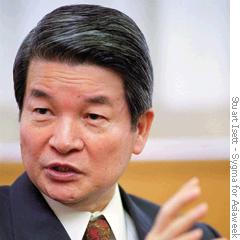 In a rather remarkable gaffe, Shinzo Abe's Health Minister, Hakuo Yanagisawa, spoke his mind with brutal honesty in describing Japanese women as birth-giving machines, according to the BBC. Of course with a fertility rate in Japan of 1.26, the lowest in the world, such an assertion is met with some skepticism at best, and with derision by the more pedantic. Yanagisawa is no newbie to the trenches having served numerous governments internationally and within the sennior ranks of the finance ministry. His remarks come at a rather uncomfortable time for PM Abe whose approval ratings are flagging rather dramtically for someone who has done ummm errrr nothing at all. Did I hear someone suggest Tourette's Syndrome???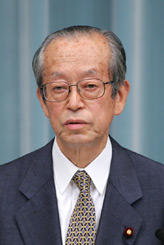
And in an another remarkable gaffe revealing yet more stunning high-level honesty behind the facade of tatamae by another old warhorse in the Abe Cabinet, Finance Minister Koji Omi was reported to have been overheard comparing the the BoJ and it's MOF-induced persistent policy of ZIRP & nearZIRP as the world's most munificent "Liquidity Giving Machine" and that continuation of this policy will work to serve TeamJapan's parochial interests by insuring that the YEN remains [paraphrasing again] "even more pathetic and disagreeable to investors than the US Dollar....". His spokesman officially denied the remarks, wink wink nod nod....
Friday, January 19, 2007
Central Bank Policy Tools Revisited
Any parent will tell you: There simply are some things that children must learn by experience. I recall my first university "Money & Banking" course, taught by a most-jolly Nigerian graduate student lecturer, with a big belly laugh, a keen sense of irony, and an enamoration with his own sense of humor similar to that of my Zen Buddhism professor. Ahhh, those were the days! But the point that I mean to make is that one can teach conceptually about Moral Suasion, Jawboning, Open Market Operations or The Discount Rate, but similar learning a foreign language, one doesn't truly learn it, nor truly appreciate the nuances until one has a large wrong-way position in relation so some Central Bank action or another.
Given the "Hear No Evil, See No Evil, Speak No Evil" stance of virtually all of the world's Central Banks, I thought it might be useful to review the tools within the arsenal of the modern day Central Banker, such that every reader is familiar in the event authorities do an about-face and decide that policy action is superior to the collection of honoriam, and beaucoup free rounds of Golf.
1. Jawboning.
"Jawboning" is the attempt to change market expectations without actually doing anything. Talk is cheap, so the old saw goes, and this is true from the point of view of political capital. It is "talking the talk", or "sowing the seeds". The opportunities for FOMC members to use this both varied and numerous. Lectures, speeches, Congressional testimony, trade conferences, press interviews, all provide opportunities for the Governors to express views that will attempt to nudge the market in the desired direction.
Sometimes these attempts have unintended consequences. Greenspan's now-famous Irrational Exhuberance is case in point. Bernanke's "Helicopter" reference in a private speech is another piece of chewing inexorably stuck to the Chairman's shoe. The trend has clearly been for greater transparency, and less cryptic-ness, which as the story goes, is believed to reduce volatility and increase economic efficiency by reducing uncertainty in planning, capital budgeting and variance in financing costs. Inflation targetting is the ultimate expression of this mechanistic view.
However, I am of the opinion that it is more complex, and thus requires more nuance. Speculation and economic activity are intricately linked, through reflexive feedback mechanisms. Economic conditions can and do change dramatically in response to war, natural disaster, political upheaval, etc. Apprising the market accordingly of adjusting expectations and conditions can be useful, even if they upset the prevailing paradigm. The market may believe that the Central Bank will tolerate higher inflation, and so they will express this belief in as many ways and as vigorously as possible until the CB indicates that it will not tolerate what the market thinks it might. This might cause a small derailment as the market adjusts, but this is most certainly superior to allowing a gross misallocation of resources and then causing a much more damaging train wreck later. So the quicker Mr Bernanke manages to slip a quip in one of his speeches about how gobsmacked he is by the rising cost of education , healthcare, housing, hotels, and all manner of goods and services, the quicker he might be able to disassociate himself from "The Helicopter".
In Japan, of course, despite the independence of the BoJ, things are NOT what they seem. For in Japan the most important thing to remember is that no one within the power structure of TeamJapan act inconoclastically for very long before being jettisoned. This is essential to remember when considering BoJ independence. For if the Prime Minister's office and the MoF are deeply opposed to that which is important to the BoJ, there is no question who will win...
2.. Moral Suasion.
Ahhh yes. There was a time when Commercial Banks respected Central Bankers. They understood that these Weberian-style bureaucrats were making a sacrifice in electing public service over the private sector. And the Central Bank could make life difficult for both commerical and merchant banks, if it chose to. Today. it would seem, that even the management of an American IB or commerical bank cannot rein in the traders and risk-takers within the organization, so how can a central bank hope to influence the activities and undertakings of institutions beneath its oversight? Not to mention that IBs and univeral banks - whether chartered in America or elsewhere - are now global, in scope and domicile. And there is no universal regulator except perhaps the BIS by extension of the broadest of capital adequacy agreements.
In Japan, by contrast, few could conceive of not heeding the gameplan of TeamJapan for the sake of parochial gain. This goes for the Corporate level and the level of the individual. If the BoJ say "Don't unload stocks into a falling market", supply will evaporate. If MoF says "Buy Stocks to support the market", they will find a way with discretionary funds and proprietary accounts, to make it so. If they say: "Don't repatriate profits so as place undue upwards pressure upon the YEN", Japanese non-financial corporations will find non-YEN investments, whether real or financial, in order to park their funds. Such is the power of Moral Suason in a society with unimaginably deep web of obligations. Make the mistake of taking personal initiative to sell stocks when MoF says "Dont Sell", and one may find oneself in old age drinking alone within a cardboard box in Shinjuku Station, or reassigned to the Corporate Travel Office instead of receiving the seniority promotion earned from years of Service.
Back in the US, the threats are reversed. IF you rock the boat and bite the hand that feeds you, the Public Servant will find that no IB of Commercial Bank will hire him and pay him millions like Gerald Corrigan or Wayne Angell. Such is the present day power of moral suasion. Witness how a sober-minded (but outspoken) Secretary O'Neill in the Treasury was hounded for making waves about fiscal policy. And even a relatively uncontroversial Fisher at the FRB Dallas took stinging heat for appearing too concerned about the threats of inflation.
3. Open Market Operations
This is day-to-day management of "classical money" rollicking through in the system. Repos, reverse repos, coupon passes add or drain reserves accordingly, in pursuit of policy objectives. But it seems to me that in this era of zeros, the Fed would to be monstrously persistent in its presence and have a medium-sized army traders to make an impact. Since it seems that Fed (confirmed again by Mishkin's speech today) is to help assure a one-way ticket for asset prices (and for the record, that direction is NEITHER down nor sideways), one would be forgiven for seeing this a rather pathetically ineffective tool in the age of explosive derivative growth (or did I mean growth in explosive derivatives?!!?), globalization and free flow of capital.
In Japan such operations were characterized by so called Quantitative Easing which flooded the banks with so liquidity that one could actually quite literally get paid (though admittedly small) to borrow YEN. Now how daft is that? But did it work?? Oh how it worked! Greenwich and Chelsea home prices galloped as a result, as did virtually all global assets EXCEPT Japanese ones. Japanese asset prices stayed on their back for another four years despite free money in near-infinite supply that was taken up by anyone and everyone NOT Japanese for any and every purpose EXCEPT investment in Japan. Japanese asset prices only lifted off after the Chinese capital investment boom was full-throttle open AND asset prices in the rest of the world had appreciated beyond comfort zones. And what does the Bank of Japan have to show for it? About a trillion dollars of US Treasury Bonds which they haven't quite figured out how to dispose of just yet.
4. Adjusting Reserve Requirements of Member Banks
"There was a time....when I was a boy....." Did your father ever start an impossible boring story that way? Irrespective, there was a time when this was contemplated in much the same way people experimented with LSD, or worse PCP or Quaaludes. Few swim in those waters anymore just as no one countenances altering reserve requirements which is probably viewed in the same light as "running over yourself with your own car". What would this do, if anything? Certainly drive banks offshore and capital away and hobble domestically chartered banks at the expense of non-US banks. But since most banks are multi-jurisdictional these days, and standards are set in Basel anyway, what would it really accomplish? Oh yes, there is one little additional thing about the regional FRB Governors being elected by the very same bankers who would be f*cked by the change in the reserve requirement. "Biting the hand that feeds you" is the first thing to comes to mind....
5. Modulating Margin
Yes there is a thing called "Reg-T" that says: "You can only borrow a maximum 50% against the collateral of your listed shares. But real specs use futures and options. Here you can get 20x or 50x implied gearing. Margin is soooo passe except for domestic day-trading saps. Hedgies of course use heavy offshore gearing to get around Reg-T in any event. And most other instruments are levered up to what volatility and market will ultimately bear. Swaps and all manner of complex options like "one-touch look-back compound calls" could have effective gearing that would have made Marshall Molotov look like a wussy. And you don't even need to be a professional to get leverage like that! My local bank (in a full-page advertisement in today's newspaper) is offering 100% interest-only mortgages on amounts up to USD$1million. My math may be rusty, but that sounds to me about as close to infinite gearing as one can get. "Reg-T"? Ha!!
6. Market Supervision
They could and should use this more. Name and shame etc. Banks and brokers are guilty. I think real supervision would be a fun job if one worked on some kind of a reverse incentive basis - i.e. payment of a percentage of the reduction in grey and nefarious activity. Moreover, a movement by overseers to a "spirit" of the law interpretation vs. letter of the law owuld help furtehr. Yes, you are guilty unless you write the overlord and get written approval that the bogus tax-loss leases can be used to offset real income.
7. Covert Market Intervention
I've written before about "The BoJ's Hot Hand". And the Kong Kong Monetary Authority in 1998 boldly stood up and like JP Morgan after the crash in 1929, bought pretty much all they could equalling perhaps 10% of the Hang Seng in the HKMAs case. THAT was at 7000, whereas the Hang Seng is roughly 3x that now at >20,000. And anyone who can remember (When I was a boy....) will recall Japanese PKO (Price Keeping Operations) that kept participants on their toes, though few knew who (MoF, or BoJ) really was giving the orders, or for that matter, why.
In the US, Canadian investment house Sprott has written at length about the alledged "The Plunge Protection Team" and their secret operations. And though plausible in theory, I have serious doubts for the US is the land of "deep throat". A place where the Vice-President likely ordered the outing of a CIA Agents because her husband voted "Blue State". There is about a ZERO chance of something as big as a PPT being kept secret. The Market sunk the bank of England; the Thai Bhat, Nick Leeson's solo plunge-protection team; Amaranth, LTCM. We are talking about people like "Brownie" and FEMA and the same government that couldn't evacuate their own colon, let alone keep a massive multi-billion market intervention and support scheme a secret. Maybe one day American's - like the Japanese before them - will find a need and reason to intervene, but I don't see it yet.
8. Overt Market Intervention
This is "Loud and Proud" entry into the market. And it's typically done for efffect. It shows a seriousness. of intent. When I was first cutting my teeth, the mere rumour: "The Fed is checking prices...." was enough to make one dump everything and go double the other way. And there was "The BuBa is checking prices too" whereby the formerly-bold speculators would be seen scattering in all directions yelling "Run Away Run Away Run Away....". Then there was the canny Mr. Yen, Eisuke Sakakibara who waited patienty like Lao Tzu for his moment, Japan having been savaged by Rubin's policy of "Dancing upon their heads didn't work...let's try telling the market we don't care where dollar-Yen goes...". Like Dr Seuss's Grinch, he waited until all the little Who's in Whoville were sleeping and drunk and body-slammed the Yen so hard it triggered every stop and cleared every chart point causing every system not only to close out sort dollars, but strong mindless impulse to go long dollars in one single well-timed and well-planned raid effectively ending the strong-yen siege. THAT was a tool. THAT was resolve. THAT shoved short dollar-yen positions so far up the specs rears, no one dared go the other way for years, except for a day trade.
BUT the market today is more like a pack of hyenas, and even if a Central Bank is like a Lion - King Of The Beasts - hyenas are not easily deterred. They will harass a lion, sometimes chase him/her off, for there is safety in numbers Which is why this tool must be used sparingly and with great gravitas. For as the BoE learned there are limits - even to a central bank - of defending a wrong-sided position.
8. Capital Controls.
Central Banker can, and do, restrict capital flows into and out of their respective countries, with mixed success, and not without cost. That's fine where a small country is evolving, but rather more problemmatical once it's already open and in the big leagues of convertibility. Just the alliteration of the words makes me wince, and think of Malaysia's Matahir and his repsonse to 1998. These are Heavy! Heavy! Heavy! though remains a possibility. Theyh can stem an outflow, but is a bit like killing a mouse with a guillotine. Effectively, capital controls, for countries with already-convertible currencies, are akin to changing the rules, mid-game. At the wrong place and wrong time, it can have crushing consequences, for once the outflow starts, one way of insuring that no further capital will return is to slap them on. Capital controls, in any event, deal with the symptom and not the problem, much like treating cancer with pain-killers: it may stop the hurt, but it willdo nothing to cure the underlying disease.
10. Short-term Interest Rates - The Discount Rate & Fed Funds Rate
This is The Hammer. This is, at the end of the day, what the market in advanced-stage capitalism best understands: the Price of Money, for it the price at which member banks borrow from the Federal Reserve, and by extension for most of the time sets scene for the region the Fed would like to see the market-determined Fed Funds Rate, or US Interbank rate. It becomes a sort of benchmark rate and feeds through to the rest of the economy and financial system.
When it is low, and longer-frame rates are higher, this creates an opportunity to manufacture liquidity and profits, though not without risk that the yield curve could bite them in a variety of nasty ways. But when its inverted, financial institutions can of course borrow long and lend short (usually deemed rather risky) but typically only make spread profits by assuming credit risk. Famed Shakespearean John Gielgud speaking on behalf of Smith Barney used to term this "Making money the old fashioned
way", something eschewed in a modernity where money and financial profits can so erffortlessly be conjured by the carry trade. Banking, it would seem, is too much effort and too hard an undertaking. Indeed, modern bankers eschew the classical risk of potentially not being re-paid, and prefer to be the equivalent of third-party administrators, leaving the real risk to be socialized and concentrated where and as it may.
But everyone must understand that the Central Banker can only erally control the short rate, and through the short rate and its path of depandancies, so the bond rate is impacted. In the days when the Bond Market was considered "el vigilante muy feroz", a steep yield curve where short rates were substanitially below long rates was rightfully understood by anyone and everyone as at once expansionary, and likely inflationary. Raise the short rate, the long rate stabilizes or dips. Lower the short rate and watch the long rate rise. And it was effective. Traders and portfolio managers watched payrolls, and hourly earnings like a hawk to make sure they were snookered by monetary or economic movements, and with present value of their fixed-income slice diminished.
That was, of course, until the neo-mercantilists decided to accumulate US reserves in such vast quantities that it didn't matter where the short rate was, or how large the budget deficit ballooned. Japanese and Chinese official buyers were "bid" for bonds. So sure of their future appetite, they sold T-Bond put options to everyone with impunity. The result of course was not disimilar to an extended general strike by law enforcement officials whereby criminals - both petty and dangerous - now understood the meaning and set off on a crime wave like the world had never seen, safe from consequence for all officials who might or could do anything were "gone fishin". And some had joined forces with the crooks, and were looting at every chance. Such was the impact of destroying the integrity and vigilance of the Bond Market.
The discount rate remains a viable tool. But it is likely that given the loss of credibility, and the implied puts beneath ecojomic activity (which are essentially political in nautre) the application of monetary strangulation required for the desired throttling of credit creation, speculation, and growth in economic activity (if those be the goals) is IMHO far greater today than what might have been required in days of old. That's during "good times". However, the flip side is that with so leverage out there, and everything correlated to the continued growth and expansion of credit, it might only take "a waaafer thin mint" or a another straw upon the proverbial camel to trigger a revulsion that in the absence of Mishkin-like response -would be larger than anything seen since the 30s.
11. The Helicopter
The final tool in the Central Bankers' arsenal, a relatively modern banking invention is the Helicopter. Historically a tool of marine rescuers, or an accompanying weapon of ground warfare, the Helicopter is believed by markets to represent the financial equivalent of "manna from heavan" in the event markets were ever to falter. Proponents would ostensibly send out [many] helicopters laden with packs and stack of Green Bills adorned with dead presidents (and some jars of peanut butter & cans of spam). Okies (presumably red-staters would then feel that they had resources and fortitude to run (actually fill up their RV and drive) to the local Home Depot or Walmart and continue their twoo-decade-long leveraged consumption binge, thereby saving the grand American economic experiment from the dustbin of history.
Given the "Hear No Evil, See No Evil, Speak No Evil" stance of virtually all of the world's Central Banks, I thought it might be useful to review the tools within the arsenal of the modern day Central Banker, such that every reader is familiar in the event authorities do an about-face and decide that policy action is superior to the collection of honoriam, and beaucoup free rounds of Golf.
1. Jawboning.
"Jawboning" is the attempt to change market expectations without actually doing anything. Talk is cheap, so the old saw goes, and this is true from the point of view of political capital. It is "talking the talk", or "sowing the seeds". The opportunities for FOMC members to use this both varied and numerous. Lectures, speeches, Congressional testimony, trade conferences, press interviews, all provide opportunities for the Governors to express views that will attempt to nudge the market in the desired direction.
Sometimes these attempts have unintended consequences. Greenspan's now-famous Irrational Exhuberance is case in point. Bernanke's "Helicopter" reference in a private speech is another piece of chewing inexorably stuck to the Chairman's shoe. The trend has clearly been for greater transparency, and less cryptic-ness, which as the story goes, is believed to reduce volatility and increase economic efficiency by reducing uncertainty in planning, capital budgeting and variance in financing costs. Inflation targetting is the ultimate expression of this mechanistic view.
However, I am of the opinion that it is more complex, and thus requires more nuance. Speculation and economic activity are intricately linked, through reflexive feedback mechanisms. Economic conditions can and do change dramatically in response to war, natural disaster, political upheaval, etc. Apprising the market accordingly of adjusting expectations and conditions can be useful, even if they upset the prevailing paradigm. The market may believe that the Central Bank will tolerate higher inflation, and so they will express this belief in as many ways and as vigorously as possible until the CB indicates that it will not tolerate what the market thinks it might. This might cause a small derailment as the market adjusts, but this is most certainly superior to allowing a gross misallocation of resources and then causing a much more damaging train wreck later. So the quicker Mr Bernanke manages to slip a quip in one of his speeches about how gobsmacked he is by the rising cost of education , healthcare, housing, hotels, and all manner of goods and services, the quicker he might be able to disassociate himself from "The Helicopter".
In Japan, of course, despite the independence of the BoJ, things are NOT what they seem. For in Japan the most important thing to remember is that no one within the power structure of TeamJapan act inconoclastically for very long before being jettisoned. This is essential to remember when considering BoJ independence. For if the Prime Minister's office and the MoF are deeply opposed to that which is important to the BoJ, there is no question who will win...
2.. Moral Suasion.
Ahhh yes. There was a time when Commercial Banks respected Central Bankers. They understood that these Weberian-style bureaucrats were making a sacrifice in electing public service over the private sector. And the Central Bank could make life difficult for both commerical and merchant banks, if it chose to. Today. it would seem, that even the management of an American IB or commerical bank cannot rein in the traders and risk-takers within the organization, so how can a central bank hope to influence the activities and undertakings of institutions beneath its oversight? Not to mention that IBs and univeral banks - whether chartered in America or elsewhere - are now global, in scope and domicile. And there is no universal regulator except perhaps the BIS by extension of the broadest of capital adequacy agreements.
In Japan, by contrast, few could conceive of not heeding the gameplan of TeamJapan for the sake of parochial gain. This goes for the Corporate level and the level of the individual. If the BoJ say "Don't unload stocks into a falling market", supply will evaporate. If MoF says "Buy Stocks to support the market", they will find a way with discretionary funds and proprietary accounts, to make it so. If they say: "Don't repatriate profits so as place undue upwards pressure upon the YEN", Japanese non-financial corporations will find non-YEN investments, whether real or financial, in order to park their funds. Such is the power of Moral Suason in a society with unimaginably deep web of obligations. Make the mistake of taking personal initiative to sell stocks when MoF says "Dont Sell", and one may find oneself in old age drinking alone within a cardboard box in Shinjuku Station, or reassigned to the Corporate Travel Office instead of receiving the seniority promotion earned from years of Service.
Back in the US, the threats are reversed. IF you rock the boat and bite the hand that feeds you, the Public Servant will find that no IB of Commercial Bank will hire him and pay him millions like Gerald Corrigan or Wayne Angell. Such is the present day power of moral suasion. Witness how a sober-minded (but outspoken) Secretary O'Neill in the Treasury was hounded for making waves about fiscal policy. And even a relatively uncontroversial Fisher at the FRB Dallas took stinging heat for appearing too concerned about the threats of inflation.
3. Open Market Operations
This is day-to-day management of "classical money" rollicking through in the system. Repos, reverse repos, coupon passes add or drain reserves accordingly, in pursuit of policy objectives. But it seems to me that in this era of zeros, the Fed would to be monstrously persistent in its presence and have a medium-sized army traders to make an impact. Since it seems that Fed (confirmed again by Mishkin's speech today) is to help assure a one-way ticket for asset prices (and for the record, that direction is NEITHER down nor sideways), one would be forgiven for seeing this a rather pathetically ineffective tool in the age of explosive derivative growth (or did I mean growth in explosive derivatives?!!?), globalization and free flow of capital.
In Japan such operations were characterized by so called Quantitative Easing which flooded the banks with so liquidity that one could actually quite literally get paid (though admittedly small) to borrow YEN. Now how daft is that? But did it work?? Oh how it worked! Greenwich and Chelsea home prices galloped as a result, as did virtually all global assets EXCEPT Japanese ones. Japanese asset prices stayed on their back for another four years despite free money in near-infinite supply that was taken up by anyone and everyone NOT Japanese for any and every purpose EXCEPT investment in Japan. Japanese asset prices only lifted off after the Chinese capital investment boom was full-throttle open AND asset prices in the rest of the world had appreciated beyond comfort zones. And what does the Bank of Japan have to show for it? About a trillion dollars of US Treasury Bonds which they haven't quite figured out how to dispose of just yet.
4. Adjusting Reserve Requirements of Member Banks
"There was a time....when I was a boy....." Did your father ever start an impossible boring story that way? Irrespective, there was a time when this was contemplated in much the same way people experimented with LSD, or worse PCP or Quaaludes. Few swim in those waters anymore just as no one countenances altering reserve requirements which is probably viewed in the same light as "running over yourself with your own car". What would this do, if anything? Certainly drive banks offshore and capital away and hobble domestically chartered banks at the expense of non-US banks. But since most banks are multi-jurisdictional these days, and standards are set in Basel anyway, what would it really accomplish? Oh yes, there is one little additional thing about the regional FRB Governors being elected by the very same bankers who would be f*cked by the change in the reserve requirement. "Biting the hand that feeds you" is the first thing to comes to mind....
5. Modulating Margin
Yes there is a thing called "Reg-T" that says: "You can only borrow a maximum 50% against the collateral of your listed shares. But real specs use futures and options. Here you can get 20x or 50x implied gearing. Margin is soooo passe except for domestic day-trading saps. Hedgies of course use heavy offshore gearing to get around Reg-T in any event. And most other instruments are levered up to what volatility and market will ultimately bear. Swaps and all manner of complex options like "one-touch look-back compound calls" could have effective gearing that would have made Marshall Molotov look like a wussy. And you don't even need to be a professional to get leverage like that! My local bank (in a full-page advertisement in today's newspaper) is offering 100% interest-only mortgages on amounts up to USD$1million. My math may be rusty, but that sounds to me about as close to infinite gearing as one can get. "Reg-T"? Ha!!
6. Market Supervision
They could and should use this more. Name and shame etc. Banks and brokers are guilty. I think real supervision would be a fun job if one worked on some kind of a reverse incentive basis - i.e. payment of a percentage of the reduction in grey and nefarious activity. Moreover, a movement by overseers to a "spirit" of the law interpretation vs. letter of the law owuld help furtehr. Yes, you are guilty unless you write the overlord and get written approval that the bogus tax-loss leases can be used to offset real income.
7. Covert Market Intervention
I've written before about "The BoJ's Hot Hand". And the Kong Kong Monetary Authority in 1998 boldly stood up and like JP Morgan after the crash in 1929, bought pretty much all they could equalling perhaps 10% of the Hang Seng in the HKMAs case. THAT was at 7000, whereas the Hang Seng is roughly 3x that now at >20,000. And anyone who can remember (When I was a boy....) will recall Japanese PKO (Price Keeping Operations) that kept participants on their toes, though few knew who (MoF, or BoJ) really was giving the orders, or for that matter, why.
In the US, Canadian investment house Sprott has written at length about the alledged "The Plunge Protection Team" and their secret operations. And though plausible in theory, I have serious doubts for the US is the land of "deep throat". A place where the Vice-President likely ordered the outing of a CIA Agents because her husband voted "Blue State". There is about a ZERO chance of something as big as a PPT being kept secret. The Market sunk the bank of England; the Thai Bhat, Nick Leeson's solo plunge-protection team; Amaranth, LTCM. We are talking about people like "Brownie" and FEMA and the same government that couldn't evacuate their own colon, let alone keep a massive multi-billion market intervention and support scheme a secret. Maybe one day American's - like the Japanese before them - will find a need and reason to intervene, but I don't see it yet.
8. Overt Market Intervention
This is "Loud and Proud" entry into the market. And it's typically done for efffect. It shows a seriousness. of intent. When I was first cutting my teeth, the mere rumour: "The Fed is checking prices...." was enough to make one dump everything and go double the other way. And there was "The BuBa is checking prices too" whereby the formerly-bold speculators would be seen scattering in all directions yelling "Run Away Run Away Run Away....". Then there was the canny Mr. Yen, Eisuke Sakakibara who waited patienty like Lao Tzu for his moment, Japan having been savaged by Rubin's policy of "Dancing upon their heads didn't work...let's try telling the market we don't care where dollar-Yen goes...". Like Dr Seuss's Grinch, he waited until all the little Who's in Whoville were sleeping and drunk and body-slammed the Yen so hard it triggered every stop and cleared every chart point causing every system not only to close out sort dollars, but strong mindless impulse to go long dollars in one single well-timed and well-planned raid effectively ending the strong-yen siege. THAT was a tool. THAT was resolve. THAT shoved short dollar-yen positions so far up the specs rears, no one dared go the other way for years, except for a day trade.
BUT the market today is more like a pack of hyenas, and even if a Central Bank is like a Lion - King Of The Beasts - hyenas are not easily deterred. They will harass a lion, sometimes chase him/her off, for there is safety in numbers Which is why this tool must be used sparingly and with great gravitas. For as the BoE learned there are limits - even to a central bank - of defending a wrong-sided position.
8. Capital Controls.
Central Banker can, and do, restrict capital flows into and out of their respective countries, with mixed success, and not without cost. That's fine where a small country is evolving, but rather more problemmatical once it's already open and in the big leagues of convertibility. Just the alliteration of the words makes me wince, and think of Malaysia's Matahir and his repsonse to 1998. These are Heavy! Heavy! Heavy! though remains a possibility. Theyh can stem an outflow, but is a bit like killing a mouse with a guillotine. Effectively, capital controls, for countries with already-convertible currencies, are akin to changing the rules, mid-game. At the wrong place and wrong time, it can have crushing consequences, for once the outflow starts, one way of insuring that no further capital will return is to slap them on. Capital controls, in any event, deal with the symptom and not the problem, much like treating cancer with pain-killers: it may stop the hurt, but it willdo nothing to cure the underlying disease.
10. Short-term Interest Rates - The Discount Rate & Fed Funds Rate
This is The Hammer. This is, at the end of the day, what the market in advanced-stage capitalism best understands: the Price of Money, for it the price at which member banks borrow from the Federal Reserve, and by extension for most of the time sets scene for the region the Fed would like to see the market-determined Fed Funds Rate, or US Interbank rate. It becomes a sort of benchmark rate and feeds through to the rest of the economy and financial system.
When it is low, and longer-frame rates are higher, this creates an opportunity to manufacture liquidity and profits, though not without risk that the yield curve could bite them in a variety of nasty ways. But when its inverted, financial institutions can of course borrow long and lend short (usually deemed rather risky) but typically only make spread profits by assuming credit risk. Famed Shakespearean John Gielgud speaking on behalf of Smith Barney used to term this "Making money the old fashioned
way", something eschewed in a modernity where money and financial profits can so erffortlessly be conjured by the carry trade. Banking, it would seem, is too much effort and too hard an undertaking. Indeed, modern bankers eschew the classical risk of potentially not being re-paid, and prefer to be the equivalent of third-party administrators, leaving the real risk to be socialized and concentrated where and as it may.
But everyone must understand that the Central Banker can only erally control the short rate, and through the short rate and its path of depandancies, so the bond rate is impacted. In the days when the Bond Market was considered "el vigilante muy feroz", a steep yield curve where short rates were substanitially below long rates was rightfully understood by anyone and everyone as at once expansionary, and likely inflationary. Raise the short rate, the long rate stabilizes or dips. Lower the short rate and watch the long rate rise. And it was effective. Traders and portfolio managers watched payrolls, and hourly earnings like a hawk to make sure they were snookered by monetary or economic movements, and with present value of their fixed-income slice diminished.
That was, of course, until the neo-mercantilists decided to accumulate US reserves in such vast quantities that it didn't matter where the short rate was, or how large the budget deficit ballooned. Japanese and Chinese official buyers were "bid" for bonds. So sure of their future appetite, they sold T-Bond put options to everyone with impunity. The result of course was not disimilar to an extended general strike by law enforcement officials whereby criminals - both petty and dangerous - now understood the meaning and set off on a crime wave like the world had never seen, safe from consequence for all officials who might or could do anything were "gone fishin". And some had joined forces with the crooks, and were looting at every chance. Such was the impact of destroying the integrity and vigilance of the Bond Market.
The discount rate remains a viable tool. But it is likely that given the loss of credibility, and the implied puts beneath ecojomic activity (which are essentially political in nautre) the application of monetary strangulation required for the desired throttling of credit creation, speculation, and growth in economic activity (if those be the goals) is IMHO far greater today than what might have been required in days of old. That's during "good times". However, the flip side is that with so leverage out there, and everything correlated to the continued growth and expansion of credit, it might only take "a waaafer thin mint" or a another straw upon the proverbial camel to trigger a revulsion that in the absence of Mishkin-like response -would be larger than anything seen since the 30s.
11. The Helicopter
The final tool in the Central Bankers' arsenal, a relatively modern banking invention is the Helicopter. Historically a tool of marine rescuers, or an accompanying weapon of ground warfare, the Helicopter is believed by markets to represent the financial equivalent of "manna from heavan" in the event markets were ever to falter. Proponents would ostensibly send out [many] helicopters laden with packs and stack of Green Bills adorned with dead presidents (and some jars of peanut butter & cans of spam). Okies (presumably red-staters would then feel that they had resources and fortitude to run (actually fill up their RV and drive) to the local Home Depot or Walmart and continue their twoo-decade-long leveraged consumption binge, thereby saving the grand American economic experiment from the dustbin of history.
Thursday, January 18, 2007
That BoJ Rate Policy Statement In Full
1. We the Board Members setting monetary policy for the Bank of Japan elect 6-to-3 to leave the discount rate unchanged.
2. We reached this decision independently, based wholly upon the domestic economic data, and not upon whether free money (technical term= nearZIRP) is contributing to a negative real global rate of interest and global runaway asset-price inflation, or as a result of threats made by the LDP that BoJ Board Members voting in favor of a rate increase would find their children, and their children's children forever "unmarriable" within polite circles.
3. Board Members who cast dissenting votes are kindly asked to go to the mail room and retrieve a cardboard box and clean their desks out, and to leave the BoJ ID Badges and Luncheon Vouchers at the main security Desk.
4. All Gaijin desiring "free YEN", please queue at the first door on the left of the main foyer, and please have your suitcases or other form of portage ready.
5. Errrr. That's all.
(asset markets may now resume their ascent)
2. We reached this decision independently, based wholly upon the domestic economic data, and not upon whether free money (technical term= nearZIRP) is contributing to a negative real global rate of interest and global runaway asset-price inflation, or as a result of threats made by the LDP that BoJ Board Members voting in favor of a rate increase would find their children, and their children's children forever "unmarriable" within polite circles.
3. Board Members who cast dissenting votes are kindly asked to go to the mail room and retrieve a cardboard box and clean their desks out, and to leave the BoJ ID Badges and Luncheon Vouchers at the main security Desk.
4. All Gaijin desiring "free YEN", please queue at the first door on the left of the main foyer, and please have your suitcases or other form of portage ready.
5. Errrr. That's all.
(asset markets may now resume their ascent)
BoJ Policy Freeze; Abe Says: What? Don't Look At Me!
So the BoJ hemmed and hawed yet again before finally deciding to do nothing, yet again. PM Abe guiltily was on the horn immediately following the decision and said:
Understandably, the YEN weaken to historical lows vs. the Euro, and multi-year lows against the USD dollar.
(Errrrr, did the CIA have anything to do with the JFK's assasination?!?!)
"I didn't interfere....I had nothign to do with it....it was completely independent ....really! .....really! ..... really! .... awww come on guys don't you believe me?....what do you think there is some conspiracy to keep the YEN weak for the sake of TeamJapan, what are you insane? You journalists probably think the the CIA killed Kennedy too, huh?...."before being yanked off stage by his personal secretary. In hilariously scripted fashion, three members of the policy-making comittee dissented on the decision to DO NOTHING, ostensibly because leaving rates at nearZIRP yet again is careless, reckless, anti-social, not to mention fricking insane.
Understandably, the YEN weaken to historical lows vs. the Euro, and multi-year lows against the USD dollar.
(Errrrr, did the CIA have anything to do with the JFK's assasination?!?!)
Friday, January 12, 2007
Barbary Apes & the Art of Central Banking
 Anyone who's visited the UK lately can see that London is bubbling and frothing. House prices are, once again, vaulting upwards, restaurants and airports are jammed, and all manner of high-end product or service retailer are replacing the tired bookie on the high street. Even the ubiquitious corner shops are being remodeled replete with a zillion watts of halogen, uncluttered aisles more akin to Waitrose than Londi's. Vertical tower cranes adorn the London skyline as new skyscrapers dwarf the once-dominant Centrepoint Tower, whilst rents are increasing smartly too, according to CB Richard Ellis's latest report. Housing affordability? Ha! It'd so unaffordable that few Brits outside hedgies and merchant bankers own (or even live) with the Congestion Zone. So the Bank of England has raised rates, and rightfully so. Granted, London can be deemed pseudo-idiosyncratic since it does prey upon the rest of EC by generously allowing tax refugees to live there without paying Inland Revenue. And Hedge Funds are popping up and multiplying like mushrooms in a cow pasture after a spring rain due to the lack of the SEC, and a subtler, more level-headed approach to fighting terrorism. Most major metropli share the feel-good of London. New York is the same. As is Tokyo, Moscow, Rio, Khartoum, as are Dubai, Mexico City, and Caracas. In fact the whole world - save Zimbabwe, Mogadishu, North Korea, Dresden, and yes, Detroit - is booming and building.
 The ECB has been raising rates, though they remain comparatively and historically low. And despite jawboning by the Trichet, higher VAT in Germany, and higher energy prices, European real estate is rising, unemployment is falling, speculative building continues apace, and estate agents and stock brokers are more ubiquitious than engineers or machinists. Liquidity is growing. And it it growing significantly. Assets of all types are being sold by old long-standing owners to new owners, and used as collateral in this transfer of ownership. It leaves the old owners with paper, while the new owners put up a bit of equity and borrow the rest, often collateralized by the assets themselves, the newly collateralized and rated paper that then is used as equity, near-equity or faux-equity for creation of further credit. But while there IS indeed real growth in eastern europe, and encouraging recovery in old europe, this boom, it would seem to me, is decidely financial. And this has been rewarding for owners of assets, and doubly so for owners that are geared. But make no mistake: the feel-good is the result of leverage and debt. And the source of such funds and the ease with which one can borrow them - i.e. the grease - is I suspect still coming from "liquidity" created by loose fiscal policies (deficit spending) of what's been 3% of GDP in the EU, 4%+ or so in the US (taking into account SS and other OBS obligations), and 4 or 5% in Japan, on top of still-easy money in the EU, very cheap money from Switzerland, and still almost free money from Japanese ZIRP, now, (called nearZIRP in my lingo). Asian savings, and GCC petrodollars further enable it. And with still-easy money, and the dollars from US nearZIRP of 02-to-05 still sloshing about unspent by the neo-mercantilst trade financiers excepting US TBills, Bonds & MBS, and the deficits continuing to add many zeros to the cumulative figures, speculators have, to say the very least, been emboldened.
So emboldened have they become, that everyone has become a spec. Whether individual home buyers in America using floating, IO mortgage product, or formerly staid folk that traded on connections and information (like Carlyle), professional specs are now seizing everything in site, whether alone or through consortia. TPG, KKR, CINVen, GS, and a hundred others all borrowing to buy assets. And Morgan Stanley, manager of the largest levered real estate fund no longer is content or satified by buying buildings. It's appetite has gotten so big, and apparent bullishness on assets so whetted, it's taken to feasting upon entire listed REITs, swallowing them whole with some equity and a lot of debt. Where is all this money emabring upon leveraged asset acquisition pecadilloes coming from??!? Is the market THAT ineffficient, that it's got the prevailing price so so wrong? Are the debt-to-equity ratios of companies that ineffciently underleveraged? Or is there something more nefarious going on? Have smart people simply figured out how to manufacture paper money at low cost in order to buy very real assets and things? Probably, the answer is "No", "No", "Yes", and emphatic "Yes". And the culprits are a combination of globalization, open-capital flow, large differentials in interest rates, and a purgatory-like stasis that is preventing adjustment in the relative value of currencies. If in fact it is so, is this bad? And If so, what is to be done?
"Why?" is still the nagging question I ask myself this question every day. And that "Why?" implies, "Why are not participants afraid of the effects of policy shifts, recession, uncertainty in their risk equations determining the pricing of risk?? Is it that one has magically found the keys to the printing press, and they are raking it in and converting it assets as quickly as possible, OR is it perhaps that the world is so awash with liquidity that delegated agent portfolio managers have it, and must use it or lose it, even if valuations are not attractive, cap rates on real estate are low, or the risk vs. reward of changes inimical to the realization of profits for investors at the end of the trade, poor. In either case asset values are rising, and price signals in both the real and financial economies are being distorted. There is no silver lining in this round of leveraged private equity as there was when Oliver Stone's Wall St. Villain shook up the sleepy New England family manufacturing firm to ostensibly make them more competitive and efficient. These buyouts are not about running the companies better, or realizing value for shareholders, whatever the rhetoric. It is about borrowing to take something private with other people's money, stripping it, and flipping it back out sans assets and with pathetic capital structures, having pried loose untoward management fees, success fees, incentive fees, directors fees, refinancing fees, handshakes, parachutes, and all manner of other freebies, goodies, consultancies, etc. before selling it back out to the public market saps. The early deals have been home-runs for investors and structurers alike, but one must wonder now with a deal-or-two-a-day being done, what the outcome of these will be. Either way, the signals and competitive incentives for the market and the immediatre future prospects for the workers and communities where these enterprises dwell is rather grim. For as leverage goes up, so all accounting conservatism goes to proverbial pot: R&D & ad spending are slashed. All but the most urgent & necessary capital expenditure is torpedoed. Working capital pared to the bone. Anything that can be levered, factored or securitized is so encumbered. Employees are laid off. Benefits and wages cut. Extra-responsiblities heaped upon non-eexecutive, non-buy-out affiliated salaried employes that are fortunate enough NOT to be fired. Good for capital. Bad for labour. Good for competitor firms, for the new owners will be in the midst of a Sherman-style march that will see the enterprise, in all likelihood marginalized and handicapped for years to come, as their competitors and nearest-neighbors invest, whistle-dixie and take "the long view".
But hey, this is capitalism, and a free market. Why should we care? And if we should care, what should we do? I think we should care because the result is inequality and further imbalance enroute to economic serfdom and marginalisation of anyone NOT already a large owner of assets or king of Wall Street. Like it or not, this will have economic, political, sociological and psychological consequences that will floor a generation, for skill-sets and compeititve market positions, once yielded, are most difficult to recapture. I am not talking central planning. I am a fan of the market, and think capitalism the lesser of evils. But I think that perverse incentives to accumulate that are granted to a limited few at the expense of the many is simply wrong, ethically speaking, for will have political manifestations, make no mistake. And when the hordes become meaningfully disenfranchised, and no longer believe the rules of the game are fair, then all manner of turn-the-world-upside-down becomes possible.
More immediately, what's to be done? The prime enablers are globalization and free movement of capital, coincidental to dramatically different national interest rates, combined with the neutering of market signals by surplus nations systematically and persistenly accumulating debtor nation reserves. The first allows "the carry trade". The second enables large imbalances - trade deficits - to persist without immediate or tangible consequence. Both of these spawn perverse outcomes and dangerous consequences to national economies and the international monetary system alike.
Now, some will say hard money is the answer. And here, I must admit to being philosophically sympathetic. BUT practically speaking, politically speaking, this is extreme, and at once difficult, at least as far as true hard money solutions go. And I will further admit to secretly having sympathy with Vickrey & discisples who mourn the social costs of lost output, as well as those who highlight the stickiness of prices on the downside, and therefore argue that cautionary erring on the side of looseness is better than erring on the side of being too scrooge like. In this sense, I am no radical. BUT I do believe that there is great moral hazard in income inequality, and in selectively giving the keys to the press to some, with a put option, and that this will cause rgeat distortion like housing bubbles, and wholesale raping of enterprises for short-term parochial gain at the expense of enlightened social policy, a balanced economy and longer-term competitiveness. This is unconscionable in a world that itself is, day-by-day becoming more competitive, and is something communities all across America and Europe will come to regret when the look back should they persiist in substituting leverage and consumption for investment, balance, a long-term view. All, which to say, in the most long-winded way that I believe, we must end the carry trade, and adopt fiscal, energy and macro policies that encourage longer-term competitiveness, balance, and fortitude and equality.
For the carry trade is the lifeblood of the Spec. There is no problem with investors from one nation desiring to invest, in another. There IS a problem with investors in one nation conjuring up financial liquidity to parasitically profit off of another while at the same time preventing it from confronting the financial issues and problems that are most pressing, like trade and current account deficits. I believe of course that our trading partners are NOT helping, and are disingenuous. ZIRP is a sham, and even if Japan experiences further disinflation or deflation (mild as it would be), they SHOULD, since they are running persistent surpluses, are demographically stagnant, undergoing dramatic producitivity increases, and situated adjacent to the largest deflationary force the world has ever seen. But leaving the cynical self-interest of MITI, MoF and BoJ, the USA can take matters into its own hands, for its own self-interest, and should NOT passively let itself be exploited for the narrow interests of transnationals, banks & finance houses benefitting most directly from the one-direction of trade and continuation of status quo and the great sucking sound that it is producing in the domestic economy.
So what specifically should do we do, since open capital flows are a cornerstone of globalisation and the international monetary system? Like many things that go awry incrementally, policy correction to fix the problem need not be intractable or even difficult. A simple statement that the speculative leveraged carry trade will not be tolerated any longer will go a long way. For this situation of the Central Bank and hordes of mischievious and clever speculators reminds me of one of my favorite anecdotes from when I visited Gibraltar some years ago. Aside from being strategically important at the mouth of the Med, and the foot of Europe, it is the home of a large troupe of barabry apes. They run wild around the place, live in caves up the side of the rock (the one now notorious by Prudential), and frequently descend upon the populated town to steal pies from the windows of old ladies, and picnic boxes from small children. Ocassionally they run amok and can truly cause chaos and mayhem, during full moons for example.
But fortunately there is a solution to help civil man and beast live side-by-side. You see, the first thing that the leader of the British garrison does when there is a leadership change in Gibraltar's British squadies, is meet with the apes, mano-a-ape-o. As the story goes, they manage to round up a great number of them into a cave, with the new British Commander. The Officer rolls up his starched sleeves. Stares the alpha Barbary male down, and proceeds to wrestle the alpha male ape down to the ground, and beat the pulp out of him thus establishing dominance. Once the Commander is ensconced atop the Barbary Ape hierarchy, he is the law, so that whenever the apes run amok, the garrison leader need only show up and tell them to "shove off" for them to run off with their tails between their legs, without screaming fuss, a fight, or tossing of bottles. Understand, that it is not out of sadistic pleasure that this is done, just as a Central Banker should take no pride in generating volatility, uncertainty, and occasional liquidation in financial markets. But, it must be understood that it IS for the greater good, else the mischievious little buggers will run amok with no apparent recourse....
Wednesday, December 27, 2006
Some 2007 Prognostications
As a "Cassandra", I would be remiss if I didn't offer some more general predictions for the coming year 2007 - particularly the kind that hopefully will stimulate debate because they are contentious. Of course, as the legend goes, few will believe them irespective that many will come to pass....
1. US Housing "Crisis" will be shallower than pessimists believe.
This one is easy. So long as central banks accumulate reserves, allowing US deficits to persist and grow coincidental to stable interest rates, economic growth will NOT implode and nominal house prices will stabilize preventing the apocalypse - at least for the moment. This doesn't mean "Buy Homebuilder Stocks", but it does mean that if one was considering purchasing a home, one shouldn't fear that he bottom will drop out further. Rather nominal tides will rise to float most boats.
2. "Intermediate Frame Price Momentum" will continue to be a factor that strongly contributes to Stock Returns in Japan.
Contrary to popular belief, wisdom, and experience, what outperformed in the recent intermediate frame will continue to outperform. This will, be due to a combination of continued money flows by investors alreadyh invested in japan alongside continued earnings growth of enterprises that have been experiencing earnings growth. This unspide-down world (for Japan) will perplex reversion-oriented traders, and reward trend-followers, however,, hollow and shallow theior relative intellect may be.
3. Contrary to contrarian calls by KBC's Jonathon(!!) Allum Dec07 Topix ~15000 call (note: this was incorrectly referred to originally as Nikkei~15000 -ed.), the Nikkei will rally to 20,000 and the TOPIX will rally to 2,000 (not necessarily in that order).
BOTH Large cap and small cap will rally as Japanese asset prices continue to look both relatively and absolutely attractive on a world stage where the only action is inaction."God Bless Apathy!" said one long and leveraged English Hedge Fund Manager
4. PM Abe will visit Yasukuni
....but he will do so under the cover of darkness. Unfortunately papparazzi will not be denied and yet another Japanese Prime Minister will once again have to explain the inexplicable.
5. California's official sponsorship of Universal Healthcare will prompt national debate on the compelling wisdom of universal healthcare, and the even-greater wisdom of a single-payor
Shares of HMOs will tank as the market begins to conceive of a healthcare world less-intermediated. America will receive [unwelcomed by Conservatives] advice from France on systemic reform, and as in 2003, America will again harass and fun of the Frenc, despite the wisdom and correctness of their advice.
6. US dawdles Yet Again on Energy Policy - Oil avgs $75bbl in 2007
The side effect of continued US deficits underpinning global demand combined with stubbornly pig-headed lack of energy policy and no carbon taxes is energy prices stay firm, and rally. At least once during the year, a crisis will cause a spike in crude to within a millimeter of triple digits. Refining margins will NOT deteriorate, and Valero (ticker VLO) will return 50%. Nippon Oil will be a stand-out investment in Japan also appreciating 50%.
7. Wolfowitz is Impeached and Relieved of Command as President of the World Bank
"Mutiny on H-Street" it will be called. The only thing more stupid than placing John Bolton in a diplomatic position was ejecting Paul Wolfowitz from the Pentagon to the helm of the World Bank. Many are still pinching themselves (those that haven't resigned) perplexedly asking themselves "How did HE get here??!?" OK its too early to say "things are right as rain", but little by little in bite-sized moresels, the good guys are reclaiming control, to the eventual benefit of humankind.
8. "The Carry Trade" Makes it to the Cover of Time Magazine
No major move on the RmB. Pathetically small increases in the BoJ discount rate. No move in US fiscal or monetary policy. No GCC currency appreciation. Continued reserve accumulation of USDs by all the usual suspects. All will mean the carry trade lives. It will make the cover of time magazine because a hedge fund manager consortia in partnership with a private-equity consortia will propose to take the entire remaining S&P 500 private, using - yes, you guessed it - YEN financed funds from Japan. This will get Congress to hold hearings, at which Rep. Barney Frank will chide Lloyd Blankfein & John Mack for "shitting on their own dinner plates by facilitating and participating in the "Stealing of America's Assets".
1. US Housing "Crisis" will be shallower than pessimists believe.
This one is easy. So long as central banks accumulate reserves, allowing US deficits to persist and grow coincidental to stable interest rates, economic growth will NOT implode and nominal house prices will stabilize preventing the apocalypse - at least for the moment. This doesn't mean "Buy Homebuilder Stocks", but it does mean that if one was considering purchasing a home, one shouldn't fear that he bottom will drop out further. Rather nominal tides will rise to float most boats.
2. "Intermediate Frame Price Momentum" will continue to be a factor that strongly contributes to Stock Returns in Japan.
Contrary to popular belief, wisdom, and experience, what outperformed in the recent intermediate frame will continue to outperform. This will, be due to a combination of continued money flows by investors alreadyh invested in japan alongside continued earnings growth of enterprises that have been experiencing earnings growth. This unspide-down world (for Japan) will perplex reversion-oriented traders, and reward trend-followers, however,, hollow and shallow theior relative intellect may be.
3. Contrary to contrarian calls by KBC's Jonathon(!!) Allum Dec07 Topix ~15000 call (note: this was incorrectly referred to originally as Nikkei~15000 -ed.), the Nikkei will rally to 20,000 and the TOPIX will rally to 2,000 (not necessarily in that order).
BOTH Large cap and small cap will rally as Japanese asset prices continue to look both relatively and absolutely attractive on a world stage where the only action is inaction."God Bless Apathy!" said one long and leveraged English Hedge Fund Manager
4. PM Abe will visit Yasukuni
....but he will do so under the cover of darkness. Unfortunately papparazzi will not be denied and yet another Japanese Prime Minister will once again have to explain the inexplicable.
5. California's official sponsorship of Universal Healthcare will prompt national debate on the compelling wisdom of universal healthcare, and the even-greater wisdom of a single-payor
Shares of HMOs will tank as the market begins to conceive of a healthcare world less-intermediated. America will receive [unwelcomed by Conservatives] advice from France on systemic reform, and as in 2003, America will again harass and fun of the Frenc, despite the wisdom and correctness of their advice.
6. US dawdles Yet Again on Energy Policy - Oil avgs $75bbl in 2007
The side effect of continued US deficits underpinning global demand combined with stubbornly pig-headed lack of energy policy and no carbon taxes is energy prices stay firm, and rally. At least once during the year, a crisis will cause a spike in crude to within a millimeter of triple digits. Refining margins will NOT deteriorate, and Valero (ticker VLO) will return 50%. Nippon Oil will be a stand-out investment in Japan also appreciating 50%.
7. Wolfowitz is Impeached and Relieved of Command as President of the World Bank
"Mutiny on H-Street" it will be called. The only thing more stupid than placing John Bolton in a diplomatic position was ejecting Paul Wolfowitz from the Pentagon to the helm of the World Bank. Many are still pinching themselves (those that haven't resigned) perplexedly asking themselves "How did HE get here??!?" OK its too early to say "things are right as rain", but little by little in bite-sized moresels, the good guys are reclaiming control, to the eventual benefit of humankind.
8. "The Carry Trade" Makes it to the Cover of Time Magazine
No major move on the RmB. Pathetically small increases in the BoJ discount rate. No move in US fiscal or monetary policy. No GCC currency appreciation. Continued reserve accumulation of USDs by all the usual suspects. All will mean the carry trade lives. It will make the cover of time magazine because a hedge fund manager consortia in partnership with a private-equity consortia will propose to take the entire remaining S&P 500 private, using - yes, you guessed it - YEN financed funds from Japan. This will get Congress to hold hearings, at which Rep. Barney Frank will chide Lloyd Blankfein & John Mack for "shitting on their own dinner plates by facilitating and participating in the "Stealing of America's Assets".
How to Hide an Elephant - (Update)
If only my market-timing were so good! Just last week in the previous post in fact, Cassandra detailed the (oh so brief) history of reporting transparency in the Japanese equity market, leading up to an observation positing that "the elephants" (FMR, Cap Research, etc.) and the large-but-simply-paranoid have been employing "new" techniques to non-report their market pecadilloes.
Well this morning new regulations will take effect, according to Bloomberg, whereby authorities will be demanding that holders of greater than 5% positions are now required to file position updates twice a month. This apparently is in direct response to the rather un-cricket rule-bending discovered by authorities in their investigation of Takefumi Horie and the Livedoor affair. While any loophole-closing is better none (at least in Cassandra's view), this doesn't address the specific loop-hole of transactions that, in spirit confer ownership, such as swaps, OTC option-like structures that are employed for, and priced as if there were no other reason for the transaction than to to accumulate a position without triggering disclosure.
A big test will be at this year-end to see who, with the large position, is increasing their holdings (and as a result the stock price of said holdings) into the mutual fund bonus measurement period and the hedge fund calendar year-end. Anyone care to guess who'll win the ignominimous award of being the most blatant?!?!
Well this morning new regulations will take effect, according to Bloomberg, whereby authorities will be demanding that holders of greater than 5% positions are now required to file position updates twice a month. This apparently is in direct response to the rather un-cricket rule-bending discovered by authorities in their investigation of Takefumi Horie and the Livedoor affair. While any loophole-closing is better none (at least in Cassandra's view), this doesn't address the specific loop-hole of transactions that, in spirit confer ownership, such as swaps, OTC option-like structures that are employed for, and priced as if there were no other reason for the transaction than to to accumulate a position without triggering disclosure.
A big test will be at this year-end to see who, with the large position, is increasing their holdings (and as a result the stock price of said holdings) into the mutual fund bonus measurement period and the hedge fund calendar year-end. Anyone care to guess who'll win the ignominimous award of being the most blatant?!?!
Friday, December 22, 2006
How Do You Hide an Elephant
Being a fly on the wall means that sometimes one has to make conjectures, hypotheses, and suppositions in order to attempt to make sense of the world. For things are often not what they seem.
And, nowhere is this more germane than in the case of reporting large positions to stock exchange regulators around the world generally, and in Japan particularly. Japan seemingly has a love-hatre relationship with transparency. Reading who has bought what and when was a fascinating exercise. On one hand, ownership changes were only detailed twice a year, and even then, only the larger holders either through the YuHo or Toyo Keizaei. So it was long after the fact that one realized who had bought the slugs of stock that vaulted the price an issue by triple digit percent. Yet, at the same time, turnover identification was available on each stock at the end of each day. This was a dead give-away as to whether purchasers were foreign or domestic, sporadic or persistent. The strange mix of obfuscation and transparaency juxtaposed each other.
A few years ago, the authorities decided, for unexplained reasons, not to "fix" this, but to turn it own its head, by eliminating the revelation of who was responsible for what percentage of turnover in a security on a particular day, while instituting a requirement to report ownership positions in a security greater than 5% (and thereafter) within some timely interval that is apparently indecipherable when reviewing the very wide variety in reported actions and compliance. Now, one couldn't see the day-to-day colour (rumours were that it was Fidelity and foreign brokers who successfully lobbied for this at a time when transaction volumes were very low, an intimations of an increase in turnover following a decrease in transparency).
The position reporting game reveals information that can be beneficial or detrimental depending upon ones objectives and motives. For example, if you are trying to buy 10% of a company at the best prices, reporting after 5% is not in one's interests. On the other hand, if one intends to buy 10%, having bought 5% at lower prices, disclosing the position might attract copy-cat buying that is beneficial from the point of you of having "the market" do some of the subsequent heavy lifting that raises the price, making the initial 5% rather more profitable and validating the purchase decision. However, if one desires to acquire 10% before encouraging the copy-cats to pile in, then reporting requirements clearly creates adverse issues.
When reporting was first enacted in I believe 2003 (and foregive my imprecision as my memory is fraying), Japan was not popular with international investors. In fact, most were underweight from a GDP adn a market cap weighting for all manner of reasons. But for the few who were operating, it revealed valuable information about who was ramping what. It mathced the proverbial name to the face. For when Fidelity was buying a truckload-sized position, a potential short-seller would be wise to recall the words of Jim Croce: "You don't tug on Superman's cape, you don't spit into the wind, you don't pull the mask off that ol' Lone Ranger, and you don;t mess around with Jim!".
Some [foreign] organizations have taken the view that they'll report quarterly, some time after the end of the quarter. And it seems that despite the apprent flaunting of the letter of the regulations, no action has been taken in customary Japanese fashion. Others such as Steel Partners, have complied for obvious reasons that publicizing their now-greater-than-5%-position attracts other buyers hoping for a quick buck. But now, it appears even the "big boys" are fed up with the annoyances of reporting. For beginning last quarter or so, it seemed that rather than institutional investors accumulating positions and reporting them as they accumulated them, brokers were accujmulating them, and anecdotally, shortly thereafter, the broker would report a drop in the position and a "real investor" (Fidelity, Cap Research etc.) would assume ownership. Now, IF I am correct and they are using these methods to obfuscate ownership acumulation until they've achieved their desired quantities, they must in order to do this, be using some option or derivative structure that technically complies with the regulation, but is contrary to the spirit of the regulation. This is of course, the raison d'etre of much of the derivatives market, but nonetheless is disturbing for those that are cannily trying to unmask price manipulations of all variety for fun, public interest, and profit.
The technology exists of course to ascribe meaningful ownership changes - and thereby the potential misuse of material non-public information - with precision and regularity. Bearer shares exist no more, and info is there for public consumption. When will Japanese authorities codify and enforce such regulations with the efficiency we've come to know and admire from this nation? Hmmmm. One would have thought that the Horie affair would have provided sufficient mpetus for change. But shenanigans certainly continue amongst powerful domestic interests, and in such an event, one must wonder for the like of Softbank and others, what unsavoury deeds might be revealed or disrobed in the process.
And, nowhere is this more germane than in the case of reporting large positions to stock exchange regulators around the world generally, and in Japan particularly. Japan seemingly has a love-hatre relationship with transparency. Reading who has bought what and when was a fascinating exercise. On one hand, ownership changes were only detailed twice a year, and even then, only the larger holders either through the YuHo or Toyo Keizaei. So it was long after the fact that one realized who had bought the slugs of stock that vaulted the price an issue by triple digit percent. Yet, at the same time, turnover identification was available on each stock at the end of each day. This was a dead give-away as to whether purchasers were foreign or domestic, sporadic or persistent. The strange mix of obfuscation and transparaency juxtaposed each other.
A few years ago, the authorities decided, for unexplained reasons, not to "fix" this, but to turn it own its head, by eliminating the revelation of who was responsible for what percentage of turnover in a security on a particular day, while instituting a requirement to report ownership positions in a security greater than 5% (and thereafter) within some timely interval that is apparently indecipherable when reviewing the very wide variety in reported actions and compliance. Now, one couldn't see the day-to-day colour (rumours were that it was Fidelity and foreign brokers who successfully lobbied for this at a time when transaction volumes were very low, an intimations of an increase in turnover following a decrease in transparency).
The position reporting game reveals information that can be beneficial or detrimental depending upon ones objectives and motives. For example, if you are trying to buy 10% of a company at the best prices, reporting after 5% is not in one's interests. On the other hand, if one intends to buy 10%, having bought 5% at lower prices, disclosing the position might attract copy-cat buying that is beneficial from the point of you of having "the market" do some of the subsequent heavy lifting that raises the price, making the initial 5% rather more profitable and validating the purchase decision. However, if one desires to acquire 10% before encouraging the copy-cats to pile in, then reporting requirements clearly creates adverse issues.
When reporting was first enacted in I believe 2003 (and foregive my imprecision as my memory is fraying), Japan was not popular with international investors. In fact, most were underweight from a GDP adn a market cap weighting for all manner of reasons. But for the few who were operating, it revealed valuable information about who was ramping what. It mathced the proverbial name to the face. For when Fidelity was buying a truckload-sized position, a potential short-seller would be wise to recall the words of Jim Croce: "You don't tug on Superman's cape, you don't spit into the wind, you don't pull the mask off that ol' Lone Ranger, and you don;t mess around with Jim!".
Some [foreign] organizations have taken the view that they'll report quarterly, some time after the end of the quarter. And it seems that despite the apprent flaunting of the letter of the regulations, no action has been taken in customary Japanese fashion. Others such as Steel Partners, have complied for obvious reasons that publicizing their now-greater-than-5%-position attracts other buyers hoping for a quick buck. But now, it appears even the "big boys" are fed up with the annoyances of reporting. For beginning last quarter or so, it seemed that rather than institutional investors accumulating positions and reporting them as they accumulated them, brokers were accujmulating them, and anecdotally, shortly thereafter, the broker would report a drop in the position and a "real investor" (Fidelity, Cap Research etc.) would assume ownership. Now, IF I am correct and they are using these methods to obfuscate ownership acumulation until they've achieved their desired quantities, they must in order to do this, be using some option or derivative structure that technically complies with the regulation, but is contrary to the spirit of the regulation. This is of course, the raison d'etre of much of the derivatives market, but nonetheless is disturbing for those that are cannily trying to unmask price manipulations of all variety for fun, public interest, and profit.
The technology exists of course to ascribe meaningful ownership changes - and thereby the potential misuse of material non-public information - with precision and regularity. Bearer shares exist no more, and info is there for public consumption. When will Japanese authorities codify and enforce such regulations with the efficiency we've come to know and admire from this nation? Hmmmm. One would have thought that the Horie affair would have provided sufficient mpetus for change. But shenanigans certainly continue amongst powerful domestic interests, and in such an event, one must wonder for the like of Softbank and others, what unsavoury deeds might be revealed or disrobed in the process.
Tuesday, December 19, 2006
Quote of the Day
In an interview with Bloomberg, Ara Hovnanian CEO President of the company bearing his name said:
"We really didn't see it [the housing slowdown] coming...."
He added (scratching his head):
"What's unusual [about the slowdown] this time, is that interest rates are low." "It's unprecendented!"
"Demand has slackened most in areas where prices had gone up the most" (strange, that!! -ed.)
-- Ara Hovnanian, President/CEO Hovnanian Enterprises
My comment: That would be fine if Mr Hovnanian was, say, perhaps a "Boulanger", an Elementary School Arts Teacher, or a Juggler in "Le Cirque du Soleil". But as the President & CEO of one of America's, (and the world's, I might add) largest residential homebuilders, his foresight is rather deficient....
"We really didn't see it [the housing slowdown] coming...."
He added (scratching his head):
"What's unusual [about the slowdown] this time, is that interest rates are low." "It's unprecendented!"
"Demand has slackened most in areas where prices had gone up the most" (strange, that!! -ed.)
-- Ara Hovnanian, President/CEO Hovnanian Enterprises
My comment: That would be fine if Mr Hovnanian was, say, perhaps a "Boulanger", an Elementary School Arts Teacher, or a Juggler in "Le Cirque du Soleil". But as the President & CEO of one of America's, (and the world's, I might add) largest residential homebuilders, his foresight is rather deficient....
Subscribe to:
Comments (Atom)

 Posts
Posts


