Friday, June 30, 2006

Tanigaki: "Elvis Lives!! - ZIRP Forever?"

Bloomberg reported today that Japanese core prices rose 0.6% YoY in May, their 8th consecutive monthly rise, while the unemployment rate fell to 4%, the lowest in eight years, and certainly the lowest amongst their largest OECD peers. Housing starts, too, increased robustly. That is EIGHT years and FOUR percent. But this should come as no surprise. For the government continue runnning a fiscal gap equivalent to nearly 7% of GDP, while the BOJ still has their discount interest rate at about ZERO. But "Why" do they persist with what is arguably a most reckless fiscal and monetary policy ?

Because they are cynically selfish and not "team players" in the international sense. Because they are intent on winning and holding market share in classic mercantilist tradition, through policies that overtly manipulate the exchange rate. They rightly (though selfishly) believe it is better to subsidise employment than unemployment, though any economist (most certainly Keynes & Triffin when they sculpted the Bretton Woods system from the ashes of WWII) would tell you that this is a classic example of a fallacy of composition whereby what is "good for a part" is not necessarily "good for the whole" [system]. They are are beggaring jobs, employment, and thus wealth over and above what they have rightfully earned from others.

So what will Tanigaki and Koizumi heir-to-be, Abe, do to spin this one? Well it seems PM Junichiro Koizumi is taking it very seriously indeed. So seriously that he's making a special trip to the USA. To see the Treasury Secretary & the President? No stupid! To commune with the spirit of Elvis at Graceland! This of course makes eminent sense for both Tanigaki and Elvis are shrouded in mystical denials and each harbour a "big lie". For Elvis, rumours abound that the "King Lives". But we all know that's horse-shit. Tanigaki's big lie is "Deflation still haunts Japan and so Japan can tolerate neither a stronger Yen, higher interest rates, nor lower government expenditure. This too is complete total utter rubbish. He knows. I know it. And most economists with an ounce of objective reality know it too. But in the eyes of the international community, especially voodoo soulmates in Washington, this can be defended, if implausibly, and so allow Japan to continue keeps rates absurdley low and fiscal gaps absurdly high, in comprison the reality on the ground, and thus ugli-fy the Yen, to maintain competitive parity with the Asian big-three of China, Korea & Taiwan.

So what happens now? The BoJ is worried. Or rather concerned. In a distinctly Japanese sort of way. Gov. Fukui remarks daily upon the future repurcussions of current policy blunders, but these are limited to Japan (fears of over-investment etc.), and not "the global commons". And the pressure to NOT go against the grain, and disturb the harmony of the nation by neutralizing Japan's self-serving parasitic policies is strong. But the pressure will continue to mount on Tanigaki, for HIS denial is looking more ridiculuous. So, he will marginally relent and "allow" the BoJ to raise rates, albeit too little, and too slowly to make any difference except quell criticism (whichh they detest). Such half-hearted moves will be yet another indication of their measured parochial cynicism at the expense of the rest of the world - something that has come to be expected from our Japanese allies. Indeed, with friends like this, who requires enemies?

Tuesday, June 20, 2006

Mr Fukui Ups the Ante

Poor Toshihiko Fukui. Fresh from losing the ZIRP tug-o'-war for the hearts and minds of Japanese people with Chief MoFo Tanigaki, he found himself under intense scrutiny for his investment in MAC, the investment fund of now-disgraced pseudo-activist and admitted insider-trader Yoshiaki Murakami. No doubt this was egged on by the MoF & Tanigaki, and while people like former intervention hot-hand Eisuke Sakikibara said there was no malice involved, he admitted it was rather careless and dumb of Mr Fukui. Clumsy indeed, but if Mr Fukui desired to enrich himself, just imagine how much he could peddle his material non-public information to someone like Mr Tudor, Mr Kovner or Mr Moore. No! He is an honest, loyal, if a bit naive, public servant.

And Mr Fukui has done Japan Inc. well. For he has steered a true course in comparison to that Mr Hayami, and achieved the objectives set out by the boffins. But now he has a problem. He has become distinctly uncomfortable with the policy and its longer-term impacts, both upon Japan and the US and he wants, shall we say, tack. Unfortuntely , Mr Tanigaki is minding the mainsheet, and in so doing is doing his best to prevent any change of direction.

And so today, Mr Fukui seems to have had enough and in upping the ante in teh BoJs battle with the MoF, has declared, according to Bloomberg news, that there should be no delay in implementing the change in policy. It doesn't get any more explicit than that. Now, I wonder if the MoF will produce some incriminating photos of Mr Fukui or send some tattooed types to loiter around the foyer of the BoJs fine edifice.

Monday, June 19, 2006

Central Banks Behind the Curve??!?


Debate is raging: how bad is inflation? Is the the Fed "behind the curve"? Are inflationary expectations picking up? Perhaps, some ask, inflation is only a problem amongst Aspen ski homes, tins of Beluga caviar, and Harvard tuition??!?

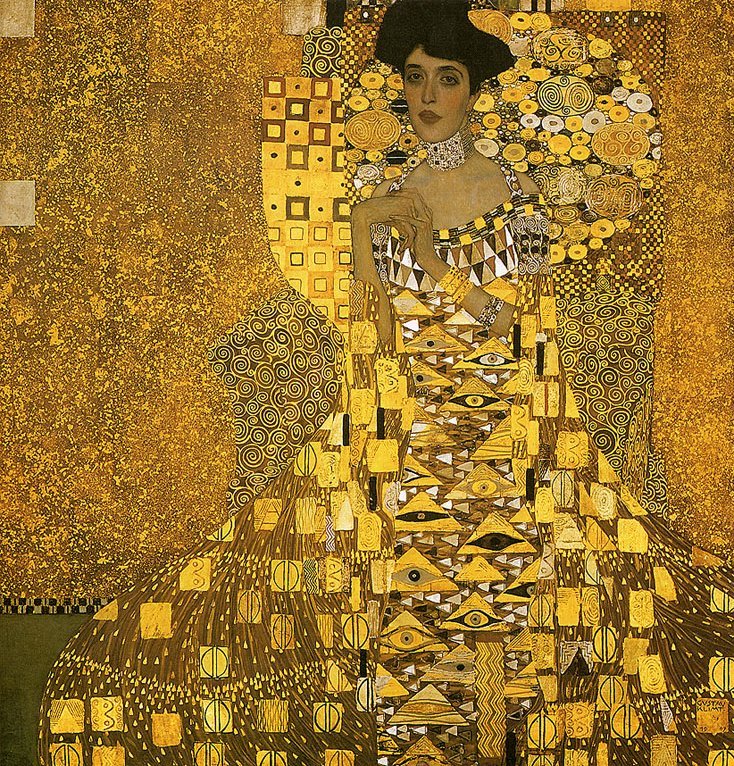
Another fracture in arguments supported by inflation apologists (IMHO akin to Creationists and evidence tallied by Darwin and, for that matter, all science) was hammered by a private auctioneer in the form of Gustav Klimt's portrait of Adele Bloch-Bauer, that sold to a museum affiliated with the Lauder family for a staggering sum of USD$135,000,000 dollars.

The apologists may argue that this was a "special picture", and was "unique". But aren't they all? The point is that each new record is an important tell-tale that says: Money is increasing in quantity faster (and accujmulating in more concentrated fashion) than the general increase in GDP. Today it's a Klimt. Tomorrow it will be your haircut, and your bag of crisps, and the quart of milk.

Wednesday, June 14, 2006

Tokyo Momentum Update

While the Average stock in Japan is down about 16.5% CYTD, and the indices have shed nearer to 20%, little has changed insofar as investor preferences, at least as they relate to momentum. One-month, three-month, six-month twelve-month, and all flavours of formation period in-between, have maintined their "spread" out-performance between the best-performing and worst-performing deciles of stocks.

This is curious if only because there has not only been enormous liquidation and margin-puking going on, but mperhaps more importantly, other major world bourses, most notably the USA have seen their 3,6,12 & 36 mo momentum spreads get absolutely crucified by a magnitude of 25% - numbers not seen November 2002 and January 2001. As a result Calamos ( doyens of uber-momentum), and heirs apparent to Navellier (TOP20 Fund -25.4% peak to trough)has seen his formerly $20bn long-only fund pummeled 20% since mid May.

Why has the relative performance of winners and losers been so dramatically altered in the USA, but not in Japan? My guess is that inflation and its associated interest rate rises that people fear, are structurally perceived as posing greater earnings threat to the US market. This is exemplified by heightened conditional co-variances of "risky" stocks (i.e. stocks whose earnings have higher r-squared to changes in aggregate demand and aggreagte US earnings), that will (presumably) manifest itself from continued hikes in US rates. Most sensitive to this are primarily effect sectors most buoyed by the "liquidity trade" (materials, mining, cyclicals, housing, etc.) coupled with secondary effects of general deleveraging by hedge funds, which means, "selling what they own". This has caused BOTH accelerated sector rotation coincidental to intra-sector convergence - both which are anti-momentum effects.

Japan, by contrast, has been caught in the jetwash. This has seemingly caused marginal exposures across the board to be reduced, which has not caused excess sector rotation nor the intra-sector convergence that so defines anti-momentum (excepting the shortest of reversion horizons). Where does it go from here? The momentum effects in Japan appear to result from the attention certain stocks receive from large foreign admirers, be they hedge funds, activists, or large long-only shops. And I believe that these allocations are somewhat stickier than the marginal flows driving some fo the US style shifts, and so I see no immediate reversal. Until, of course, if and when, Japanese stocks return to ignominimy. As for the immediate direction, the selling has been overdone and today the 14th of June with many fine securities having shed 30% to 40% from values seen just a few months before, I strongly suspect a significant and profitable near bounce is on the cards.

Friday, June 09, 2006

June 9th Market Musings

There is much that fascinates me today. Newsflow on Murakami continues strong, with most writers wielding late, but probably deserved, tar & feathers. The market bounced in sympathy with an "outside reversal" afternoon bounce in the US markets, and an oversold technical condition after a classic "margin puke" in Japan. And finally, the largest-ever MBO in Japan was announced with Nomura Principal Finance teaming with management to take the Skylark Co. (TSE Code#8180) private at a price of YEV2500/shr.

Today's news on Murakami alledges that in addition to being a child-raper, a North-Korean spy, being responsible for global warming, and being covert operative for Al-Zarqawi, he back-stabbed, two-timed Livedoor's Horie but dumping shares in NBS, after he urged [and convinced, we are supposed to believe] Horie to buy them at higher and higher prices. We are meant feel sorry for Horie, and despise Murakami's lack of honor. But I feel like I am watching the Japanese equivalent of Jerry Spinger, and really feel no sympathy for either of them.

Following on this, the Asahi Shimbun reports on research by Kazunori Suzuki, professor at Chuo University's Graduate School of International Accounting, that suggests Murakami's activist style of investing actually destroys both companies and shareholder value. He's analysed the juicy and apparently undervalued companies in which Murakami's fund made investments and found that while their ensuing stock market performance was better than average, their ensuing business performance was pathetically worse than average on many important measures. The researchers suggest that this might be due to the distraction and low morale caused by the raiders' unwanted interest in the company, and therefore questions whether the activist has the company's long-term interests at heart. The skeptic (being me) would respond that the share price performance was aresult fo the raider/activists own buying upon the relatively illiquid markets of the smaller companies that caught his eye, and the true story will need to be seen only after MAC and other activists dispose of their holdings, or the researchers try to disentangle the subsequent share price performance due to "improved management and shareholder focus" from the insanely large market impact of incentivized fund managers jamming up the prices of these securities to collect ludicrously large performance fees. Furthermore, the skeptic might rightfully suggest that the companies in MACs portfolio suck. They are sh*t that sticks to your shoe, and they are cheap for a reason. OK, they were too cheap, but that is quickly resolved once one buys them up, and then what? You've gota large position in a sh*tty, illiquid company. It was no surprise that the companies that appeared "the cheapest" in the mid nineties all has "Martin Armstrong Repair Bonds" in the "marketable securities" line on their balance sheet, where REAL marketable securities should have been.

Finally, there is Skylark - Japan's largest MBO to-date. Rumour has it that the sale was the resulot of a typically Japanese family feud (similar to the Canadian McCain's), and the exit via a sale to Nomura and management was a mutually acceptable option. But THE PRICE for a pedestrian chain sushi-conveyors, buffets and dressed up noodle wagons?!?!? Granted, MBOs are "new" to Japan, and sometimes you have to learn by doing - even if the lessons are harsh. There is no lesson on the perils of "paying too much" than paying too much. And while I admire the engineering prowess, manufacturing organization, and long-term committment of Japanese corporations, I would also point out that Zaitech was invenyed in Japan, and there is good reason was THIS concept was never successfully exported!

Thursday, June 08, 2006

So, You Think You've Had a Bad Day

It is worth noting that when Impressionist paintings are "ringing the bell" at auction, and you overhear your nine year-old wanting to be a "hedge fund manager", that it may be time to consider that we are near to an intermediate-term top. Such was the case with Tokyo at year-end - something that's been alluded to in this forum in unwaveringly but none-too-subtle form.

Today, the 8th of June, Japanese fund managers might be forgiven feeling a little glum. After what was a bad start to the week, they saw yet another four percent hived off of their average portfolio values in what was the third biggest volume day of the calendar year. This was more notable since it was the largest volume day on the negative side of zero. This places the popular price-weighted benchmark, the Nikkei 225 at -9.17% YTD, and the the broader TOPIX first-section down 10.1% YTD. But if you bump into Tokyo bourse investors today, and they seem particularly [black and] blue, I will tell you why: The average investable stock, which is to say, the index of quarterly-rebalanced, equally-weighted security prices is down more than 17.4% since December 31, 2005, (and more -18% YTD for the annually-rebalanced variety!)!!

So while your American friends may be feeling poorly because the S&P500 has given up most of its gains (+0.45% YTD), and your European colleagues, too, are feeling regret at having shed their double-digit profits to less than a percent YTD, I would ask you to be especially kind to your Japan-centric acquaintences, and perhaps buy them a very, very, dry Martini and lend them an understanding ear to offset the very real financial, performance, and emotional distress they may be encountering.

Monday, June 05, 2006

Murakami: Legitimate Activist?

Forty-six year old former Ministry of Finance (known as "MoF") official Yoshiaki Murakami was arrested having admitted that he used material non-public information to profit from Livedoor's takeover of Nippon Broadcasting (TSE Code#4660). Bloomberg reported that Ken Siegel, Senior Partner at US lawfirm Morrison & Forrester (amusingly known as MoFo) commented that "...it would be a shame if this discourages legitimate shareholder activism."

Which begs the question: "What is legitimate shareholder activism?". It also begs the question: "What is legitimate management intransigence and what constitutes cynical self-serving behaviour?" Is this culturally determined, since there are many flavours of capitalism that have evolved in the world, distinct from the American version where the owner is "king" and all else, labour included, is meat for the grinder.

As is most often the case, reality probably lies somewhere in between Daniel Loeb's obnoxiously delicious missives, and Tokyo Style's (TSE COde# 8112) deliciously obnoxious disregard for their financial partners (i.e. capital). But it IS important to recognize that, in many places, the form of the limited liability corporation has many uses. In many instances, it is NOT to provide immediate rewards to shareholders, as the case may be in France or Belgium, where the "holding company" is effectively a legal tax dodge affording the owners to avoid various pecuniary wealth and generational estate taxes, while maintaining the benefit of effectively private control over one's business affairs. And indeed, the same may be said of many second-section listed subsidiaries in Japan.

Here I make no judgement of the relative merits such organization and [lack of] profit-maximizing business objective, for I believe that while profit-maximization affords certain disciplinary benefits, I believe that the large corporation legitimately serve multiple constituents - not least, shareholders, employees (including management), the community, and suppliers (probably in that order). And I also believe that many of these constituents are best served (shareholders included I might add) by longer-term vision and investment rather than shorter-term maximization strategies (meeting quarterly earnings forecasts, or the incipient year's profit growth), that might reward "activists", but impoverish the other constituents (including longer-term shareholders).

From my perspective, I might make one observation that I have learned in my years of experience that separates the "mouse that roared" from the "real men" of financial substance. And that is: possession in nine-tenths of the law. This is to say, if you are not prepared "to own it" (bid for majority control) and run it (take it private), or are not able to do either due to majority stake-holders, you've got nothing to say.

Friday, June 02, 2006

The Nail That Sticks Up Gets....


I remember that fateful day when Hank Greenberg Former Chairman of the colossal AIG Insurance Company started attacking US Attorney Eliot Spitzer implying he was something akin to a "fascist". Well I was far away as the crow flies, but I KNEW what was coming and next thing you see, Mr Greenberg was being investigated for fraud, and subsequently was bounced out of his job amidst great personal embarassment and shame. Despite the fact that, in he end, he was cleared of any wrongdoing, one could see he messed with someone more powerful, and he lost, full-stop. Of course, we shouldn't shed any tears for him as he is, after all, sitting in control of the CV Starr Foundation that owns an ungodly amount ($21 billion??!?) of AIG stock, in addition to the billions he has accumulated of his own.

But this is not about AIG or Mr Greeneberg, but about former MoF official, Yoshiaki Murakami: value investor, corporate cage-rattler, stock-greenmailer, petty thief, and now corporate scafflaw & greedy trader, whose portfolio took a severe hammering today as a result of an investigation into MAC Asset's potential wrongdoing. Many people seem to have issue with Mr Murakami: self-serving managers, squeezed short-sellers, his fund investors, as well as his competitors. But the one he has really offended is Japan Inc., and like the disgraced Livedoor upstart Takefumi Horie found out, there are limits to how much they'll take. For he has challenged entrenched interests and caused (in all truth) some positive changes in the respect (or at least lip service and dividends) that Jap[anese companies heed shareholders, but in this process has disturbed the "wah" of the house of Nippon. But he has wrought these changes in an apparently ill-tempered and undiplomatic manner that has been seen as vulgar (in Japan) to most of the powers that be, in addition to those transgressed.

The markets severe reaction today was perhaps predictable since he has, for parochial interest, NOT been gentle upon "price" in accumulating his positions. I have two observations that I can humbly offer Mr Murakami about today's events. The first is: "Don't break the law when you're breaking the law" (even if this "Law" is the unwritten law of the land know as "custom"). For if you do, they will surely bury you, with what the Miller Brewing Co. used to called "gusto". The second piece of advice is: IF you are going to accumulate very large positions in rather pedstrian and illiquid lines of stock, you had best not be: (1) leveraged (2) be subject to investor calls on capital for an amount of time less than that measured in "years", and (3) Never, never, never, let the market know your positions. If you get caught violating all three at any time, I must say, one might deserve whatever "Mr Market" might deliver...

Thursday, June 01, 2006

Baby Blues


The BBC announced today Link that fertility rates in Japan have dropped to their lowest levels since record-keeping began more than 60 years ago, weighing in at 1.25 per couple in 2005, vs. 1.29 in 2004. This is versus a steady-state replacement fertility rate of 2.1. While a number of western European nations (most notably Italy, Spain and Eastern Europe) face similar issues, Japan's issue is particularly acute since, by my calcualtions, in but a mere 40 generations, the Japanese will follow the path of the Dodo, and be no more.

So why is this advanced mature nation, with far less sexual hang-ups than Western Europe and that are so adept at producing consumer electronics and automobiles having such a difficult time producing babies? Cost? Environmental stress & degradation? Health? Male impotence? Competition? Urbanization? Nintendo? Manga? Ego-centric hedonism? Pathological disorders? Maybe none. Or maybe a bit of all of the above.

My own guess is that following the industrial revolution and the technological revolution of the 20th century, mortality rates fell dramatically, as hygiene improved, diseases were treated, food security and wealth increased with global trade and the division of labour. But there was a several generation lag in the off-setting fall in fertility rates that exponentially mushroomed the human pestilence across the planet, to levels that, one might speculate, are beyond the stress-free carrying capacity of the land. Urbanization and modernity followed, but perhaps this has been not without consequence. Perhaps we are witnessing an unconcious natural reaction in humanity to the stress and pressure of excess population, driven by living costs, health, etc. that will ultimately see human population numbers move away from forecast Malthusian heights returning towards more sustainable numbers. That is, of course, if we can convince the various religions, particularly evangelical christians, and muslims that "going forth and multiplying" is, while historically useful when mortality was high, is rather passe, unhelpful and terribly uincivic-minded for the planet when mortality rates are low.

Friday, May 26, 2006

The MoF as Radio Moscow

I have been an information junkie ever since I was a wee lad. I was the proud owner of a 100lb "Hallicrafters" shortwave radio set with more dials than a kid could imagine or ever want. I become so enthused with listening to the far and exotic edges of the earth (way before Hubble, Skylab, the Shuttle or the Internet) I graduated to a wonderfully sophisticated, Japanese-made Yaesu, and today still, I never travel anywhere without a small Sony to - at the very least - allow me to stay tuned to the BBC World Service.

It is important to point out (at the risk of showing my actual age) that this was during the height of the ideological cold war between the "west" and "communism". A time when people wrote and sent "letters" and still others actually answered them. "Aerogrammes" were the preferred mode of contact for boy pinching pennies. The Amerians, too, invested in radio propaganda (in the overly nasal and earnest "Voice of America"), but their efforts couldn't match the sheer weight of Soviet & Chinese efforts to persuade anyone in the english-speaking world of the inherent superiority of People's Socialism or Communism. Radio Habana Cuba, Radio Praha, Radio Moscow, Radio Kiev, Radio Bucharest, Radio Peking, and the most outrageous and hilarious of the lot, even to a twelve-year old, Radio Pyong-yang. They all were keen to share the heroic exploits of Tractor Combine Factory's #5 production triumphs, or wade into the peace-loving benefits of SS-17 Warheads vs. the evil Neutron weapons the US desired to point at the East flank of NATO. My powers bullshit detection were greatly heightened by the exercise of trying to triangulate "truth and objectivity" from the various sources of news all with differing views on the same event. Whether listening to Radio Pakistan vs. All India Radio's take on the Indo-Pakistani war, the Voice of Chile's pronouncements on the wondrous and benign regime of General Augusto Pinochet, or the Afrikaaner's hardened view on the dubious merits of Apartheid, there was rarely a dull moment when one's bullshit-o-meter could be turned off. And so I sarcastically adopted "Radio Moscow" as the metaphorical label for the obviously kitsch untruths & utter crap that one might encounter.

So what does this have to do with Japan, stock markets or the MoF? The NHK, Japan's National broadcaster, was, after all a relatively unbiased (if unprovocative) source of internatonal news and opinion. The connection is that Sadakazu Tanigaki, the Minister of Finance, is talking pure crap-ola about deflation and the impact of Yen appreciation and higher interest rates upon the Japanese economy, and he must be held accountable and internationally shamed for his persistent perversion (surely I mean sub-version??) of the truth. This has earned him my "Radio Moscow" award for this week.

For Bloomberg reported today that Chief MoFo Tanigaki (and other ministry officials) wentr on the offensive by saying that depsite six months of positive increases in prices, deflation stil, persists in Japan. "We still can't say that the economy has emerged from deflation", he said. Chief Cabinet Secretary Shinzo Abe, in pole-position for Koizumi's job, echoed this populist sentiment by saying: "Today's report [+0.6%) confirms deflation isn't over". What they are cynically, if not intentionally ignoring for Japan's marginal but parochial gain, is that international capital flows are more or less free and open. Sitcking to ZIRP when things are rather obviously booming in Japan is akin to leaving the tap open in the bath and letting the tub overflow. But because of the nature of relative interest rates, Tanigaki and the Japanese are metaphorically living on the third floor apartment, and all the liquidity is falling through a hole in the causing great damage to the flats below. And when we yell upstairs "HEY! W.T.F.??!!", we get Tanigaki, Abe and friends of MoF & LDP doing their Radio Moscow imitation "...leak? What leak....?"

Tuesday, May 23, 2006

The Forest & The Trees

All too often, one's sense of perspective can get lost. Occassionally this results simply from the passage of time, while in other cases it is the result of deeply held opinions that one cannot jettison or merely happenstance that has in some Darwinian way, survived. Whatever the cause, accurate perception of current reality may be the resulting casualty it occurs.

One such example is the 10-Year Japanese Government Bond ( the "JGB"), seen here depicted in yield terms (courtesy of Bloomberg Professional) in the chart below. The JGB's yield (if one can really call it yield at all) has been SO low, for SO long, that people have stopped questioning whether or not it should be yielding thus. They have been ground down, and rather are worn out. In this respect, the MoF has won. But the cruel irony of financial markets is that the game is NEVER over. They have won but a round, an inning, a frame (maybe even several), but not the game.

Some of you may then ask: "where it is going from here?" I would suggest the answer is rather obvious, jumping off the page. So obvious (when one looks at it from afar) irrespective that people have stopped asking the question of it's proper yield; ignoring that hedge funds have stopped shorting it; and despite the sight of the BoJ AND the MoF patting each other on their backs in salute of their "victory" over trade surplus-related YEN appreciation, one's conclusion can only be that JGB yields are going higher. And they are going higher, make no mistake, because of six-years of ZIRP and 7%-of-GDP fiscal gaps. Just look at it for a moment and ponder the possible alternate realities of the future. 4% (at least!) by the end of 07' is my variant vision of the future.

Monday, May 15, 2006

Greenspan's Shame?

I was snowed-in, high in the Arlberg so I missed this gossip in Mark Thoma's Blog "Economist Voice" that Alan Greenspan, not more than two weeks retired as Chair of the FRB, was giving a private briefing for a few of Lehamn Bros privileged few. Fortunately, this subject was raised to my attention last night and I must admit to being rather astonished. More worryingly, I must admit to agreeing with Bloomberg's feisty conservative, columnist, Caroline Baum. Yes, I think that there is something wrong with the former Chairman of the Federal Reserve Board giving a private chat to the 10 or so largest gun-slinging hedge fund managers, including Moore Capital's Louis Bacon and Tudor's enigmatic namesake, Paul Tudor Jones.

First let me say, I have nothing against hedge fund managers, per se, since I AM one myself. And I must quickly dismiss the notion that I might be jealous, since I neither trade nor speculate in bonds or currencies. So what is it that Mr Greenspan has done by trying to earn a few honest quid that so gets my proverbial goat? After all, supporters of Mr Greenspan (as well as the priviliged few attending the private speaking engagement) will quickly point that no laws were broken (to which I argue not). And unlike other critics of his private briefing with the kings of hedgefundland, I do not think it is even against the spirit of the regulations and directives governing what he may or may not do.

But yet, a horrid taste remains in my mouth, for reasons not mentioned by Ms. Baum or by Dr Thoma & friends in the "Economists Voice" post. Dr. Greenspan should NOT have given a private briefing simply because he should not allow it to appear that markets are "rigged", "unfair", or "undemocratic", by holding private court with the wealthiest and most powerful investors in America, and possibly the world. This is a very unhealthy thing for a market economy predicated as it is by attempts to insure fair and uniform public disclosure of information. This directly relates to confidence of the people in the integrity of markets and money itself, and former government officials should have an obligation not to jeopardize THIS spirit in any way shape or form. They must be beyond reproach.

It is even more offending that Dr Greenspan has - whether intentionally or unintentionally - raised the spectre of unfairness in financial markets for the paltry sum of $250,000. I appreciate that this amount is greater than Dr Greenspan's ANNUAL salary as Chair of the FRB, but in relation to the worth and value of even insigfnificant mutterings in private, this amount is laughably small. This amount, split between the wealthy and powerful hedge-titans is a rounding error on a morning's interest. This is not meant to imply Dr Greenspan should sell private potentially valuable information to the highest bidder, but it is meant to put into perspective that *IF* he were to do it, the price should be much much higher.

I have no problem with Dr Greenspan speaking to capitalize upon his hard-earned notoriety after years of public service at an admittedly lower-than-market-value wage. But this should be honorary keynote stuff; graduation-day speeches, motivational lectures; academic philosophical discussion groups; or in the least televised, media-fed, OPEN lectures with open and transparent Q&A's for everyone's consumption. We don;t own Dr Greenspan, or his still lucid and keen mind, but he (and other public servants) with information that could remotely be construed as priviliged have a public repsonsibility to insure that the decorum of fairness and equal access to market information is upheld. This private "briefing" for a privileged few movers and shakers miserably failed THAT smell-test.

Friday, May 12, 2006

Dumb, Dumber, Dumbest


In the interests of economy I will sacrifice eloquence for speed today in my attempt to highlight one of the more interesting characteristics of recent Japanese price action: From the point of view of return relative to the average security, the only thing worse than being a high-momentum stock is being a low momentum stock.

This is say that "High-momentum" stocks - that pool of securities outperforming all others in terms of price return during the prior formation periods - has done very badly indeed since the beginning of the calendar year. This is true across all formation periods - short and long alike. With negative returns running from between 12 and 20 relative percent.

there are few fundamental factors or pockets that have done worse than that and many of your favorite Japanese long-only and hedge funds will be reflecting this fact, since the only way pedestrian stocks get to graduate to the elite high-momentum gentleman's club is by your not-so-selfless agent/portfolio manager buying them, and buying them and buying- most likely at higher and yet-higher prices. Now before you excoriate (or excommunicate) them, let it be said that the adept may have gotten out, and their gains on the way in may exceed their losses on the way out. Jeff Vinik is a fine an example of such an adept player.

But what is fascinating is that perhaps the only thing that has done worse than extremely buying extremely high momentum (in any formation period), is buying extremely low momentum, again in any every time frame where negative returns have ranged from -20 to -30 relative percent since the beginning of the calendar year. This is even true for short-term horizons which have historically been fertile places to look for "a bounce", "bottom fish", or "catch the falling knife" with some moderate success.

So what is one to make of it since, every financial advisor is jolly-well smitten with Japan? Well "momentum" is conceptually vacant. Today's high or low momentum is different than last month's high or low momentum and they may reflect highly contrasting phenomena. Some may be "justifiably high or low, and some may not. At the moment, I would suggest that the immediate future will remain difficult for BOTH high and low momentum. BOTH are expensive, with the current Class of 2006 high momentum as highly valued as the ignominious class of 2000 (and we know what happened to them!). But low momentum, while often a nice place to scour for tomorrows' undervalued darling has a decidedly pasty fundamental pallour. And while there may be some hidden gems, buying underperformance or low momentum as a matter of course is likely to remain unrewarding. Finally, for the ever-popular players of the "good-stock/bad-stock" game, the risk is likely to be elevated relative to the pedestrian expected returns and so one is likely to see their favorite Japanese quality-biased long-short manager underperform the more adept and forward-thinking one. We are likely to be entering a phase where avoiding the wrong stocks (proverbial potholes and torpedoes) yields far more relative return than selecting the right stocks.

Monday, May 08, 2006

The Best Little Stock Trader in Japan

Nomura securities reported yesterday that the BSPC (Banks' Shareholdings Purchasing Corporation) suspended new purchases as of the end of April 2006, though it may continue to puchase securities for it's general account up until the end of the window permitted by its articles of association. This follows nine rounds of purchases of shares from Banks that commenced in Feb 2002 up through the present - most of which were cross-held shares that financial institutions desired to get off their books to minimize the variability of their core capital due to the vagaries of share price movements.

To date, the BSPC bought an aggregate amount of YEN 1,586.6 billion (at cost) worth of shares (USD$14.3 billion at today's exchange rates). This is only a smaller part of the total shares bought by the various Japanese authorities and agencies (including the Daiko henjo pension givebacks; the Bank of Japan's purchases (The DIC - Deposit Insurance Corporation) from failed financial institutions, as well as those whose ownership was assumed when other failed institutions were nationalized. But if you think this was a charitable undertaking - think again. Impressively. the BSPC is believed to sitting upon
YEN 1,000 billion of unrealized capital gains, making them one of the wildest financial gunslingers in the world surprassing the HKMA's feat of buying copious amounts of stock to support the market during the Asian Crisis of 1998. Yes, that's right, YEN 1 Trilion (USD$9 billion in market-to-market gains at this morning's exchange rate.

So will this stock find its way onto the market anytime soon, and rain on the bullish party sweepiong Japan? Legally, the Corporation must be dissolved by 2017, and they claim to have no immediate plans to sell stock. But if you're looking for a large line stock, perhaps you should give them a call...

Wednesday, April 26, 2006

Rabbit Out Of A Hat

Quietly and inauspiciously, the yield on the 10-year JGB has surpassed 2% for the first time in six years. Yes, you read both numbers correctly: 2 (two) percent and 6 (six, seis, sext, VI) years in coming. Anyone who had studied economics at an American university (in between beer-bongs, and debauched frat parties) would be asking themselves: "If you give something away for free, won't it's supply increase, thereby driving the price down (and if you're a bond trader) the yield up?" What dyslexia pray-tell has overcome the Japanese to invert such laws of supply and demand for so long? A 2% 10-year JGB following 52-months of continued expansion and SUSTAINED ZERO PERCENT SHORT TERM INTEREST RATES is the Houdini-inspired equivalent of a rabbit out of a hat.

But what's the truc du chef? It seems that for the past seven or so years, during which time ZIRP has been the policy du jour, there's been a leak in Japanese monetary plumbing (not to mention that of the international monetary system). All that YEN they've been so eagerly giving away, surreptitiously managed to find its way out of the beautiful isles of Japan. But gosh, golly that's a LOT of YEN!! Where'd it go? Well you see not all of it went abroad. Some stayed in Japan and helped the banks buy the JGB's that financed the 7% of GDP fiscal gap. And two percent is, after all, two percent, which it must be said is still a very nice loan spread when one is able to borrow for free. It is, for a bank, the very definition of "free money" (though even moderately astute observers or US S&L victims will attest it is not without its own risks). The rest of it is/was/has been happily taken it up by foreigners - banks, brokers, hedge funds, astute property developers, and everyone else who can and is in need of a unit of money, today, at no-cost - zip, zero, ZIRP. Of course, when they borrowed YEN, they would need to remove it from the domain of the Emperor, and in so doing they'd be required to sell the YEN in the currency market. Which I daresay was convenient for everyone. The banks made a turn in the FX market. The MoF (and most Japanese blue-chip exporters) were rather keen to see the YEN not appreciate, even depreciate especially vs. the USD and the Euro. And given the sizable trade surplusses being run by Japan Inc, the repatriation of which would most certainly have wreaked havoc upon the exchange value of the YEN, was averted.

But all good things that are free (clean air, clean water, Ketchup in fast food restaurants) must inevitably end. And the ZIRP is no exception. Whether due to victory by BoJ technocrats afraid of repeating the horrible episode of Japanese inflation, the concerted though unwanted attention from the G7, or through a plunge in the unit of exchange of the junkie-of-a-nation mainlining the free juice (the US Dollar), Japanese short-term interest rates will rise, and rise rather substantially.

So although inching across the 2% threshhold may seem inconsequential, it is delineating a trend. And as we know, the more a trend is delineated, the more persistent and inertial it tends to become. And that means a return to normality. Regression to the mean (or at least some longer-term process). What might that be? Let your imagination go wild.

IF officialdom raises rates, the carry trade explodes. If the markets do it, they push down the dollar, and force the unwind of the carry trade that way (or a mixture of both). For the dynamic is that there remains lots of speculatively financed borrowings in Yen which ultimately must be closed out. The smart ones have done this pre-emptively. The dumb ones will be in for a rude awakening. How rude? Recall Oct 1998. Everyone went to bed one night and the YEN was 132 to the dollar and woke up to see it at 118. It had risen from a denoument of ~145, some some had managed to get out, and even get short. But there was little if any trade between 132 and 119. A gap. A chasm. A painful impalement upon something very unpleasant. Of course, I can say precisely when. Or how much. But as Cassandra, I am issuing a pari-passu warning of an impending unwind in one of the largest fiascos the modern financial system has ever seen, and it won't be pleasant, and there will be collateral damage. Evenn Sakakibara cannot help with one....

Friday, April 21, 2006

MoF v. BoJ: Financial Kabuki Theatrics


I read it once. I blinked more times than I could count (an involuntary form of expressing disbelief and incredulity), then re-read the text as reported by Bloomberg: MoF Chief Tanigaki "urged policymakers to damp expectations of interest rate increases after the government borrowing costs rose to the highest since 1999." (The JGB 10-year by the way now yields a whopping 2%). "Well, matey", I thought, "could it be other than thus when you've been running fiscal deficits surpassing 7% of GDP for the past five years, and by optimistic observertions are forecast to remain at least at 6.5% next year and 5.7% in 2008 despite heady recovery, (unless action is taken to the contrary)!? The gall!

Yet there remains a stylized tension between the BoJ's Fukui and the MoFs Tanigaki that is reminiscent of a Kabuki play. Fukui moves towards ending ZIRP; the conniving Tanigaki uses smoke and demagoguery to make critics and the people fear such a change. Fukui goes silent, only to reappear and try his hand again, but is rebuffed yet another time by Tanigaki, who seems to be winning the not-so-bloody battle for the hearts & minds of policy wonks who care about such arcanely boring stuff.

You see, in reality (and note I am not a Japan-basher as I generally admire them), Japan is behaving badly. It is continuing with ZIRP policies that are enlarging and intensifying global imbalances - especially in the USA, fueling asset bubbles and beggar-thy-neighbor employment gains from other OECD nations, and, threatening the stability of the post-Bretton Woods world financial order. Not that the USA is any less of a rogue (at the opposite end of the spectrum), or doing anything to help itself (e.g. consumption taxes, energy taxes, higher income taxes, investing in education, public transport, universal healthcare, etc.). But this post is not about lambasting the USA (which is not terribly sporting these days anyway), but about the selfishness of Japan, the LDP, and Chief MoFo Tanigaki.

Surely it's ass-backwards - not to mention rather disingenuous - to assign blame for the problem to "the rate of interest" the govt is paying on its borrowings (especially when they are but a mere 2% at the long end), rather than as is obviously the case, the quantity of its growing and not-so-insubstantial obligations outstanding. If Tanigaki was the least bit cocnerned (as a Chief Financial Officer of a nation should be) about the state of said nation's financial affairs (i.e. the State's Balance Sheet) in which he/she is charged, he would be focused upon how to raise revenues (i.e next FY's Income Statement for his undertaking, given the robust state of the Japanese economy . Instead, detached observers and both "victims" and participants in RealFinanz (the financial equivalent of RealPolitik) must suffer through the painful mock-theatrics of appearing to be on the verge of doing something that should have been done a long time ago, but instead, delays and debates further, and endlessly, in order to gain yet additional pecuniary advanatge at the expense of the other players.

"Our basic understanding is that rapid gains in interest rates are undesirable because mild deflation still persists" said Tanigaki.' PARDON ME!/!/ On what planet has he been living? In three years, (in both US dollar and Japanese Yen terms), oil is up 200%, Zinc & Copper! are up 400%!; Silver & Gold 300%! Steel prices have more than doubled, cement prices, office rents, airline tickets, the price of office buildings, all have positive and accelerating price trajectories. The only thing that is not caught in the swift current of price increases are fluffy stuffed animals, brassieres, or pairs of cotton socks, manufactured in China. These offshored manufactured goods and the odd service suffering from over-investment (cellular phone service) are the few items in one's budget that may have fallen in price from the perspective of the consumer in Nagoya. But c'mon, seriously now, this should not be confused with deflation, as we are now in the year 2006 and virtually every manufacturer of common items subject to price competition has opened a plant somewhere in China or Indonesia, and BOTH Tanigaki and Fukui know it full-well.

Thursday, April 13, 2006

BoJ's Blind Date

In an epiphany of sorts, it occured to me that there are many similarities between the BoJ's treatment of their unit of exchange, "the Yen", and an attractive girl who's got cold feet after having been cajoled into accepting a blind date. You may think this an absurd comparison, but I hope you'll hear me out, since I rarely comment on things outside my realm of knowledge such as currencies, or understanding the psychology of the opposite sex.

ZIRP (Zero Interest Rate Policy) remains my pet peeve, for there remains few if any benign reasons why Japanese authorities should be destroying the prodigious savings of their average citizens (savings held primarily in Yen, and in Postal Savings, life insurance, or other "investments" with pedstrian nominal returns). Yet ZIRP persists, far beyond it's sell-by date, coincidental to serially gargantuan fiscal gaps equivalent to 7% of GDP. Together, they are ostensibly intended to grease the wheels of commerce, goose GDP growth, thereby elevating Japan from the clutches of perniciously evil deflation. All while the BoJ's balance sheet has ballooned to inter-galactic proportions while the MoF continuous to engineer ways to borrow and spend the people's hard-earned nest-eggs. They repeat the mantra that it's to insure that Japan has truly emerged from "deflation", doesn't backslide, and thus is solidly on the road to recovery. But does this remotely, in any way, describe their real motivations?? For domestic demand has long-since recovered. Retail sales are increasing handsomely. Companies have restructured and most are now-sporting ROE's greatly in excess of their risk-adjusted cost of capital. Banks, too, have repaired their balance sheets and repaid their emergency government loans. Exports are robust, across most important sectors, and not just to their Asian factories transplanted to take advantage of lower wage costs, but to buyers across asia - especially China - who are now purchasing high-tech and high-value added machinery and electronic device inputs. Unemployment has dropped and the ratio of vacancies to job seekers has consistently increased. So why do Japanese authorities continue to persist with ZIRP and 7%-of-GDP fiscal deficits??!?

Cut to the Watson household. Attractive Jennifer is getting ready for her blind-date. She looks out her second-floor bedroom window and sees her as yet unknown suitor pull up. He's arrived early. She gets a peek, sees he's obese, slovenly, and un-hygienic pig and she thinks to herself: "Oh god, no! This is horrible! I'll never survive! What should I do? I don't want to hurt his feeling, but...." She proceeds to make herself as ugly and unattractive as possible. Faux-chicken-pox spots. Make-up bags under her eyes. Highlight the coldsore on her lip, messes up hair, snot running out of her nose, and proceeds downstairs, opens the door (coughing and sneezing in plain sight) to try and bail-out uncallously.

This is precisely what the BoJ and the MoF are conspiring to accomplish with the Yen: abuse the Yen; uglify it to the point that no sane international investor would desire of holding this paper given the contempt, overt neglect and punishment heaped upon it by it's alledged guardians - the govenment and central bank. And they've gone one step better - one that's more even cynical than their laughable protests to preserve their archaic and abominable whaling practices - they are GIVING it away to any and all comers at zero cost!!. And they are doing this in the full knowledge that those who borrow it will immediately sell it on the open FX market to assist in stealthily (ha! ha! ha!) counteract the large and persistent international trade surpluses racked up by their exporters. This is, to be sure, a pure and simple policy of neo-mercantilism. And as a result, they have been able to maintain market-share and trade advanatge advantage for such time that they have succeeded in building-out multi-teated, global manufacturing networks. They have followed other OECD nations in their industrial hollowing - but have done so at their own measured pace, without the substantial domestic labour dislocations, or loss of markets or market share, and consequently the drop in labour's real wages and thus their share of GDP. Not discounting the foresight of their corporate managers, their engineering and manufacturing prowess and teamwork, it is likely that this "truc de chef" would not have been possible without this concerted disfigurement of their currency.

What's been the cost? Internationally, the imbalances they have caused have rife, particularly in the USA. Japan has succeeded to a greater extent than would otherwise have been the case, in a beggar-thy-neighbor-like pilfering of higher-end manufacturing jobs from other OECD nations. They have been a keen co-spirator to the multiple speculative asset bubbles around the world (not to mention indvertently financing numerous Greenwich, CT estates) since the late-90's, which wouldn't have been possible (or certainly would have been more restrained without ZIRP) if they let US rates (and thus US consumption) find equilibrium without their meddling. And this has in turn helped China which has helped Japan, in many ways, though most roads in the daisy chain of ultimate cause & effect still return to the USA, resulting from it's higher-than-financable consumption caused by the combo of unsustainably high-deficits and artifically abnormally low-rates.

And then there is the Kawagishi family, and many others like them. Although they don't know it yet, their retirement savings have already been spent by the government in pursuit of the so-called "national interest". Their covert appropriation has helped prevent pain to, and the decline of, the Japanese middle class, and to support the powerful corporate business interests near to the center of Japanese power. Asset inflation has hit Japan, as is service-price inflation. They think they have USD1 trillion of US assets (in the form of US govt paper), but they will never be able to spend this or achieve the purchasing power that is currently marked-to-market by their holdings.

Make no mistake: this is not Japan-bashing of the traditional sort. There is lots of culpability to go around, but Japan must accept her larger-than-average share. You see, the global monetary system is cooperative by design. There are boundaries, and the nation-states in this game are called upon the respect the boundaries and take corrective policy action when they veer off-course. Cynical neo-mercantilism of the Asian variety practiced over the past two deacdes, is akin to an aggressive driver quite literally forcing other more-respectful drivers off the road. While trade indeed generates benefits, selfishness of a participant in pursuit of, or in order to preserve, national advanatge at the expense of other participants can and does have deleterious impacts upon the functioning of the system itself, and potentially upon the trade from which in a healthy system, everyone might benefit.

The hour is getting late for the system. Responsible actions need to be taken to preserve its integrity, even at the risk of domestic discomfiture in certain nations. But the price is worthy given the value the system itself delivers to many of the world's people. To the US, this means efforts towards, lower consumption & energy intensity, higher savings, lower fiscal and trade imabalances. To Japan, this means NO MORE ZIRP!!, lower fiscal deficits, continued domestic market liberalization, and a dramatically higher currency (even if higher domestic unemployment were the cost). The alternative scenarios, protectionism, economic nationalism, possible military conflict resulting therefrom, in a modernity, shoulb be grim motivators of the need to act.

Monday, April 10, 2006

Better Late than Never....Mr Saito's Back in the Money....

Asset prices undulate. When they are rising, it seems that they will rise forever. Such are the times when the the most regretful trades are posted. When they are falling, the market depressively cannot imagine if and how they will ever rise again. With hindsight, however, we can see these cycles more clearly. Time, it seems, (if it's an asset of reasonable quality) makes good even the most ludicrous of trades. Take the Japanese stock market for example. Many [formerly?] credible investors have been bullish on Tokyo bourse share prices since 1993, that have only been made good in 2005 - a full twelve years later!! What is twelve years my younger readers might inquire??? The life span of a dog; three of four marriages for Elizabeth Taylor, or the duration of Nazi reign in Germany. Through whatever human lens it's viewed, it is a long long (and expensive!!) time...to be wrong.

But that bubble was the now-distant past and it is currently the year 2006. The Tokyo stock market is booming once again, with small caps and mid-caps making all-time highs. And so is the art market, particularly for the Great Masters and impressionism where a near-frenzy exists. Supply is limited, of course, by the lack of new work by dead men and thus catapaulting REAL prices to levels not seen in either market since 1990. For that was the year that investors rang the bell on the TSE, thus allowing one now infamous Mr Ryoji Saito, scion of once-venerable Daishowa Paper, to "ring the bell" in the art market a GONG! that resonated so loudly that is was untouched and unmatched in real terms for more than a decade and a half!

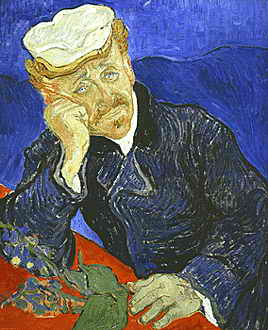
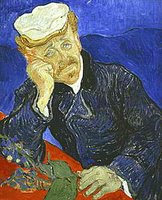
His story, or rather the story of his prey, is the subject of a book by Cynthia Saltzman, entitled "Portrait of Dr. Gachet: The Story of a van Gogh Masterpiece, Money, Politics, Collectors, Greed, and Loss". And while the details are fascinating and worthy of a read in greater detail, I will recount some of the history of Mr Saito, in the hope that by remembering and ruminating upon the folly of days past, we can increase the probability of preventing ourselves and others from making similar, if not the same financial mistakes.

OLIVER STONE: "GREED IS GOOD"

Like the internet bubble of the late 90's, and perhaps like Wall Sreet today, the late 80's were heady days. Recall "Barbarians at the Gate", and the new breed of brash and aggressive entrpreneurs that employed financial engineering techniques (read: 'Other People's Money') to make more money. They hadn't yet hit the introspective wall or been bitten by the philanthropy bug and were thus spending conspicuously pushing up the prices of, amongst other things, fine art. Christie's London sold a Van Gogh "Sunflowers" in March 1987 for a then auction record of $US39,921,750. The buyer: venerable Fuyo Group insurance giant, Yasuda Fire & Marine of Tokyo, who acquired it to display in their art gallery at head office.

"Later that year", Wikipedia tellls us, "Australian tycoon Alan Bond, winner of the 1983 America's Cup" (which Yankee yachtsmen had held for the previous 132 years) "successfully bid USD$53,900,000 at Sotheby's in New York for another now-famous Van Gogh, "Irises". Sadly, like a number of famous speculators, Mr Bond failed to repay the loan Sotheby's had given him to buy the painting, thus allowing the Getty Museum to acquire it from the auction house for an undisclosed sum. In 1996 Bond was sentenced to three years' jail for a $15m swindle involving the Edouard Manet painting La Promenade. In 1997, he was jailed for a further four years after pleading guilty to deceptively siphoning off $1.2bn from Bell Resources, to prop up his ailing Bond Corporation. It was Australia's biggest corporate fraud. He was released on parole in March 2000", though few outside Australia in the year 2006 (excepting the Newport crowd) will remember Mr Bond.

Enter Japanese industrialist Ryoei Saito, who in a 1990 Christie's auction bought a third Van Gogh, "Portrait of Dr. Gachet", for the then-amazing sum of $82,500,000 ($75 million, plus a 10 percent buyer's commission). The bidder on behalf of Mr Saito doubled the prevailing bid sending the room in gasps for air, followed by a gavel, making Vincent van Gogh's 'Portrait of Dr. Gachet' the world's most visible, and renown work of art.

SAITO & DAISHOWA

By the time of this landmark purchase, Ryoei Saito was very wealthy. He was not mega-rich by birth. Rather, he made his money in the paper industry, beginning some time in 1961, when he took his father's relatively modest paper company and apparently bullied his way into bigger companies' territory by undercutting their prices and raiding their clients.

According to the Ken Jacowitz' account, Saito took large financial risks to make Daishowa Japan's second-largest paper company. Such risks typically entail leverage (and lots of it) and so it was that The Sumitomo Bank took control of the company because of losses in 1982, most likely ripples from Volcker's assault of inflation that sent developed market interest rates into the high teens. Being tenacious, Saito managed to win back control of the Company by 1986, just in time to surf one of the biggest financial waves the world had ever seen! In hindsight this was probably caused by the unceasing pressure upon Japanese authorities to weaken the Yen by over-easing monetary policy and lowering Japanese interest rates to levels that supported and encouraged the most imprudent of speculations.

The lower rates didn't weaken the Yen, but merely fueled growth further ballooning asset prices, as well as Japan's relative wealth thus creating the heyday whence Japanese companies buying landmarks such as Rockefeller Center. It also allowed their billionaires to raid the West for treasures. Stories abound of western arbitrageurs front-running trades in Samurai swords, prior to near-certain acquisition at even headier prices in order to repatriate the treasure. Fine art, in particular, was considered - (mistakenly), as it turned out - a good investment, and Mr Jacowitz tells us, Saito sent a representative to a Christie's New York auction, with instructions to "pay whatever was necessary". And he could afford it. We know this because each year, the Japanese government makes public a list of the country's largest taxpayers. In 1990, Tokyo's Yomiuri Shimbun reported that Saito was Japan's largest taxpayer, contributing approximately $24 million to government coffers. His fortune was estimated at $770 million according to Inquirer art critic, Ed Sozanski.

THE TRADE

In business, Saito was nicknamed "wild fellow,". Emerging from international obscurity as he did when he paid USD$82.5 million to buy the melancholic portrait of van Gogh's physician, Paul-Ferdinand Gachet (who as it turns out also suffered from the same depression as van Gogh). According to Mr Jacowitz, the price was $33 million more than he had expected. And not more than two days later he paid a further USD$78.1 million for a Renoir known as "Au Moulin de la Galette," - the second highest price ever paid for a masterpiece at auction. Non-plussed, he told the press: "If other good ones become available, I will buy more and more". He said he would display the paintings publicly someday, and brought them back to wild acclaim in Japan, as if he won the country a national prize, only to stash them in a warehouse. It has been reported that Saito spent but a few hours admiring the portrait, before locking them both in his climate-controlled vault, where they remained for seven years. The American and European art worlds were stunned that the European masterpieces were going - not only of all places - to Japan, but to bubble-emboldened nouveau riche!

THE AFTERMATH: HOW THE MIGHTY FELL

How many a famous speculator subsequently have crashed & burned! The BOJ's tightening in 1990 diminished many a bubble fortune. Much of Saito's wealth was in overvalued forest lands, and when real estate values plummetted, so too did the value of Daishowa's forest lands, it's share price, and along with it, Mr Saito's fortunes. In an attempt to generate cash flow from his very leveraged land holdings, Saito proposed a golf resort and paid the governor of Miyagi Prefecture to get zoning changed from "forestry" to "development", an undertaking that was ignominimously to be named the "Vincent Golf Course". In December 1993, Saito was indicted on bribery charges.

Like Australia's Alan Bond, Saito pleaded guilty. Disgraced and broken,(the most severe punishment in itself in Japan), he was wheeled into the courtroom two years later to hear his sentence: "three years, suspended", following which he apologized tearfully (as one does in Japan and as we still hope Scooter Libby might do for knee-capping Joe Wilson). Around this time, Saito shocked the art world when he was said to have told friends that the Gachet portrait and the Renoir should be burned at his cremation so his heirs could avoid the billions of yen in inheritance tax. Later, he said that he was only joking. Six months later in 1996, at 79 years of age, Saito suddenly collapsed and died of a stroke.

THE AFTERMATH: WHERE'S GACHET GONE?

But were they his to burn? Were they posted as collteral, as so often is done by over-extended acquisitive noveau riche seeking notoriety by 'ownership' of masterpieces? Daishowa indeed HAD lots of debt, and in the post-bubble era, banks and creditors were keen to keep the cleaning of the mess as quiet as possible. It was likely that ownership of Gachet and the Renoir was disputed. Was it Saito's heirs, Daishowa, or were they now his creditors?? Few even knew where they were? Curators and auction houses tried to locate them. Company reps and spokesmen for the family assured the world that they were still around, though silence and secrecy surrounded all future movements. "Gachet", according to Wikipedia, "seemed to "simply vanish into the murky waters of the international art market". Three years passed with no public sighting or reliable account of its location or movements.

Saito's & Daishowa's main creditor, Fuji Bank (now the behemoth Mizuho - a product of the marriage between Fuji & Daiichi Kangyo banks) appeared to be the main creditor. But Japanese banks in general, and blue-blooded Fuji in particular, were loath to report on anything as embarassing as financing such absurd profligacy. Fuji repeatedly refused to comment on the painting. "I don't have an official report of what happened to the art. However, I presume that this painting is in the United States, in the East Coast of the United States," Toshitsugu Saito said, according to Sozanksi. "This is a world-class asset, so I am convinced that it was treated very properly and respectfully. But to tell you the truth, this is all that we know about it."

Sozanski reported that the Gachet portrait had gone so deeply underground that even Japanese art dealers familiar with the market could only guess as to where the painting might be and who has custody. One dealer, who spoke to Sozanski on condition of anonymity, tought the portrait was still in Tokyo, acquired as collateral by one of the financial institutions from whom Saito had borrowed money. "If a bank or other financial institution controlled the Gachet portrait, he continued, it would be extremely cautious in offering it for sale". "Japanese banks are very conservative, so they wouldn't admit that they controlled a painting or that they wanted to sell it," he said. "They would be afraid of making any mistake [because] they might be criticized by their board of directors."

It wasn't property of Daishowa Paper Company, said Iwao Sakamoto, a spokesman for the firm. He said the painting belonged to Mr. Saito, and NOT the company. He said they weren'r sure where it is, but that they heard that they sold the painting to somebody else. But the spokeperson said there is no truth to the rumor that Saito took the painting to his coffin. Ryoei Saito's son and now chairman of the company, Kiminori Saito, declined to comment. But from good accounts we know that a subsidiary of Daishowa Paper sold Saito's Renoir shortly after his death for USD$50 million to help repay debts which was - even at that price- a 26 percent loss before transactions costs, commissions, and opportunity cost. Although Saito's threat to burn the painting with his body were criticized at the time, they were regarded by those close to him as a joke. Sozanksi reported: "He didn't mean it literally. It's just that he appreciates the pictures that much," said Tokyo art dealer Hideto Kobayashi, who bid on the paintings for Saito."


WHAT"S BECOME OF THE BABY

Undoudbtedly there was some schaudenfraude about the fate of Saito. But the question remained where is portrait? His son said it is now likely gone from Japan, probably to the United States. But the question remains at the forefront of people's minds due to Saito's quip that he wanted the masterpiece placed in his coffin at his cremation (despite his retraction and subsequent clarification).

Saito's second son, Toshitsugu Saito, 54, a prominent member of the Diet (Japanese parliament) was quoted as saying "As the remaining family, we had to give up that art. I completely gave up my inheritance right. The van Gogh painting went into the hands of the creditors. It was the bank that had the substantial hold on it."

The Washington Post's Jacowitz cited two independent sources as saying that the auction house Sotheby's had paid several million dollars to Japanese creditors for a an option to sell the work. When that effort failed, Sotheby's forfeited the sum, Jacowitz's sources said.

Jacowitz interviewed Saltzman as to the pictures whereabouts. He quoted her as saying "I have since heard more reliably that it is in a European private
collection," but she doesn't know the present owner's name. "There were many rumors over the past few years that it had been sold, but whenever I would trace those rumors, they turned out to be just rumors."

In his same investagative piece, Jacowitz also said that "a Japanese magazine reported that a Christie's representative sold the painting in Switzerland. Several art dealers say stories swept through Tokyo last year that it was discreetly sold to someone in America. A Christie's spokesman in Tokyo refused comment".

Jacowitz also spoke to Anne Distel, chief curator of the Musee d'Orsay who'd recently put on a van Gogh exhibit about The Collection of Dr. Gachet. Distel was reported to have contacted the owner about borrowing the painting for the exhibition but was refused. Jacowitz speculated that the new owner was rumored, among others, to be Swiss art dealer Ernst Beyeler, a wealthy collector with his own museum, though he apparently denied the rumor.

Another report on German radio quoted the president of the International Auction Organization in Tokyo, as saying that the Gachet was sold in the United States for between $87 million and $130 million to a man who wished to remain anonymous, though the buyer was said to have no plans to display it publicly.

But that is all that is know. Nothing certain just hearsay and rumour. But interestingly, as we've waited for this most picture to resurface, it has since been surpassed by the 2004 sale of Picasso's 'Garçon à la pipe' a sign of the times that money is abundant, and asset prices are soaring.

Epilogue

What are we to take away from this intriguing story? First, that fortunes based upon inflated asset prices and leverage are potentially a toxic combination for both borrower and lender alike. Secondly, though it is possible that monetary policy will never be tightened again, accidents can still happen. The long rate is governed by the market, and though US policymakers and new Fed Reserve Chairman Bernanke talk a big, game, it is unclear WHAT they will do if faced with a rising long rates AND a collapsing US dollar in free-fall. Will they protect it? So even with the "Greenspan put-option" in force, speculators and those with leverage should be wary. Thirdly, though price momentum can often signal continuation of prices in the same direction in the future, serial occurances of this phenomena can take prices on severe divergent departures from equilibrium values, that dramatically diminish the prospect for additional momentum return. So much so, that like Japanese Stocks, or impressionit art, it might take 12 years OR MORE! Finally, as we see in Mr Saito, there are indeed people with more money than sense, and we can only hope that they, too, are soon bitten by the philanthropy bug to help their fellow human in whatever their (hopefully) humane and compassionate charitable pursuits...
Wednesday, April 05, 2006

'Threshold' List = Institutional Failure

Self-regulation is about as useful as allowing our legislators to vote themselves their own pay and benefit packages, asking the Petroleum Institute of America to study "Global Warming", or letting your five-year-old put themself to bed. With respect to the latter, they may eventually fall aslepp but not before raising cain or creating chaos. Such is the case with the SIA, NASD, NYSE or th NFA. You can be certain that, if something is in the public's interest, but NOT in the interest of the industry of it's most important constituent members, the outcome will undoubtedly be self-serving.

Americans are afflicted by a peculiar form of triumphalism, and like to think that they are better than others - especially in respect of the "heathen" of Asia and the "teeming unwashed masses" of less-developed or "developing" world. Of course, the US has no monopoly on this perception. "Gaijin" is the derogatory Japanese for "smelly foreigner", and Gwailo the equivalently derogatory "foreign devil for us ignorant "round-eyes". But when it comes to the stock market, however, America is indeed in need of some imported assistance. For one could not invent a more absurd or assinine market structure mechanism than the "specialist system" if you set out and tried to accomplish this with specific purpose and intent. Settlement, too, by comparison, seems byzantine, despite a supposedly efficient DTC and oodles of automation.

Currently there is furor is over the alledged evils off "naked shorting" or selling stock short in companies where one cannot or cynically does not make delivery. Being a simple minded, but utilitarian seer and prognosticator, I really do not get what the fuss is about. I can recall in my less-than-illustrious past trading in Singapore, sometime around 1990. In this near-serious and sober near-police state, failing to deliver was very serious stuff - almost as serious as getting caught by Lee Kuan Yew himself spitting your chewing gum upon the pavement. One would get a literal financial caning (which by the way they still emply in the schools).

What does this mean? It means that if you failed to punctually deliver the securities to the exchange for regular-way settlement (I think it was TDate+3 back then), the exchange was free (and I would point out more-than-eager) on TD+4 to execute a "buy-in" for immediate settlement. This meant - quite literally - an agent of the exchange walking on to the floor and bidding for the failed stock for IMMEDIATE DELIVERY. Of course few people had the stock available for immediate delivery, suffice to say, so the bids would scale up rapidly without encountering offers of satisfactory size. One would get SO HOSED!!! So irrevocably hosed and buggered, that one would do anything and everything never to let it happen again. As a broker, if your client failed to deliver, he'd be liable for pain so eagerly inflicted by the locals. And if ti was the fault of the client 's custodian, then "guess what?" Yes, he'd be liable to satisfy the claim. Not exactly rocket science, but very very effective at eliminating "fails" and insuring stock was delivered for settlement. Back in NYSE and NASDAQ-land, everyone seems caught in a daisy chain where it's OK not to deliver if someone doesn;t make delivery to you. Why? Perhaps because we are a permissive society? Hmmm....while very plausible, it's probably off of the mark. The real reason is more likely to be that it's simply not in the members' "best interests".

Anyway, I think back wistfully to those days when some stupid disorganized and unpunctual 'gwai-lo' "failed", and an eager young asian broker walks onto the floor and starts bidding for stock. All the local banks (the ones with the potential to deliver the stock) wait....look unimpressed at their watches....consider what to order for lunch, pick up a newspaper.... waiting...waiting... for the price to be bid up to an impressively painful level - in order to give the smug foreigner a financial rogering he'll remember well past the coming Chinese New Year!

Wednesday, March 29, 2006

Stock Split Performance Option Squeeze Still Alive

In my November 2005 post "10 Divided by 1 = 3...Really", I discuss the anomaly whereby unscrupulous managers were using a technical loophole in TSE settlement procedures to generate enormous two-month performance options by effectively ramping shares that recently split, since such shares were not technically available for delivery for 10 weeks following record date.

Embarassed by the abuse and manipulation of shares in Japan, the delay was eliminated beginning in 2006, with "pay date" for the newly issued fungible stock now reduced to 6 days (settlement date + 3).

One would have thought that this would end the party except for the most ardent of die-hard cynics who enjoy surfing the edge of "demonstrably sub-optimal economic behaviour". Whilst only the TSE, Mothers, NASDAQ-Japan, and JASDAQ, through their time-and-sales data, and NSD and various clearing agents really know WHO the villains are here, it is worth highlighting this quarter-ends list of egregiously manipulated share splittees in an attempt to "name and shame" the ultimate perpetrators.

Code--Name---- SplitRatio--%Chg--Vol%ADV
-----------------------------------------------
2450 Ikyu..........3-for-1...15.8%....300%
8571 Nissin........2-for-1...16.7%....295%
8738 Himiwari.....3-for-1...14.4%....740%
3758 Aeria.........3-for-1....8.3%....100%
7873 Arrk..........2-for-1....7.6%....100%
9856 Keiyu.........2-for-1...10.9%....400%
3783 Nano Media..3-for-1...16.6%....210%
2383 Nihon Aim....5-for-1...12.4%....330%
8426 Nissin Srvc...2-for-1....9.7%....150%
2463 Senior Comm.3-for-1....7.2%....100%
9715 Trans Cosmo.2-for-1....9.3%....130%

Though most of these stocks traded multiples of the their average daily volume, one might have expected that they would trade with reduced volume since there are fewer shares available for delivery (until SD+3). One might also expect this to continue until the end of their marginal purchaser's respective valuation period, after which it's every man, hedgefund, or day-trader for themselves.