When Georgia Pacific's Chairman Pete Correll oversaw the sale of this venerable company to the Koch family (prounounced "Kock"), some mystifying questions remain unanswered as to what one should infer from the sale itself, and what Mr Correll meant in his comments surrounding the transaction. Apparently it seems, Mr Correll chose to sell due to increasing frustration over the markets' rating of his comapny's shares. The FT of London quoted him as saying: "The credibility of CEO's in this country is at an all-time low and we're spending a lot of time trying to convince the world that we are doing the right thing."
The first thing that went thorugh my head upon reading this quote was Sheryl Crow sadly pining with an accompanying pedal steel guitar ... "No one said it would be easy......No one said it would be this hard....". To be fair to Mr Correll, he ONLY took down USD$4,188,000 in cash compensation last year which really is a paltry sum compared to CEO's of other public companies of similar size so he may have reason to be bitter. And perhaps his board turned turn his request for a gross-up. Although this may have been a hidden agenda, it was not his stated reason for (seeking?), agreeing, and awarding the venerable Georgia Pacific Corp. to the rabidly conservative Kock (sic?) family.
No. His stated reasons were (to paraphrase him): (1) my stock price is not high enough (2) too much of my chiefly time is spent trying to get it up (the stock price, that is), and (3) no one seems to believe in me or have confidence in my decisions. My questions are: (a) Do the Koch's know something the rest of the world doesn't? (b) is one in the hand worth two in bush? (c) is there not something strange in Mr Correll's very quick agreement to the bid, and stated intention to lead the company on behalf of the Koch's after the deal closes? It seems that my "questions" relate roughly in order to Mr Correll's reasons, but they clearly merit some more detail than that.
First, Mr Correll opined, "My share price is too low". My initial thought to this was that maybe he's in the wrong business. Maybe his eye for value is so good, he should be a portfolio manager, since the difference between "too little" and "too much" seeems a paltry sum. But upon closer examination, with GP at approx. 1.4x book, 5.2x 12-month trailing cash flow, 9x trailing free cash flow, and 6.5x trailing ev/ebitda, it's hard to argue that he's wrong (about it being cheap) or that his "frustration" unwarranted. On the other hand, GP has lots of debt, and it's cost of capital is high, while it's returns are low relative to assets. And I've certainly seen better balance sheets. With their BB+ rating, and an avg 250bp spread to US Treasury's on more than $9bn of indebtedness, it sucks up a lot of EBITDA, and raises dramtically raises cost of funds. As a result, many would categorize it as a destroyer of value in the Stern-Stewart sense. But then again, modernity has blessed GP shareholders with the near-perfect capital structure for our times where inflation is increasing, assets are dear (and becoming dearer!), and paper (cash in particular) is duff. So rather than whining about the market valuation, he had the perfect stump speech to give to investors in order to continue talking it up: lots of assets with lots of debt and lots of present and future cash flow - including the "free kind", after creditors have been satiated, that is.
But what if it IS low. So what? Well if you believe Mr. Correll, the market is wrong and therefore inefficient. But THAT is neither Mr Correll's fault nor problem (unless he can convince the Johnson Family to up Fido's stake from a paltry 3% to the 15% that is similar to things they like. IF THAT is his problem, then he best be tuning up his stump speech to include things like "the short run vs. the long run", "the investment horizon of the typical GP project (10yrs) versus the typical institutional stock market investment horizon (of 2 quarters)". He can also talk about "price-making" versus "price taking". He can also talk about how chaos would reign, and capitalism would be disintegrate if management were really measured quarter-to-quarter. Finally, he could speak of patience, Warren Buffett, Joe Steinberg, and how investors should be emulating these giants by beating their own path - especially where the assets are good, and the business is sound.
But what if you believe the market (which by the way one ignores at their peril IMHO)? Maybe it's cheap for a reason, and should be cheap and thus the current price is "fair-value". Maybe 'ol Joe is just "talkin' his own book"? Asbestos, loadsa' debt, poor returns however they're measured, management who can't seem to decide whether its a buyer or seller of assets. Maybe, at 250bp's over, it's the debt that's attractive, not the equity? Maybe, the market is saying that the housing boom is over with direct consequences for building materials, or maybe pulp prices will rise, or deflation is just around the corner which will wreak havoc with leveraged balance sheets everywhere. In such a situation, GP may not only be fairly-valued, but over-valued, from the perspective of the shareholder. All quite plausible, the answer which we'll find out in a few years time.
What's an investor to believe? Joe says $35 is "too cheap", so cheap that he is despondent and his secretary has to hide all the sharp objects in order to keep tragedy at bay. But $47 (the bid price) is "too much". And we can infer that it's "too much" because as fiduciary on behalf of shareholders, he's willing to rapidly and unequivocally "hit the bid". One has no other choice to conclude then that it must be unequivocally too much, such that (1) he is unable to wring further savings or efficiencies out of the company; (2) he thinks margins are as fat as they can get (3) he cannot foresee higher end-prices for tissues, paperboard, or building materials (4) he cannot foresee or envision a probable scenario for growth of GP's mainlines (5) he thinks the capital structure of the company is a liability rather than an asset. Yet despite any or all of these possibilities, no one is forcing a sale. Maybe Joe has confused investors' frustration with the viccissitudes and variability of Mr Market with disappointment in the company and it's chairman (i.e. himself)? Or perhaps it's just a self-esteem problem?
Yet the Koch's are keen. That's precisely what makes a market. Willing buyers and sellers at a price. But one would be foregiven for asking the question: What do the successful owners of America's largest private enterprise know that Joe Correll, the market and "the world" for that matter doesn't? It would be worth meditating upon this question if for no other reason than the Koch's are the owners of the largest private business in America, and you/I/we, are not. And one doesn't arrive (and stay) in this position with some amount of shrewdness (not to mention political campaign contributions and some good tax accountants).
The Kochs, you see, own assets (first and foremost energy & petrochemical). Effectively, their enterprise works like this: They earn paper dollars from the cash flow of their existing assets in excess of the rate of interest on their debt and then use the surplus generated to borrow more money in order to buy more assets. And so on. In the 1920s they called it pyramiding. (And it worked, until 1929).
Like the Kocks, GP owns large amounts of assets. They also have copious amounts of debt though quite sufficient cash flow to service it, and also provide a respectable return for shareholders (though not enough it would seem by shareholders approval of the sale). GP shareholders owned the assets. And Joe Correll, as Chairman and CEO was supposed to be protecting the interests of GP shareholders.
Back to the Kochs. They like swapping depreciating paper (other people's money) for other peoples' hard assets. They are willing to do so at a premium to what the market thinks the current price should be - particularly in "out-of-favor" industries. Mr Correll must therefore believe that shareholders will be better off with paper today (cash) at a slightly higher price, than with the assets (and their cashflow) tomorrow. In other words, "one-point-five (1.5x) in hand" (the proposed takeout multiple) is worth 2-point-something (2.0x) or more in the bush".
Interestingly, Mr Correll will be "chaperoning" these assets to their new owners out of some [altruistic?] responsibility to employees and the new owners. A cynic might suggest that he's been double dealing, not to mention double dipping (golden parachute severance + golden handshake in one deal!) though an honest midwesterner would say it can't possibly be for the upside that the new owners might afford him, since as CEO has has obviously wrung as much value for existing shareholders out of the company as was possible. For if there was more to wring, then he wouldn't (or shouldn't) be selling it to the Kochs at that price since this would have breached his fiduciary duties, not to mention shone a light on his failure as CEO.
It's all rather puzzling. One day, maybe Mr Correll will publish his memoirs and learn "the inside story". On second thought, we should hope he spares potential readers honor. But the nagging question remains: The Kocks are paying above market so they must be bullish right? The real question, is: bullish on what? It might be bullish on economies of scale (but they are a minnow in GP's industry by comparison). Or they might be bullish on the economy...more bullish than Mr Correll and his shareholders. Perhaps, however, there is a third and more interesting reason. Perhaps, given their good republican credentials, and their close relationship with the Bush family and his administration, the Kochs are bullish on continued deficits and monetization thereof, and loose monetary policy to insure there aren't any nasty surprises. There is an old saying "Neither a borrower nor a lender be..." But this was obviously truncated from the original which continued "...unless one has reliable information on the future course of fiscal and monetary policy in which case you should back up the truck and lever up."
Wednesday, January 25, 2006


Monday, January 23, 2006
Scandalous?!?
Livedoor foudner and momentary celebrtiy Takefumi Horie has been remanded in custody by Japanese authorities, along with cohorts Ryoji Miyauchi, Osanari Nakamura and Fumito Okamoto. Former Livedoor executive, Hideaki Noguchi, would probably have joined them had he not committed suicide last week. All rather bizarre and macabre. Should we be surprised? And what should we think of the Japanese market following these events?
Given the choice between investing with "celebrities" such as Mr Horie, and what I might call the silent substance of the Ian Cumming & Joseph Steinberg variety (Leucadia National), I would chose the latter. This is not because I am hostile towards (or jealous of) celebrity-ism, but simply because the I believe that real profits are most effectively pursued quietly and diligently so as to not attract undue attention, parasitic hangers-on, or the wrath of jealous folk, regulators, etc. Celebrity does have its usefulness in business (free media coverage, development of larger-than-life reputations, obtaining finance etc.), but I believe that it's practical limitations outweigh them.
These are not theoretical comments. I have never, it must be said, owned a share of Livedoor, it's frighteningly-monikered predecessor, "Livin'On The Edge" or any of it's affiliates, nor have I ever been tempted to do so in the slightest way. I have never understood why their business or method of business agglomeration should make money commensurate with their price, and so always saw it as dramtically over-valued. The combination of which typically makes me ignore it completely or, perhaps, look for a placce to short it. Call me "old-fashioned", but why-oh-why would any sensibly minded investor contemplate ownership of a company calling itself "Livin on the Edge"? I thought this was precisely what companies and investors were looking to avoid! Unless of course you are Kurt Cobain, and we all know what happen to him (though I must admit that after seeing the laughable antics of Courtney Love, his demise may have been related).
I have some sympathy for Mr Horie insofar as I myself was once rebellious too. Like Horie, I spat at authority and "the establishment". My path took me through youthful encounters of street demonstrations, Marxist economics and politics before settling upon a more balanced path of enlightened self-interest (as opposed to the unmitigated, unrepentant selfishness of Ann Rand). For Mr Horie (and his contemporaries), Japanese corporatism and society is incredibly stifling to someone creative and youthfully-energetic. But even a rebel would be wise to learn that there is wisdom and there is foolishness when it comes to choosing one's battles. And this would be especially true for someone living on the edge (or over the edge as it now appears) of that grey line between right and wrong, and legal and illegal. "Don't break the law when you're breaking the law", a mentor once advised me, and Mr Horie would have been wise to contemplate it. That is just prudence. But taking everything together - his abashed greed, irreverance, desire for celebrity based upon ostensibly shaky business foundations leads me NOT to compare him with Icarus, but rather with Roy. Roy the replicant, of Blade Runner fame, that is. Why Roy? Because Roy was the best, most brilliant, and strong, of all the replicants that Dr Tyrrell had designed and manufactured. He was the prodigal son. Yet, immortality was out of Roy's grasp and not an option. Roy demanded to meet his maker and demand an explanation as to "Why" to which Dr Tyrrell replied "Roy...the light that shines twice as bright burns for half as long...."
But should we infer something more from this affair? The stock market in Japan has expanded dramatically in the past half-decade. There are nearly 4000 listings now, up from approximately 3000 in the late 1990's. This is even greater when one considers that number of mergers, bankruptcies, delistings. Like Mr. Horie, many of these newly listed companies are perceived as representing "new japan". Creative, energetic, growth-oriented, iconoclastic unlike the stifling old consensus-built corporatocracies that were emblematic of Japan's post-WWII economic might. Investors and speculators alike have sought out these companies and pinned blue ribbons upon many in the form of vastly inflated share prices making them, in aggregate, extremely over-valued by any normal and conventional metric - even taking into account their perceived (and likely) growth potential.
Warren Buffet is often ridiculed for his dinosaur-like approach to evaluating and valuing growth and new businesses. His definition of growth is parochial: it must be tangible and not ephemeral. It must near or present, rather than distant. Even then, he will not pay over the odds for growth potential. This may be open to criticism, but since Berkshire is primarily HIS money, he has earned the luxury. This may seem flippant, but it highlights an important distinction: there are few principals investing their own money at these prices in this new gaggle of emergent growth companies in Japan. There are indeed Japanese domestic speculators risking borrowed funds in a desparate, frenzied, day-trading attempt to strike it rich. And there are agents - money managers (I hesitate to use the word investor) who will risk a dollar of someone else's money on an over-valued new idea for reasons that less-than-fiducariary. And then there are game players who are attempting take advantage of structural SNAFU's to [temporarily] profit. These include small floats, limited marginability, limited short-selling, low liquidity, and possible but unlikely growth scenarios that give an investment manager "plausible deniability" when justifying to overseers precisely why he is holding a 5% position Piece-o-shite Co. Ltd and why he has bought more of it for his growth, value, and hedge funds alike - at higher and higher prices.
In 2000 and 2001, there was a substantial wash-out in both expectations and prices that left many such neophyte listings trading at pennies on the dollar, and their shareholders, subtantially poorer. Most of the companies survived and many have grown admirably. I am less bearish on the companies thesmelves than I am about investor expectations in respect of these companies and the prices of the share of such companies. To the prudent, Livedoor should mark the point at which the liquidity and internet bubble #2 took it's first hit. It's effect may be short-lived and specific to internet companies since it may be viewed as idiosyncratic since fraud and criminal activity often is. But the wise will use any subsequent positive reaction to bail on any like exposure. For the next shot will be more substantive and will probably reflect a failure in reality, of certain expectations that up until now have been inflated with hope and liquidity, to live up to their billing.
Given the choice between investing with "celebrities" such as Mr Horie, and what I might call the silent substance of the Ian Cumming & Joseph Steinberg variety (Leucadia National), I would chose the latter. This is not because I am hostile towards (or jealous of) celebrity-ism, but simply because the I believe that real profits are most effectively pursued quietly and diligently so as to not attract undue attention, parasitic hangers-on, or the wrath of jealous folk, regulators, etc. Celebrity does have its usefulness in business (free media coverage, development of larger-than-life reputations, obtaining finance etc.), but I believe that it's practical limitations outweigh them.
These are not theoretical comments. I have never, it must be said, owned a share of Livedoor, it's frighteningly-monikered predecessor, "Livin'On The Edge" or any of it's affiliates, nor have I ever been tempted to do so in the slightest way. I have never understood why their business or method of business agglomeration should make money commensurate with their price, and so always saw it as dramtically over-valued. The combination of which typically makes me ignore it completely or, perhaps, look for a placce to short it. Call me "old-fashioned", but why-oh-why would any sensibly minded investor contemplate ownership of a company calling itself "Livin on the Edge"? I thought this was precisely what companies and investors were looking to avoid! Unless of course you are Kurt Cobain, and we all know what happen to him (though I must admit that after seeing the laughable antics of Courtney Love, his demise may have been related).
I have some sympathy for Mr Horie insofar as I myself was once rebellious too. Like Horie, I spat at authority and "the establishment". My path took me through youthful encounters of street demonstrations, Marxist economics and politics before settling upon a more balanced path of enlightened self-interest (as opposed to the unmitigated, unrepentant selfishness of Ann Rand). For Mr Horie (and his contemporaries), Japanese corporatism and society is incredibly stifling to someone creative and youthfully-energetic. But even a rebel would be wise to learn that there is wisdom and there is foolishness when it comes to choosing one's battles. And this would be especially true for someone living on the edge (or over the edge as it now appears) of that grey line between right and wrong, and legal and illegal. "Don't break the law when you're breaking the law", a mentor once advised me, and Mr Horie would have been wise to contemplate it. That is just prudence. But taking everything together - his abashed greed, irreverance, desire for celebrity based upon ostensibly shaky business foundations leads me NOT to compare him with Icarus, but rather with Roy. Roy the replicant, of Blade Runner fame, that is. Why Roy? Because Roy was the best, most brilliant, and strong, of all the replicants that Dr Tyrrell had designed and manufactured. He was the prodigal son. Yet, immortality was out of Roy's grasp and not an option. Roy demanded to meet his maker and demand an explanation as to "Why" to which Dr Tyrrell replied "Roy...the light that shines twice as bright burns for half as long...."
But should we infer something more from this affair? The stock market in Japan has expanded dramatically in the past half-decade. There are nearly 4000 listings now, up from approximately 3000 in the late 1990's. This is even greater when one considers that number of mergers, bankruptcies, delistings. Like Mr. Horie, many of these newly listed companies are perceived as representing "new japan". Creative, energetic, growth-oriented, iconoclastic unlike the stifling old consensus-built corporatocracies that were emblematic of Japan's post-WWII economic might. Investors and speculators alike have sought out these companies and pinned blue ribbons upon many in the form of vastly inflated share prices making them, in aggregate, extremely over-valued by any normal and conventional metric - even taking into account their perceived (and likely) growth potential.
Warren Buffet is often ridiculed for his dinosaur-like approach to evaluating and valuing growth and new businesses. His definition of growth is parochial: it must be tangible and not ephemeral. It must near or present, rather than distant. Even then, he will not pay over the odds for growth potential. This may be open to criticism, but since Berkshire is primarily HIS money, he has earned the luxury. This may seem flippant, but it highlights an important distinction: there are few principals investing their own money at these prices in this new gaggle of emergent growth companies in Japan. There are indeed Japanese domestic speculators risking borrowed funds in a desparate, frenzied, day-trading attempt to strike it rich. And there are agents - money managers (I hesitate to use the word investor) who will risk a dollar of someone else's money on an over-valued new idea for reasons that less-than-fiducariary. And then there are game players who are attempting take advantage of structural SNAFU's to [temporarily] profit. These include small floats, limited marginability, limited short-selling, low liquidity, and possible but unlikely growth scenarios that give an investment manager "plausible deniability" when justifying to overseers precisely why he is holding a 5% position Piece-o-shite Co. Ltd and why he has bought more of it for his growth, value, and hedge funds alike - at higher and higher prices.
In 2000 and 2001, there was a substantial wash-out in both expectations and prices that left many such neophyte listings trading at pennies on the dollar, and their shareholders, subtantially poorer. Most of the companies survived and many have grown admirably. I am less bearish on the companies thesmelves than I am about investor expectations in respect of these companies and the prices of the share of such companies. To the prudent, Livedoor should mark the point at which the liquidity and internet bubble #2 took it's first hit. It's effect may be short-lived and specific to internet companies since it may be viewed as idiosyncratic since fraud and criminal activity often is. But the wise will use any subsequent positive reaction to bail on any like exposure. For the next shot will be more substantive and will probably reflect a failure in reality, of certain expectations that up until now have been inflated with hope and liquidity, to live up to their billing.
Thursday, January 19, 2006
Saved By the Bell
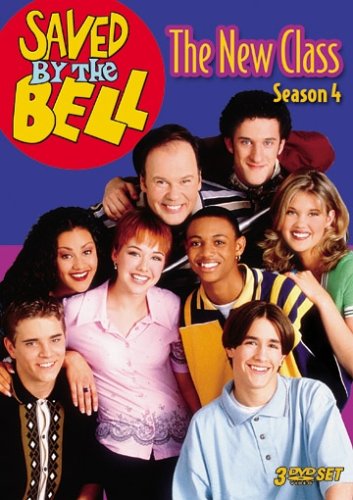 A Google Picture Search for "Saved by the Bell" surprisingly reveals smiling actors with bleached teeth, rather than the boxing metaphor that I myself would have associated with it. By most accounts, "Saved by the Bell" was a shockingly bad American TV sitcom that should have stayed down for the count, but ran more than a few seasons too many.
 It is the boxing metaphor, however, that is appropos with respect to the errr .... "hiccup" on the Tokyo Stock Exchange that led to yesterday's early halt of trading. For the mini-panic was apparently caused by a classic margin-puke or cascade of margin sales due to speculators requirement to "sell position to make position" or meet margin calls resulting from mark-to-market losses on collateral. Such is the danger of leverage, and speculation, in combination with dubious underlying value of securities, electronic execution, sell-stops as a risk-management tool, few non-speculative purchasers of securities traded, and high degree of consensus amongst speculators trading said securities.
Nonetheless, in the stock market, as in boxing, it IS possible to be "Saved by the Bell", allowing cooler heads to prevail, and potentially for margin to be located from other sources., or prices to subsequently bounce restoring the value of collateral. Or for the purported "plunge protection team" to come to the rescue. And where the cause of a "panic" is itself speculative and based upon sparse, fragementary or incomplete information, the added time may reveal that prior decisions to liquidiate might have been hasty (though I will withold judgement on this possibility).

In any event, for today, Speculators and holders of speculative and highly acumulated issues have been spared bloody and painful impalement upon their positions. The wise ones will thank their lucky golden buddhist toad and take the next plane to the Hawaiian Islands for a "thank-you, I'm not dead" beach holiday. The others tempting fate will, of course, shortly meet theirs, head-on.
Wednesday, January 18, 2006
Whooops!

Way back when, Wall Street folk seemed to possess a more ironic sense of humour. Earnestness was present in reasonable quantities but more subdued. Everything was "lighter" (in the Kundera sense) and even greed was somewhat repressed and viewed as rather uncouth. "Whooops" back then had a very specific meaning referring to the debt obligations of northwestern utility "Washington Power & Light" that suffered under the weight of red ink that resulted from Nuclear plant construction cost overruns. For creditors and equity holders, it was "whhooops", then "oouuchh!!".
Today, the 18th of January, 2006, and the fourth year of substantive recovery in Tokyo bourse share prices, marked a similar "Whooops-Like" historic event: the shuttering of the exchange early, before the close - alledgedly due to errrr ... ummmm .... "indigestion" experienced from a margin-cascade, and consequential volume surge of sell orders and the (cynical one might chime) direction of trade prices. What should observers make of it?
A simple exercise in Monty Python-inspired word association [football] around my office revealed "whooops" to be intricately linked to the humble yellow utilitarian banana peel. The image is both archetypically and comically delicious, and though my sample size was small (me myself & I!), it is even funnier when imagined with John Cleese (as Basil Fawlty) or Rowan Atkinson (as Mr Bean). I am sure visualizing either of them in connection with the slippery yellow fruit skin made you smile too. But why is it we humans find humour in witnessing others' slapstick misfortune? Why does this not only yield a smile, but gives rise to guffaws and even deep roaring belly laughs? We certainly wouldn't find the same humour if an old woman slipped on the same - even if that woman was for example, the very unfunny Margaret Thatcher or "Tipper" Gore.
The answer is that both Cleese and Atkinson have the magical ability to portary a blatant disregard for the obvious that sets up the comical moment. They are caricatures of misplaced self-confidence leading up to the "whoooops" that allows the observer to feel as if they were somehow deserving of it.
But what does this have to do with Japan, Tokyo, and the TSE? For me, the parallels are indeed striking. Investors (if one can actually call them that) have, of late, displayed a blatant and cynical disregard for prudence, value, common sense, and fiduciary responsibility in both their stock selection and their subsequent incessant ramping of such shares to higher and higher prices for no other reason than "they can" and they would (thank you very much) like to "borrow" some incentive fees from their unsuspecting investors. That they have been doing this individually, in collusion, or "en masse", makes little difference to the observer, who sees arrogance and overconfidence setting up the comical situation that makes laughter (peppered with schaudenfraude) and derision the correct and appropriate response to Tokyo's "whooooops".....
Tuesday, January 17, 2006
New Shock & Horror: Livedoor Fraud
The Nikkei fell nearly 3% today, and the Topix more than 2% ostensibly because of accusations by the authorities that affiliates of Livedoor conspired to manipulate the price of Livedoor shares. Particularly hard hit were "growth" stocks, and issues that had been run up rather quickly during the last quarter, month, weeks, & days.
Although the "F" word was the excuse (fraud, that is, though those specs with large concentrated longs would be forgiven for thinking otherwise), the correction should surprise no one. That the Japanese market is overheated is of similar understatement to positing Dick Cheney lacks charisma, or that Lewis "Scooter" Libby lacks honor. For the JASDAQ, Small-cap, and Midcap indices have all taken out their prior late 1980's bubble-induced all-time highs, and the vaulting of share prices in Q4 of 2005 were carny-like in their provision of fun, amusment (and profit!!) for many investors (though I truly believe that "investors" is a misnomer, and we require a new linguistic or vernancular to describe precisely WHAT they are). Double were positively pedestrian. Triples were commonplace. Quadruples....hardly rare. Even five-baggers were not singular occurances. The result: buyers beware. Value has become more elusive, and though there remain some hiddden asset or undervalued asset plays, and some potential balance-sheet restructurings and some yet-to-be-realized cyclical recovery plays the fundamental business risk, and the market-cap and liquidity risk that one must shoulder is more meaningful than ever before.
But the ironic thing about the Livedoor accusations being the trigger is that the entire move in Q's 3 & 4 of 2005 has been characterized by the rarefied (in Japan) property of price-momentum. And not the non-vintage kind, but uber-momo or super-persistence, of the types that "corners" are made of. Large and well-heeled investors it seems - whether growth or value, or Fidelity, Sparx, Capital Research, BGI, MAC, Alliance, ML, Bleichroder, Steel Partners, T-Zone, or SFP have all come to the realization that it is better to buy a lot of a little and do it more or less continuously (especially when "it matters" like when incentive fees are being paid, than to leave the vagaries of performance (and performance fees!!) to chance or the vicissitudes of "the market".
And it must be said that in 2005 the conditions were remarkably favorable for such undertakings. Shorts were few and far between, and those that were there knew better than to short stocks that were going up. A significant part of the marginal supply of stock was held by government authorities (BOJ, DICJ, etc.), and the small, and mid, and broad indicies were being bought at the expense of more cap-sensitive ETF's, Nikkei larger-skewed TOPIX 300 and core indices. Combine this with an environment where everyone (officials, investors, regulators, maangement) is interested in, and thrilled by, higher share prices that no one cares HOW they get (or got) there.
This assymetry of concern is pervasive in all markets. People only care about manipulation, fraud (whatever the extent), and the impairment of the market mechanism as a means of efficiently discovering prices and allocating scarce resources when share prices are going down and tax-payers are losing wealth. No matter that dark fiber is omnipresent across America or that people's retirements will be more humble than might have been the case had the TMT bubble & fraud NOT occured. The price action in Japan from late August through the present has been positively shameful in many respects, not least of which is the cynical weight-of-money investment styles adopted by the named and shamed investors. Ultimately, they will receive their so-called 'just desserts' since the market typically taketh-away in greater quantities than it giveth, and such now-large and concentrated positions will provide an interesting spectacle in reverse predatory trading.
If you are they, or an investor of theirs, wish them (and yourselves) luck as you will need it. If you are NOT either, then you should be setting your sights upon them and their pregnant positions, flooding the torpedo tubes and arming your weapons.
Thursday, January 12, 2006
Jabberwacky
Wackiness abounds in the Japanese stock market. Just when you think yesterday's silliness cannot be outdone, you need only at today's prices and action to see clearly that many partipants have quite literally lost their minds. But sanity is not the only thing that's been lost. MIA is the integrity of the stock market's price mechanism as an allocator or scarce economic resources. While I'll admit that the past two decades remarkable manufacture of liquidity may reasonably lead one to question as to whether resources are indeed scarce, we'll ignore such a possibility for the moment. My prior post on Stock Split Anomalies in Japan spilled the beans, and since then recent changes in settlement will do away with this. But not before a few last wicked games are played out.
Take SEI Crest (Ticker Code# = 8900) which began December as a humble YEN100,000 stock. Since then, little has changed except it's price (today YEN 500,000) following a Dec 9th announcement that they'll split their shares 5-for-1 providing a two-month window for shenanigans. The stock peaked at YEN700,000, sufficient jack for any successful punter to upgrade his on-line trading machine and his high-speed internet connection, Interestingly, volume spiked 10-fold three days before the public declaration indicating at least friends of someone in the know profited from the material non-public information.
Equally spectacular is Digital Arts (Ticker# 2326) which also began Q3 as humble YEN450,000-priced stock. Having doubled through Dec31 closing the year at a local maxima, it vaulted to a YEN1,300,000 per share, making it a clean triple in the six trading days of the new year until lo-and-behold they announced today and 3-for-1 stock split. And once again, a 10-fold increase in volume was seen three days prior to the split announcement - a sure telegraph of foul play and deception (or at least an information leak).
One might suspect Philby except he's dead. But someone has the info and is acting upon it. In the case of Digital Arts, that probably amounted to about YEN 1.6 billion in illicit trading gains. Perhaps if we are unsuccessful as exporting manufactured goods to Japan, we can reduce our trade imbalance by exporting Eliot Spitzer to provide some needed help in financial oversight.
Just in case you doubt my original assertion about the recent market as an efficient allocator, take a look at these other recent split-induced "moves" in Backs #4306, or Toho Titanium #5727. One would hope that some rational investors will be selling into it. Except of course that most rational or prudent investors wouldn't be caught dead holding these securities at these prices.....
Take SEI Crest (Ticker Code# = 8900) which began December as a humble YEN100,000 stock. Since then, little has changed except it's price (today YEN 500,000) following a Dec 9th announcement that they'll split their shares 5-for-1 providing a two-month window for shenanigans. The stock peaked at YEN700,000, sufficient jack for any successful punter to upgrade his on-line trading machine and his high-speed internet connection, Interestingly, volume spiked 10-fold three days before the public declaration indicating at least friends of someone in the know profited from the material non-public information.
Equally spectacular is Digital Arts (Ticker# 2326) which also began Q3 as humble YEN450,000-priced stock. Having doubled through Dec31 closing the year at a local maxima, it vaulted to a YEN1,300,000 per share, making it a clean triple in the six trading days of the new year until lo-and-behold they announced today and 3-for-1 stock split. And once again, a 10-fold increase in volume was seen three days prior to the split announcement - a sure telegraph of foul play and deception (or at least an information leak).
One might suspect Philby except he's dead. But someone has the info and is acting upon it. In the case of Digital Arts, that probably amounted to about YEN 1.6 billion in illicit trading gains. Perhaps if we are unsuccessful as exporting manufactured goods to Japan, we can reduce our trade imbalance by exporting Eliot Spitzer to provide some needed help in financial oversight.
Just in case you doubt my original assertion about the recent market as an efficient allocator, take a look at these other recent split-induced "moves" in Backs #4306, or Toho Titanium #5727. One would hope that some rational investors will be selling into it. Except of course that most rational or prudent investors wouldn't be caught dead holding these securities at these prices.....
Courage

May you R.I.P. Hugh Thompson Jr. (1944-2006). You did the Right thing and displayed courage few others can match, but that many others will hopefully emulate. May friends of Spiro Agnew and any others who might disparage your bravery and good heart, rot wherever they may be.
Wikipedia on Hugh Thompson
Monday, January 09, 2006
On Gold...
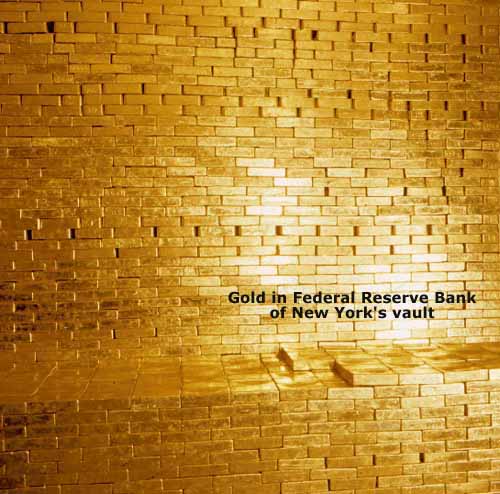
Many friends and acquaintances have been asking my opinion on gold. In an unusual bout of of self-congratulation for a usually self-deprecating observer, I am obliged to tell you that I have had the direction of it's price right from $330 to present. And my reasoning as to the move has also proved prescient: disillusionment and concern over "paper" resulting from unprecedented fiscal and monetary spinelessness, primarily in Washington, coupled with buoyant demand from increasingly prosperous middle classes in India, China and elsewhere. Where does it go from here? More of the same, I think, probably leading to blow-off sometime in '06 coincidental to the markets testing the word of Mr Bernanke by pressing the dollar and watching for his response, before the ripples of lower housing demand and prices makes their impact felt through the macroeconomy.
But what do I "think" of gold in the philosophical sense? My opinion coincides with that of one Robert Triffin, who was JK Keynes' American counterpart in chiseling out the post WWII monetary system that became known as "Bretton Woods". Triffin, a steady, sober and articulate man would have been horrified at the state of what he built. He would decry Japanese and Asian neo-mercantilism and scowl upon the large trade and current account deficits of the USA. He would disapprove of the leverage encouraged to permeate the USA economy and I reckon he would deplore the systematic debasement of the world's primary unit of exchange. There is little doubt he would recommend positive pre-emptive action to prevent these occurances, such as higher income and/or energy taxes, lower fiscal & household spending, or, in the absence of effective fiscal measures, substantially higher interest rates to cool the jets of imbalances that might threaten the entire system. He would believe it incumbent upon authorities to cooperatively steer our economies through a good, but admittedly imperfect system.
And what did he think of Gold? To paraphrase:
There are few human follies that are more amusing or more scandalously wasteful than the one in which man scours the world to discover gold, subsequently digging deep and moving enormous mountains of earth at great expense to remove it from the ground and refine it, then, move it to the other side of the planet (also at great expense), only to dig another great enormous hole, and bury it once again deep in the ground.
Claro?
Saturday, January 07, 2006
ETF/Index Membership & The Liability of Cap
Hedge Funds are reputed to have wrought many evils upon us: increased volatility; demonstrative increase in unmitigated greed; market-manipulation; massive [undeserved?] transfers of wealth; over-compensation for assymetrical risk-taking; naked short-selling; bending and flouting of market rules; as well as the high-profile Lipper-esque fraud, theft and ponzi-like schemes that directly diminished wealth of investors, to mention but a few of the more prominent charges.
As a well compensated investment manager myself who also engages in short-selling, I must say that these charges appear excessive, overblown and are probably IMHO somewhat off of the true mark. Yet, kernels of truth are present in all them. But since these truths bite so close to the bone, they are all to often dismissed, denied, then ignored probably at one's kharmic (and possibly one's financial) peril.
This is because one of the most profound impact of hedge funds' growth and proliferation (at least in global equity markets) has been more subtle: mega-capitalization underperformance. This has been for both technical and structural reasons. For over the last few years as investors have outsourced and off-shored their speculative undertaking to the hedgies, their agents, in perhaps uncoordinated, yet no less herdlike manner, have seemingly arrived at many similar if not common stategies seemingly involving many similar if not common instruments. More specifically, one would conjecture, after looking carefully at the distribution of returns across many equity markets, equity investors are placing more long bets in concentrated smaller-cap positions (where their marginal purchases can have more price impact upon existing positions with obvious benefits), while shorting their composite index or benchmark of choice (all which are market capitalization weighted). Individually, and in itself, there is nothing wrong with a trader or portfolio manager buying what "he knows" (or overconfidently thinks he knows) and selling "a little of a lot" exemplified by a broad market, sector index or ETF thereof. But what if everyone pursues such a strategy? Some, like Joesph Heller's 'Yossarian', believe that whatever the logical contortions, one would be "a fool to do any different" since being contrarian is not just a disinterested philosophical bet, but when expressed in a position, is a bet upon one's very livelihood - something Jeremy Grantham has pointed out on numerous ocassions.
But is Yossarian wrong? Why should HE be the one who flies missions, while others back in the USA are having a good time? Where is the problem in his logic? Lawyers and risk-managers, who often agree but very rarely, and even then, on very little, both might term this "pari passu". Economists call it a "fallacy of composition" (what's good for a few is not necessarily good for everyone). As result, certain risks (Taleb terms them "the black swan" risk) are elevated. I eschew this term if only because it's imagery is so tame and too far removed from earthly reality of consequence. Instead, I like to call it: "driving really really fast downhill as you near the sharp narrow hair-pin turning adjacent to the 1000' drop into the canyon below-risk". Lots of things can happen: a tire can blow; a bicyclist or large truck could be around the blind corner; brakes could fail; there could be skree or oil on the road. There are lots of plausible, but low-probability, fat-tail like outcomes.
Back to the distribution, because this is what is fascinating. Take Japan. If you look at something lke the Barra Size factor, which is a cross-sectional regression, it has been a rather poor performer, over the last few years, this year, and as late. And if you look at the top and bottom deciles of some investable universe, and you equally weight them using some monthly rebalance schema, you get a similar picture. And the picture is the same all over the world. In most markets, historically, size and liquidity commanded a discount. Returns to scale, and stability achieved through diversification were attendant benefits to larger size, not to mention the ability to recruit and train higher calibre individuals, all which conspired to command a marginal valuation premium. Yet today, the any premium has waned, and in some cases inverted. Smaller and mid sized enterprises are trading at equivalent if not premium metrics. The Russell 2000 S&P Barra MID Index are far far above their bubble peaks, while TOPIX Mid and Second Section Indicies have also vaulted to all time price highs while their valuation spreads have narrowed to unprcedented levels.
Couldn't this be just a reflection of the lethargy and inefficiency of the big, and the nimble growth oprientation and possiilities of the small? It cannot be ruled out that such a perception is driving the phenomena. But as market wise-man Jeremy Grantham points out, the "quality" one can buy today relatively is very attractive in comparison to history, and I would add thhat it's attractive primarily because of the diminished relative valuations of larger-cap issues which tend to be more stable, have higher profitability ratios (whether ROE, EVA or CFROI) and have better balance sheets per unit of P/E. Sure there are some sector effects (particularly in the USA, and particularly in energy and energy-related sectors repsen ted in small & mid indices), though I would argue that these affects are secondary to the weight and impact of the huge hedges laid out in cap-weighted indicies and ETFs. The effect, in effect is caused by myopic informationless hedging and aggregation of individuals game playing. Those with the trade on, who are now patting themselves on their respective backs, and collecting larger performance fees for this past year for their stock-picking prowess have really been the fortunate beneficiary of huge structural effect. In this respect, they should be careful of self-attribution bias and attempt to understand where the bonus that bought the Tribeca loft actually came from.
One might ask, is it permanent? How does it work itself out? I personally do not believe it's here to stay. Since much benchmark-relative net long exposure has gone into smaller-cap at the expense of larger cap, this probably unwinds into a market correction driven either by whiffs of higher rates and diminishing or levelling-off of corporate profits growth or a more general recession where growth retreats and real rates turn positive. Liquidation of smaller-cap will necessarily cause the re-purchase or closing out of the cap-weighted hedge positions in broad indices and cap-weighted sector ETFs thus restoring some off the traditional sensibilities and relative levels of market cap spreads. But I warn allocators to hedge funds, that THIS WILL NOT PAINLESS and the managers that have been riding this filly-of-a-trade will likely be thrown from their mounts.
As a well compensated investment manager myself who also engages in short-selling, I must say that these charges appear excessive, overblown and are probably IMHO somewhat off of the true mark. Yet, kernels of truth are present in all them. But since these truths bite so close to the bone, they are all to often dismissed, denied, then ignored probably at one's kharmic (and possibly one's financial) peril.
This is because one of the most profound impact of hedge funds' growth and proliferation (at least in global equity markets) has been more subtle: mega-capitalization underperformance. This has been for both technical and structural reasons. For over the last few years as investors have outsourced and off-shored their speculative undertaking to the hedgies, their agents, in perhaps uncoordinated, yet no less herdlike manner, have seemingly arrived at many similar if not common stategies seemingly involving many similar if not common instruments. More specifically, one would conjecture, after looking carefully at the distribution of returns across many equity markets, equity investors are placing more long bets in concentrated smaller-cap positions (where their marginal purchases can have more price impact upon existing positions with obvious benefits), while shorting their composite index or benchmark of choice (all which are market capitalization weighted). Individually, and in itself, there is nothing wrong with a trader or portfolio manager buying what "he knows" (or overconfidently thinks he knows) and selling "a little of a lot" exemplified by a broad market, sector index or ETF thereof. But what if everyone pursues such a strategy? Some, like Joesph Heller's 'Yossarian', believe that whatever the logical contortions, one would be "a fool to do any different" since being contrarian is not just a disinterested philosophical bet, but when expressed in a position, is a bet upon one's very livelihood - something Jeremy Grantham has pointed out on numerous ocassions.
But is Yossarian wrong? Why should HE be the one who flies missions, while others back in the USA are having a good time? Where is the problem in his logic? Lawyers and risk-managers, who often agree but very rarely, and even then, on very little, both might term this "pari passu". Economists call it a "fallacy of composition" (what's good for a few is not necessarily good for everyone). As result, certain risks (Taleb terms them "the black swan" risk) are elevated. I eschew this term if only because it's imagery is so tame and too far removed from earthly reality of consequence. Instead, I like to call it: "driving really really fast downhill as you near the sharp narrow hair-pin turning adjacent to the 1000' drop into the canyon below-risk". Lots of things can happen: a tire can blow; a bicyclist or large truck could be around the blind corner; brakes could fail; there could be skree or oil on the road. There are lots of plausible, but low-probability, fat-tail like outcomes.
Back to the distribution, because this is what is fascinating. Take Japan. If you look at something lke the Barra Size factor, which is a cross-sectional regression, it has been a rather poor performer, over the last few years, this year, and as late. And if you look at the top and bottom deciles of some investable universe, and you equally weight them using some monthly rebalance schema, you get a similar picture. And the picture is the same all over the world. In most markets, historically, size and liquidity commanded a discount. Returns to scale, and stability achieved through diversification were attendant benefits to larger size, not to mention the ability to recruit and train higher calibre individuals, all which conspired to command a marginal valuation premium. Yet today, the any premium has waned, and in some cases inverted. Smaller and mid sized enterprises are trading at equivalent if not premium metrics. The Russell 2000 S&P Barra MID Index are far far above their bubble peaks, while TOPIX Mid and Second Section Indicies have also vaulted to all time price highs while their valuation spreads have narrowed to unprcedented levels.
Couldn't this be just a reflection of the lethargy and inefficiency of the big, and the nimble growth oprientation and possiilities of the small? It cannot be ruled out that such a perception is driving the phenomena. But as market wise-man Jeremy Grantham points out, the "quality" one can buy today relatively is very attractive in comparison to history, and I would add thhat it's attractive primarily because of the diminished relative valuations of larger-cap issues which tend to be more stable, have higher profitability ratios (whether ROE, EVA or CFROI) and have better balance sheets per unit of P/E. Sure there are some sector effects (particularly in the USA, and particularly in energy and energy-related sectors repsen ted in small & mid indices), though I would argue that these affects are secondary to the weight and impact of the huge hedges laid out in cap-weighted indicies and ETFs. The effect, in effect is caused by myopic informationless hedging and aggregation of individuals game playing. Those with the trade on, who are now patting themselves on their respective backs, and collecting larger performance fees for this past year for their stock-picking prowess have really been the fortunate beneficiary of huge structural effect. In this respect, they should be careful of self-attribution bias and attempt to understand where the bonus that bought the Tribeca loft actually came from.
One might ask, is it permanent? How does it work itself out? I personally do not believe it's here to stay. Since much benchmark-relative net long exposure has gone into smaller-cap at the expense of larger cap, this probably unwinds into a market correction driven either by whiffs of higher rates and diminishing or levelling-off of corporate profits growth or a more general recession where growth retreats and real rates turn positive. Liquidation of smaller-cap will necessarily cause the re-purchase or closing out of the cap-weighted hedge positions in broad indices and cap-weighted sector ETFs thus restoring some off the traditional sensibilities and relative levels of market cap spreads. But I warn allocators to hedge funds, that THIS WILL NOT PAINLESS and the managers that have been riding this filly-of-a-trade will likely be thrown from their mounts.
Friday, January 06, 2006
More Moore
When Stewart Info Corp. (NYSE Ticker=STC) Director and rel estate expert Laurie Moore married her husband, also surnamed Moore, and decided to keep her name (along with that of her spouse), what could Laurie Moore-Moore have possibly been thinking? Moore is better? Perhaps there was another Moore at her firm, or even another Mrs. L. Moore?!?!?
My wife, too, chose to hyphenate and keep a semblance of her prior identity, so I quibble not at the principle, but I also know what a pain-in-the-arse (not to mention an envirinmental waste) it was to change everything. But in Mrs. Moore-Moore's case, I ask: "for what?", other than derision and laughter at her expense.
My wife, too, chose to hyphenate and keep a semblance of her prior identity, so I quibble not at the principle, but I also know what a pain-in-the-arse (not to mention an envirinmental waste) it was to change everything. But in Mrs. Moore-Moore's case, I ask: "for what?", other than derision and laughter at her expense.
Thursday, December 29, 2005
My 10 New Year's Resolutions

Here's my list of New Year's resolutions upon which entropy will be working its wonders....
#10. Do NOT Choose a Hotel on the Internet, Sight Unseen.
I could give numerous reasons and countless examples precisely why, though I reckon that most with a modicum of taste and a wafer of expectation will know what I am talking about. Yet, when in need at the last moment, I still find myself lured and ensared by slick-looking but apparently ten-year old photos taken from "the perfect angle" obscuring the view of the railroad yards or motorway across adjacent. How about "room cams"? On second tought, maybe not....
#9. Disconnect My Cable.
No, not in lieu of a satellite dish but for peace and quiet and added industriousness. I am certain that seventy-five channels are merely seventy-four ways (excluding BBC World) to squander one's meager allotment of time on this planet with drivel, nonsense and mis-information. If you're reading my blog, then you apparently already made an important disassociative step from enslavement by the evil box. IF however you are a frequent FOX watcher, it may be too late to help.
#8. Avoid Indian food.
It tastes so so good. And the burn of a spicy curry releases a torrent of endorphins that overwhelms me with narcotic contentment. But I always always always regret it afterwards....
#7. Try Again to "Understand" Conservatives.
If the Dalai Lama doesn't hate the Chinese considering what they've done to his beloved Tibet, but rather feels true sorrow for them, then I reckon I can try yet again to understand and be sympathetic to arguments for why selfishness is inherently superior, and why being kind to people who are less fortunate than me will somehow f*ck everything up. I'll admit that I've been unsucessful so far at really getting my head around it, but I promise that I'll try....
#6. Respect the Market.
There is quite often a paradoxical wisdom in the herd. They know a good thing when they see it. But they typically don't know how to price it. That in itself instinctually "feels" like an opportunity to a natural contrarian like myself. Yet, the crowd typically doesn't care about the price of that thing. Not a bit. It just cares that it's good and that they want it. This means the price of such a thing can remain very divergent for a very long time. As such, its useful to remember that when it comes to trading growth counter-trendwise, time is NOT on your friend.
#5. Enjoy the Crowd.
I am naturally wary of crowds. Too much company or consensus in a position makes me feel decidely nervous. I can't help that - it's my nature. But the crowd CAN do a lot of heavy lifting in maret sense (of prices). And since it appears we are living in a brave new world dominated by feedback trading trend-followers, I will endeavor to relax more when I find myself long of momentum.
#4. Finish Writing the Novel.
It's rather frightening to consider how many resolution lists this one will find itself. MY novel continues to gestate. In fact, I feel like I am already finished it in my head. All I have to do is commit it to paper. Why am I hesitating? OK, besides the house full of kids? I feel as though I am in swimming trunks contemplating a dive into a rather cold swimming pool on rather cold day. A very cold swimming pool. Jump, damnit! I just have to jump....
#3. Do Not Try to Think 'Economically' About My Boat.
A boat defies all economic logic. It makes no economic sense. Like a poor elderly people or a squadron of Stealth bombers. I must stop trying to rationalize it. It simply is uneconomic. I must accept it, even though it makes much more sense to charter one whenever the fancy strikes. Such is the price for the convenience of leisure on-demnd. Oh crap, I wish I could just stop moaning about it.
#2. Stop Banging My Head Against the Wall and Embrace Inflation and Imbalances.
I must stop caring about inflation and deficits and imbalances. Why should I care about them anyway? No one else does. That makes me a fool. A really big fool and one who is rapidly getting relatively poorer because I care. I must face reality. The reality is: our economic leadership is morally bankrupt, the American people (at least half of them) are selfish and don't want to pay for what they and their country need or consume, the result of which is a long inexorable debasement of the unit of exchange, since anything that halts that debasement will have such grave political consequences that it is completely untenable. The economist in me says "what is unsustainable will NOT be sustainable", and the markets will enforce the discipline that our leaders, and we as citizens (at least half of us) are too weak, inept or selfish to undertake. But in 2006, I will just "let go", leverage up, buy a truckload of speculative stocks and real estate in hot markets and if the train wrecks, then I'll suffer with everyone else. But what really sucks is the classic behavioural FUBAR of watching everyone else amass wealth while I worry about the ultimate conequence of inflation....
#1. Don't Short on Price (read: valuation).
Like the schoolboy forced to write his penance on the chalkboard during detention, I WILL NOT SHORT ON PRICE. I WILL NOT SHORT ON PRICE. I WILL NOT SHORT ON PRICE. (And if I do, then I will do so only briefly).
Happy New Year to all and may you have success with your own resolutions!! (except for the misogynous bastards that think its clever or fun to steal from their investors by ramping stocks in the end of the year in order to collect a bonus or incentive fee).
Tuesday, December 27, 2005
Re-Liquidation
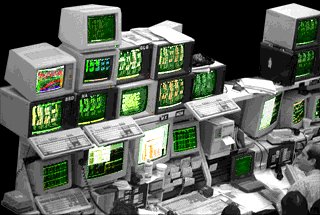 It came as no surprise to most of us who perservered through the tediously long dark days of Tokyo's bear without becoming bitter, jaded, sullen (or unemployed) that Japan was cheap and that this would - sooner or later - come to be appreciated by other less observant (and it must be said less patient) investors. But before we start pinning medals upon our own breasts, let us remember that most of the same things that became cheap in the waning days of 1997, were STILL cheap (if not cheaper) nearly six years later in the thawing spring of 2003.
 Today, in the twilight hours of 2005, the pickings of low-hanging fruit are decidely thinner, and the risks associated with joining the value-investor or activist greenmailer bandwagon have decidely increased. This is not to say they won;t be rewarded further. Or that there isn't any juice left to squeeze. It's just an observation that quite literally, a Tsunami of buying at higher and higher prices has roared through the TSE in Q3 & especially Q4 leaving many a share price inflated.
One might speculate as to the cause: petrodollars, a breakout fancied by CTA trend-followers, macro allocators, pension funds below benchmark weights, increasing speculation and day-trading by domestic Japanese, as well as a proliferation of Japanaese and Asian focused hedge funds. In many cases, the last real price-sensitive marginal seller was taken out mid-way through Q3 (probably sometime in a August) and anyone looking for stock has had to pay higher and higher prices for it. In a great many cases, we are talking doubles, triples, and more. Why is there so little stock seemingly available for sale?
Of course this situation doesn't concern those who already have large positions. In fact, many of them are resposnible not only for taking out the last discretionary marginal sellers in many issues, but for subequently and mercilessly squeezing any shorts unfortunate enough NOT to have puked and for continuing to purchase even more at even higher prices in a dramatic denoument that will insure performance fees are crystallized and relative performance rankings preserved.
But why is there such a dearth of stock for sale at such higher prices (and valuations!) on the main bourse in what remains the world's second largest economy? Daiwa Securities has shed some light on the subject recently by highlighting the sheer quantities of stock that are NOT for sale. Take the Deposit Insurance Corporation of Japan (the DICJ to acronym buffs) for example who bought YEN 2,400,000,000,000 worth of stocks at book value from failed financial institutions. Then of course, there is the Banks' Shareholdings Purchase Corporation (BSPC) which bought YEN 1,600,000,000,000 worth of shares from major banks to assist them in meeting their capital requirements and reducing the volatility of their earnings tied to the equity market. And finally, there is the Bank Of Japan (BOJ) itself which in the course of nationalizing some of the major City banks acquired nearly YEN 2,000,000,000,000 worth of shares. Undoubtedly, given the moves over the past two years, and especially in Q4 2005, these values are conservative. That's a lot of zeros. And a lot of zeros - even in Japan - means a lot of stock. How much? Probably close to more than USD$50,000,000,000 at cost, which is probably more like USD$70billion given the dramatic rise in stockvalues in 2005.
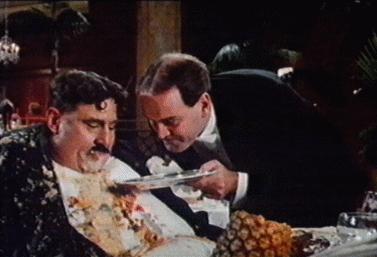 So in considering more precisely why the TOPIX MID, TOPIX 2nd Section, and JASDAQ Indices are all at all-time historic highs, it's worth contemplating one of the more important reasons: no stock!, and that beginning perhaps as easrly as Q2 2006, these securities will begin to be liquidated, or as Daiwa terms it - re-liquidated. We may then see how much room investors have for that so-called "Wafer Thin Mint" so-immortalized by John Cleese.
Be careful what you wish for....
 Japanese capitalism is of a distinctly different flavour than the American variety. This was initially drilled into me years ago by my Industrial Relations tutor at the LSE, and has stayed with me to this present day. But one need not be a Japan-o-phile, or a student in comparative finance or economics to appreciate the differences. Yet with the TOPIX MidCap, the TSE 2nd Section and JASDAQ indicies all at historic highs, a pertinent question arises as to whether "We are systemically converging upon them", or whether "They are systemically converging upon us"? Whatever the true answer, ,it is worth pondering the implications of such events.
 If one closes one's eyes, one can conjure up images of Japanese-style Capitalism: keiretsu groupings and other business or legacy cross-shareholding relationships; long-range planning and even longer-term investment horizons; lifetime employment possibilities; promotion and pay based upon seniority; close banking relationships often cemented by part-ownership or primary creditor status; paternal responsibilities of corporations to employees during recessions and resulting good industrial relations; single-payor national healthcare; diversified constituencies of reponsibility exemplified by stockholders, workers, management, customers, government and community (not necessarily in that order of priority); negligible stock-ownership by professional managers; management by consensus; low ratio of average executive compensation in comparison to average worker salary; high priority on shop-floor capital expenditure vs. low priority on executive suite profligacy; self-deprecating and conservative managerial style; government assistance in defining the public interest for the benefit and detriment of corporations. There are of course other attributes that I've missed, but suffice to say, these are the primary ones that come to mind.
Now lets repeat the exercise with the American brand of capitalism: a rugged individualism of corporations (no cross-shareholdings); short-termism is the rule rather than the exception in both planning and investment considerations; little lifetime employment and "first-in-first out" firing policy to reduce costs by firing more senior, better paid people; purely competitive, sometimes predatory banking relationships; no paternal responsibilities (e.g. Wal-Mart not providing health insurance); bi-polar teated constituency: the shareholder and the executives: all others are deemed expendable or irrelevant; authoritarian style of management; worlds HIGHEST ratio of average executive compensation to average worker compensation; high management ownership ratio resulting from riskless incentive compensation awards at shareholder expense; low priority on shop-floor capex & high priority of boardroom & HQ expenditure; high prevalence of overconfidence and self-attribution biases.
These are dramatic differences, often at the opposite end of the spectrum. And so since foreign investors have been pouring billions of dollars into Japan, it is worth speculating whether these are "pure price momentum investment flows" or whether they are directing these billions because they admire these cultural differences. Or on the other hand, perhaps because they expect these differences to narrow? Some in fact, like the carpetbagger-cum-greenmailer, Steel Partners, are vociferously demanding change to more mono-constituency (i.e. "shareholder focused) regimes". Is this reasonable and/or rational? Will they kill the proverbial golden goose in the process?
Investors should be careful what they wish for. One would be forgiven for questioning whether it is realistic for investors to expect management to selectively reward shareholders without discarding many of the other conventions and attributes that are cornerstones to the success of the Japanese enterprise and society. For instance, IF Japanese corporations go to FIFO, management and workers would rightly expect greater compensation of shouldering the adjustment risks inherent in the employment relationship. And with these risks come large annual riskless stock option grants, "gross-ups" (expensive in high-tax Japan) and other such awards that diminish cash profits dilute shareholder earnings. Higher employee turnover and less paternalism in a Japan with impending demographic implosion and 4%-unemployment means higher and more competitive wages, lower employee productivity and loyalty - all which come at a price to shareholders. And Capex, long the cornerstone of Japan's edge, would also be a victim. It would also be unreasonable Japanese managers not to emulate their American peers and not spruce up their corporate offices, putting in gymnasiums, kitchens, games rooms, not to mention the odd helicopter and Gulfstream corporate jet. But don't forget golden parachutes. All this raiding, uncertainty, and greenmailing will have repercussions upon the stress-levels of Japanese executives that can only be ameliorated with sufficiently large separation packages.
I think it would be an interesting exercise to "play dress-up" with the average Japanese company, by "Americanizing" or "Yankifying" their income statement to reflect Japan's presumed migration from multi-teated to shareholder capitalism. It may be that I exaggerate the implications. It may be that the benefits to shareholders to be had from cutting R&D expenditure, advertising expense, and capital expenditure (classic telltales of accounting conservatism) raping the workers' retirement fund and underfunding their legacy obligations (ones which haven't taken advantage of Daiko Henjo), putting the "asset pedal to the balance-sheet metal" and use every spare dollar of cash to squeeze the share float, and then use some not so spare dollars leverage it further but swapping debt for equity in order to approach a more Stern-Stewart-like capital structure....one that Mr Stern or Mr Stewart could be proud of.
Immortality, Fertility & Conscience
 Nobel laureate economist Dr Milton Friedman was interviewed by Charlie Rose, the result which was aired late yesterday evening on America's PBS. This in itself is an amusing paradox worth considering since most of Dr. Friedman's close friends and disciples would eschew the very concept of a Public Broadcasting Corporation, thus depriving us of the still-lucid old man's oftentimes contentious views about the state of the world and the great economic debates of our times.
 He commented upon many subjects: the Reagan years; his self-stated unequivocal victory over JK Galbraith and the Keynesians; the moral turpitude of communism and central banks (as well as most central bankers), Greenspan and Bernanke excepted. He also weighed in on Japan, the details of which I reveal shortly. While I respect Dr Friedman (as a Nobel Laureate), and what he has achieved in his life and career, I must say I find many of his opinions as disagreeable as those of Ayn Rand. While this is not the time for a long missive and though I am not qualified to find fault in his economic theory (my BSc being no match for his PhD and distinguished teaching career), my gripes with the famous laureate center upon the philosophical and social implications of his theory and rhetoric. In particular, while I don't doubt that in economic terms a nation where government occupies less than 15% of GDP may indeed be more efficient and create greater total output than a nation where government subsumes a 45% share, and while I would even admit that, distributionally-speaking, it MIGHT result in "more things for more people", I have grave concerns and reservations about what the social face of this society would resemble in the modernity in which we find ourselves.
For I am the first to admit that it would be wonderful indeed if the village (and her villagers) looked after its own. If children cared for their parents in old age. It would indeed be preferable (and novel) if a strong work ethic were universally distributed, as it would be if the same were true of education, wisdom, opportunity, and physical health and ability. That there were no indigent, malevolent, periodically sick or ill, nor wars; if greed, corruption, and dishonesty were rare as edelweiss in Florida, and people always did "the right thing" whether that was to pay taxes, or respect the common good or interest. In THAT world, on THAT planet (which is seemingly far from this terrestrial orb) a 15% slice for government might even be too much. But OUR world, THIS world, IS different....much much different. And as a result, I find it ironic that progressives and liberals are the actual pragmatists fostering and nurturing solutions that MIGHT help create better outcomes for people that those callously dealt by the market, and minimize the externalities resulting from the econonomic and social relations between men and women (where "better outcomes" is defined by, and includes words like "dignity", "need", "charity", "opportunity", "accident", "kindness", "respect" and yes, even "altruism". By contrast Friedman (and his disciples) appear quixotic in their objectives since the world required for Friedman-ite philosophy and economic theory to prosper - and more importantly - be superior to progressive social democracy, differs dramatically from the world as IT IS and as we know it.
With that off my chest, the reason for this post, was that Mr Friedman spoke about some things Nippon that I have promised to reveal. They are surprisingly close to my own thoughts. He said, Japan is in better shape than it has been for a long time, and their prospects are bright. BUT (and there always is a "but"), BUT, Japan is a nation with a severe dearth of births (my words, not his) which in combination with the wholesale lack of immigration, is both worrying and troublesome. He pointed out that the demographic contraction of the Japanese people over the coming decades will be dramatic and severe and unlike anything we've experienced in the modern age - something that is likely to have economic consequences.
Does this mean the TOPIX will fall? One cannot say. But it is interesting to observe that the impending demographic implosion has caught the prescient eye of Dr Friedman. This will likely mean, whether one agrees or disagrees with the good Professor's social conscience (or lack of one) that these concerns will at some not-too-distant point in the future, be front-page news, and capture the imagination of pundits and investors alike.
Wednesday, December 21, 2005
J-Comm, Mizuho & the TSE (part III)
Practical Market Philosophy Question #217: What's worse for an exchange : (a) admitting an error or mistake and taking steps to justly correct it, or (b) allowing the exchange become of farcical cariaciature of its intention and its members honor?
Yes, I've created a straw man of the the view that I think absurd. But what good does the latter serve with respect to the primary objective and function of the largest stock exchange in the world's second largest economy? How can this possibly represent the interests of the companies that are listed on the exchange without which the stock exchange would be nothing short of a pari-mutuel off-track betting office for the ponies? How can allowing the trade to stand possibly further the conception of a fair and orderly market? One look at the daily price and volume recap of a company with 15,000 Shares outstanding reveals the patent absurdity of anything less than "BUST THE TRADES!".
(Remember there are 15,000 shares outstanding, the float of which is only 3,660!!
DATE PRICE VOLUME
12/08/2005 772,000 708,000 (~500,000 lollipops taken from the baby at 572000)
12/09/2005 Not Traded
12/12/2005 Not Traded
12/13/2005 Not Traded
12/14/2005 1,020,000 215 (Bid-only, Limit Up Allocation)
12/15/2005 1,220,000 342 (Bid-only, Limit Up Allocation)
12/16/2005 1,420,000 6,472 (Limit Up - Allocation on close)
12/19/2005 1,620,000 1,622 (Limit Up - Allocation in close)
12/20/2005 1,920,000 1,826 (Limit Up - Allocation in close)
12/21/2005 1,900,000 1,367
It was less than 10 mintues, between the huge, ridiculuous and obviously mistaken offer of non-existant shares and the time when the clever-cats knowingly lifted more than 500 times the shares sold at the IPO. By way of precedent, if your bank makes a mistake and puts money on your account that is NOT yours, you are not permitted to keep it. If you spend it, you are liable. If you are shopping in teh supermarket, and a bag of candy has broken open, that is NOT free booty for you as a shopper to loot. If bags of money fall out of a Brinks truck, it is NOT finders-keepers, irrespective of how irresistible it may seem. Yet, the news media continues to treat this as though "the lucky ones" won the lottery, or "pulled triple-sixes on the one-eyed bandit's grand jackpot" in a fair game of chance. I admit it makes for a wonderful spectacle, and interesting reading as to how a twenty-four year unemployed programmer will spend his windfall, but won't someone, BOJ Gov Hayami, PM Koizumi, Kofi Annan, Billy Graham, SOMEONE, ANYONE please please please just take a stand and admit it is just plain wrong??!!
Yes, I've created a straw man of the the view that I think absurd. But what good does the latter serve with respect to the primary objective and function of the largest stock exchange in the world's second largest economy? How can this possibly represent the interests of the companies that are listed on the exchange without which the stock exchange would be nothing short of a pari-mutuel off-track betting office for the ponies? How can allowing the trade to stand possibly further the conception of a fair and orderly market? One look at the daily price and volume recap of a company with 15,000 Shares outstanding reveals the patent absurdity of anything less than "BUST THE TRADES!".
(Remember there are 15,000 shares outstanding, the float of which is only 3,660!!
DATE PRICE VOLUME
12/08/2005 772,000 708,000 (~500,000 lollipops taken from the baby at 572000)
12/09/2005 Not Traded
12/12/2005 Not Traded
12/13/2005 Not Traded
12/14/2005 1,020,000 215 (Bid-only, Limit Up Allocation)
12/15/2005 1,220,000 342 (Bid-only, Limit Up Allocation)
12/16/2005 1,420,000 6,472 (Limit Up - Allocation on close)
12/19/2005 1,620,000 1,622 (Limit Up - Allocation in close)
12/20/2005 1,920,000 1,826 (Limit Up - Allocation in close)
12/21/2005 1,900,000 1,367
It was less than 10 mintues, between the huge, ridiculuous and obviously mistaken offer of non-existant shares and the time when the clever-cats knowingly lifted more than 500 times the shares sold at the IPO. By way of precedent, if your bank makes a mistake and puts money on your account that is NOT yours, you are not permitted to keep it. If you spend it, you are liable. If you are shopping in teh supermarket, and a bag of candy has broken open, that is NOT free booty for you as a shopper to loot. If bags of money fall out of a Brinks truck, it is NOT finders-keepers, irrespective of how irresistible it may seem. Yet, the news media continues to treat this as though "the lucky ones" won the lottery, or "pulled triple-sixes on the one-eyed bandit's grand jackpot" in a fair game of chance. I admit it makes for a wonderful spectacle, and interesting reading as to how a twenty-four year unemployed programmer will spend his windfall, but won't someone, BOJ Gov Hayami, PM Koizumi, Kofi Annan, Billy Graham, SOMEONE, ANYONE please please please just take a stand and admit it is just plain wrong??!!
Friday, December 16, 2005
J-Com ...Ayn's Shame?
Two days after UBS publicly stated it won't keep the gains from the errant Mizuho trade in J-Comm (Code #2462), an eerie silence hangs from the others: Nikko, Lehman Bros, CSFB, and Morgan Stanley. Susquehanna, Evolution Master Fund LP, and Tiedeman by contrast have bot, flipped and gone.
Which got me thinking about whether these people and organizations (ex-UBS) are devotees of Ayn Rand. This, to me, seems the most plausible of explantions for their collective actions: They are devotees of the Cult of Selfishness, which in Ms Rand's eyes is not only wholly justified when pursued in rational self-interest, but benefits everyone and makes them better off. I can hear Ms. Rand's voice with her sour unpleasant dosposition exclaiming her thoughts on the Mizuho fiasco:
"Vot kind of vimpy altruists these Swiss (UBS) have become! Can't they [UBS] see that such actions stem from ze pressure of vot other people think??! Where is their mettle? Where is their resolve? Do you think they become one of the biggest banks in the vorld being NICE to people? Bah!" They are nothing but sissies! Take that firm Morgan Stanley - the one with lots of men who possess chiseled chins, strong capitalist handshakes, an unwavering confidence and resolvein the correctness of their actions. Now that's a firm that KNOWS it's destiny. THAT's a firm which is not held back by insignificant concerns about "intention", "meaning", or "spirit". Nyet! THEY know that THEY are destined for greatness. THEY understand the difference between themselves and the weaker men who suffer from their brain-voshed bonds of altruism and vorry. THEY ALONE VILL RULE THE WORLD BY WINNING AND WINNING AND ACCUMULATING ALL THE CHIPS! VE MUST WIN! WIN ALL THE CHIPS! ACCUMULATE MORE CHIPS! IT IS GOOD FOR THE PEOPLE. DON'T BE A CHUMP AND OFFER YOUR HAND TO THE WEAK. IT WILL POLLUTE YOUR RESOLVE. ....MUST HAVE MORE CHIPS THAN THERE ARE CHIPS! MORE SHARES!! ...MUST GET MORE SHARES THAN THERE ARE SHARES! AAAARRGH DESTINY! POWER! GLORY! AAARGH!!! LET THE SOFT VIMPS VALLOW IN THEIR OWN PITY. MONEY IS POWER IS FREEDOM IS DESTINY IS LOVE IS POWER...."
Ahem. Well as I was saying, perhaps they are devotees Ayn Rand. Or maybe, it's that their lawyers are simply discussing the implications and technicalities of how to bust the trades without setting a bad precedent. Time will tell....
Which got me thinking about whether these people and organizations (ex-UBS) are devotees of Ayn Rand. This, to me, seems the most plausible of explantions for their collective actions: They are devotees of the Cult of Selfishness, which in Ms Rand's eyes is not only wholly justified when pursued in rational self-interest, but benefits everyone and makes them better off. I can hear Ms. Rand's voice with her sour unpleasant dosposition exclaiming her thoughts on the Mizuho fiasco:
"Vot kind of vimpy altruists these Swiss (UBS) have become! Can't they [UBS] see that such actions stem from ze pressure of vot other people think??! Where is their mettle? Where is their resolve? Do you think they become one of the biggest banks in the vorld being NICE to people? Bah!" They are nothing but sissies! Take that firm Morgan Stanley - the one with lots of men who possess chiseled chins, strong capitalist handshakes, an unwavering confidence and resolvein the correctness of their actions. Now that's a firm that KNOWS it's destiny. THAT's a firm which is not held back by insignificant concerns about "intention", "meaning", or "spirit". Nyet! THEY know that THEY are destined for greatness. THEY understand the difference between themselves and the weaker men who suffer from their brain-voshed bonds of altruism and vorry. THEY ALONE VILL RULE THE WORLD BY WINNING AND WINNING AND ACCUMULATING ALL THE CHIPS! VE MUST WIN! WIN ALL THE CHIPS! ACCUMULATE MORE CHIPS! IT IS GOOD FOR THE PEOPLE. DON'T BE A CHUMP AND OFFER YOUR HAND TO THE WEAK. IT WILL POLLUTE YOUR RESOLVE. ....MUST HAVE MORE CHIPS THAN THERE ARE CHIPS! MORE SHARES!! ...MUST GET MORE SHARES THAN THERE ARE SHARES! AAAARRGH DESTINY! POWER! GLORY! AAARGH!!! LET THE SOFT VIMPS VALLOW IN THEIR OWN PITY. MONEY IS POWER IS FREEDOM IS DESTINY IS LOVE IS POWER...."
Ahem. Well as I was saying, perhaps they are devotees Ayn Rand. Or maybe, it's that their lawyers are simply discussing the implications and technicalities of how to bust the trades without setting a bad precedent. Time will tell....
Wednesday, December 14, 2005
Financial Omerta
Where I grew up, several families lived at the end of the street who were reputed to be "mafiosi". They were said to launder money through the local pizzeria they were rumored to own. We would drive by and see them playing bocce on their front lawn - damning evidence for a naive eight year old. And so my innocent mind started thinking about "Fat Tony", "Big Nicky", the Godfather, honor, and their renowned code of silence, "omerta". I took comfort in the fact that while their code of Omerta made them virtually impenetrable, their honor made it a crime to harm innocent women and children.
In a related subject, most have read and commented upon Mizuho's "J-Comm error" where, upon initial listing of the shares, a now-shamed execution trader entered an incorrect order that offered to electronically sell several times more shares than were in issue, whereafter the more astute brokers/traders, with the deepest pockets scooped up the shares. In another situation, this would have been termed "a perfect corner" - the trading equivalent of "checkmate". Subsequently, Mizuho's shares themselves were violently sold off until because of the potential fear of an open-ended (or at least half billion dollar) liablity. Then they rallied as it was said to be the Exchaange's problem, and then Fujitsu's problem (who responsnible for the stock exchange's computers & software). Either way, particpants saw it in terms of black and white, winners and losers while ignoring the spirit of the rules and the intention of the game itself.
People forgot that "a corner" is against the spirit of the exchange, and illegal. And they forgot that an obvious and genuine mistake of this magnitude is...well... an obvious and genuine mistake. This was pit against honor, word and reputation, that are (or used to be) nearly everything in banking and financial markets. Commentators offered their amazement that it could happen and gawked over the potential profits of the successful bidders (more than 3 years worth of ordinary trading profits for UBS, it was reported!!) but were wholly silent upon the ethics.
But today the "omerta" was broken (at least by one), ironically by UBS the firm who got nailed by an identical error following the IPO of Japan's largest advertising agency, Dent-su. They announced that they had no intention of keep "the profits" from the transaction. Others profiting wildly, Nikko-Citigroup (the underwriter, no less!!) Morgan Stanley, Lehman Bros. and CSFB have, as of this moment, "no comment".
Why it was UBS iis uncertain. Perhaps because they profited most. Perhaps because there is residual guilt from WWII, and their illustrious record highlighted by the Volcker report. Why it took so long, I do not know. One would suspect greed or avarice, driven the same drunken euphoria that one might encounter if "a few hundred million dollars" fell at one's feet off the back of the Brinksmat truck. It might take a short while to come to one's senses that it is WRONG TO KEEP THE MONEY. That it's SOMEONE ELSE'S MONEY. That money doesn't, so to speak, grow on trees (though it seems that way following the great American debasement of the dollar over the last two decades).
A similar error (and subsequent trabsactions) in the shares of Corinthian Colleges (ticker COCO) in later 2003, that resulted in a far smaller loss, and that was far less obvious of "an error" was "busted" by the exchange in but a few hours. Is this because the US exchange has less "honor"? Or less "integrity"? In my Nov05 posting "Responsibility 101", I highlight some of the cultural aspects that suggest things are indeed different between the US and Japan, with the US distinctly erring on the side of utilitarianism and self-interest. While no one is suggesting that exchange authorities too-frequently exercise role-playing of "the Almighty", there is clearly a time and place to wield and exercise such over-riding power. And in a modernity where participants cannot apparently distinguish between right and wrong by their own volition, it is ever-more incumbent upon the authorities to take decisive action.
In a related subject, most have read and commented upon Mizuho's "J-Comm error" where, upon initial listing of the shares, a now-shamed execution trader entered an incorrect order that offered to electronically sell several times more shares than were in issue, whereafter the more astute brokers/traders, with the deepest pockets scooped up the shares. In another situation, this would have been termed "a perfect corner" - the trading equivalent of "checkmate". Subsequently, Mizuho's shares themselves were violently sold off until because of the potential fear of an open-ended (or at least half billion dollar) liablity. Then they rallied as it was said to be the Exchaange's problem, and then Fujitsu's problem (who responsnible for the stock exchange's computers & software). Either way, particpants saw it in terms of black and white, winners and losers while ignoring the spirit of the rules and the intention of the game itself.
People forgot that "a corner" is against the spirit of the exchange, and illegal. And they forgot that an obvious and genuine mistake of this magnitude is...well... an obvious and genuine mistake. This was pit against honor, word and reputation, that are (or used to be) nearly everything in banking and financial markets. Commentators offered their amazement that it could happen and gawked over the potential profits of the successful bidders (more than 3 years worth of ordinary trading profits for UBS, it was reported!!) but were wholly silent upon the ethics.
But today the "omerta" was broken (at least by one), ironically by UBS the firm who got nailed by an identical error following the IPO of Japan's largest advertising agency, Dent-su. They announced that they had no intention of keep "the profits" from the transaction. Others profiting wildly, Nikko-Citigroup (the underwriter, no less!!) Morgan Stanley, Lehman Bros. and CSFB have, as of this moment, "no comment".
Why it was UBS iis uncertain. Perhaps because they profited most. Perhaps because there is residual guilt from WWII, and their illustrious record highlighted by the Volcker report. Why it took so long, I do not know. One would suspect greed or avarice, driven the same drunken euphoria that one might encounter if "a few hundred million dollars" fell at one's feet off the back of the Brinksmat truck. It might take a short while to come to one's senses that it is WRONG TO KEEP THE MONEY. That it's SOMEONE ELSE'S MONEY. That money doesn't, so to speak, grow on trees (though it seems that way following the great American debasement of the dollar over the last two decades).
A similar error (and subsequent trabsactions) in the shares of Corinthian Colleges (ticker COCO) in later 2003, that resulted in a far smaller loss, and that was far less obvious of "an error" was "busted" by the exchange in but a few hours. Is this because the US exchange has less "honor"? Or less "integrity"? In my Nov05 posting "Responsibility 101", I highlight some of the cultural aspects that suggest things are indeed different between the US and Japan, with the US distinctly erring on the side of utilitarianism and self-interest. While no one is suggesting that exchange authorities too-frequently exercise role-playing of "the Almighty", there is clearly a time and place to wield and exercise such over-riding power. And in a modernity where participants cannot apparently distinguish between right and wrong by their own volition, it is ever-more incumbent upon the authorities to take decisive action.
Tuesday, December 06, 2005
United Arrows' Xmas Present to Investors
United Arrows (TSE Code 7606) is a well-run, rapidly growing, Tokyo-based clothing specialty retailer thought highly of by investors, analysts and customers alike. By way of full disclosure, I am not conflicted by having a long or short position one way or the other. With that out of the way, I would bring to your attention that their Board has done something quite unusual, and it might even be said, magnanimous for their more performance-conscious shareholders: they have announced a more-than 1.5 million share buy-back (almost 7% of share outstanding) to be completed between today and December 27th.
My first thought was "Hallelujah & Merry Xmas!". My second thought once the emotion had subsided was: "How Generous!" and what a coincidence of timing to announce the fixed-period repurchase of 6.3% of your stock at the most illiquid time of year. Then I noticed the caveat: they'll only buy shares at YEN 5208, and not a YEN more. Which is fine except that momentum and growth investors have pushed the stock towards the more lofty level of YEN 7000. Bah Humbug!!
But what does this really mean? Yes, the company has put a 25% stop-loss under the current share price. Is is it simply public relations? Or are they trying to buy it on the cheap by suckering in a large and unwitting shareholder into selling at a discount? Is it a statement about the current value of the company? Is it a statement about the Owner's / Manager's / Board of Director's (yes they happen to be one and the same) view of prevailing fair valuation? It would indeed be novel for them (as owners of stores selling clothes fit for an emperor) to come out and say that "the emperor has no clothes" so to speak, or in this case that he is "over-dressed". After all, the stock is trading at quite lofty multiples (36x FY06 and 31x FY07 consensus EPS) for a company with forecast growth of 15%. It must be considered, however, that the Board are simply sophisticated and experienced stock market operators, and that YEN 5,208 is simply the result of hard, cold and objective analysis. It may be the modeled liquidity discount that a small-float, highly accumulated and probably-over-valued momentum stock would command in the open-market if such a cmparably-sized shareholding were to be sold in the open market and predatory traders were able to sniff it out. Nothing pejorative intended, nor insulting towards the foreign growth aficionados who see diamonds where others see quartz.
Perhaps I'll put in a call to the founder/owner/manager Shigematsu-San and ask for the real skinny....
My first thought was "Hallelujah & Merry Xmas!". My second thought once the emotion had subsided was: "How Generous!" and what a coincidence of timing to announce the fixed-period repurchase of 6.3% of your stock at the most illiquid time of year. Then I noticed the caveat: they'll only buy shares at YEN 5208, and not a YEN more. Which is fine except that momentum and growth investors have pushed the stock towards the more lofty level of YEN 7000. Bah Humbug!!
But what does this really mean? Yes, the company has put a 25% stop-loss under the current share price. Is is it simply public relations? Or are they trying to buy it on the cheap by suckering in a large and unwitting shareholder into selling at a discount? Is it a statement about the current value of the company? Is it a statement about the Owner's / Manager's / Board of Director's (yes they happen to be one and the same) view of prevailing fair valuation? It would indeed be novel for them (as owners of stores selling clothes fit for an emperor) to come out and say that "the emperor has no clothes" so to speak, or in this case that he is "over-dressed". After all, the stock is trading at quite lofty multiples (36x FY06 and 31x FY07 consensus EPS) for a company with forecast growth of 15%. It must be considered, however, that the Board are simply sophisticated and experienced stock market operators, and that YEN 5,208 is simply the result of hard, cold and objective analysis. It may be the modeled liquidity discount that a small-float, highly accumulated and probably-over-valued momentum stock would command in the open-market if such a cmparably-sized shareholding were to be sold in the open market and predatory traders were able to sniff it out. Nothing pejorative intended, nor insulting towards the foreign growth aficionados who see diamonds where others see quartz.
Perhaps I'll put in a call to the founder/owner/manager Shigematsu-San and ask for the real skinny....
Friday, December 02, 2005
Educating Riso
I have an interesting story about Riso Kyoiku (TSE Code# 4714), a humble family-run private education company running ju-ku, or cram schools, not dissimilar from America's SAT review courses. It is a story that Elliot Spitzer should be interested in for it exemplifies just how far the investment management business has travelled. But more, It is a tale that reveals the sordid impact of what this reality has wrought. But to fully appreciate it, one needs race through my short course in Financial History from 1979 to the present.
[fade in to an Appalachian-looking cottage with Hay-seed (yours truly) playing banjo on the porch with a mongrel dog buzzed by flied at his feet, and a 1955 Buick upon on blocks in the yard] A long time ago, when I was a boy, in the good old days, when Republicans were socially conservative, AND fiscally conservative (but no less un-hip), a healthy tension existed between those who might have thought it wise to short a stock, and those of a more bullish persuasion who were inclined to buy it from them. They were innocent times. No channel checkers. No one rummaging through your rubbish or supbeoning your e-mails. No hedge fund analysts running around trying to interview disgruntled employees, count cars in teh factory parking lot or bribing doctors affiliated with clinical trials in order to obtain material non-public information. Investors, even large ones it must be said, generally bought stocks because they thought (for better or worse) they were good investments and that their prices would go up in the future because others would recognize the same. And while some even made money in this good old-fashioned kind of way, few bought stocks with the intention that they would make them go up come proverbial hell or high water.
I don't believe there is a clear line of demarcation when money management moved from the discreet rooms and plush carpets of the Trust companies and boutique patrician firms to the big-time, but it probably began in earnest once the horrors of Volcker's bloody massacre of inflation began to dissipate and Reagan's great democratisation of credit providing 24-7 leverage to the masses really took off. These were good years. Vietnam and oil shocks faded, as did "day-glo" and bell bottoms (thank god!). Pony-tails were cropped. House prices rose. Ordinary middle-class Americans began to save, but had very little knowledge or savvy about what to do with it. Not that the rich had any better clue, they simply had enough of the stuff (money) that substantial amounts were left over once the Trust Co had helped themselves such that it didn't matter. And besides, it was bad form to haggle over price as folks at the club might get wind of it and think that one was having "problems".
Recall that CD's were considered bold financial innovations, brokerage commissions were only recently deregulated and the mutual fund was still a novelty. Those who invested directly in stocks typically suffered from bad halitosis. With double-digit interest rates and single digit PE's (that had been double-digit themselves not long before), equity mutual funds were clearly NOT the au fait topic at cocktail parties. Not in 1981. The boom may seem obvious in hindsight (as it always does). The first movers who seized the opportunity grew to inconceivable size - something few could have dreamed of only a few years earlier watching President Carter deliver his "Malaise Speech" in that dark cardigan. If they had been able to conceive of it, maybe a Johnson from Boston, rather than a Kennedy from Chappaquidick would have resided in the large white house atop Pennsylvannia avenue.
With this growth came lower fees. Explicit ones, at least. Granted they wer not much lower, but they were lower. Mostly, however, the heady growth just meant pots of money for the investment management company. But there was competition. Someone was always doing better, and when they did, money flowed to them and THEY grew at a faster pace. Don't shed a tear for the others though. There was plenty to go around. At the same time came Wall Street's resurgence. Greed was Good!, Gordon Gecko told us. MBA's, CFA's, VC's, CEO's, PhD's, all setting their sights on the pots of gold were followed by LBO's, MBS's CMO's IPO's, QQQ's and ECN's. Of course there were some minor setbacks (1987 & portfolio insurance, Gulf War I, LTCM, 9-11), but for the most part, money and credit were easy, easier, and easiest and more or less has remained that way to this very day. Wealth was created and had to be invested. Firms grew, and either ate or were eaten to become ever-larger and more powerful, controlling larger percentages of assets. And this is the opportune moment to point out that the combination of ambition, power, and buckets of other people's money is a certain a recipe for folly and possible financial calamity.
Fast-forward to the miliennium. Jerry Garcia is dead. Johhny Cash is playing a cameo with a grunge band. Netscape, THE Bubble, Enron, WorldCom, Adelphia, Janus "20" Fund, all were tell-tales of "something" in people and America that many obserrvers still seem not to have fully grasped. Games (big games!) were played. Sometimes well (by Jeff Vinik and Cap Research), some less well, like Janus, who let (and encouraged!) investors to pour so much money into the Janus-20 Fund ($30 billion?+) ostensibly focused on "their twenty best ideas" that the annointed stocks therein powered to unimaginable heights. And like Gerry Tsai before her, Helen Hayes was presumed a genius (as was Ameriindo Vilar & First Hand Landis)! Yet there wasn't a one article in Fortune, Forbes or the Wall Street Journal that questioned the wisdom (or queried the market price impact impact) of focusing multiple billions of dollars of liquidity upon non-megacap stocks through open market purchases. Nope. Performance was self-attributed to "amazingly perceptive research analysts" ("one step ahead", we were fallaciously told) and prescient portfolio managers. Kahneman & Tversky have words for these people, and they are technical and not pejorative in nature. But I too have words for them....less techincal... and more plebian descriptors: fraud and stupidity. Not because in 2002 it all went horribly wrong leading to the [deserved?] near-destruction of Janus, but because it was ill-conceived and cynically dishonest from early on creating a redistribution of wealth from those whose need for it in the future will be more, to those whose immediate need for it wasless. And if it wasn't premeditated and cynically dishonest then lord please have mercy upon their very stupid souls!
But what does this have to with the saga of Riso Kyoiku, the humble operator of 50 or so juku schools in and around Tokyo? In the post-bubble meltdown that also hit Japanese stocks hard, Riso was minding it's own business, and fairly well one might add. It had grown it's business beyond many peers and as ambitious people do, garnered a TSE listing. This is not unusual as most juku operators in Japan are for-profit, and numerous are publicly listed - some more time-honored, some more aggressive. Sometime in 2001, the "for-profit" education theme captured the imagination of US investors and the few available stocks had their growth (much by acquisition and in hindsight less-than-scrupulous enrollment methods) were rewarded with doubles, triples, and more. UOPX, APOL, CECO & COCO were present in almost every growth, momentum, and thematic portfolio. By the end of 2003 the private education theme was, as they say "white hot". And so in early 2004, it spilled over to Japan.
It's is hard to know whether such the decision to select and ramp Riso is the result of a mechanical formula for choosing a few active-weight companies which will be annointed "The Ones" (like Neo in teh Matric), chosen above those of its brethren. Perhaps they throw darts. Maybe they write the co names on slips of paper and stuff them inside a paper mache donkey and have a pinata party (the Senior Portfolio Manager getting to swing the bat first?). Maybe it's the sector analysts' call and they, in fact, choose meritocratically on fundamentals. It's only of passing interest and once the stock passes the two-bagger level, matters little to the outcome. As it happens Riso does have growth (both historical and forecasted). And this growth is forecasted to be higher than peers. But this is independent of the cynical disregard for all decorum (and probable legality) in what happened next.
In this instance, the very large American fund management company chose Riso. And they chose. And they chose. And they continued choosing. They chose it for their value funds, their growth funds, their global funds, their country funds. They chose it on Mondays, Tuesdays, and Wednesday, as well as Thursdays and Fridays. For Riso (and it's owners), this must have been like winning the lottery, for they sold some shares. And from when they began choosing to the end of the first quarter, they had taken Riso from YEN 2,500 to YEN12,500 (on a split-adjusted basis). A significant and eye-popping amount of this performance was the first of three following a large stock splits (see my previous post "10 Divided by 1 = 3", for an explanation of the split-ramping anomaly) which must have. This must have been welcome news to the American Co's various portfolio managers who held this previously unknown nano-cap juku operator, and even though their holding may be small, even a 25bp position that quadruples in value can contribute a potentially quartile-changing return.
But things were to get even more curious. By end of Q1 2004, humble Riso was sporting google-like valuations (and returns!). It was quite obviously was no longer a value stock, yet it remained a member in a myriad of style contradicted funds. The owners sold a reasonable number of shares which were apparently hoovered up by "interested parties" who by this time had filed with authorities of >5% ownership. The stock price came off to near it's pre-split ramp price (still 2.3x, it's price at the beginning of the ramp), but leapt to a new high just eclipsing its prior high on the back of rises every day in Jun4 2004 which coincided with this investor acquiring another 6% of the company. Following this quarterly pump, the price again dumped 25%. But a combination of another round of splitting, split ramping, insider sales, and accumulation by interested parties who raised their stake by another 5% to nearly 15% of shares outstanding or about a third of the free-float, took the stock up 27% in the last of Aug, and other 15% in Sept to conveniently set another new high for the end of Q3 2004. Maybe it was causual coincidence that they increased there stake so substantially at higher and higher prices which coincided with important fund valuation periods and random perhaps, but curious all the same. But as an observer of randomness, I have my doubts.
The price fell back 30% into Q4. Maybe this large shareholder was lightening up.
Maybe they were trying to send a message to management that while they have mutual interests in seeing a higher a share price, they will NOT buy any more stock from the owner & family at these high prices. Perhaps the message hit home. For in Q1 of 2005, the co. announced yet another split, vaulting the shares another 35% back to their prior highs. Since then, the American investment manager so enamoured prior, has cut its ownership by more than half to Q3 2005, and the price has nearly halved. One might wonder what would happen to the share price if they unloaded the rest of their position.
But what this is about is our tolerance of obviously manipulative behaviour, without investigation, or even a footnote in the financial, academic or regulatory press. Martha Stewart went to jail for far less (not that I approve of what she did). And the thing is that YOU can't do this at home. And it is a direct result of the size these firms have reached, the placing of their parochial interests as an investment manager in front of the interests of their shareholders and their role as a fiduciary. THIS is where financial history has taken us. THIS is the sad result of size and questonable ethics upon markets. And everyone is poorer - except Mitsugu Iwasa - Chairman and founder of Riso, who has indeed seemingly drawn four aces from his relationship with his institutional investor.
[fade in to an Appalachian-looking cottage with Hay-seed (yours truly) playing banjo on the porch with a mongrel dog buzzed by flied at his feet, and a 1955 Buick upon on blocks in the yard] A long time ago, when I was a boy, in the good old days, when Republicans were socially conservative, AND fiscally conservative (but no less un-hip), a healthy tension existed between those who might have thought it wise to short a stock, and those of a more bullish persuasion who were inclined to buy it from them. They were innocent times. No channel checkers. No one rummaging through your rubbish or supbeoning your e-mails. No hedge fund analysts running around trying to interview disgruntled employees, count cars in teh factory parking lot or bribing doctors affiliated with clinical trials in order to obtain material non-public information. Investors, even large ones it must be said, generally bought stocks because they thought (for better or worse) they were good investments and that their prices would go up in the future because others would recognize the same. And while some even made money in this good old-fashioned kind of way, few bought stocks with the intention that they would make them go up come proverbial hell or high water.
I don't believe there is a clear line of demarcation when money management moved from the discreet rooms and plush carpets of the Trust companies and boutique patrician firms to the big-time, but it probably began in earnest once the horrors of Volcker's bloody massacre of inflation began to dissipate and Reagan's great democratisation of credit providing 24-7 leverage to the masses really took off. These were good years. Vietnam and oil shocks faded, as did "day-glo" and bell bottoms (thank god!). Pony-tails were cropped. House prices rose. Ordinary middle-class Americans began to save, but had very little knowledge or savvy about what to do with it. Not that the rich had any better clue, they simply had enough of the stuff (money) that substantial amounts were left over once the Trust Co had helped themselves such that it didn't matter. And besides, it was bad form to haggle over price as folks at the club might get wind of it and think that one was having "problems".
Recall that CD's were considered bold financial innovations, brokerage commissions were only recently deregulated and the mutual fund was still a novelty. Those who invested directly in stocks typically suffered from bad halitosis. With double-digit interest rates and single digit PE's (that had been double-digit themselves not long before), equity mutual funds were clearly NOT the au fait topic at cocktail parties. Not in 1981. The boom may seem obvious in hindsight (as it always does). The first movers who seized the opportunity grew to inconceivable size - something few could have dreamed of only a few years earlier watching President Carter deliver his "Malaise Speech" in that dark cardigan. If they had been able to conceive of it, maybe a Johnson from Boston, rather than a Kennedy from Chappaquidick would have resided in the large white house atop Pennsylvannia avenue.
With this growth came lower fees. Explicit ones, at least. Granted they wer not much lower, but they were lower. Mostly, however, the heady growth just meant pots of money for the investment management company. But there was competition. Someone was always doing better, and when they did, money flowed to them and THEY grew at a faster pace. Don't shed a tear for the others though. There was plenty to go around. At the same time came Wall Street's resurgence. Greed was Good!, Gordon Gecko told us. MBA's, CFA's, VC's, CEO's, PhD's, all setting their sights on the pots of gold were followed by LBO's, MBS's CMO's IPO's, QQQ's and ECN's. Of course there were some minor setbacks (1987 & portfolio insurance, Gulf War I, LTCM, 9-11), but for the most part, money and credit were easy, easier, and easiest and more or less has remained that way to this very day. Wealth was created and had to be invested. Firms grew, and either ate or were eaten to become ever-larger and more powerful, controlling larger percentages of assets. And this is the opportune moment to point out that the combination of ambition, power, and buckets of other people's money is a certain a recipe for folly and possible financial calamity.
Fast-forward to the miliennium. Jerry Garcia is dead. Johhny Cash is playing a cameo with a grunge band. Netscape, THE Bubble, Enron, WorldCom, Adelphia, Janus "20" Fund, all were tell-tales of "something" in people and America that many obserrvers still seem not to have fully grasped. Games (big games!) were played. Sometimes well (by Jeff Vinik and Cap Research), some less well, like Janus, who let (and encouraged!) investors to pour so much money into the Janus-20 Fund ($30 billion?+) ostensibly focused on "their twenty best ideas" that the annointed stocks therein powered to unimaginable heights. And like Gerry Tsai before her, Helen Hayes was presumed a genius (as was Ameriindo Vilar & First Hand Landis)! Yet there wasn't a one article in Fortune, Forbes or the Wall Street Journal that questioned the wisdom (or queried the market price impact impact) of focusing multiple billions of dollars of liquidity upon non-megacap stocks through open market purchases. Nope. Performance was self-attributed to "amazingly perceptive research analysts" ("one step ahead", we were fallaciously told) and prescient portfolio managers. Kahneman & Tversky have words for these people, and they are technical and not pejorative in nature. But I too have words for them....less techincal... and more plebian descriptors: fraud and stupidity. Not because in 2002 it all went horribly wrong leading to the [deserved?] near-destruction of Janus, but because it was ill-conceived and cynically dishonest from early on creating a redistribution of wealth from those whose need for it in the future will be more, to those whose immediate need for it wasless. And if it wasn't premeditated and cynically dishonest then lord please have mercy upon their very stupid souls!
But what does this have to with the saga of Riso Kyoiku, the humble operator of 50 or so juku schools in and around Tokyo? In the post-bubble meltdown that also hit Japanese stocks hard, Riso was minding it's own business, and fairly well one might add. It had grown it's business beyond many peers and as ambitious people do, garnered a TSE listing. This is not unusual as most juku operators in Japan are for-profit, and numerous are publicly listed - some more time-honored, some more aggressive. Sometime in 2001, the "for-profit" education theme captured the imagination of US investors and the few available stocks had their growth (much by acquisition and in hindsight less-than-scrupulous enrollment methods) were rewarded with doubles, triples, and more. UOPX, APOL, CECO & COCO were present in almost every growth, momentum, and thematic portfolio. By the end of 2003 the private education theme was, as they say "white hot". And so in early 2004, it spilled over to Japan.
It's is hard to know whether such the decision to select and ramp Riso is the result of a mechanical formula for choosing a few active-weight companies which will be annointed "The Ones" (like Neo in teh Matric), chosen above those of its brethren. Perhaps they throw darts. Maybe they write the co names on slips of paper and stuff them inside a paper mache donkey and have a pinata party (the Senior Portfolio Manager getting to swing the bat first?). Maybe it's the sector analysts' call and they, in fact, choose meritocratically on fundamentals. It's only of passing interest and once the stock passes the two-bagger level, matters little to the outcome. As it happens Riso does have growth (both historical and forecasted). And this growth is forecasted to be higher than peers. But this is independent of the cynical disregard for all decorum (and probable legality) in what happened next.
In this instance, the very large American fund management company chose Riso. And they chose. And they chose. And they continued choosing. They chose it for their value funds, their growth funds, their global funds, their country funds. They chose it on Mondays, Tuesdays, and Wednesday, as well as Thursdays and Fridays. For Riso (and it's owners), this must have been like winning the lottery, for they sold some shares. And from when they began choosing to the end of the first quarter, they had taken Riso from YEN 2,500 to YEN12,500 (on a split-adjusted basis). A significant and eye-popping amount of this performance was the first of three following a large stock splits (see my previous post "10 Divided by 1 = 3", for an explanation of the split-ramping anomaly) which must have. This must have been welcome news to the American Co's various portfolio managers who held this previously unknown nano-cap juku operator, and even though their holding may be small, even a 25bp position that quadruples in value can contribute a potentially quartile-changing return.
But things were to get even more curious. By end of Q1 2004, humble Riso was sporting google-like valuations (and returns!). It was quite obviously was no longer a value stock, yet it remained a member in a myriad of style contradicted funds. The owners sold a reasonable number of shares which were apparently hoovered up by "interested parties" who by this time had filed with authorities of >5% ownership. The stock price came off to near it's pre-split ramp price (still 2.3x, it's price at the beginning of the ramp), but leapt to a new high just eclipsing its prior high on the back of rises every day in Jun4 2004 which coincided with this investor acquiring another 6% of the company. Following this quarterly pump, the price again dumped 25%. But a combination of another round of splitting, split ramping, insider sales, and accumulation by interested parties who raised their stake by another 5% to nearly 15% of shares outstanding or about a third of the free-float, took the stock up 27% in the last of Aug, and other 15% in Sept to conveniently set another new high for the end of Q3 2004. Maybe it was causual coincidence that they increased there stake so substantially at higher and higher prices which coincided with important fund valuation periods and random perhaps, but curious all the same. But as an observer of randomness, I have my doubts.
The price fell back 30% into Q4. Maybe this large shareholder was lightening up.
Maybe they were trying to send a message to management that while they have mutual interests in seeing a higher a share price, they will NOT buy any more stock from the owner & family at these high prices. Perhaps the message hit home. For in Q1 of 2005, the co. announced yet another split, vaulting the shares another 35% back to their prior highs. Since then, the American investment manager so enamoured prior, has cut its ownership by more than half to Q3 2005, and the price has nearly halved. One might wonder what would happen to the share price if they unloaded the rest of their position.
But what this is about is our tolerance of obviously manipulative behaviour, without investigation, or even a footnote in the financial, academic or regulatory press. Martha Stewart went to jail for far less (not that I approve of what she did). And the thing is that YOU can't do this at home. And it is a direct result of the size these firms have reached, the placing of their parochial interests as an investment manager in front of the interests of their shareholders and their role as a fiduciary. THIS is where financial history has taken us. THIS is the sad result of size and questonable ethics upon markets. And everyone is poorer - except Mitsugu Iwasa - Chairman and founder of Riso, who has indeed seemingly drawn four aces from his relationship with his institutional investor.
Topix 2nd Section Hits All-Time High
Pop the champagne corks everyone! In a little noted event the TOPIX Second Section index has surpassed YEN 4500 in latte November, and thus has clocked an all-time high! That's right, higher than in early 1990 when a a handerkerchief-sized piece of Tokyo was emminently more valuable than the entire Isle of Sheppey.
According to Bloomberg this equates to 121x trailing earnings, 26x forecast earnings, 1.6x book and 8.1x cashFlow. These remain undemanding by way of comparisons to the US market (S&P's "MID" Index stood at 20x forecast earnings, 2.6x book, and 11.4x cashflow). On the other hand, this is Japan, and the owner of many TSE2 securities also finds themselves essentially as a minority shareholder.
Should this command a discount? First thing to remember, despite all of the hyperbole surrounding change in Japan is that in Japan's version of Capitalism, the Shareholder is but one constituent alongside, but not necessarily superior to, workers, customers, suppliers, and government and the community at large. The SHareholder is becoming more important, but doesn't sit atop the pile by any stretch.
Second thing to remember is that as a minority shareholder, one is often "taken under" rather than taken over. This is to say that the minority shareholder seldom achieves fair value when consolidation, divestiture or acquisition is taking place, since these transactions are typically done in the interests of the controlling shareholder. This is far from the situation in America, and warrants some nebulous discount. How much? Who knows. Damodaran has some novel views on this and would be wise to consult his site on my links sidebar.
But my main point is to bring attention to the tardiness of the media's recognition of "Japan's Re-Emergence", and phenomena more than three years old, and as the chart above indicates, far far less cheap than it was but 24 months ago. Bargain hunting? It may be wiser to start in Korea, or at least be very discriminating when looking at the fruit that remains on tree on the TSE.
According to Bloomberg this equates to 121x trailing earnings, 26x forecast earnings, 1.6x book and 8.1x cashFlow. These remain undemanding by way of comparisons to the US market (S&P's "MID" Index stood at 20x forecast earnings, 2.6x book, and 11.4x cashflow). On the other hand, this is Japan, and the owner of many TSE2 securities also finds themselves essentially as a minority shareholder.
Should this command a discount? First thing to remember, despite all of the hyperbole surrounding change in Japan is that in Japan's version of Capitalism, the Shareholder is but one constituent alongside, but not necessarily superior to, workers, customers, suppliers, and government and the community at large. The SHareholder is becoming more important, but doesn't sit atop the pile by any stretch.
Second thing to remember is that as a minority shareholder, one is often "taken under" rather than taken over. This is to say that the minority shareholder seldom achieves fair value when consolidation, divestiture or acquisition is taking place, since these transactions are typically done in the interests of the controlling shareholder. This is far from the situation in America, and warrants some nebulous discount. How much? Who knows. Damodaran has some novel views on this and would be wise to consult his site on my links sidebar.
But my main point is to bring attention to the tardiness of the media's recognition of "Japan's Re-Emergence", and phenomena more than three years old, and as the chart above indicates, far far less cheap than it was but 24 months ago. Bargain hunting? It may be wiser to start in Korea, or at least be very discriminating when looking at the fruit that remains on tree on the TSE.
Subscribe to:
Comments (Atom)

 Posts
Posts


